The holiday season is a time for celebration.
Shopping increases.
Travel plans are made.
Online activity rises.
For many businesses and individuals in Charleston, the holidays bring excitement but also increased cybersecurity risks, especially with rising cybersecurity trends.
While people focus on gifts and gatherings, cybercriminals focus on opportunity.
Emails increase.
Online transactions grow.
Digital interactions multiply.
And attackers take advantage of it all.
Sometimes the mindset is:
“It’s just a busy season nothing will happen.”
That assumption can be dangerous.
Holiday scams are specifically designed to exploit urgency, emotions, and high activity levels.
For individuals and businesses across Charleston SC, awareness is the first line of defense.

Why Holiday Scams Are More Common
During the holiday season, people are:
Shopping online more frequently
Clicking promotional emails
Booking travel and services
Sharing personal and payment information
This creates the perfect environment for cybercriminals.
Attackers know people are busy and less cautious.
They use urgency, discounts, and emotional triggers to trick users.
As a result, scams become more frequent and more convincing, especially with AI-driven threats.
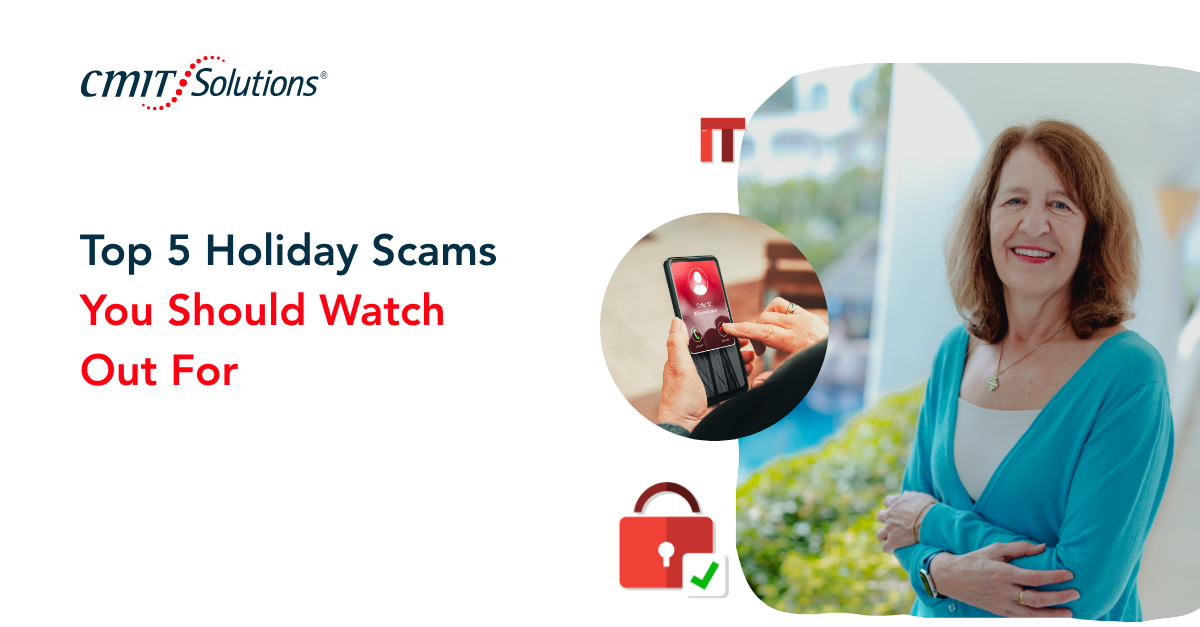
Top 5 Holiday Scams You Should Watch Out For
Phishing Emails Disguised as Holiday Deals
One of the most common scams during the holidays is phishing emails.
These messages often look like they come from trusted brands or retailers.
They promote “limited-time offers” or “exclusive discounts.”
The goal is simple — get you to click a link and enter your personal or payment information.
Always verify the sender.
Avoid clicking suspicious links.
Visit official websites directly instead of using email links.
Fake Online Shopping Websites
Cybercriminals create fake e-commerce websites that look identical to legitimate stores.
These sites offer attractive discounts to lure buyers.
Once you make a purchase, either:
The product never arrives
Or your payment details are stolen
How to avoid it:
Check website URLs carefully.
Look for secure connections (HTTPS).
Read reviews before making purchases.
Package Delivery Scams
With increased shipping activity, delivery scams become very common.
You may receive messages like:
“Your package is delayed”
“Click here to track your order”
These messages often contain malicious links.
How to avoid it:
Track packages directly through official courier websites.
Avoid clicking links from unknown messages.
Charity and Donation Scams
The holiday season encourages giving, and scammers take advantage of this generosity.
Fake charities or donation requests are often shared through emails or social media.
Funds sent to these organizations are usually never recovered.
How to avoid it:
Donate only to verified organizations.
Research charities before contributing.
Gift Card Scams
Gift cards are popular during the holidays and a favorite target for scammers.
Attackers may:
Pose as company executives requesting gift cards
Send fake promotions asking for gift card payments
Trick users into sharing gift card codes
Once the code is shared, the money is gone.
How to avoid it:
Never share gift card details.
Verify requests, especially in workplace environments.

Why These Scams Matter for Charleston Businesses
Charleston’s economy includes retail, hospitality, healthcare, and professional services — all of which see increased activity during the holidays.
This makes businesses a prime target.
A single scam can lead to:
Financial loss
Data breaches
Operational disruption
Reputation damage
For small and mid-sized businesses, these impacts can be significant, especially without strong endpoint security and data privacy strategies.
How to Stay Safe During the Holiday Season
Preventing scams starts with awareness and simple precautions.
Businesses and individuals should:
Stay cautious of unexpected messages
Verify sources before sharing information
Use secure payment methods
Keep systems and software updated
Train employees on cybersecurity best practices
A proactive approach can significantly reduce risk, especially when supported by business continuity planning.
The Growing Role of Cybersecurity Awareness
Cyber threats are becoming more sophisticated every year.
Holiday scams are no longer limited to obvious fake messages.
They are designed to look real and trustworthy.
For Charleston businesses, cybersecurity awareness is just as important as technical protection.
Educated users are less likely to fall for scams, especially when organizations implement MDR security solutions and digital defense strategies.
Conclusion
The holiday season should be a time of celebration — not concern.
However, increased online activity also brings increased risk.
Understanding the most common holiday scams helps individuals and businesses stay protected.
For those in Charleston SC, awareness and preparation can prevent costly mistakes and security incidents.
By staying vigilant and following best practices, you can enjoy the holidays with confidence.
Want to protect your business from holiday cyber threats in Charleston SC? Connect with our experts today and ensure your systems, data, and employees stay secure this season while avoiding reactive IT risks and system downtime issues.