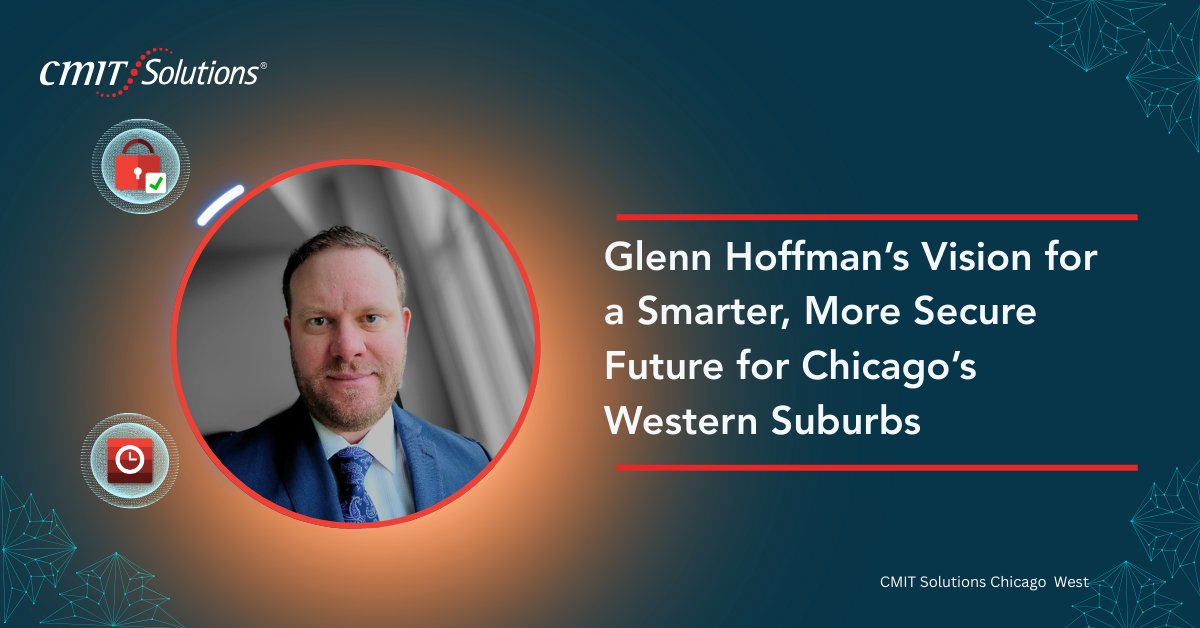
Technology is no longer a background function for growing businesses; it is the foundation on which resilience, trust, and long-term success are built. For Glenn Hoffman, President of CMIT Solutions of Western Suburbs, this reality shapes every conversation about the future of business across western suburbs.
As organizations navigate rising cyber threats, hybrid work models, compliance pressure, and rapid digital transformation, Hoffman’s vision is clear: businesses must move beyond reactive IT and toward intelligent, security-first digital ecosystems that support growth without sacrificing stability.
This vision isn’t theoretical. It’s grounded in the real challenges facing local businesses and in practical strategies that prepare them for what’s next.
Why the Western Suburbs Are at a Digital Inflection Point
western suburbs are home to a diverse mix of professional services firms, manufacturers, healthcare providers, logistics companies, and growing SMBs. Many of these organizations are scaling rapidly but often on infrastructure that wasn’t designed for today’s risks.
Key pressures shaping the region include:
- Accelerated cloud and SaaS adoption
- Hybrid and remote work becoming permanent
- Increased cyberattacks targeting SMBs
- Greater regulatory and client compliance demands
- Dependence on always-on digital operations
As outlined in the future of IT, regions experiencing digital growth without parallel security investment face compounding risk not just technical, but operational and reputational.
Glenn Hoffman’s Core Belief: Security Enables Growth
Hoffman’s leadership philosophy challenges a long-held misconception that cybersecurity slows businesses down. In reality, secure systems enable faster, more confident decision-making.
Security-driven growth means:
- Fewer disruptions and downtime
- Greater client and partner trust
- Faster adoption of new technologies
- Stronger compliance posture
- Reduced long-term costs
This mindset aligns with the principles described in cyber resilience over cybersecurity, where resilience not reaction is the true measure of preparedness.
Moving Businesses Away from Reactive IT
One of the most consistent challenges Hoffman sees among local organizations is reliance on reactive IT—waiting for something to break before addressing it.
The risks of reactive IT include:
- Unplanned downtime
- Emergency spending
- Slow incident response
- Incomplete visibility into threats
- Staff burnout and frustration
Through CMIT Solutions of Western Suburbs, Hoffman advocates a shift toward proactive management, an approach reinforced in why managed IT services, where continuous monitoring and planning replace firefighting.
Strengthening Digital Foundations Before Scaling
Growth exposes weaknesses. Hoffman emphasizes that before businesses expand whether by hiring, opening new locations, or adopting advanced tools they must strengthen their digital foundations.
Foundational priorities include:
- Modern, scalable infrastructure
- Secure cloud environments
- Integrated systems and data
- Reliable backup and recovery
- Continuous monitoring
This approach directly addresses the challenges described in hidden operational costs, where aging systems quietly limit scalability.

Cybersecurity as a Business Leadership Issue
For Hoffman, cybersecurity is not just an IT concern, it’s a leadership responsibility. Decisions about access, data handling, and recovery impact every part of the organization.
Leadership-driven security focuses on:
- Risk awareness at the executive level
- Clear accountability for systems and data
- Regular security assessments
- Employee education and policy alignment
- Preparedness for incidents, not denial
This leadership lens is critical in addressing threats like those detailed in small business big targets.
Preparing Local Businesses for Modern Cyber Threats
Cyber threats targeting the western suburbs are no longer opportunistic; they are deliberate and increasingly automated.
Common threats affecting local businesses include:
- Ransomware targeting operations
- Phishing impersonating vendors or executives
- Credential theft in hybrid environments
- Supply chain-based attacks
- Silent breaches that go undetected
Hoffman stresses early detection and rapid response—principles echoed in silent breaches.
The Role of Smarter Digital Ecosystems
Rather than stacking tools, Hoffman promotes building smarter digital ecosystems environments where systems communicate, automate, and reinforce one another.
Smarter ecosystems deliver:
- Real-time visibility
- Automated protection and updates
- Reduced manual processes
- Better user experience
- Faster recovery when issues occur
This integrated approach reflects the strategy described in digital decision gap.
Cloud Adoption with Accountability
Cloud platforms are essential but Hoffman cautions that unmanaged cloud environments often introduce new risks.
Responsible cloud strategies require:
- Clear ownership of configurations
- Identity-based access control
- Continuous security monitoring
- Encrypted backups
- Compliance-aware design
These principles align with cloud services that scale, where flexibility and security must coexist.

Supporting Hybrid Work Without Compromising Security
Hybrid work is now standard across the western suburbs. Hoffman emphasizes that productivity and security must be designed together.
Secure hybrid environments depend on:
- Endpoint visibility and protection
- Consistent access policies
- Secure collaboration platforms
- Centralized identity management
- Ongoing user education
The importance of endpoint protection is reinforced in endpoint security.
Data Protection and Business Continuity
For Hoffman, resilience means ensuring businesses can continue operating even under adverse conditions.
Continuity-focused strategies include:
- Immutable backups
- Tested recovery plans
- Clear restoration priorities
- Ransomware-resistant systems
- Regular resilience reviews
These strategies reflect the mindset described in beyond backups.
Why Local Leadership Matters in IT
As President of CMIT Solutions of Western Suburbs Hoffman believes proximity and accountability matter especially in moments of crisis.
Local leadership provides:
- Faster response times
- Understanding of regional business needs
- Long-term relationship focus
- Clear ownership and accountability
This local advantage is reinforced in why businesses in Western Suburbs.
Educating Businesses for Long-Term Security
Hoffman consistently emphasizes education not fear as the foundation of strong security.
Education-driven security includes:
- Executive-level risk discussions
- Employee awareness training
- Clear incident response procedures
- Transparent communication
- Continuous improvement mindset
This human-centered approach complements the technical strategies outlined in cyber resilience 2025.
A Smarter, More Secure Future for the Region
Looking ahead, Hoffman envisions a western suburbs business community that is digitally confident able to innovate without fear and grow without fragility.
That future is built on:
- Proactive IT management
- Integrated digital ecosystems
- Security-first leadership
- Local partnerships
- Long-term resilience
This vision reflects the broader roadmap described in IT for growth.
Conclusion: Leadership That Strengthens the Digital Future
Glenn Hoffman’s vision for western suburbs is rooted in a simple but powerful idea: strong digital foundations create strong businesses.
Through proactive security, smarter systems, and trusted local partnerships, organizations can move beyond survival mode and toward sustainable growth.
With CMIT Solutions of Western Suburbs, Hoffman and his team are helping local businesses prepare not just for today’s challenges but for a smarter, more secure future built on confidence, resilience, and trust.