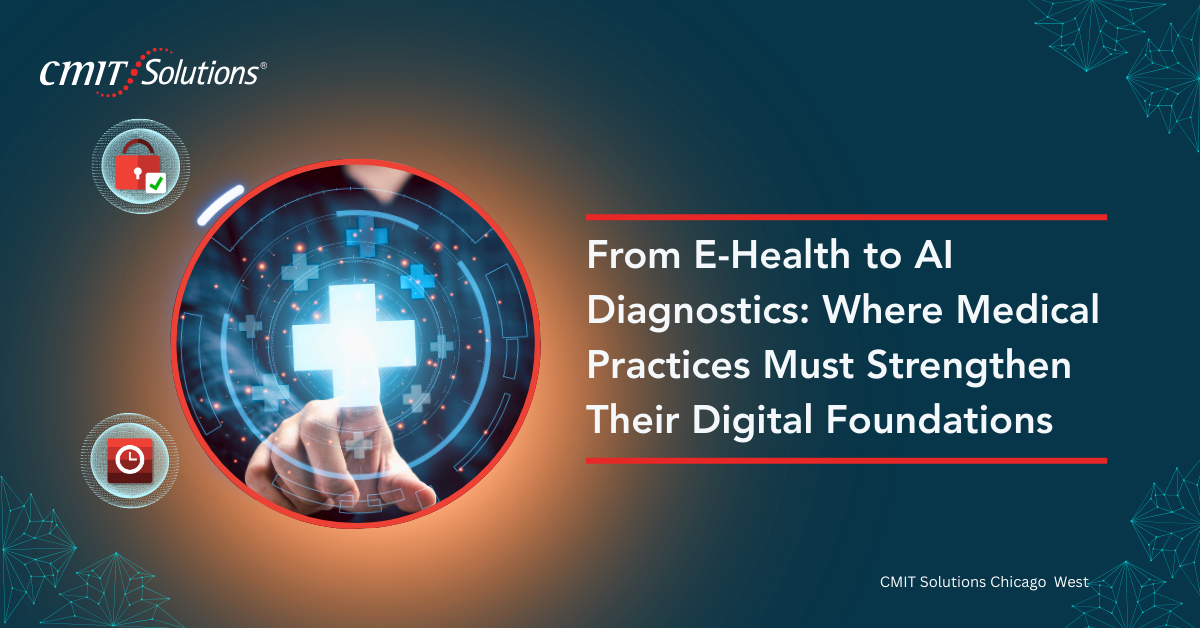
Healthcare has entered a defining era. Electronic health records, telemedicine, remote monitoring, and AI-driven diagnostics are no longer emerging tools they are becoming standard expectations for modern medical practices.
Yet while clinical innovation is accelerating, many practices are still operating on digital foundations that were never designed for this level of complexity, data sensitivity, or regulatory pressure.
The result is a growing gap between what healthcare technology can do and what medical practices are actually prepared to support. Closing that gap requires strengthening the underlying digital infrastructure that powers care delivery, data protection, compliance, and trust.
The Evolution of Digital Healthcare Is Moving Faster Than Infrastructure
Healthcare technology has advanced rapidly from basic electronic records to predictive analytics and AI-assisted diagnostics. However, many practices layered new tools onto outdated systems rather than modernizing holistically.
Key forces accelerating change include:
- Expansion of telehealth and virtual visits
- AI-driven imaging, diagnostics, and decision support
- Interoperability requirements across providers
- Patient demand for digital access and transparency
- Increased regulatory and cybersecurity scrutiny
As outlined in the future of IT, organizations that adopt advanced tools without reinforcing their foundations often introduce risk instead of resilience.
E-Health Systems Depend on Stable, Secure Infrastructure
Electronic health records (EHRs) are the backbone of digital healthcare. Yet EHR reliability depends entirely on the infrastructure beneath it.
Common infrastructure weaknesses include:
- Aging servers supporting mission-critical systems
- Inconsistent network performance
- Limited redundancy and failover
- Manual patching and updates
- Insufficient monitoring
These weaknesses mirror the challenges discussed in hidden operational costs, where legacy systems quietly undermine reliability and performance.
AI Diagnostics Raise the Stakes for Data Integrity
AI-powered diagnostics rely on accurate, timely, and complete data. Any weakness in data flow, storage, or security can compromise outcomes.
Digital foundation requirements for AI diagnostics include:
- High-availability data access
- Secure data pipelines
- Standardized data formats
- Strong access controls
- Continuous system performance monitoring
Without these foundations, AI tools can amplify errors instead of improving care. This risk aligns with broader concerns raised in digital decision gap, where decisions are only as good as the systems supporting them.
Cybersecurity Threats Are Targeting Healthcare Aggressively
Healthcare data remains one of the most valuable targets for cybercriminals. As practices digitize further, attack surfaces expand.
Healthcare-specific threats include:
- Ransomware targeting EHR systems
- Phishing campaigns impersonating labs or insurers
- Compromised medical devices
- Credential theft through shared access
- Data exfiltration of patient records
CMIT outlines these growing risks in cyber resilience 2025, emphasizing that healthcare organizations must plan not just for prevention, but for continuity.
HIPAA Compliance Depends on Technology, Not Just Policy
HIPAA compliance is often misunderstood as a documentation exercise. In reality, compliance is deeply tied to how technology systems are designed, secured, and monitored.
Technology gaps that create compliance risk include:
- Weak authentication controls
- Shared user accounts
- Lack of audit logging
- Unencrypted data storage or transmission
- Poor vendor access oversight
These challenges are explored in securing sensitive data, where compliance is framed as a continuous operational discipline.

Cloud Adoption Must Be Done with Clinical Context
Cloud platforms are essential for scalability, collaboration, and AI integration—but healthcare cloud adoption must be intentional.
Healthcare-ready cloud foundations require:
- HIPAA-compliant hosting
- Role-based access controls
- Encrypted data storage and backups
- Clear vendor responsibility boundaries
- Continuous configuration monitoring
CMIT explains this balance in cloud services that scale, where growth and compliance must coexist.
Medical Devices Are Now Part of the IT Environment
Modern medical devices are connected systems—not isolated tools. Imaging machines, monitoring devices, and diagnostic platforms often connect directly to networks and cloud services.
Device-related risks include:
- Unsupported operating systems
- Infrequent security updates
- Network exposure without segmentation
- Vendor access vulnerabilities
- Limited monitoring
These risks reflect the broader challenges discussed in endpoint security, where every connected device becomes a potential entry point.
Downtime in Healthcare Is a Patient Safety Issue
In healthcare, downtime is not just an inconvenience it directly impacts patient care, safety, and outcomes.
Consequences of system downtime include:
- Delayed diagnoses
- Interrupted treatment workflows
- Inability to access patient records
- Increased clinical errors
- Loss of patient trust
This reality underscores the importance of proactive oversight highlighted in proactive monitoring.
Data Backup and Recovery Are Clinical Safeguards
Backups are often viewed as an IT function, but in healthcare, they are a clinical safeguard.
Effective healthcare backup strategies include:
- Automated, encrypted backups
- Off-site and cloud redundancy
- Rapid recovery testing
- Clear restoration priorities
- Protection against ransomware
CMIT expands on this approach beyond backups, where recovery speed becomes a measure of care continuity.
Staff Workflows Must Align with Digital Systems
Technology should support clinicians not slow them down. Weak digital foundations often force staff into inefficient workarounds.
Workflow friction often stems from:
- Slow logins or system access
- Poor system integration
- Manual data entry
- Inconsistent device performance
- Frequent technical interruptions
As described in boosting productivity, well-designed systems reduce burnout and improve outcomes.
Identity and Access Control Are Now Clinical Controls
As systems expand, controlling who accesses what and when becomes critical.
Strong identity foundations include:
- Role-based access for clinicians and staff
- Multi-factor authentication
- Session monitoring
- Rapid access revocation
- Audit-ready access logs
These principles align with modern security strategies discussed in cyber resilience over cybersecurity.

Why Many Medical Practices Struggle to Modernize
Despite the urgency, many practices delay foundational upgrades.
Common barriers include:
- Fear of disrupting clinical operations
- Budget uncertainty
- Limited internal IT expertise
- Reliance on legacy vendors
- Competing priorities
Unfortunately, delay increases both risk and cost an issue highlighted in signs to upgrade.
The Role of Managed IT Services in Healthcare
Managed IT Services provide healthcare practices with the expertise, oversight, and structure needed to modernize safely.
Managed IT supports healthcare by:
- Designing compliant infrastructure
- Securing clinical systems
- Monitoring environments 24/7
- Supporting cloud and AI adoption
- Preparing for audits and incidents
This partnership model is outlined in why managed IT services.
Building a Future-Ready Digital Foundation for Care
Healthcare innovation will continue from AI diagnostics to predictive care models. Practices that succeed will be those with strong, adaptable digital foundations.
Future-ready practices focus on:
- Secure, scalable infrastructure
- Integrated systems
- Continuous monitoring
- Compliance by design
- Resilience over reaction
These principles reflect the long-term vision described in the future of IT.
Conclusion: Clinical Innovation Requires Digital Strength
From e-health platforms to AI-driven diagnostics, healthcare technology is transforming how care is delivered. But innovation without strong digital foundations introduces risk not progress.
By strengthening infrastructure, security, compliance, and monitoring, medical practices can safely embrace advanced tools while protecting patients, providers, and trust.
With CMIT Solutions Western Suburbs as a strategic partner, healthcare organizations gain the stability and expertise needed to support innovation without disruption ensuring that technology enhances care rather than complicates it.
The future of medicine depends not just on smarter tools but on stronger foundations.