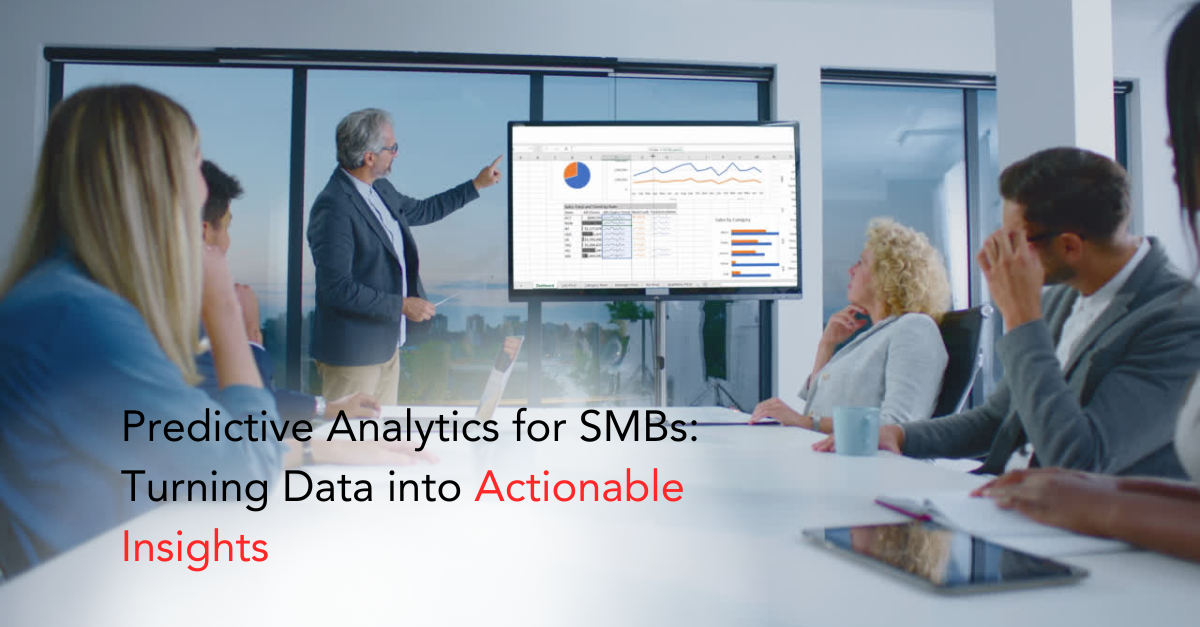
In today’s digital-first business landscape, data is power but only if it’s used effectively. Small and medium-sized businesses (SMBs) are generating more data than ever before through customer interactions, sales reports, marketing platforms, and IoT devices. The question is no longer how to collect data, but how to turn that data into decisions. That’s where predictive analytics steps in. By combining machine learning, historical data, and statistical modeling, predictive analytics helps SMBs forecast trends, anticipate customer needs, and make smarter operational choices.
Let’s explore how predictive analytics can transform your business and why implementing it securely and strategically is crucial for sustainable growth.
What Is Predictive Analytics?
Predictive analytics is a branch of data analytics that uses algorithms and AI to forecast future outcomes based on historical data. Unlike basic reporting which looks at what happened—predictive models answer questions like:
- What will happen next?
- Why might it happen?
- How can we prepare for it?
By applying predictive analytics, businesses can detect risks before they occur, anticipate market trends, and improve decision-making in real time. These capabilities are closely tied to AI-powered productivity initiatives, which are redefining how companies work smarter, not harder explored further in AI productivity tools.
Why Predictive Analytics Matters for SMBs
For many SMBs, decision-making often relies on instinct or experience. While intuition has its place, it’s no longer enough in a fast-paced digital economy. Predictive analytics empowers smaller organizations to compete with larger enterprises by leveraging insights hidden in their existing data.
Key Benefits Include:
- Proactive decision-making instead of reactive troubleshooting.
- Optimized resource allocation through accurate demand forecasting.
- Enhanced customer retention via behavior analysis and personalization.
- Reduced operational costs by identifying inefficiencies early.
Much like proactive IT management, predictive analytics prevents problems before they happen a philosophy shared in proactive IT support.

How Predictive Analytics Works
Predictive analytics combines data science, automation, and AI to find patterns and project future trends.
Core Steps Include:
- Data Collection – Gather data from sales, marketing, operations, and customer systems.
- Data Cleaning – Eliminate duplicates and errors to ensure reliability.
- Modeling – Use algorithms like regression, clustering, or neural networks to identify patterns.
- Validation – Test models to confirm their accuracy.
- Deployment – Integrate insights into business workflows.
This structured process mirrors the intelligent network management principles that ensure stability and precision similar to network management solutions.
Predictive Analytics in Action: Real SMB Use Cases
A. Customer Behavior Forecasting
Retail and service-based SMBs can analyze purchase history and browsing behavior to predict future buying patterns, enabling better marketing campaigns and stock management.
B. IT System Reliability
By studying network logs and server activity, predictive models can detect anomalies before system failures occur—aligning with strategies from Zero Trust security.
C. Cybersecurity Detection
AI-driven analytics can spot unusual login attempts or data transfers that indicate potential threats, enhancing overall protection.
D. Financial Forecasting
SMBs can use predictive analytics to anticipate cash flow trends and make informed budgeting decisions.
Data Security Challenges with Predictive Analytics
While predictive analytics offers enormous advantages, it also introduces new data security and privacy challenges. SMBs must protect sensitive business and customer information throughout every stage of the analytics lifecycle.
Risks to Watch For:
- Unauthorized data access due to poor encryption.
- Cloud misconfigurations exposing stored analytics models.
- Compliance violations under data privacy laws.
Businesses must follow security best practices like those shared in cloud security tips, ensuring their analytics platforms are resilient and compliant.
Integrating Predictive Analytics with Cloud Solutions
Most predictive analytics tools run on cloud platforms due to scalability, affordability, and storage capacity. However, integrating these tools requires a cloud-smart strategy to prevent overspending or inefficiencies.
Best Practices Include:
- Choose hybrid cloud environments for flexibility.
- Secure data transfers between local systems and the cloud.
- Monitor cloud resource utilization continuously.
- Maintain visibility with managed service dashboards.
These steps align with the approach discussed in hybrid cloud strategies.
Why SMBs Need Managed IT Services for Predictive Analytics
Predictive analytics requires more than just software—it demands secure data management, reliable infrastructure, and ongoing optimization. SMBs often lack the internal resources to handle this effectively.
How Managed IT Helps:
- Ensures cloud infrastructure security and compliance.
- Provides data backup and disaster recovery for analytics systems.
- Monitors real-time data flows and anomaly alerts.
- Offers AI integration guidance and automation consulting.
Partnering with a trusted MSP helps businesses deploy analytics securely and cost-effectively, as detailed in managed IT services.
Compliance and Governance in Predictive Analytics
Predictive analytics systems often handle sensitive and regulated data, from financial transactions to customer identities. SMBs must align their analytics processes with compliance frameworks such as HIPAA, PCI-DSS, and GDPR.
Automation can simplify this effort by:
- Tracking how and where data is used.
- Applying access control and encryption policies.
- Generating real-time audit logs.
Learn how to auomate these processes in compliance automation.
Data Backup and Business Continuity for Predictive Systems
Data drives predictive analytics but it must be backed up securely. Losing trained models, customer datasets, or historical logs could cripple business insights overnight.
Recommendations:
- Implement automated ransomware-proof backup solutions.
- Schedule redundant storage across regions.
- Test recovery processes regularly.
- Encrypt backups to protect model integrity.
These principles reflect the best practices outlined in ransomware backup.
Predictive Analytics and AI: The Road to Smart Automation
Predictive analytics and AI are deeply intertwined. While predictive analytics focuses on forecasting, AI transforms those forecasts into automated actions reducing manual effort and improving accuracy.
Examples include:
- AI chatbots predicting customer needs.
- Predictive maintenance for IT infrastructure.
- Automated compliance alerts for data anomalies.
This synergy embodies the future of AI-driven business growth, as explored in Microsoft’s AI future.
Building a Predictive Culture in Your Organization
Technology alone isn’t enough success depends on building a data-driven culture. Every department should understand how to interpret and act on analytics insights.
How to Create a Predictive Culture:
- Encourage employees to question and validate data findings.
- Use dashboards for visual storytelling and trend analysis.
- Integrate predictive KPIs into business performance reviews.
- Offer ongoing data literacy training.
When analytics becomes part of daily operations, businesses make faster, smarter decisions—similar to the innovation mindset behind digital strategy.
The Future of Predictive Analytics for SMBs
As AI, machine learning, and cloud technology evolve, predictive analytics will become even more accessible to SMBs. Expect to see:
- Pre-built predictive models tailored to industries.
- AI copilots for business forecasting.
- Automated decision systems powered by continuous learning.
- Sustainable analytics centers designed with green computing in mind.
These developments mirror the digital transformation wave happening across industries, covered in digital transformation insights.
Conclusion: From Raw Data to Smart Decisions
In 2025, every business large or small has access to powerful data. The real differentiator lies in how effectively you use it.
Predictive analytics turns information into action, enabling SMBs to stay ahead of the curve, manage risk, and create personalized customer experiences. But these benefits only last when combined with secure infrastructure, proactive management, and ethical data use.
To build a predictive-ready business:
- Invest in cloud-smart architecture and automation.
- Partner with Managed IT Services for secure deployment.
- Strengthen compliance and backup policies.
- Foster a data-driven, collaborative culture.
With guidance from CMIT Solutions of Dallas, your organization can harness predictive analytics to transform data into insight and insight into measurable growth.