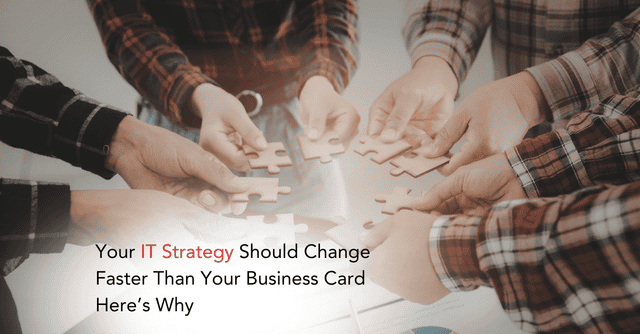
Your business card may stay the same for years.
Your business doesn’t.
Teams grow. Technology shifts. Customers expect faster service. Security threats evolve. Regulations tighten. Yet many Dallas businesses continue operating with an IT strategy designed for a much earlier stage of their organization.
That gap between how your business works today and how your IT was planned yesterday is where inefficiency, risk, and frustration begin especially as organizations push forward with digital tools without a clear long-term IT planning strategy.
Why Business Change Outpaces Traditional IT Planning
Modern businesses change continuously, not in neat cycles. New tools are adopted quickly, workflows evolve organically, and growth often happens faster than planning.
Traditional IT strategies were built to be long-term and stable. That approach no longer fits an environment where:
- Cloud platforms replace on-prem systems rapidly
- Remote and hybrid work becomes the norm
- Data volumes and integrations multiply
- Security threats adapt in real time
Many of these shifts are driven by broader trends outlined in what’s next in IT.
When IT strategy doesn’t keep pace, it becomes misaligned with reality.
The Early Warning Signs Your IT Strategy Is Outdated
Outdated IT strategy rarely causes immediate failure. Instead, it creates friction that teams slowly learn to work around.
Common warning signs include:
- Employees relying on manual processes or unofficial tools
- Systems that don’t communicate with each other
- Increased support tickets for recurring issues
- Delays when launching new services or initiatives
These symptoms often surface when businesses grow without the support of a structured managed IT ecosystem.
How Static IT Strategy Increases Risk Over Time
An IT strategy that doesn’t evolve creates hidden exposure. As systems change and access grows, controls often stay the same.
This can lead to:
- Users having access beyond what their role requires
- Security tools configured for outdated threats
- Backup and recovery plans that don’t reflect modern platforms
- Compliance gaps created by system changes
These risks mirror the same weaknesses highlighted in why cybersecurity rules no longer work the way they used to.

Why Modern IT Strategy Must Be Adaptive by Design
Effective IT strategy today isn’t about building a perfect plan. It’s about building a flexible framework.
Adaptive IT strategies focus on:
- Scalable systems that adjust as the business grows
- Regular reviews instead of one-time decisions
- Security that evolves alongside new risks
- Technology choices driven by business goals
This mindset aligns closely with organizations pursuing sustainable digital transformation, rather than reactive change.
Why Dallas Businesses Feel the Impact More Intensely
Dallas is a competitive, fast-moving market. Businesses here scale quickly, adopt new technologies rapidly, and expect agility.
When IT strategy adapts quickly:
- New hires onboard faster
- Remote teams stay productive
- New tools integrate smoothly
- Growth doesn’t introduce chaos
When it doesn’t, technology becomes a bottleneck instead of an advantage a challenge many local leaders are now addressing by prioritizing digital reliability.
IT Strategy Should Be a Continuous Leadership Conversation
The strongest organizations treat IT strategy as an ongoing discussion, not a document that gathers dust.
That means:
- Revisiting IT decisions as the business evolves
- Aligning technology planning with leadership goals
- Proactively addressing security and compliance changes
- Making IT a strategic function, not an emergency response
This approach is far more effective than relying on ad-hoc fixes, as outlined in the contrast between strategic IT guidance and reactive support.

How Often Should IT Strategy Be Revisited?
More often than most businesses expect.
IT strategy should be reviewed:
- When business direction shifts
- When teams expand or change locations
- When new platforms or vendors are introduced
- When security or compliance requirements evolve
Frequent reviews also help businesses stay ahead of issues related to compliance complexity, before they become operational problems.
Small, regular adjustments prevent large, disruptive overhauls later.
Conclusion: Your IT Strategy Should Move at the Speed of Your Business
Your business card may remain unchanged, your business will not.
When IT strategy evolves alongside operations, technology becomes an enabler instead of an obstacle.
CMIT Solutions of Dallas helps businesses continuously align their IT strategy with how they actually operate today. From system design and security to scalability and long-term planning, we ensure technology supports growth, not friction.
If your IT strategy hasn’t been reviewed recently, now is the right time. Reach out to CMIT Solutions of Dallas to build an IT roadmap that keeps pace with your business today, tomorrow, and beyond.