It is a quiet Sunday morning in Glen Oaks. You are reviewing quarterly numbers in your home office. The house is peaceful. The smart thermostat adjusts itself. The refrigerator orders milk. The doorbell camera logs a passing jogger.
Everything feels secure.
It is not.
Your home network is likely the weakest link in your company’s cybersecurity posture. And the devices you trust the most, the ones that make life convenient, are the same ones that can expose your business strategy to threat actors halfway around the world.
The Blind Spot Most Executives Miss
Most business leaders assume cybersecurity is handled at the office. Firewalls. Endpoint protection. Managed IT. The company network is locked down.
But the home office is different.
Executives work from home regularly. Board materials are reviewed on personal laptops. Confidential calls happen over home Wi-Fi. Sensitive documents sit in cloud folders accessed from the same network as a teenager’s gaming console.
The problem is not your work device. The problem is everything else connected to the same network.
Smart TVs. Voice assistants. Security cameras. Thermostats. Refrigerators. Coffee makers. Every single one of these devices is a potential entry point.
And most of them were never designed with security in mind.

What Your Smart Fridge Actually Knows
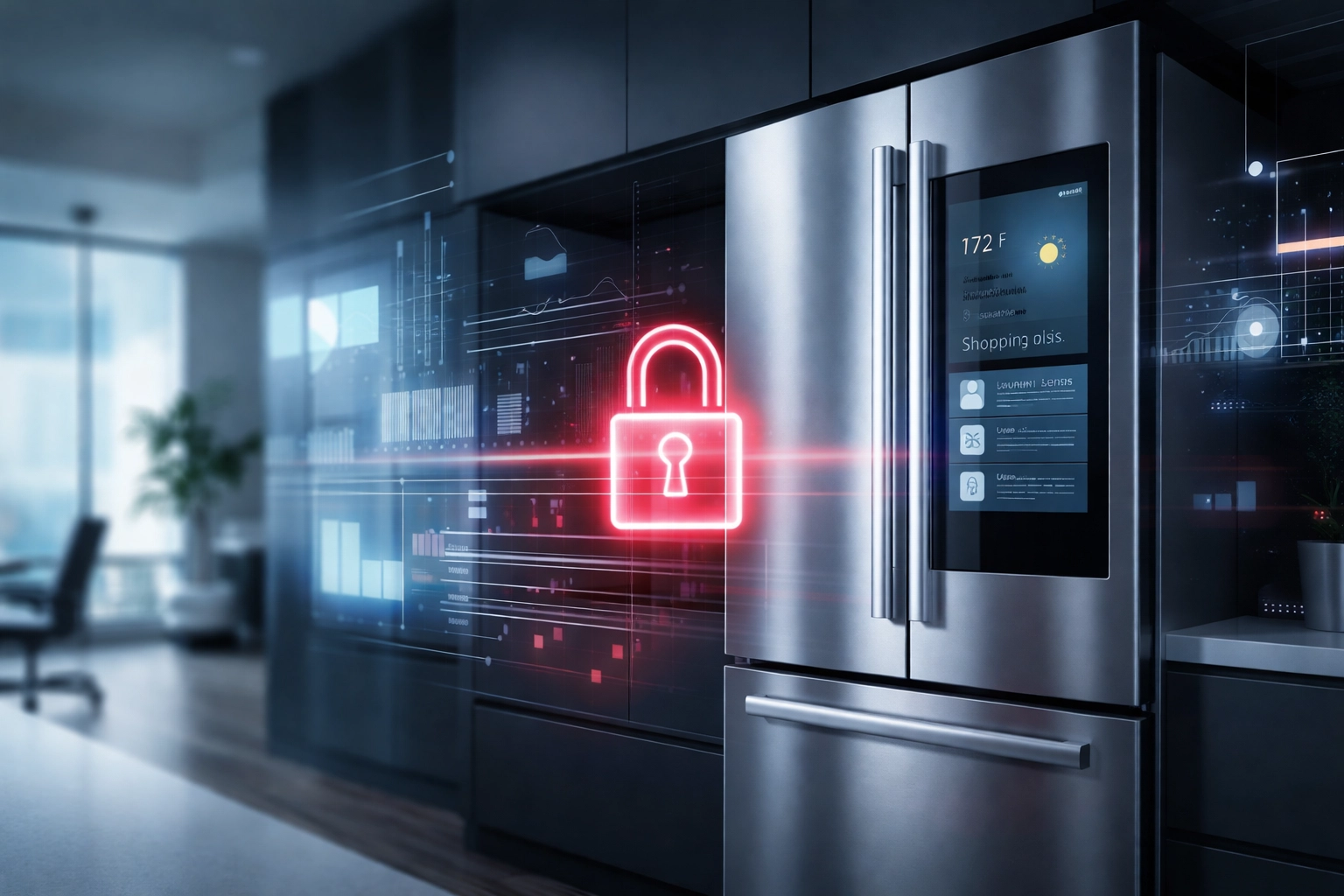
Smart refrigerators do more than keep food cold. They collect data. A lot of it.
According to recent research, smart fridges track:
- When food runs low
- Barcode scans and inventory lists
- ZIP codes and phone numbers
- Dates of birth
- Geolocation data through smartphone apps
Some manufacturers explicitly state in their privacy policies that they sell this data. Others share it with third parties without transparent consent.
Only 14% of consumers consider smart devices secure. Over half distrust them to protect privacy. And 75% worry their data is being used without authorization.
These are not paranoid concerns. In 2014, certain smart fridge models were hacked, leaking personal account details. The technology has improved since then. But the fundamental vulnerabilities remain.
Now imagine what happens when that same network hosts your work laptop. Your email. Your board materials. Your financial projections.
The fridge does not need to know your business strategy. But the network it sits on might be the pathway to it.
How Attackers Pivot From Your Home to Your Business
Threat actors are not breaking down front doors. They are slipping through side windows.
Here is how it works:
- An attacker identifies a vulnerable IoT device on your home network. Maybe it is a smart doorbell with outdated firmware. Maybe it is a voice assistant with weak authentication.
- They gain access to that device. Now they are inside your home network.
- From there, they move laterally. They scan for other devices. They look for anything with business value: laptops, tablets, phones.
- They intercept traffic. They capture credentials. They access cloud services tied to your work identity.
- They pivot into your company network. Using your credentials. Your access. Your trust.
This is not hypothetical. It is happening now. AI-driven attacks have made this process faster and more scalable. Automated tools scan for vulnerable home networks 24 hours a day.
And executives are high-value targets. You have access to sensitive information. You have authority. You have influence over financial decisions.
That makes your home network worth attacking.
The Des Moines and Overland Park Reality
Business leaders in Des Moines and Overland Park are pragmatic. They move fast. They value efficiency.
But that same efficiency creates risk.
You upgraded to a smart thermostat because it saves energy. You installed a video doorbell because it adds convenience. You connected everything to one Wi-Fi network because it was easier.
Now you are preparing for a board meeting in your West Des Moines home office. You are reviewing confidential financial data on your laptop. And that laptop shares a network with 15 other devices you have not thought about in months.
The attack surface is larger than you realize.
What Business Leaders Should Be Thinking About
This is not about abandoning smart home technology. It is about managing it.
Here is what executives should consider:
Network Segmentation
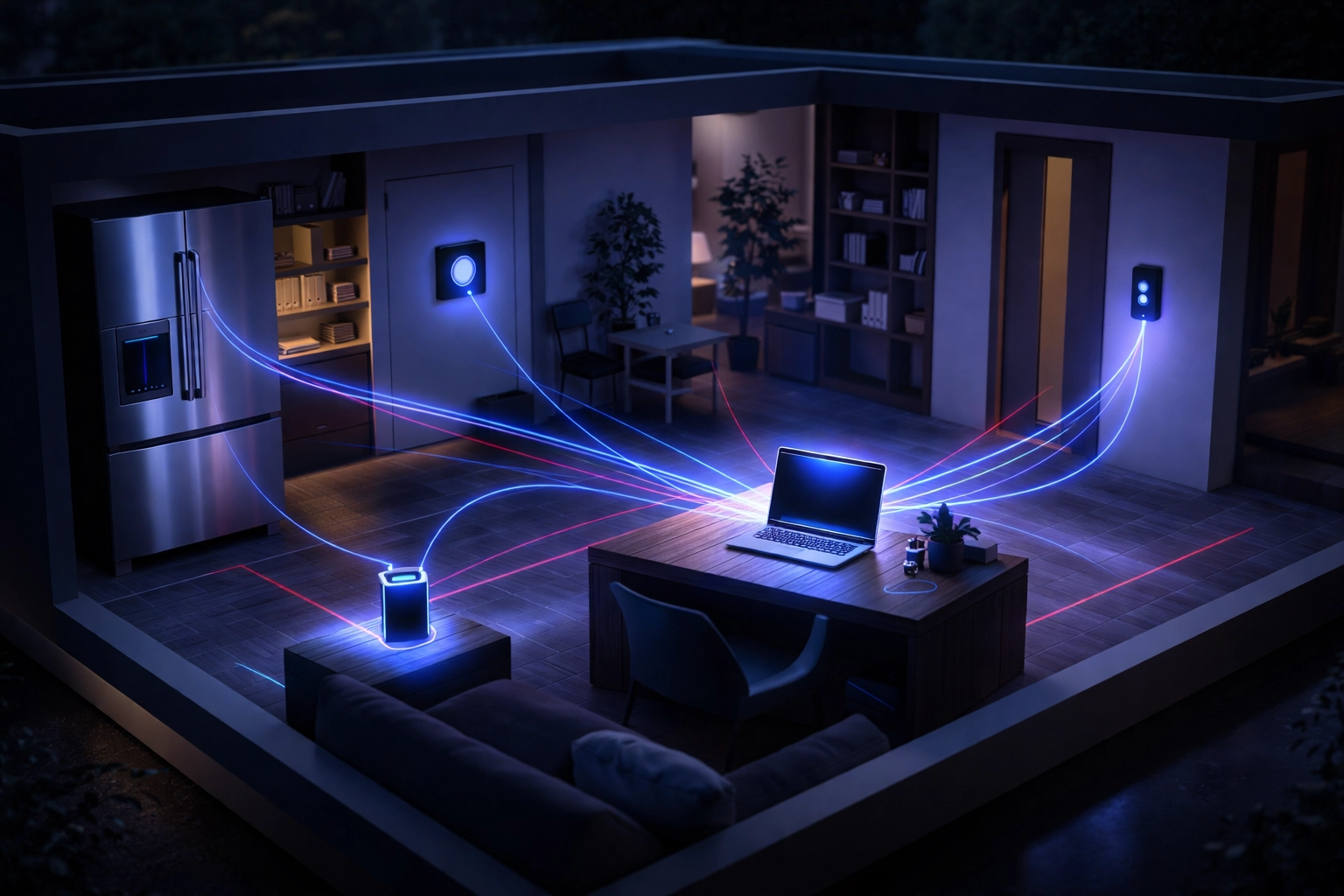
Your work devices should not share a network with your IoT devices. A segmented network isolates traffic. If a smart TV is compromised, it cannot reach your laptop.
Device Inventory
Know what is connected. Most executives cannot name every device on their home network. If you do not know what is there, you cannot secure it.
Firmware and Updates
IoT devices need updates just like computers. Outdated firmware is a known vulnerability. Many devices never get updated after initial setup.
Permission Audits
Review what data your devices collect. Disable unnecessary features like location tracking. Do not grant permissions unrelated to product performance.
Physical Controls
Where possible, choose devices with physical privacy toggles. App-only controls can be bypassed.
Home Network Audits
This is where a professional assessment matters. A thorough audit identifies vulnerabilities you cannot see on your own.

The Shift From Standard IT to Executive Cyber Concierge
Traditional business IT support services focus on the office. The company network. The corporate devices.
But executives do not work exclusively in offices anymore.
This is why the concept of an executive cyber concierge matters.
An executive cyber concierge extends cybersecurity beyond the corporate perimeter. It includes the home network. The personal devices that touch business data. The IoT ecosystem that surrounds your work environment.
This is not about installing antivirus software on a laptop. It is about understanding the full picture. Mapping every device. Identifying every risk. Building layers of protection around your digital life: not just your work life.
It is a different approach. One that recognizes how business leaders actually live and work in 2026.
Why This Matters for AI Governance
AI governance is not just about how your company uses AI tools. It is also about how AI-powered threats target your organization.
Attackers are using AI to:
- Automate reconnaissance of home networks
- Generate convincing phishing messages tailored to executives
- Identify vulnerable devices at scale
- Accelerate lateral movement once inside a network
If your home network is exposed, AI makes it easier to exploit. Faster. More efficiently. With less human effort on the attacker’s side.
This is why AI governance and cybersecurity are inseparable. You cannot govern AI risk without understanding where your data lives. And for most executives, that data lives at home as much as it lives at the office.
Where CMIT Solutions Fits
This is the kind of work CMIT Solutions of Des Moines and Overland Park does every day.
We work with business leaders who understand that cybersecurity is not just an IT problem. It is a business risk. A personal risk. A leadership responsibility.
Our approach goes beyond traditional business IT support services. We help executives audit their entire digital environment: including home networks. We identify vulnerabilities. We implement protections. We provide ongoing oversight.
This is what an executive cyber concierge looks like in practice.

A Calm Next Step
Your smart fridge is not going to steal your business strategy. But the network it sits on might be the pathway for someone who wants to.
This is worth addressing before it becomes urgent.
If you are a business leader in Des Moines or Overland Park and you want to understand your home network risk, start with a conversation. No pressure. No sales pitch. Just a clear-eyed assessment of where you stand.
Because the quiet of a Sunday morning should stay quiet.