
Most business owners think AI governance is an IT problem.
It’s not.
AI governance is a leadership responsibility. It determines whether your business uses AI safely or becomes a cautionary tale about what happens when innovation moves faster than control.
If you’re adopting AI tools: or if your team already is: you need a governance framework. Not someday. Now.
This guide walks you through what AI governance actually means for a small business, why it matters in 2026, and what you need to do to get it right.
What AI Governance Really Means
AI governance is not about blocking innovation. It’s about knowing what AI tools your business uses, how they access your data, who’s accountable when something goes wrong, and what controls prevent exposure.
Think of it as operational hygiene for the AI era.
Without governance, you have no visibility into:
- What AI tools employees are using
- What data those tools can access
- Whether vendors are training models on your sensitive information
- Who reviews automated decisions before they impact customers or compliance
This lack of visibility creates risk. Regulatory risk. Data breach risk. Reputational risk.
Governance gives you control.

Why 2026 Is Different
The regulatory environment has shifted. Federal agencies, state governments, and international bodies are all tightening AI oversight. The EU AI Act is in force. Colorado has passed its own AI regulations. More states are following.
If you operate in multiple jurisdictions, compliance is no longer optional.
But beyond compliance, the business case is clear: enterprises with active senior leadership involvement in AI governance achieve significantly greater business value than those that delegate it entirely to technical teams.
Leadership shapes strategy. IT executes it. Both are necessary.
The Foundation: Know What You’re Using
Most businesses significantly underestimate their AI adoption.
AI is embedded in:
- Marketing automation platforms
- CRM systems
- Applicant tracking tools
- Customer support chatbots
- Analytics dashboards
- Email filtering
Your team is likely using AI-powered tools you didn’t formally approve.
Start here: Create an inventory of every AI tool in use across your organization. A spreadsheet works. Include the tool name, vendor, what data it accesses, and who uses it.
This visibility is the foundation for everything else.
If you don’t know what’s running, you can’t govern it.
Risk-Based Classification
Not all AI use cases carry the same risk.
A chatbot summarizing internal documents is different from an AI system screening job candidates or making credit decisions.
Modern regulatory frameworks use a risk-based approach:
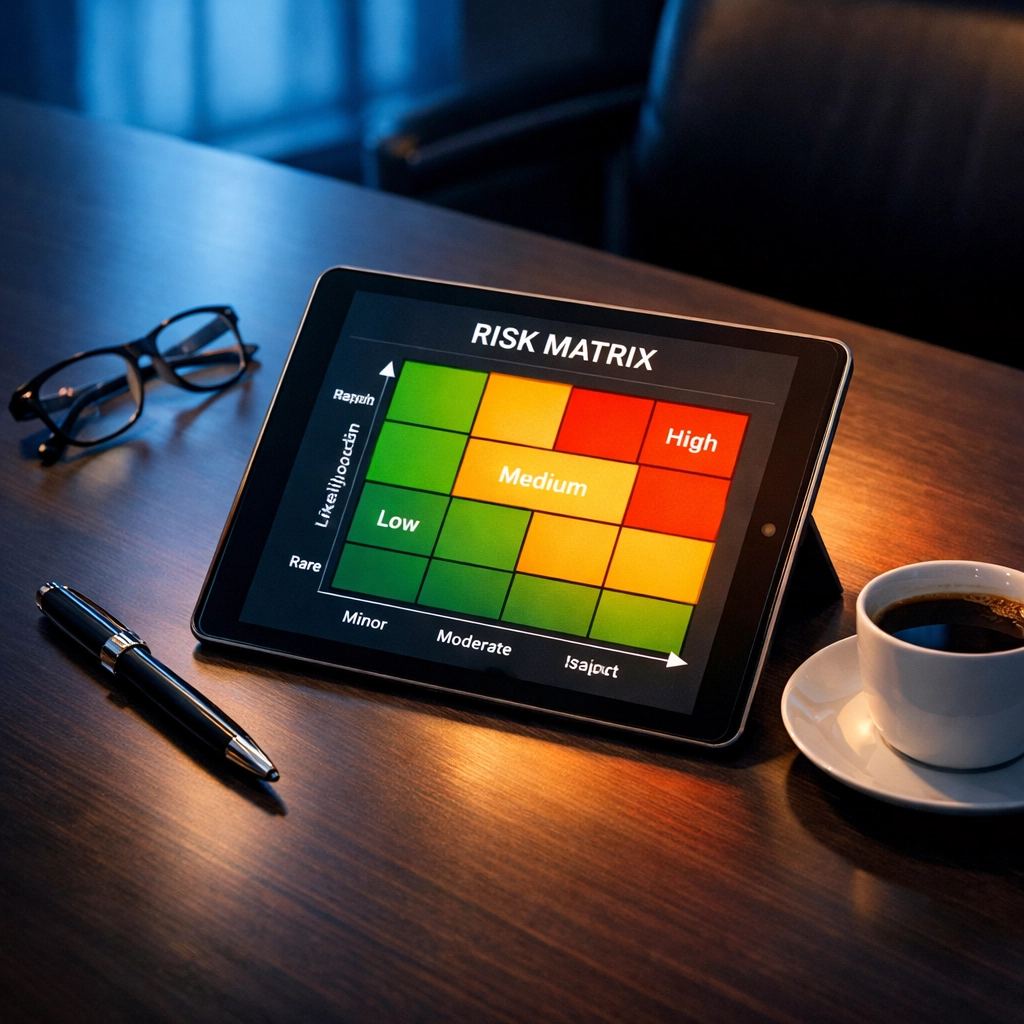
- Low risk: Internal productivity tools with no customer impact
- Medium risk: Tools that process customer data but don’t make automated decisions
- High risk: Systems affecting individual rights, compliance obligations, or operational continuity
Classify your AI uses by risk level. Apply stricter controls to high-risk applications.
This means:
- Requiring human review for automated decisions
- Documenting how models reach conclusions
- Logging performance issues and bias flags
- Establishing escalation paths when outputs are inconsistent
High-risk AI deserves high-level oversight.
Vendor Controls Are Non-Negotiable
Most small businesses don’t build AI models. They buy them.
That makes vendor management the most critical governance lever you have.
Your contracts with AI vendors should include:
- Transparency provisions clarifying what the model does and how it works
- Data use restrictions preventing vendors from training models on your data
- Security obligations including breach notification and encryption standards
- Audit rights for high-risk use cases
- Indemnification for misuse or model failures
Legal teams often overlook these provisions. Don’t let that happen.
If a vendor refuses to commit to data use restrictions, that’s a signal. You’re trusting them with sensitive information. They should be willing to contractually protect it.
Human Oversight Matters
Automation is powerful. But automated decisions without human judgment create liability.
Regulators across jurisdictions consistently emphasize the need for meaningful human oversight, especially in high-risk scenarios.
What does “meaningful” mean?
It means:
- A qualified person reviews the AI’s output before decisions are final
- That person has the authority to override the system
- Review procedures are documented
- Logs capture when and why overrides occur
This is not a rubber stamp process. It’s a safeguard.
If your business uses AI to screen resumes, approve loans, or flag compliance issues, human oversight is not optional.
The Technology Foundation
Safe AI deployment requires infrastructure, not shortcuts.
You cannot run enterprise AI on consumer-grade tools and expect security.
The foundation includes:
- Secure cloud platforms with access controls and monitoring
- Centralized data management so you know where sensitive information lives
- Strong identity controls with multi-factor authentication (MFA) across all systems
- Modern cybersecurity tools including endpoint detection and response (EDR)
This infrastructure prevents data exposure. It also enables reliable AI performance.
If your business IT provider hasn’t discussed this foundation with you, that’s a gap.
AI governance and cybersecurity are inseparable. You can’t have one without the other.
Policy and Accountability
Governance requires structure. That means written policies and clear accountability.
Your AI governance policy doesn’t need to be complex. It needs to be clear.
Essential elements:
- Principles for responsible AI use aligned with your business values
- Inventory and oversight procedures
- Risk classification guidelines
- Data handling requirements
- Vendor management standards
- Escalation and reporting processes
Assign ownership. Create an AI ethics and compliance committee with representatives from leadership, technology, legal, and risk management.
This committee defines review processes for new AI systems. It updates policies as regulations evolve. It ensures the organization takes governance seriously.

Employee Training Reduces Risk
Many AI-related incidents stem from human misuse, not model failure.
Employees need to understand:
- What AI tools are approved for use
- How to handle sensitive data in AI workflows
- How to identify bias or irregular outputs
- What transparency obligations apply to automated decisions
- How to report concerns or issues
Annual training cycles should cover these topics. Make it practical, not theoretical.
This may be one of the highest-impact governance investments a small business can make.
The Strategic Advantage
Businesses that implement AI governance now position themselves to adopt AI safely, effectively, and profitably.
You demonstrate maturity to:
- Regulators who are scrutinizing AI use
- Customers who want to know their data is protected
- Investors who evaluate risk management practices
Governance is not a barrier to innovation. It’s the framework that makes innovation sustainable.
Companies without governance will face regulatory violations, data breaches, and reputational damage. Companies with governance will scale AI with confidence.
What This Looks Like in Practice
AI governance is not theoretical.
It means:
- Before deploying a new AI tool, someone reviews its risk classification
- Contracts with AI vendors include data protection language
- High-risk decisions get human review before they’re final
- Employees know how to use AI responsibly
- Leadership understands what AI the business relies on
It’s operational discipline. It’s oversight. It’s accountability.
This is where business IT support services become strategic partners, not just technical vendors.

Where to Start
If you’re reading this and realizing your business doesn’t have an AI governance framework, you’re not alone.
Most small businesses in Des Moines and Overland Park are in the same position.
Here’s where to begin:
1. Inventory your AI tools. Know what’s running.
2. Classify risk levels. Not all AI use is the same.
3. Review vendor contracts. Ensure data protections are in place.
4. Establish human oversight for high-risk decisions. Document the process.
5. Train your team. Make sure employees understand the policies.
6. Assign accountability. Someone at the leadership level owns this.
If this feels overwhelming, it’s worth addressing before it becomes urgent.
This is why businesses work with partners like CMIT Solutions. We help you build the governance framework, implement the technology foundation, and ensure your team understands how to use AI safely.
We’ve already helped businesses navigate AI governance challenges and understand what IT experts know about managing AI risk.
If you want to understand what AI governance looks like for your business, start with a conversation.
This is worth getting right.