Artificial intelligence has become one of the most talked about tools in business technology, and for good reason. It can scan thousands of log entries in seconds, flag suspicious login attempts, and detect patterns no human could catch by manually reviewing spreadsheets. Vendors everywhere are marketing AI powered security tools as the answer to every cyber threat a business might face. The pitch sounds appealing: install the software, let the algorithms do the work, and rest easy.
The reality is more complicated. AI is a powerful tool, but it is still just that, a tool. It does not understand your business the way a person does. It cannot make judgment calls in gray areas, negotiate with a vendor during an outage, or explain to a worried employee why their account was just locked. AI without human oversight can generate false alarms, miss context specific threats, or worse, create a false sense of security that leaves real gaps unaddressed.
This is why more businesses are shifting away from the idea of AI as a standalone defense and toward a model where AI works alongside experienced IT professionals. When paired with the right team, AI becomes a force multiplier rather than a fragile safety net. This article explores why AI alone falls short, what it actually excels at, and how a knowledgeable managed IT services team uses these tools to deliver protection that neither technology nor people could achieve on their own.
Why AI Alone Is Not Enough
It Lacks Business Context
An AI model trained on general threat data does not automatically know that your accounting team always processes payroll on the 15th, or that your sales director frequently logs in from three different states while traveling. Without that context, AI tools either flag too many false positives, creating alert fatigue, or worse, learn to ignore patterns that actually deserve attention. Human analysts working through a structured advanced cybersecurity solutions program bring exactly this kind of business specific knowledge that raw automation cannot replicate on its own.
It Cannot Make Judgment Calls
When an AI system flags an anomaly, someone still has to decide what to do about it. Is this a genuine breach in progress, or a legitimate employee working late from a new device? Should the account be locked immediately, or does that risk disrupting a critical business process? These decisions require judgment, experience, and often a quick phone call to verify what is actually happening. Automation can surface the question, but it cannot always answer it responsibly.
It Can Be Fooled
Attackers are increasingly aware that businesses rely on automated detection tools, and they design their techniques accordingly. Slow, low volume attacks that mimic normal user behavior can slip past algorithms trained to spot obvious spikes in activity. This is one of the biggest reasons dedicated real time threat monitoring still depends on trained analysts reviewing what the machines surface, rather than trusting automated output blindly.
It Requires Constant Tuning
AI models are not “set and forget” systems. They need to be retrained, recalibrated, and adjusted as a business changes, new software is adopted, staff turnover occurs, or attack techniques evolve. A model that worked well six months ago may be generating blind spots today simply because nobody updated its parameters. Businesses without dedicated oversight often discover this only after something slips through.
It Cannot Take Full Responsibility
Perhaps most importantly, AI cannot be held accountable. If an automated system fails to catch a breach, there is no algorithm to answer to regulators, explain what happened to customers, or take corrective action. Responsibility ultimately rests with people, which is exactly why a strong human team paired with reliable IT support services remains the backbone of any serious security strategy.
What AI Actually Does Well
None of this means AI is not valuable. Quite the opposite. Used correctly, AI dramatically improves the speed and scale at which threats can be identified and addressed.
- Processing enormous volumes of log data far faster than any human team could manually review
- Identifying subtle patterns across thousands of data points that would otherwise go unnoticed
- Flagging anomalies in real time rather than during a periodic manual review
- Automating repetitive tasks like patch deployment, freeing up human staff for higher value work
- Predicting likely failure points based on historical trends before they cause downtime
The key is treating AI as an accelerant for human expertise, not a replacement for it. This distinction is at the core of how modern intelligent workflow automation is being deployed across growing businesses, handling the repetitive groundwork so people can focus on strategy and judgment calls.
The Danger of Overreliance on Automation
Businesses that adopt AI tools without pairing them with skilled oversight often fall into a trap. They assume that because a dashboard shows green checkmarks, everything must be fine. This false confidence can be more dangerous than having no automated tools at all, because it discourages the kind of ongoing vigilance that catching real threats requires.
Some of the most common pitfalls include:
- Assuming automated alerts will catch every threat without any gaps
- Failing to review AI generated reports because “the system would have flagged it”
- Ignoring the need for periodic manual audits of AI decision making
- Believing AI eliminates the need for employee security training
- Underestimating how quickly attackers adapt their techniques to evade automated detection
None of these mistakes stem from AI itself being flawed. They stem from treating AI as a complete solution rather than one part of a broader, human led strategy.
This is precisely why businesses benefit from a documented cybersecurity risk assessment conducted by people, not just an automated scan. A cybersecurity risk assessment walks through the actual gaps between what a tool claims to cover and what genuinely gets reviewed, so leadership has a realistic picture rather than a false sense of confidence built on dashboard checkmarks alone.
How AI and Human Expertise Work Together
The most effective security and IT strategies combine the speed of automation with the judgment of experienced professionals. This partnership plays out across nearly every area of business technology.
Network Monitoring
AI tools can continuously scan network traffic for anomalies, but it takes a trained analyst to determine whether a flagged event represents a genuine threat or a harmless deviation. This combination underpins effective network management solutions, where automated alerts are reviewed and acted on by people who understand the full context of the business.
Identity and Access Control
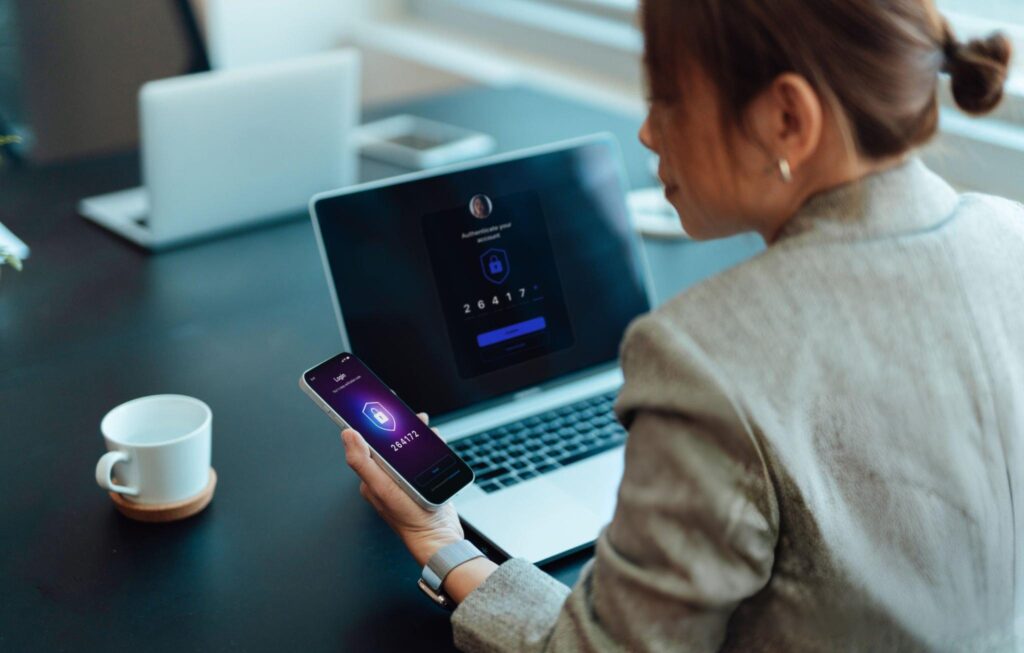
Modern identity platforms use AI to detect unusual login behavior, such as an account suddenly accessing systems from an unfamiliar location. But deciding how to respond, whether that means a temporary lockout, additional verification, or a full investigation, still requires human judgment. This layered approach is central to modern access management solutions that combine automated detection with trained response teams.
Cloud Security
Cloud environments change constantly, with new services, permissions, and integrations added on a regular basis. AI tools can continuously scan for misconfigurations, but a skilled team is needed to interpret findings and prioritize which issues pose the greatest actual risk. This is the foundation of effective cloud security posture management programs, where automation handles scale and people handle judgment.
Data Backup and Recovery
AI can help identify which files have changed and flag unusual deletion patterns that might indicate ransomware activity in progress. But confirming backups are clean, isolated, and actually restorable still requires hands on verification from a knowledgeable team managing data backup solutions on an ongoing basis.
Cloud Infrastructure Management
As businesses migrate more workloads to the cloud, AI assists with monitoring performance and flagging resource inefficiencies. Properly configuring and maintaining cloud services solutions still requires an experienced team that understands the specific compliance and operational needs of the business, something generic automation cannot fully account for on its own.
Continuous Visibility Still Requires People Watching the Watchers
One subtle risk of AI driven security tools is assuming that once they are installed, visibility into the network is automatically complete. In practice, tools need to be configured correctly, integrated across every system, and checked periodically to confirm they are actually collecting the data they claim to be collecting. A gap in coverage that nobody notices is functionally the same as having no monitoring at all in that area.
This is where ongoing continuous network monitoring practices matter just as much as the AI tools themselves. Regular audits confirm that every device, application, and cloud service is actually feeding data into the monitoring system, rather than assuming coverage exists simply because a tool was installed at some point in the past.
Businesses should periodically ask themselves a few honest questions about their current setup:
- Is every device on the network actually reporting into our monitoring tools, including personal devices used for work?
- When was the last time someone manually verified that alerts are being generated and reviewed as expected?
- Do we know exactly who is responsible for reviewing AI generated reports each day?
- Have we tested what happens when a genuine threat is deliberately simulated against our current tools?
Without honest answers to these questions, a business may be paying for AI powered protection that is quietly leaving significant gaps unaddressed.

Why Small and Mid-Sized Businesses Need This Balance More Than Ever
Larger enterprises often have dedicated security operations teams that can build and tune custom AI models in house. Small and mid-sized businesses rarely have that luxury, which means the tools they adopt need to come with expert oversight built in rather than left as a self-service product.
This is exactly the gap a strong managed IT services team is designed to fill. Instead of asking a business owner to configure and monitor complex AI driven tools themselves, a managed provider brings both the technology and the expertise needed to interpret and act on what that technology finds.
Businesses in this position benefit from:
- Access to enterprise grade AI tools without the cost of building an internal team
- Experienced professionals who already know how to interpret AI generated alerts
- Faster response times because oversight is happening continuously, not occasionally
- A single point of accountability rather than a disconnected patchwork of software vendors
Businesses that have tried to piece together their own combination of free or low cost AI tools often find the results inconsistent, with gaps forming between products that were never designed to work together. A properly integrated approach under a dedicated proactive managed IT support model avoids this fragmentation by treating security, monitoring, and response as one coordinated system rather than a collection of disconnected subscriptions.
The Compliance Angle: Why Human Oversight Matters Legally, Too
For businesses operating in regulated industries, relying solely on automated tools introduces legal risk as well as security risk. Many regulatory frameworks require documented human review of security incidents, not just automated logs showing a tool “handled it.” Working with a team that understands regulatory compliance assistance ensures that AI driven monitoring is paired with the documentation and human accountability regulators actually expect to see during an audit or investigation.
Data Governance: Feeding AI the Right Information
AI tools are only as good as the data they are trained on and given access to. Businesses that have not organized or classified their data properly often find that their AI tools either miss critical assets entirely or flood analysts with irrelevant noise. Strong data governance strategies ensure that automated tools are actually looking in the right places, with sensitive data properly classified and prioritized rather than treated the same as routine files.
AI at the Edge: Protecting Distributed Teams
Remote and hybrid work has pushed security concerns beyond the traditional office network. Employees connecting from home offices, coffee shops, and shared workspaces create a much larger and more unpredictable attack surface. AI tools deployed at the network edge can detect unusual behavior on individual devices in real time, but they still need to be paired with a responsive team that can act immediately when something is flagged. This combination is what makes modern edge security solutions effective for businesses supporting distributed workforces.
Business Continuity in an AI Driven World
AI is also changing how businesses plan for continuity and disaster recovery, allowing for far more sophisticated modeling of potential failure scenarios. But a plan built entirely around automated predictions without human review can miss the practical, operational realities of how a business actually functions day to day. Thoughtful business continuity planning blends AI driven risk modeling with real world input from the people who understand how the business actually operates.
Recovery Still Requires Human Decision Making
When an incident does occur, AI can help identify the scope of the damage and even suggest a recovery sequence based on system dependencies. But executing that recovery, communicating with stakeholders, and making judgment calls about what to prioritize under pressure still requires experienced people at the helm. This is why cyber recovery planning has become a distinct discipline that leans on both automated tooling and hands on expertise working in tandem.
Communication Tools Need the Same Balanced Approach
Email, messaging, and video platforms are frequent targets for AI powered phishing attacks that are increasingly difficult to distinguish from legitimate communication. Ironically, defending against AI generated threats often requires AI powered detection tools of your own, paired with human review of anything flagged as suspicious. Businesses relying on properly configured unified communications solutions benefit from this layered defense across every channel employees use to communicate. Pairing these platforms with dependable reliable IT support services ensures that flagged messages are actually reviewed promptly rather than sitting in a queue nobody checks.
Procurement Decisions Shape How Well AI Performs
The effectiveness of any AI driven security or IT tool depends heavily on the underlying hardware and software it runs on. Outdated systems, inconsistent configurations, and mismatched software versions all create blind spots that even the best AI cannot fully compensate for. A structured approach to IT procurement services ensures that every new device and application entering the network meets a consistent standard, giving AI tools clean, reliable data to work with from day one. Businesses undergoing a broader technology refresh often pair procurement decisions with an updated network management solutions strategy, ensuring new hardware is deployed onto an infrastructure already built to support consistent monitoring.
Productivity Tools Are Getting Smarter, But Still Need Guardrails
AI features are now built directly into many everyday business applications, from smart email filtering to automated document suggestions. These features genuinely improve efficiency, but they also introduce new considerations around data privacy and access control. Businesses using business productivity applications benefit from having a knowledgeable partner review default AI settings, many of which are not configured with security as the top priority out of the box.
Building an AI Strategy That Actually Works
Businesses considering how to responsibly integrate AI into their security and operations should start with a few foundational questions.
- What specific problem is this AI tool actually solving, and how will success be measured?
- Who is responsible for reviewing and acting on what the tool flags?
- How often will the tool be retrained or recalibrated as the business changes?
- What happens when the tool generates a false positive, or worse, misses something real?
- Is there a documented process for human review, or is the tool simply left to run unsupervised?
Answering these questions honestly often reveals that the technology itself was never the hard part. The harder part is building the human processes and expertise around it, which is exactly where a knowledgeable strategic IT guidance partner adds the most value.

Planning for What Comes Next
AI capabilities are advancing quickly, and the tools available today will look different in even a year or two. Businesses that want to stay ahead need a partner who is not just deploying today’s tools, but actively planning for how those tools will evolve. This kind of forward thinking is central to long term IT planning that treats AI as an ongoing capability to be developed, not a one time purchase to check off a list.
Looking further ahead, the industry is already moving toward models that anticipate problems before they happen rather than simply reacting to them after the fact. This shift toward predictive IT support represents the next stage of the human and AI partnership, where automated systems flag likely future issues and experienced teams intervene before they ever become disruptions.
Practical Steps for Businesses Evaluating AI Tools
Businesses ready to adopt AI driven security and IT tools responsibly should consider the following approach.
- Start with a clear inventory of existing tools and identify where AI could genuinely add value
- Avoid adopting AI tools simply because a vendor is marketing them as the latest trend
- Ensure every automated tool has a designated human reviewer responsible for acting on its output
- Ask vendors directly how their AI models are trained, tuned, and updated over time
- Pair any new AI tool with a documented incident response process, not just a dashboard
- Schedule regular reviews to confirm the tool is still performing as expected months later
Working through this checklist alongside an experienced expert IT guidance partner tends to surface gaps far faster than attempting it internally, since an outside team can compare your setup against what similar businesses have already learned the hard way.
Why This Balanced Approach Matters for Fort Myers Businesses
Local businesses face the same sophisticated threats as large enterprises, but typically without the internal resources to build custom AI security operations from scratch. CMIT Solutions Fort Myers South was built around exactly this reality, combining enterprise grade automated tools with hands-on, local expertise that understands how Southwest Florida businesses actually operate day to day.
Rather than selling a single AI product and walking away, the approach centers on ongoing partnership: continuous monitoring backed by real people, automated detection paired with human judgment, and technology decisions guided by actual business context rather than generic templates. Businesses that have never had this kind of layered support in place often discover, once they start looking, just how many gaps existed between what their tools claimed to catch and what was actually being reviewed.
Conclusion
AI has genuinely changed what is possible in business technology and security, and any organization ignoring it entirely is leaving real capability on the table. But the businesses getting the most value out of AI are not the ones that bought a tool and walked away. They are the ones pairing that tool with experienced people who understand their business, review what the technology flags, and make the judgment calls that no algorithm can make on its own.
AI cannot call a worried customer to explain what happened during an incident. It cannot negotiate priorities during a stressful recovery effort. It cannot take responsibility when something goes wrong. People do that work, and the best results come when those people are equipped with AI as a tool rather than treating it as a replacement for their own expertise.
If your business has adopted AI tools without a clear plan for who is reviewing and acting on what they find, or if you are still relying entirely on manual processes in an environment where automation could genuinely help, now is the time to talk to a team that understands how to combine both effectively. Reach out today to schedule a consultation and find out how a balanced, human led approach to AI can strengthen your business rather than leave it exposed. You can also get in touch directly to discuss what a tailored strategy could look like for your specific operations, and visit the trusted IT provider Fort Myers team page to learn more about the full range of services available.
Frequently Asked Questions