The workplace has changed permanently.
Employees are no longer working only from corporate offices connected to centralized networks. In 2026, businesses across Fort Myers and Southwest Florida are operating in highly distributed environments where employees connect from homes, client locations, construction sites, coffee shops, airports, and mobile devices.
This shift has created enormous flexibility and productivity benefits.
But it has also created new cybersecurity risks.
Traditional network security models were designed for a world where users, devices, and applications existed inside a protected office perimeter.
That perimeter no longer exists.
Today’s businesses must secure:
- Remote employees
- Cloud applications
- Mobile devices
- Hybrid work environments
- Distributed offices
- Internet-connected endpoints
- Third-party platforms
As cyber threats continue evolving, organizations are realizing that centralized security alone is no longer enough.
That is why edge security solutions are becoming one of the most important cybersecurity strategies for modern businesses.
Edge security helps organizations protect users, devices, and data closer to where work actually happens at the edge of the network.
For businesses managing remote and distributed workforces, edge security is now essential for maintaining operational security, productivity, and resilience.
What Is Edge Security?
Edge security refers to cybersecurity solutions designed to protect devices, users, applications, and data outside the traditional centralized network perimeter.
Instead of routing all security through a central office or data center, edge security distributes protection closer to endpoints and remote users.
This includes securing:
- Remote devices
- Mobile users
- Cloud applications
- Branch offices
- IoT devices
- Remote access connections
- Distributed networks
Edge security focuses on protecting the modern digital environment where employees work from multiple locations and access systems through cloud platforms and internet-based services.
Businesses modernizing distributed operations are also investing in Managed IT Services to strengthen long-term security and operational stability.
Why Traditional Security Models Are No Longer Enough
For years, businesses relied on perimeter-based security.
The model was simple:
Protect the corporate office network with firewalls and internal controls.
But today’s work environment is completely different.
Employees now access business systems through:
- Cloud platforms
- SaaS applications
- Mobile devices
- Home networks
- Public Wi-Fi
- Remote collaboration tools
Applications and data often exist outside traditional office infrastructure.
This creates major challenges for older security models.
When users and systems are distributed everywhere, businesses need security that can operate everywhere too.
That is exactly what edge security solutions provide.
Organizations improving operational resilience are also implementing Cybersecurity Advantage strategies to strengthen proactive cyber defense.

Why Remote Work Increased Cybersecurity Risks
Remote and hybrid work environments expanded rapidly over the past several years.
While remote work improved flexibility, it also increased cybersecurity exposure significantly.
Businesses now face risks such as:
- Unsecured home networks
- Phishing attacks targeting remote users
- Compromised personal devices
- Weak remote access controls
- Cloud misconfigurations
- Unauthorized application access
- Endpoint vulnerabilities
Cybercriminals actively target remote workers because distributed environments often create more opportunities for attack.
Traditional office-based security systems struggle to provide visibility and control across these environments.
Edge security helps businesses close those security gaps.
Businesses supporting hybrid workforces are also strengthening Scam Prevention efforts to reduce phishing and social engineering risks.
How Edge Security Protects Distributed Workforces
Edge security solutions provide several layers of protection designed specifically for modern work environments.
Securing Remote Access
Remote employees constantly connect to cloud systems, company applications, and sensitive data.
Without proper protection, these connections become major attack points.
Edge security solutions help secure remote access through:
- Zero trust access controls
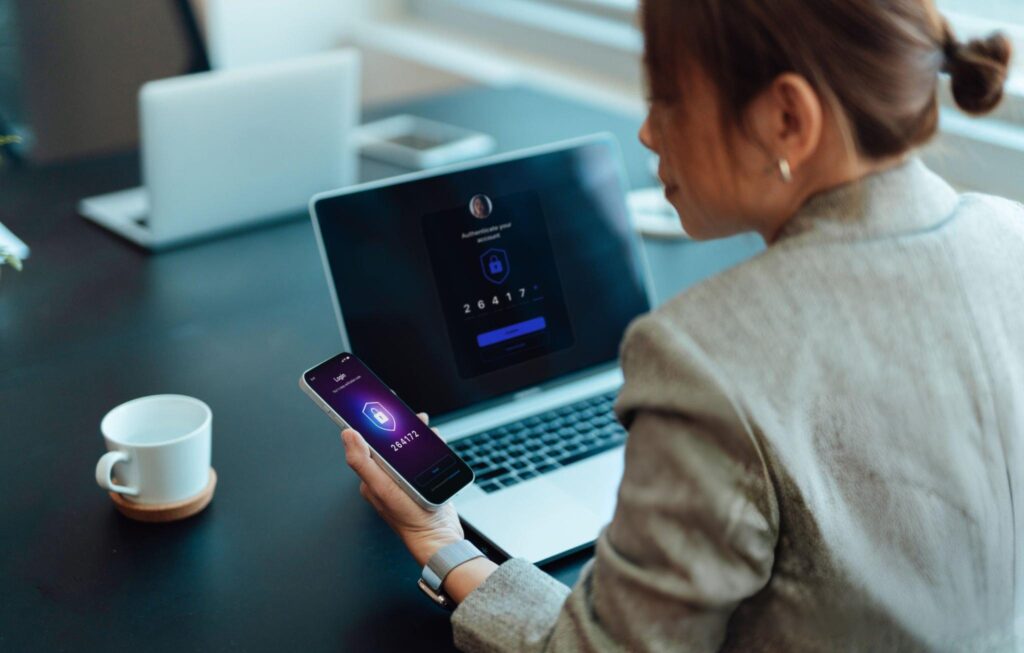
- Multi-factor authentication (MFA)
- Identity verification
- Encrypted connections
- Secure access gateways
These controls help ensure only authorized users and devices can access business systems.
Businesses implementing modern access controls are also improving Threat Management strategies to strengthen risk visibility and incident response.
Protecting Endpoints
Endpoints are one of the biggest cybersecurity risks in distributed environments.
Every laptop, smartphone, tablet, and remote workstation creates a potential entry point for attackers.
Edge security strengthens endpoint protection by continuously monitoring devices for:
- Malware infections
- Unauthorized access
- Suspicious activity
- Unpatched vulnerabilities
- Abnormal behavior
Modern edge security platforms can also isolate compromised devices automatically before threats spread across the organization.
Organizations improving endpoint resilience are also leveraging AI Enhancements to improve intelligent threat detection and automation.
Improving Cloud Security
Cloud adoption continues growing rapidly across Fort Myers businesses.
Organizations rely on cloud platforms for:
- File storage
- Collaboration
- Customer management
- Communication
- Business applications
- Data analytics
However, cloud environments require a different security approach than traditional networks.
Edge security solutions help protect cloud environments by:
- Monitoring cloud traffic
- Enforcing access policies
- Detecting unusual behavior
- Securing SaaS applications
- Preventing unauthorized data sharing
This improves visibility and control across cloud-based operations.
Businesses modernizing cloud infrastructure are also following Cloud Migration best practices to improve security and scalability.
Supporting Zero Trust Security Models
Zero trust has become one of the most important cybersecurity strategies in modern business environments.
The core principle of zero trust is simple:
Never automatically trust users or devices even inside the network.
Edge security supports zero trust by continuously verifying:
- User identity
- Device health
- Access permissions
- Behavioral activity
- Connection security
This approach significantly reduces the risk of unauthorized access and lateral movement during cyberattacks.
Businesses adopting advanced security frameworks are also implementing stronger AI Policy strategies to improve governance and technology security.
Reducing Network Complexity
Traditional security models often route remote traffic through centralized office infrastructure.
This creates:
- Performance bottlenecks
- Increased latency
- Management complexity
- Scalability challenges
Edge security solutions distribute security closer to users and applications, improving both performance and operational efficiency.
This is especially important for businesses supporting large remote or hybrid workforces.

Why Businesses in Fort Myers Are Investing in Edge Security
Businesses across Southwest Florida are becoming increasingly digital and distributed.
Industries such as:
- Healthcare
- Construction
- Legal services
- Financial services
- Retail
- Hospitality
- Professional services
now rely heavily on remote connectivity and cloud platforms.
For example:
- Construction teams access systems from job sites
- Healthcare staff use cloud-based patient systems
- Remote employees collaborate through SaaS platforms
- Retail businesses process online transactions continuously
As these environments expand, businesses need cybersecurity solutions capable of protecting users regardless of location.
Edge security provides that flexibility.
Organizations improving digital infrastructure are also prioritizing Digital Transformation to support scalable business operations.
Cyber Threats Are Becoming More Sophisticated
Modern cyberattacks move quickly and often target distributed workforces directly.
Businesses now face threats such as:
- AI-generated phishing emails
- Credential theft
- Ransomware attacks
- Session hijacking
- Cloud account compromise
- Endpoint malware
- Business email compromise
Attackers increasingly target remote workers because they may connect through less secure environments.
Edge security helps businesses detect and contain these threats earlier through continuous monitoring and distributed protection.
Businesses improving cybersecurity intelligence are also adopting Multimodal AI technologies to improve operational visibility and automation.
The Role of AI in Edge Security
Artificial intelligence is becoming a major component of modern edge security platforms.
AI-powered systems help businesses:
- Detect abnormal user behavior
- Identify suspicious access patterns
- Analyze network traffic in real time
- Prioritize security alerts
- Automate threat response
- Reduce false positives
AI improves the speed and accuracy of security operations across distributed environments.
For example, if an employee account suddenly logs in from multiple geographic locations within minutes, AI systems can flag or block the activity immediately.
Why Edge Security Improves Business Performance
Edge security is not only about cybersecurity.
It also improves operational performance.
By distributing security closer to users and applications, businesses often experience:
- Faster connectivity
- Lower latency
- Improved cloud application performance
- Better remote user experience
- Reduced network congestion
Employees gain more reliable access to systems without sacrificing security.
Edge Security and SASE
Many businesses implementing edge security are also adopting Secure Access Service Edge (SASE) frameworks.
SASE combines networking and security services into a cloud-based model designed for distributed workforces.
SASE solutions typically include:
- Secure web gateways
- Cloud access security brokers (CASB)
- Zero trust network access (ZTNA)
- SD-WAN technology
- Threat prevention tools
This integrated approach helps businesses simplify security management while improving scalability and remote workforce protection.
Businesses improving cloud operations are also strengthening ERP Integration to support efficient and secure business workflows.
Why Small and Mid-Sized Businesses Need Edge Security
Some organizations assume advanced edge security only applies to large enterprises.
That is no longer true.
Small and mid-sized businesses now face many of the same cybersecurity threats as larger organizations.
Attackers often target smaller businesses because they may have:
- Limited security resources
- Inconsistent remote access controls
- Weak endpoint protection
- Limited monitoring capabilities
Edge security solutions are becoming increasingly accessible for smaller organizations and provide important protection without requiring large internal security teams.
Businesses improving cybersecurity readiness are also strengthening IT Basics knowledge to support smarter technology decisions.
The Business Benefits of Edge Security
Businesses implementing edge security solutions gain several major advantages.
Stronger Cybersecurity Protection
Continuous monitoring and distributed controls reduce exposure to modern cyber threats.
Better Remote Workforce Support
Employees can work securely from virtually any location.
Improved Cloud Security
Businesses gain stronger visibility and protection across cloud environments.
Reduced Downtime Risks
Faster threat detection helps minimize operational disruption.
Enhanced Scalability
Edge security supports business growth without overloading centralized infrastructure.
Improved User Experience
Distributed security models improve application performance and remote connectivity.
Organizations strengthening data protection are also improving GDPR Compliance to better support compliance and customer trust.
Why Strategic IT Partnerships Matter
Successfully implementing edge security requires careful planning, monitoring, and ongoing management.
Businesses increasingly partner with managed IT and cybersecurity providers to strengthen distributed workforce security.
An experienced technology partner can help businesses:
- Assess remote workforce risks
- Implement zero trust strategies
- Secure cloud environments
- Protect endpoints
- Monitor threats continuously
- Improve compliance readiness
- Optimize remote access infrastructure
This proactive approach helps businesses maintain both security and operational efficiency.
Why Businesses Trust CMIT Solutions of Fort Myers South
Modern businesses need cybersecurity strategies built for today’s distributed work environments.
CMIT Solutions of Fort Myers South helps organizations strengthen remote workforce protection through proactive IT and cybersecurity solutions designed for modern digital operations.
Their services focus on:
- Managed cybersecurity
- Endpoint protection
- Cloud security
- Zero trust security strategies
- Remote workforce support
- Continuous monitoring
- Business continuity planning
- Network optimization
By combining advanced security technologies with proactive support, businesses can better protect employees, data, and operations in increasingly distributed environments.
The Future of Edge Security
Edge security will continue growing rapidly over the next several years.
As businesses become more cloud-driven and decentralized, security must evolve alongside them.
Future edge security strategies will increasingly rely on:
- AI-driven threat detection
- Zero trust architecture
- SASE frameworks
- Real-time analytics
- Automated incident response
- Identity-centric security
- Distributed cloud protection
Businesses that adopt modern edge security strategies early will be better prepared for future cybersecurity challenges.
Conclusion
The modern workforce is more distributed than ever before.
Employees now work across multiple locations, devices, and cloud platforms creating new cybersecurity challenges that traditional security models were never designed to handle.
That is why edge security solutions are becoming essential for businesses across Fort Myers and Southwest Florida.
By protecting users, devices, applications, and data closer to where work actually happens, edge security helps organizations strengthen cybersecurity while supporting flexibility, scalability, and productivity.
Businesses that invest in edge security can:
- Improve remote workforce protection
- Strengthen cloud security
- Reduce cyber risk
- Improve operational performance
- Support zero trust initiatives
- Enhance business continuity
At CMIT Solutions of Fort Myers South, businesses gain access to proactive cybersecurity and IT solutions designed to protect modern distributed workforces in an increasingly digital world.
Ready to strengthen your remote workforce security strategy? Visit CMIT Solutions of Fort Myers South or connect through Contact Us to learn how edge security solutions can help protect your business, employees, and operations in 2026 and beyond.