Open your inbox this morning and you probably scanned past a dozen messages without a second thought. A vendor invoice. A shipping notice. A message from your bank about unusual activity. Maybe even one from your own CEO asking you to handle something quickly. Two years ago, spotting a scam in that pile was easier. Bad grammar, mismatched logos, a sender address that looked slightly off. Today, those tells are mostly gone, and what has replaced them is far harder to catch with the naked eye.
Email remains the single most common entry point for cyberattacks against small and midsize businesses, and that has not changed. What has changed is everything about how those attacks are built, delivered, and disguised. Artificial intelligence, automation, and a booming underground economy of ready-made attack kits have turned email threats into something closer to a professional service industry than a scattered collection of scammers. For Southwest Florida business owners, understanding this shift is no longer optional. It is the difference between staying protected and becoming the next headline.
This article breaks down exactly how inbox threats have evolved, why older defenses are failing, and what a modern, layered approach to email security actually looks like for a growing business. A single successful email attack can interrupt operations for days, which is exactly why business continuity planning has become such a central part of modern IT strategy rather than an afterthought reserved for hurricanes or hardware failures.
Why Your Inbox Is a Bigger Target Than Ever
Every business, regardless of size, runs on email. Contracts get signed over it, payments get authorized through it, and sensitive client data moves through it daily. That makes it the most attractive door into your organization, and attackers know it.
A few forces have converged to make inbox threats more dangerous right now:
- Generative AI tools can write flawless, context-aware phishing messages in seconds
- Stolen credentials and corporate data are cheaply available on underground marketplaces
- Remote and hybrid work has expanded the number of devices and networks touching company email
- Multi-factor authentication, while helpful, has created new attack methods designed specifically to defeat it
- Attackers increasingly research their targets on LinkedIn and company websites before striking
None of these factors existed at this scale two years ago. Together, they explain why email threats have quietly transformed from a nuisance into one of the most serious risks a business faces.
AI Generated Phishing Has Erased the Old Warning Signs
For years, businesses trained employees to look for obvious red flags: awkward phrasing, spelling mistakes, generic greetings. That training is now outdated. Large language models allow attackers to generate messages that mimic a company’s actual tone, reference real projects, and even personalize content using information scraped from social media or breached data sets.
These messages often arrive with none of the old tells. The grammar is clean. The formatting matches internal templates. Some attackers now use AI to translate phishing kits into multiple languages instantly, expanding their reach far beyond what a single scammer could produce manually. This is a major reason why organizations are shifting from static spam filters toward layered cybersecurity defense that inspects behavior and context, not just keywords.
Because these messages are harder to identify visually, businesses need protection that analyzes sender reputation, domain history, and behavioral patterns rather than relying on employees to catch every fake by eye.
Deepfake Voice and Video Are Now Part of the Email Attack Chain
Perhaps the most unsettling shift is how email threats now combine with synthetic audio and video. A phishing email might arrive first, followed by a phone call using a cloned voice of an executive confirming the request. Some attackers have even used short deepfake video clips sent through email links to add legitimacy to urgent wire transfer requests.
This tactic works because it exploits trust built over years of hearing a colleague’s actual voice. Traditional email filters cannot detect this kind of layered social engineering because the malicious payload is not always in the email itself. It is in the follow up call or video that the email sets up. Businesses need email threat protection paired with clear internal verification policies for any financial request, regardless of how convincing the follow up communication sounds. This kind of layered social engineering is exactly why more companies are studying identity access controls as part of their broader defense planning.
QR Code Phishing Has Quietly Bypassed Traditional Filters
QR code phishing, sometimes called quishing, has grown rapidly because it sidesteps a major weakness in legacy filtering technology. Most email security tools scan links and attachments for malicious signatures, but a QR code embedded as an image often slips past that scanning entirely.
The scam typically works like this:
- An email arrives disguised as a shipping notice, invoice, or IT department alert
- Instead of a clickable link, it contains a QR code asking the recipient to scan it with their phone
- Scanning routes the employee to a fake login page designed to steal credentials
- Because the scan happens on a personal device, it often bypasses corporate network protections entirely
This tactic has become popular precisely because it moves the attack off the monitored corporate network and onto an employee’s phone, where cloud based protection and endpoint monitoring may not extend. Businesses evaluating their current defenses should ask whether their filtering technology can even see inside image based threats like this, especially as more companies adopt cloud security posture tools to close these visibility gaps.
Business Email Compromise Has Grown More Patient and More Costly
Business email compromise, or BEC, is not new, but the sophistication behind it has changed dramatically. Older BEC attacks were often rushed and clumsy. Today’s versions involve weeks of quiet reconnaissance before a single fraudulent email is sent.
Attackers now:
- Monitor a compromised or spoofed mailbox for weeks, learning communication patterns
- Time fraudulent payment requests around real invoice cycles or known travel schedules
- Insert themselves into ongoing email threads rather than starting new conversations
- Use compromised vendor accounts to make requests appear to come from a trusted third party
This patience pays off. Because the fraudulent request fits naturally into an existing conversation, it rarely raises suspicion. This is one reason strict approval workflows for financial transactions have become essential rather than optional. A verbal confirmation process for any changed payment details can stop even a highly convincing BEC attempt before money moves.
MFA Fatigue and Session Hijacking Are the New Credential Theft
Multi-factor authentication was supposed to solve the password problem, and it has helped significantly. But attackers adapted quickly with two techniques that specifically target MFA.
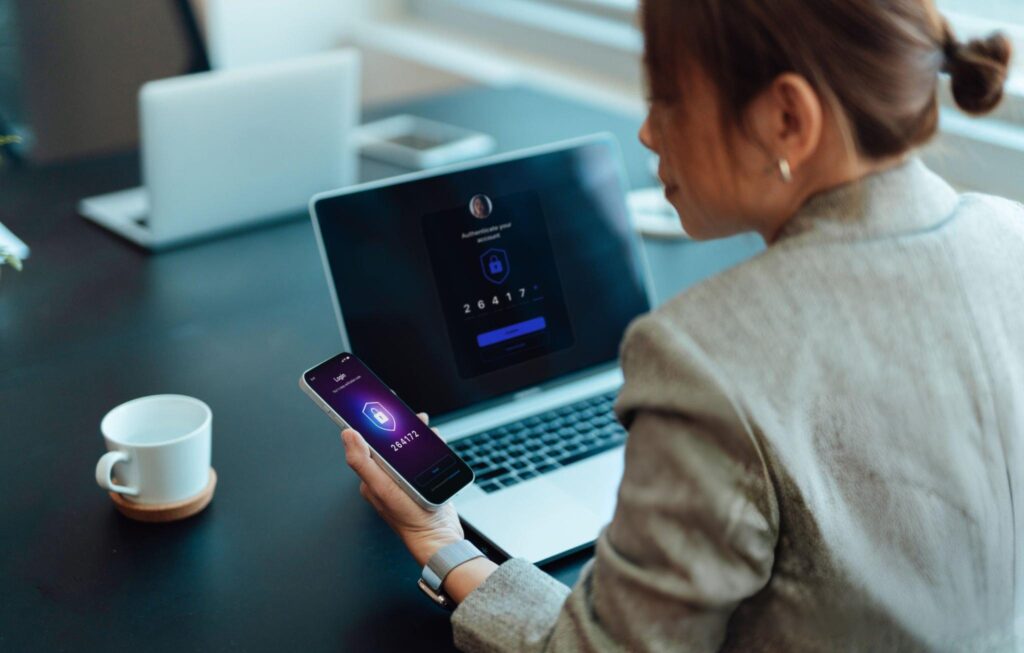
MFA fatigue floods a user’s phone with repeated authentication push notifications, hoping the employee eventually taps approve just to make the notifications stop. It relies entirely on human exhaustion rather than any technical flaw.
Session hijacking, sometimes called token theft, is more dangerous because it skips the login process entirely. Attackers steal an active session token, often through a malicious link, and use it to access accounts without needing a password or MFA code at all.
Both techniques highlight why real time monitoring of login behavior matters as much as the authentication method itself. A login attempt from an unusual location, an unfamiliar device, or an odd time of day should trigger an alert, not sit unnoticed in a log file. Pairing strategic IT guidance with continuous monitoring tools gives businesses a much better chance of catching these attacks before damage is done.
Supply Chain and Vendor Email Compromise Are Expanding the Attack Surface
Attackers have realized that breaching a well protected company directly is often harder than breaching one of its less protected vendors. Once inside a vendor’s email system, attackers can send convincing, legitimate looking messages to every one of that vendor’s clients.
This is particularly dangerous because:
- The sending domain is genuinely real, not spoofed
- Prior email history between the two companies makes the message look consistent
- Invoice formats and payment details can be altered convincingly since the attacker has access to real templates
Protecting against this requires more than watching your own systems. It means building network security monitoring and vendor risk practices into your broader IT strategy, including verifying any changed payment instructions through a separate communication channel before processing them.
Ransomware Still Starts With a Click
Despite years of awareness campaigns, ransomware overwhelmingly still begins with a single email. What has changed is the speed and precision of the attack once that click happens. Modern ransomware groups often gain access, quietly map out a network, locate backups, and disable them before ever triggering an encryption event that the victim notices.
This is why reliable data backup planning has to assume backups themselves could be targeted. Immutable backup copies, offsite storage, and regular restoration testing have become baseline requirements rather than nice to have extras. A business that discovers its backups were quietly corrupted weeks before an attack is in a far worse position than one with tested, isolated recovery systems in place.
Cyber recovery strategy has become its own discipline separate from traditional disaster recovery, specifically because ransomware groups now target the recovery process itself as part of the attack.
Why Traditional Spam Filters Are No Longer Enough
Legacy spam filters were built to catch known bad senders, obvious malicious links, and suspicious attachments. That model made sense when threats were mass produced and largely unchanged from one campaign to the next. Today’s threats are often unique, generated on the fly, and designed specifically to avoid pattern matching.
A modern approach requires:
- Behavioral analysis that flags unusual sending patterns, not just known bad senders
- Domain authentication protocols that verify a message actually came from where it claims
- Sandboxing technology that opens attachments in an isolated environment before delivery
- Continuous threat intelligence updates rather than periodic signature updates
Businesses relying solely on the spam filter built into their email platform are often operating with significant blind spots. Layered protection built around proactive network management and continuous monitoring closes gaps that a single filter simply cannot cover alone.

The Human Element Still Matters, But Training Has to Evolve Too
Technology alone cannot solve this problem. Employees remain both the biggest vulnerability and the strongest line of defense, depending on how well they are prepared. But training built around spotting typos and bad logos is no longer sufficient.
Effective training today should include:
- Regular simulated phishing tests that reflect current AI generated tactics, not outdated templates
- Clear, simple reporting processes so employees flag suspicious messages without hesitation
- Specific guidance on verifying financial requests through a second communication channel
- Awareness of QR code and deepfake based scams, not just traditional link phishing
Training works best when it is ongoing rather than a once a year checkbox exercise. Combining consistent education with responsive IT support ensures employees have somewhere to turn the moment something feels off, rather than guessing or ignoring a suspicious message out of uncertainty.
Sensitive Data in Email Needs Its Own Governance Rules
Email is often treated as a simple communication tool, but for most businesses it also functions as an uncontrolled storage system for sensitive files, client records, and financial details. Attachments sent years ago often still sit in inboxes, forgotten but fully accessible if an account is ever compromised.
A few practices help close this gap:
- Setting retention limits so sensitive attachments do not linger indefinitely
- Encrypting messages that contain financial or personal client information
- Restricting bulk export or forwarding of large attachment volumes
- Classifying data so the most sensitive information gets the strictest handling rules
Strong data governance practices reduce the blast radius of any single compromised mailbox, since an attacker gaining access to one account should not automatically mean access to years of sensitive files.
Remote and Distributed Teams Face Extra Exposure
Hybrid and fully remote work arrangements have added complexity to email security that many businesses have not fully addressed. An employee checking email from a coffee shop, a home office, or a personal phone introduces variables that a traditional office network never had to account for.
Common gaps include:
- Personal devices without the same endpoint protection as company hardware
- Home networks with weaker router security than a business environment
- Public Wi-Fi connections that expose login credentials to interception
- Inconsistent patching schedules on devices IT does not directly manage
Extending protection to these edges of the network, rather than assuming the office perimeter is the only boundary that matters, has become essential. Distributed workforce protection strategies address exactly this kind of exposure by pushing security controls out to wherever employees are actually working.
Automation Is Helping Teams Keep Pace With Attack Volume
Security teams, especially at smaller businesses, are consistently outnumbered by the sheer volume of threats arriving daily. Manually reviewing every flagged email or login alert simply is not realistic once a business grows past a handful of employees.
This is where automation has started to close the gap. Automated systems can triage alerts, isolate suspicious attachments in a sandbox, and even quarantine a compromised account within seconds of detecting unusual behavior, far faster than a human analyst could respond manually. Workflow automation tools are increasingly being applied to security operations specifically because speed matters so much once an account is compromised.
Planning Ahead Prevents Reactive, Expensive Decisions
Businesses that only think about email security after an incident tend to spend more, recover slower, and make rushed decisions under pressure. A more effective approach treats security as part of ongoing, long term planning rather than a reaction to whatever the most recent headline happened to be.
This kind of planning typically involves:
- Budgeting for security improvements annually rather than only after an incident
- Revisiting policies as the business grows and adds new tools or staff
- Setting measurable goals for training completion and simulated test results
- Reviewing vendor and partner access on a regular schedule, not just at onboarding

Compliance Pressure Is Rising Alongside the Threat
For businesses in healthcare, finance, legal services, and several other regulated industries, email security is no longer just a operational concern. It is a compliance requirement. Regulations increasingly expect documented proof of email protection measures, incident response plans, and employee training records.
Falling short here creates two layers of risk: the direct cost of a breach and the additional penalties or liability tied to non-compliance. Working with a partner that understands regulatory compliance support relevant to your sector helps ensure your email protections satisfy both security needs and regulatory expectations at the same time.
Unified Communications Adds New Angles for Attackers
As businesses shift more communication into chat platforms, video conferencing, and integrated messaging tools, attackers have followed. A unified communications platform that connects email, chat, and voice can be a huge productivity win, but it also means a compromised account can spread further than email alone.
Attackers have been known to move from a compromised email account into connected chat tools, sending malicious links through channels employees trust even more than email. Securing this properly means thinking about identity and access across every connected communication tool, not treating email as an isolated system.
Productivity Platforms Have Become a Favorite Disguise
Fake login pages mimicking Microsoft 365, Google Workspace, and other productivity suites remain one of the most common phishing destinations. These pages are often pixel-perfect copies of real login screens, making productivity application security a critical piece of any email defense strategy.
Key protections worth reviewing include:
- Conditional access policies that block logins from unexpected countries or devices
- Alerts for newly created mailbox forwarding rules, a common sign of a compromised account
- Regular audits of connected third party apps that have access to company email and files
Attackers often use compromised productivity accounts as a launchpad for further attacks inside the organization, making these accounts far more valuable than a single stolen password might suggest.
Building a Layered Defense That Actually Keeps Up
No single tool stops every threat described above. Effective protection today comes from layering multiple defenses so that if one fails, another catches the attack before real damage occurs.
A well rounded approach generally includes:
- Advanced email filtering built on behavioral analysis rather than static rules
- Network security monitoring to track traffic patterns and catch anomalies early
- Outsourced IT management that keeps every layer patched, monitored, and updated consistently
- Disaster recovery planning with tested, isolated recovery copies
- Ongoing employee training paired with simulated phishing exercises
- Documented incident response procedures everyone on staff understands
Businesses that treat these as connected pieces of one strategy, rather than separate purchases, end up far more resilient than those buying individual tools in isolation.
Choosing the Right Tools Without Overspending
Not every business needs the exact same stack of security tools, and buying more technology is not automatically the answer. Smart IT procurement means matching protection to actual risk, industry requirements, and company size rather than chasing every new product on the market.
A thoughtful evaluation process typically weighs:
- Which threats are most likely given your industry and client data types
- Whether existing tools are being used to their full capability before adding new ones
- How well new tools integrate with what your team already uses daily
- The total cost of ownership, including training time, not just the license price
This kind of measured approach avoids both underinvestment and wasted spending on overlapping tools that create complexity without meaningfully reducing risk.
Why Local Expertise Matters for Fort Myers Businesses
Southwest Florida businesses face some specific considerations that a generic, one-size-fits-all security package often misses. Hurricane season adds urgency to disaster recovery planning that businesses in other regions may not prioritize as heavily. A growing local economy means more businesses are scaling quickly, often faster than their internal IT capabilities can keep pace with.
A locally based IT team familiar with the local business landscape can tailor recommendations around these realities, rather than applying generic national templates that ignore regional risk factors like storm related outages or seasonal business fluctuations tied to tourism and snowbird populations.
How a Managed Partner Changes the Equation
Handling all of this internally is a significant burden for a small or midsize business, especially without a dedicated security team. This is where working with an experienced partner changes the outlook substantially.
CMIT Solutions Fort Myers South works with local businesses to build layered protection around real world threats like the ones outlined above, combining monitoring, filtering, employee training, and rapid response into a single coordinated strategy rather than a patchwork of disconnected tools. Instead of reacting after a breach occurs, the goal is catching suspicious activity early and closing gaps before attackers find them.
Businesses considering an upgrade to their current protections often benefit from starting with a straightforward conversation about where their biggest exposures actually sit. You can request a quote or connect with our team to talk through your current setup and identify practical next steps.
Practical Steps You Can Take This Week
Improving email security does not require an overnight overhaul. A few immediate steps can meaningfully reduce risk while a longer-term strategy is developed:
- Review and tighten mailbox forwarding rule permissions across your organization
- Confirm backups are tested regularly and stored in a way ransomware cannot reach
- Establish a mandatory verbal confirmation step for any changed payment details
- Audit which third party apps currently have access to your email environment
- Schedule a simulated phishing test to gauge current employee awareness levels
None of these steps require major budget, but each closes a door attackers commonly walk through.
Looking Ahead: What the Next Two Years Likely Bring
If the last two years are any indication, inbox threats will continue evolving faster than most internal IT teams can track without dedicated support. AI generated attacks will grow more convincing, deepfake integration will become more common rather than rare, and attackers will keep finding creative ways around whatever defenses become standard. Businesses that build flexible, layered protection now, paired with predictive IT support that adapts as threats change, will be far better positioned than those waiting to react after an incident occurs.
Email is not going away as a business tool, and neither is its role as the top entry point for attacks. The businesses that thrive through this shift will be the ones that treat email security as an ongoing, evolving priority rather than a one-time setup.
Frequently Asked Questions
- Why do phishing emails look so much more convincing now than they did a few years ago?
Attackers increasingly use AI writing tools that eliminate the grammar mistakes and awkward phrasing that used to make scams easy to spot, and they often personalize messages using publicly available information. - What is quishing, and why is it harder to detect?
Quishing refers to phishing attacks delivered through QR codes rather than clickable links. Because the malicious destination is hidden inside an image, many traditional filters fail to scan it the way they would a standard link. - How does business email compromise differ from regular phishing?
Business email compromise typically targets a specific employee or department after weeks of research, often impersonating an executive or vendor to request a fraudulent payment rather than casting a wide, generic net. - Can multi-factor authentication still be bypassed?
Yes. Techniques like MFA fatigue and session token theft are specifically designed to get around multi-factor authentication without needing the actual password or code. - What is MFA fatigue?
It is a tactic where attackers repeatedly trigger authentication prompts on a user’s device, hoping the person eventually approves one out of frustration or confusion. - Are deepfakes really being used in business scams?
Yes, increasingly so. Cloned voices and short video clips are being paired with phishing emails to add credibility to urgent requests like wire transfers. - Why do standard spam filters miss so many modern threats?
Most built-in spam filters rely on recognizing known bad senders or signatures. Since many current attacks are freshly generated and unique, they often slip past filters built for older, repetitive threats. - What should employees do if they suspect a phishing email?
Report it immediately through the company’s designated process rather than clicking, replying, or forwarding it, and avoid interacting with any links or attachments in the message. - How often should phishing simulation training happen?
Ongoing, regular testing throughout the year tends to be far more effective than a single annual session, especially since attack tactics change frequently. - What makes vendor email compromise particularly dangerous?
Because the attacker is using a genuine, previously trusted email account, messages often bypass the usual red flags employees are trained to look for. - Does ransomware still primarily start through email?
In most cases, yes. A single click on a malicious link or attachment remains the most common entry point for ransomware infections. - Can ransomware attackers target backup systems too?
Yes, sophisticated attackers often locate and disable backups before triggering encryption, which is why isolated and regularly tested backup copies matter so much. - What industries face the strictest email security compliance requirements?
Healthcare, financial services, and legal industries typically face the most detailed regulatory expectations around email protection, documentation, and incident response. - How can a business tell if its email security tools are actually sufficient?
A professional assessment comparing current protections against known attack patterns, along with simulated testing, is the most reliable way to identify gaps. - Is it worth investing in additional security tools if a spam filter is already in place?
Usually yes. A basic spam filter alone rarely covers behavioral analysis, sandboxing, or domain authentication, all of which address different categories of modern threats. - What role does employee behavior play compared to technology?
Both matter significantly. Even the best technology can be undermined by a rushed employee action, while well trained staff can still be fooled by a highly sophisticated attack without proper technical safeguards in place. - How does hurricane season affect email and data security planning in Southwest Florida?
Storm related outages and disruptions can complicate recovery efforts, making tested, offsite backup and continuity planning especially important for local businesses. - What is the fastest way to reduce email risk without a major budget?
Reviewing mailbox forwarding rules, tightening login policies, and requiring verbal confirmation for payment changes are low-cost steps that meaningfully reduce exposure. - Should small businesses worry about these threats as much as large enterprises?
Often more so. Smaller businesses frequently have fewer internal defenses in place, which makes them attractive, easier targets for the same tactics used against larger organizations. - How can a business get started improving its email security?
Reaching out for a professional review of current protections is typically the most efficient starting point, allowing gaps to be identified and addressed based on actual risk rather than guesswork.