
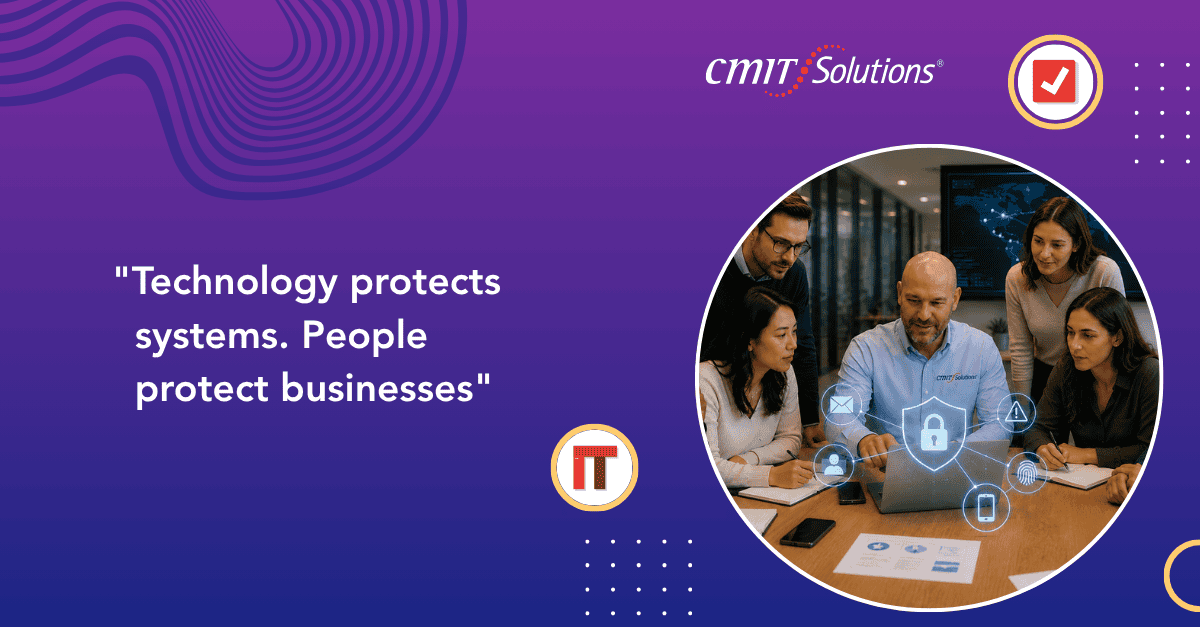
Artificial intelligence is transforming cybersecurity in 2026. Businesses are using AI-powered security tools to automate threat detection, improve network monitoring, and strengthen security operations faster than ever before. At the same time, cybercriminals are also leveraging AI to launch more sophisticated phishing campaigns, impersonation scams, and social engineering attacks that are increasingly difficult to detect.
As technology evolves, many organizations assume advanced cybersecurity software alone is enough to protect their business. However, one reality continues to remain true: employees are still one of the most important factors in cybersecurity.
For businesses across Southeast Wisconsin, cybersecurity is no longer only about installing the latest security tools. It is about building a security-aware workplace where employees understand modern threats, recognize suspicious behavior, and help protect the organization from human-targeted attacks.
The Rise of AI-Driven Cyber Threats
Cyberattacks today are far more advanced than traditional spam emails or basic malware attempts. Artificial intelligence allows cybercriminals to create realistic phishing emails, fake login pages, and even AI-generated voice impersonations that appear highly convincing.
Unlike older attacks that often contained obvious warning signs, modern AI-generated threats are carefully designed to imitate real business communications. Employees may receive emails that appear to come from executives, vendors, clients, or trusted partners with accurate branding, natural language, and realistic urgency.
This shift has made cyberattacks more difficult to identify through technology alone, increasing the importance of human awareness and critical thinking within organizations supported by proactive cyber defense.
Why Employees Continue to Be a Primary Target
Most cyberattacks still rely on human interaction to succeed. Whether it involves clicking a malicious link, downloading an infected attachment, or sharing login credentials, attackers often focus on manipulating people rather than breaking through technical defenses directly.
Employees manage sensitive information, access cloud applications, handle financial transactions, and communicate with customers daily. Because of this, they remain one of the most valuable entry points for cybercriminals.
Businesses across Kenosha, Racine, Burlington, and Lake Geneva are increasingly recognizing that cybersecurity awareness training is essential for reducing these risks and strengthening overall security posture.
Human Error Can Bypass Advanced Security Tools
Modern businesses invest heavily in firewalls, endpoint protection, AI-based threat detection, and cloud security solutions. While these technologies are critical, they cannot eliminate every risk caused by human behavior.
A single employee mistake can still lead to:
- Credential theft
- Financial fraud
- Malware infections
- Data breaches
- Unauthorized system access
Cybersecurity tools are designed to reduce exposure, but employees still make decisions every day that directly impact business security.
This is why organizations are shifting toward a more human-centered cybersecurity strategy that combines technology with continuous employee education and awareness.
Remote and Hybrid Work Have Increased Security Risks
The growth of hybrid and remote work environments has significantly changed how businesses operate. Employees now access business systems from home offices, mobile devices, and cloud platforms outside traditional office networks.
While remote work offers flexibility and productivity benefits, it also introduces new cybersecurity challenges. Employees may unknowingly connect through unsecured Wi-Fi networks, use weak passwords, or access sensitive systems on unmanaged devices.
Businesses across Southeast Wisconsin are increasingly focusing on secure remote work practices, including:
- Multi-factor authentication
- Secure cloud access
- Password management policies
- Device security awareness
- Safe collaboration platform usage
As work environments become more distributed, employee cybersecurity awareness becomes even more important for maintaining strong remote security.

Cybersecurity Awareness Is Becoming an Ongoing Process
In the past, many companies treated cybersecurity training as a once-a-year compliance task. In 2026, businesses are realizing that cybersecurity awareness must be continuous because threats evolve constantly.
Modern cybersecurity awareness programs often include:
- Ongoing phishing simulations
- Real-world attack scenario training
- AI-generated scam awareness
- Password security education
- Secure remote work guidance
- Data protection best practices
Regular training helps employees stay informed about emerging threats and reinforces safer digital habits over time.
Organizations with strong cybersecurity cultures are often able to identify threats earlier and respond more effectively to suspicious activity through proactive risk management.
Building a Security-First Workplace Culture
Cybersecurity is no longer only the responsibility of IT departments. Businesses are increasingly integrating security awareness into everyday operations across all teams and departments.
A strong security culture encourages employees to:
- Verify suspicious communications
- Report unusual activity immediately
- Follow secure password practices
- Protect sensitive customer information
- Think critically before responding to urgent requests
When employees feel involved in cybersecurity efforts, businesses create a more proactive and resilient defense against evolving threats.
This cultural shift is becoming especially important as organizations continue adopting cloud platforms, AI-powered tools, and connected workplace technologies supported by modern digital workplaces.
AI Security Tools Still Require Human Oversight
AI-powered cybersecurity solutions can analyze massive amounts of data, identify unusual behavior patterns, and automate threat detection much faster than traditional systems. However, AI is not perfect.
Businesses still need human oversight to:
- Review alerts
- Validate suspicious activity
- Make judgment-based decisions
- Respond to incidents appropriately
- Identify unusual communication patterns
The most effective cybersecurity strategies combine intelligent automation with informed employees and experienced IT professionals.
Businesses that rely entirely on automation without employee involvement may still remain vulnerable to social engineering and human-targeted attacks despite advanced threat monitoring.

Why Businesses Are Prioritizing Human-Centered Cybersecurity in 2026
As AI-driven cyber threats continue evolving, businesses across Southeast Wisconsin are recognizing that employee awareness is one of the most valuable investments they can make.
Organizations that prioritize cybersecurity awareness often experience:
- Reduced phishing success rates
- Faster threat reporting
- Improved compliance readiness
- Stronger protection for remote workforces
- Better overall operational resilience
Cybersecurity is no longer just about preventing attacks it is about creating a workplace environment where security becomes part of daily business operations supported by proactive business protection.
How CMIT Solutions of Southeast Wisconsin Helps Businesses Strengthen Cybersecurity
CMIT Solutions of Southeast Wisconsin helps businesses combine advanced cybersecurity technologies with proactive employee awareness strategies to reduce modern cyber risks.
From managed cybersecurity services and endpoint protection to phishing prevention and security awareness training, businesses receive customized support designed to strengthen both technical defenses and human readiness.
By helping organizations build stronger security cultures alongside modern IT protection, CMIT Solutions supports long-term cybersecurity resilience for businesses across Southeast Wisconsin through reliable technology support.
Conclusion
Artificial intelligence is reshaping the cyber security landscape, making cyberattacks more advanced, personalized, and difficult to detect than ever before. While AI-powered security tools remain essential, employee awareness continues to play a critical role in protecting businesses from evolving threats.
Organizations across Kenosha, Racine, Burlington, Walworth County, and Lake Geneva are realizing that cybersecurity is not only about technology it is also about people, training, and proactive security culture.
Businesses that combine intelligent security solutions with educated, security-aware employees will be far better prepared to defend against modern cyber threats and maintain long-term operational resilience.
If your business is looking to strengthen cybersecurity awareness, improve employee readiness, and build a more proactive security strategy, CMIT Solutions of Southeast Wisconsin can help you create a safer and more resilient IT environment for the future. To get started, contact our team today.