Introduction: The Need for a Future-Ready IT Roadmap
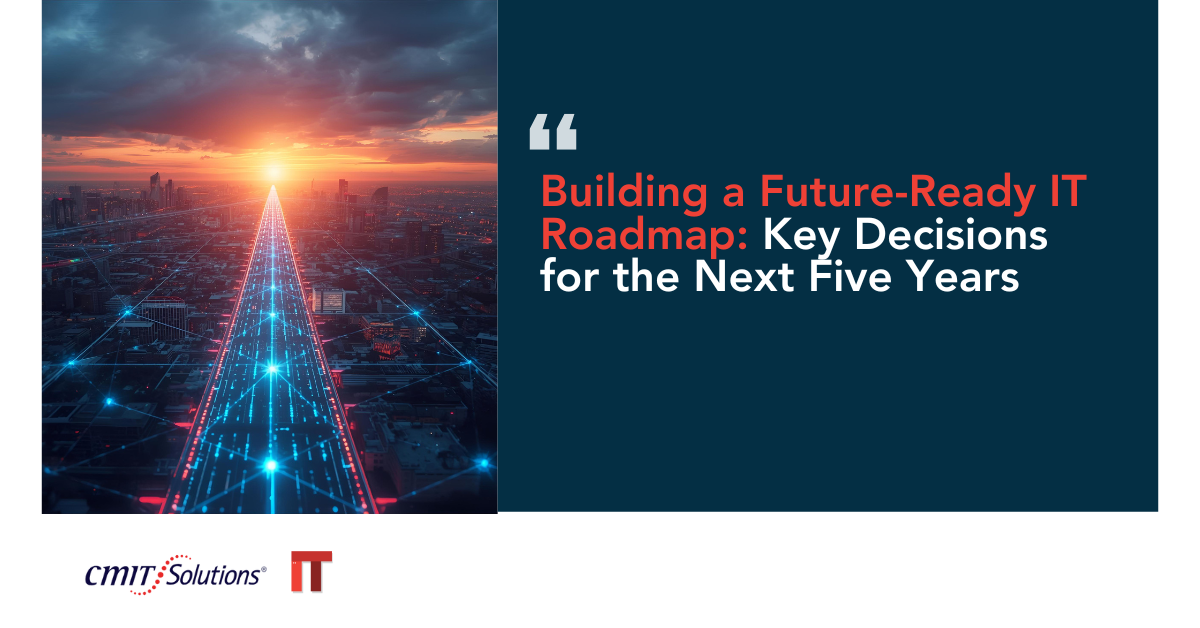
Businesses today face rapid technological change, evolving cybersecurity threats, and increasing regulatory requirements. A future-ready IT roadmap is essential to align technology investments with business goals, optimize operations, and ensure long-term competitiveness.
Small and medium-sized businesses (SMBs) benefit from strategic planning that combines managed IT services, cloud services, and IT guidance to prepare for the next five years.
What Is an IT Roadmap?
An IT roadmap is a strategic plan that outlines technology initiatives, investments, and milestones to support business objectives. Key elements include:
- Current IT assessment: Evaluate existing systems and identify gaps.
- Future technology goals: Define where the business wants to be in 3–5 years.
- Investment priorities: Determine which IT procurement initiatives provide the most value.
- Implementation timeline: Set realistic milestones to adopt new technologies efficiently.
By developing a clear IT roadmap, businesses can reduce unnecessary spending, improve productivity, and prepare for emerging threats.

Why SMBs Need a Strategic IT Roadmap
SMBs often face resource constraints and rapid growth challenges. Without a roadmap:
- IT investments may be reactive, leading to wasted budgets.
- Cybersecurity risks increase without managed IT services and proactive monitoring.
- Compliance gaps may occur, risking fines and reputational damage.
A structured IT roadmap ensures that SMBs are prepared for cloud adoption, cybersecurity challenges, and emerging technologies over the next five years.
Key Decisions for the Next Five Years
1. Cloud Strategy
Migrating to the cloud is no longer optional. Businesses must decide:
- Which workloads will move to the cloud.
- Whether to adopt public, private, or hybrid cloud.
- How to ensure cloud security and compliance during migration.
A well-planned cloud strategy reduces costs, improves scalability, and supports continuous operations.
2. Cybersecurity Investments
Cyber threats are evolving, making cybersecurity compliance a business necessity. Key considerations include:
- Implementing advanced threat protection for endpoints.
- Adopting zero trust security models.
- Ensuring employee awareness through security awareness programs.
Cybersecurity investments protect data, maintain compliance, and reduce downtime costs.
3. Digital Transformation Initiatives
Digital transformation is essential for efficiency and innovation. Organizations should evaluate:
- Automating workflows using cloud tools and productivity applications.
- Leveraging data analytics for strategic decision-making.
- Integrating managed IT services to maintain technology infrastructure.
A digital transformation plan ensures that IT investments align with business growth objectives.
4. IT Infrastructure Modernization
Modernizing IT infrastructure ensures scalability and reliability:
- Upgrade legacy systems to support cloud services.
- Implement network management for reliable operations.
- Adopt virtualization or desktop-as-a-service (DaaS) for flexibility.
This modernization reduces downtime, improves performance, and supports remote work.
5. Workforce Enablement
Employees are central to IT strategy. Decisions include:
- Deploying productivity applications for collaboration.
- Providing IT guidance for secure device use.
- Enabling secure remote access through cloud services.
Empowering the workforce ensures efficiency, engagement, and adherence to security policies.
6. IT Budget and Procurement
Budgeting decisions are critical for long-term IT planning:
- Prioritize investments in IT procurement based on strategic goals.
- Allocate resources for managed IT services and cybersecurity.
- Plan for emerging technologies like AI, IoT, and advanced analytics.
Strategic budgeting ensures ROI and aligns IT initiatives with business growth.

Preparing for Emerging Technologies
Over the next five years, businesses must consider:
- Artificial Intelligence (AI) to optimize workflows and cybersecurity.
- IoT integration for operational insights.
- Cloud-native infrastructure for scalability and resilience.
- Zero trust security and advanced threat protection to mitigate evolving risks.
Future-ready IT roadmaps incorporate these trends to stay competitive and resilient.
Conclusion: Future-Proof Your Business
A future-ready IT roadmap enables SMBs to align technology with business objectives, strengthen cybersecurity, and optimize operations. By leveraging managed IT services, cloud services, and IT guidance, businesses can confidently navigate the next five years of technology evolution.
Investing in strategic decisions now ensures efficiency, compliance, and competitive advantage for the future.