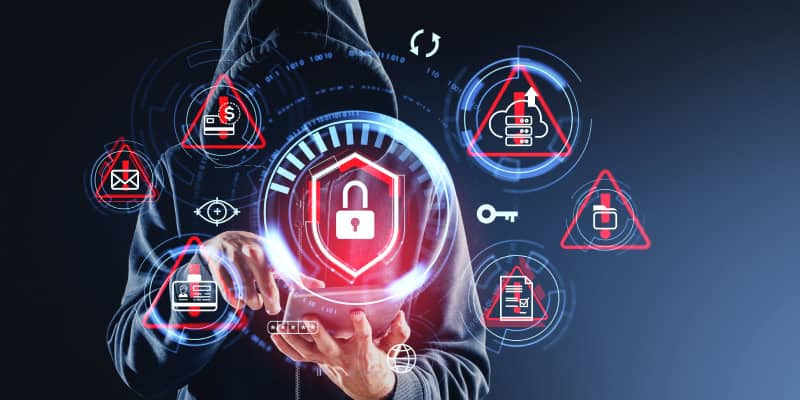
Artificial Intelligence (AI) is no longer merely a tool for innovation — it has also become a dangerous weapon for cybercriminals.
Cybercriminals are now using AI-powered cyber attacks to:
- Automate complex, sophisticated attacks.
- Slip past traditional security systems.
- Dramatically scale the impact of these attacks.
This evolution in threats makes SMBs especially vulnerable, as automation turns them into prime targets for these malicious actors — underscoring the importance of cybersecurity consulting services.
This guide provides a practical roadmap of actionable defensive strategies, starting with a closer look at what makes these attacks fundamentally different from what you’ve seen before.
What is an AI-Powered Cyber Attack?
An AI-powered cyber attack is a threat that uses AI to automate, accelerate, or enhance its effectiveness in various ways, such as:
- Crafting more believable phishing emails
- Discovering system vulnerabilities
- Creating adaptive malware that evades detection
- Conducting large-scale social engineering attacks
These attacks leverage machine learning to evolve and adapt, making them a more significant challenge to cybersecurity than traditional methods.
Let’s take a closer look at how AI changes the nature of these threats.
How AI Transforms Cyber Threats Into Autonomous Weapons
Traditional cyber attacks are static in nature and do not adjust after they are deployed, while an AI-powered cyber attack would be dynamic and adjust to the target defenses.
These sophisticated cyber threats use adaptability and learning capabilities to be able to:
- Learn and adjust their tactics in real time, making them progressively more difficult to detect and stop.
- Combine these features with automation and speed, leading to complex tasks being completed at unprecedented speed and scale, changing the cyber threat landscape. This makes it difficult for existing security tools — and the teams that support those tools — to adjust and respond to these fast-moving, expansive threats.
Furthermore, AI now enables:
- Personalization and customization of attacks using publicly available open-source intelligence, tailored to your business environment through highly targeted and convincing phishing or social engineering campaigns.
These two capabilities contribute to autonomous attacks with minimal human engagement — from the initial reconnaissance to the execution phase — making attacks relentless and efficient.
Ultimately, attackers leverage AI to achieve asymmetry, deploying AI tools that scale faster, adapt quicker, and inflict more damage with less effort — shifting the balance in their favor.
Next, we’ll explore how these intelligent threats are manifesting in the real world.
Also Read: How Can AI Safeguard SMBs in Cybersecurity
Recognizing Today’s Most Dangerous AI-Driven Attacks
At their core, these sophisticated threats are social engineering attacks that use AI to craft messages designed to manipulate your employees:
- For instance, an AI-generated email might mimic a colleague’s writing style or reference a recent project, making it incredibly difficult to spot. These campaigns often target key personnel like finance and HR leaders who have access to critical systems.
The goal? Exploitation of human psychology, tricking staff into sharing sensitive credentials.
Transitioning to another threat, AI-enhanced ransomware uses intelligence to maximize its impact. Instead of encrypting files randomly, it automatically identifies valuable data like financial records or intellectual property. This malware can also mimic legitimate system activity to evade detection.
Another potent threat involves deepfakes — hyper-realistic AI-generated audio or video used for impersonation. In a common scenario, attackers use a cloned voice of a CEO to create false urgency, instructing an employee to make an emergency fund transfer. In some high-profile cases, this method has led to millions in losses.
Understanding these intelligent threat types is the first step — next, let’s explore how SMBs can build stronger, adaptive defenses.
Fortifying Your Technical Defenses for the AI Era
Defeating an AI-assisted cyber attack means using a similar approach; therefore, it is necessary to implement a multi-layered and adaptive security strategy — the “defense-in-depth” approach. This approach requires the construction of security controls, which have multiple layers that work together to give complete protection against changing threats.
Focus on these key measures:
- Go for the AI-powered threat detection systems that instantly assess behavior for anomaly recognition, as legacy signature-based antivirus can no longer keep pace with breaches from polymorphic malware that escapes detection.
- Use contemporary Endpoint Detection and Response (EDR) tools that leverage User and Entity Behavior Analytics (UEBA) and anomaly detection techniques for their operation, thus catching not only the known threats but also revealing the dubious activities that the older systems fail to detect.
- Make it a rule to apply Multi-Factor Authentication (MFA) universally to every company platform. By accepting that any account could become compromised, this model reduces risk and limits the lateral movement of attackers.
- Keep immutable, off-line, and air-gapped backups as your last line of defense. They cannot be tampered with or encrypted by AI-powered ransomware, allowing you to restore operations after the event.
While these technical measures can construct a formidable barrier, technology alone cannot prevent every sophisticated AI-powered cyber attack — human vigilance remains critical.
Next, let’s turn our focus to the practical measures that can strengthen your defenses.
Which of the Following Strategies Can Help Defend Against AI-Powered Attacks?
Since technology by itself is not a total solution, the main thing to do is to reduce the risk of human errors, which continue to be the most common cause of attacks.
- Create a solid “human firewall” as a key part of your defense.
Now, let’s see some impactful and process-based controls that you, as a business leader, can put into practice.
- Implement a strict “Multi-Person and Dual-Channel Verification rule” — no financial transfers or sensitive data releases happen without confirmation from two verified contacts through separate channels.
This simple process is incredibly effective because even the most sophisticated AI-driven social engineering attacks — including convincing deepfakes — cannot replicate dual-channel verification.
- Create and distribute simple “Red Flag Playbooks” tailored for your most targeted teams — such as finance and HR leaders.
These guides should detail department-specific scenarios to watch for, like urgent, out-of-the-ordinary payment instructions or unexpected requests for confidential employee information, which should trigger the verification process.
- Invest in continuous “employee awareness training” that incorporates realistic phishing simulations generated by AI.
This is crucial, as training that focuses on the convincing nature of modern threats makes your staff significantly more likely to recognize and resist AI-crafted phishing attempts and social engineering tactics.
- Work with IT to configure role-based access controls — a process that limits data exposure by ensuring employees can only access the information essential for their roles.
By weaving these human-centric defenses into your daily operations, you build a resilient security culture that powerfully complements your technical safeguards.
Creating Your Proactive and Layered Security Strategy
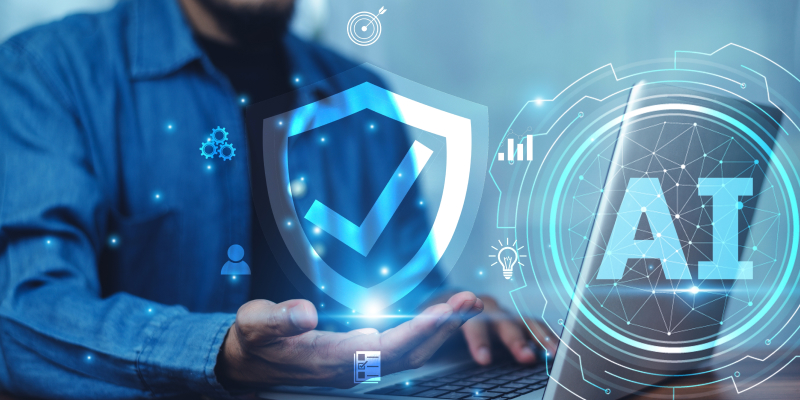
The rise of AI-powered cyber attacks illustrates a fundamental shift in the cyber threat landscape. Hence, embracing a defense-in-depth strategy that integrates AI-powered detection tools with a vigilant human firewall becomes vital. This human-AI collaboration is especially essential for SMBs, as it ensures your defenses evolve as quickly as the threats themselves.
Ready to stay ahead of the evolving cyber risks? At CMIT Solutions of Roanoke and Blacksburg, we offer expert business IT consulting to build robust security strategies. Connect with us today — prioritize eternal vigilance and continuous innovation!