
It’s a new year, and a new technology landscape. For small and medium-sized businesses, staying ahead of these trends will enable growth in an increasingly digital world. At CMIT Solutions of Tribeca, we help businesses navigate these changes with confidence.
To kick the year off right, here are the most critical technology trends to be aware of to shape your business strategy in the coming year.

1. Agentic AI: From Tools to Digital Workers
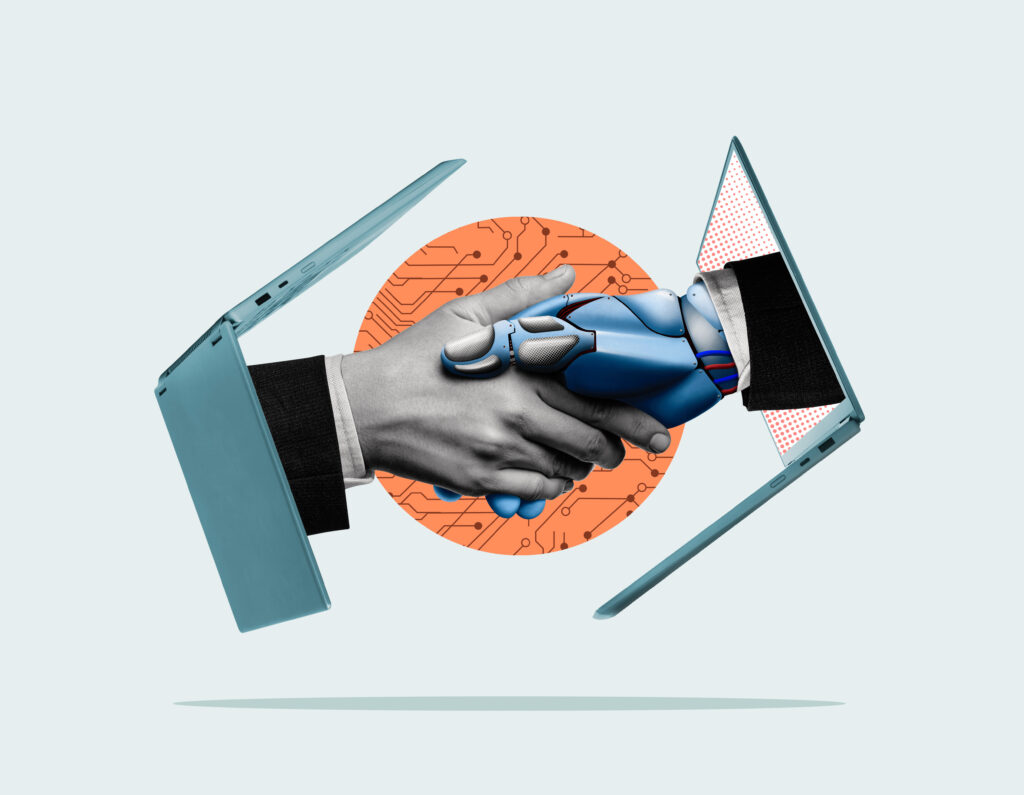
The most significant shift in artificial intelligence this year will be the rise of agentic AI—autonomous systems that can set goals, plan actions, and execute tasks independently. Unlike traditional AI that waits for your input, agentic AI will operate proactively, making decisions based on business context without constant human oversight.
What This Will Mean for Your Business
By the end of 2026, experts predict that 40% of enterprise applications will include task-specific AI agents, transforming how businesses handle everything from customer service to complex workflow orchestration. These won’t be just chatbots—they’ll be intelligent systems that can coordinate across multiple departments, access data, and autonomously execute end-to-end processes.
Think of practical applications like AI agents that will monitor your accounts, identify opportunities, and make recommendations without being asked. Companies will be adopting enterprise-wide AI strategies centered on focused investments in key workflows where AI payoffs can be significant.
Action Steps
- Start with specific, high-value workflows where automation could deliver measurable ROI
- Ensure proper governance and human oversight for autonomous systems
- Consider marketplace solutions for standard business functions before building custom agents

2. Cybersecurity Evolution: AI-Powered Threats and Defenses
The cybersecurity landscape in 2026 will present both unprecedented challenges and opportunities. With more than 70% of Canadian SMBs having experienced a cyber attack in 2024, the sophistication of these attacks will continue to escalate.
The New Threat Landscape
Attackers will use generative models to produce more convincing phishing emails, generate polymorphic malware that mutates to evade detection, and automate reconnaissance of potential victims. The barrier to entry for cybercriminals will drop dramatically, allowing even low-skilled threat actors to launch professional-looking campaigns.
If cybercrime were a nation in 2026, it would be the world’s third-largest economy, behind only the U.S. and China. However, defenders will be fighting back with their own AI-powered tools that automate threat detection, incident response, and vulnerability management.
Essential Security Priorities for 2026
- Implement phishing-resistant authentication: Deploy passkeys or FIDO2 keys for administrators and financial personnel
- Embrace Zero Trust architecture: Move beyond perimeter-based security to continuous verification of users and devices
- Address SaaS sprawl: Gain visibility into all cloud applications and tighten access controls
- Strengthen backup strategies: Ensure backups are tamper-proof and stored separately from production systems
- Plan for quantum threats: Begin inventorying encryption usage and assess post-quantum readiness

3. Multi-Cloud and Edge Computing Maturity
AI will no longer be an optional workload—it will be foundational, requiring a complete rethinking of traditional infrastructure. Businesses will be moving beyond single-cloud deployments to sophisticated multi-cloud strategies that balance performance, cost, and resilience.
Edge computing will accelerate this shift, processing data closer to where it’s generated. This will reduce latency, improve response times, and enable real-time AI applications that weren’t possible before.
Why This Will Matter
For businesses with multiple locations or remote teams, edge computing will deliver AI-driven insights at the point of need—whether that’s a retail location, manufacturing floor, or field service operation. Combined with multi-cloud strategies, organizations will gain flexibility to deploy workloads where they make the most sense operationally and financially.
4. Digital Transformation Through Data-Driven Decision Making
AI-powered decision-making will enable organizations to forecast demand, personalize customer experiences, and identify new revenue opportunities. The businesses that will thrive in 2026 will be those that treat themselves as data companies, regardless of industry.
Practical Applications
Companies will use AI and advanced analytics to analyze behavioral data, trends, and patterns shaping business strategy. This means moving from gut feelings and annual reports to real-time insights that drive agile decision-making.
Netflix demonstrates this approach by using viewer data to inform content creation decisions. Similarly, financial institutions will be leveraging AI-powered insights to deliver hyper-personalized product recommendations that increase customer engagement.
Getting Started
- Identify your most valuable data sources and ensure they’re accessible
- Implement analytics tools that provide actionable insights, not just reports
- Train teams to interpret data and make evidence-based decisions
- Start small with pilot projects that deliver quick wins

5. Zero Trust Security: From Concept to Standard Practice
Businesses will move beyond pilot programs and implement fully measurable, ongoing Zero Trust initiatives. This shift will mean continuously verifying users and devices, enforcing least-privilege access, and segmenting networks based on risk.
The traditional network perimeter has dissolved due to cloud adoption and remote work. Identity will be the new perimeter—attackers will often log in with stolen credentials rather than exploit technical vulnerabilities.
Implementation Essentials
Zero Trust won’t be a single product but an operational philosophy: never trust, always verify. This will apply to every user, device, application, and data flow, regardless of location.
Key components will include
- Context-based identity and access management
- Micro-segmentation of critical applications and sensitive data
- Automated access revocation when risk levels change
- Continuous monitoring and verification

6. Platform Engineering and Developer Productivity
By 2026, experts predict that 80% of large software engineering organizations will have dedicated platform engineering teams. These teams will build Internal Developer Platforms that provide developers with centralized, self-service environments for building, testing, and deploying efficiently.
The Business Impact
This trend will matter even if you’re not in the software industry. Modern businesses rely on applications, integrations, and customizations. Platform engineering will accelerate delivery, improve reliability, and let technical teams focus on business value rather than infrastructure complexity.

7. Sustainability and Green Computing
Digital sustainability will be shifting from an ethical consideration to a business requirement. ESG reporting frameworks will require disclosure of digital infrastructure—energy intensity, e-waste policies, and carbon-aware cloud metrics.
Forward-thinking businesses will be making sustainability a design-time input rather than a post-launch justification. This will include optimizing cloud resource usage, selecting energy-efficient infrastructure, and implementing carbon-aware computing practices.

8. Supply Chain Resilience Through Technology
Global sourcing will be shifting from low-friction models to adaptable, diversified, and reliable supply chains for materials and technology. Geopolitical tensions, trade policies, and recent disruptions have forced businesses to rethink supply chain strategies.
Technology will enable this resilience through
- Real-time visibility into supplier networks
- AI-powered risk assessment and scenario planning
- Blockchain for product authenticity and provenance tracking
- Diversified sourcing strategies supported by data analytics
The Path Forward: Strategic Technology Adoption
The technology trends shaping 2026 share a common thread: they’ll be moving from experimental to operational. AI investment has climbed dramatically, with the AI and machine learning investment index rising from -3 to 64, confirming that organizations are committed to increasing their investments.
Your Action Plan
- Assess your current state: Where does your technology stack stand relative to these trends?
- Prioritize based on business impact: Which trends align with your strategic objectives?
- Start with quick wins: Implement changes that will deliver measurable value quickly
- Build governance frameworks: Especially for AI and data-driven initiatives
- Invest in your team: Training and upskilling will be essential for successful adoption
- Partner strategically: Work with trusted technology advisors who understand your business
At CMIT Solutions of Tribeca, we help businesses navigate these technology trends with practical, tailored strategies. We understand that small and medium-sized businesses can’t adopt every trend at once—success will come from focusing on the technologies that deliver the greatest value for their specific situation.
The businesses that will thrive in 2026 and beyond won’t be those with the most technology, but those with the most strategic, integrated, and business-aligned technology. The time to start planning and implementing is now.
Ready to discuss how these trends will apply to your business? Contact CMIT Solutions to Tribeca to schedule a technology assessment and discover which innovations can drive your business forward in 2026.