Passwords have been the foundation of digital security for decades. But today, they’ve also become one of its biggest weaknesses.
From weak credentials to password reuse and phishing attacks, traditional logins are often the easiest way for cybercriminals to gain access to systems and data. As a result, businesses are starting to rethink how authentication should work—and many are moving toward passwordless solutions.
What Does “Passwordless” Actually Mean?
Despite the name, passwordless security doesn’t always mean passwords disappear entirely overnight.
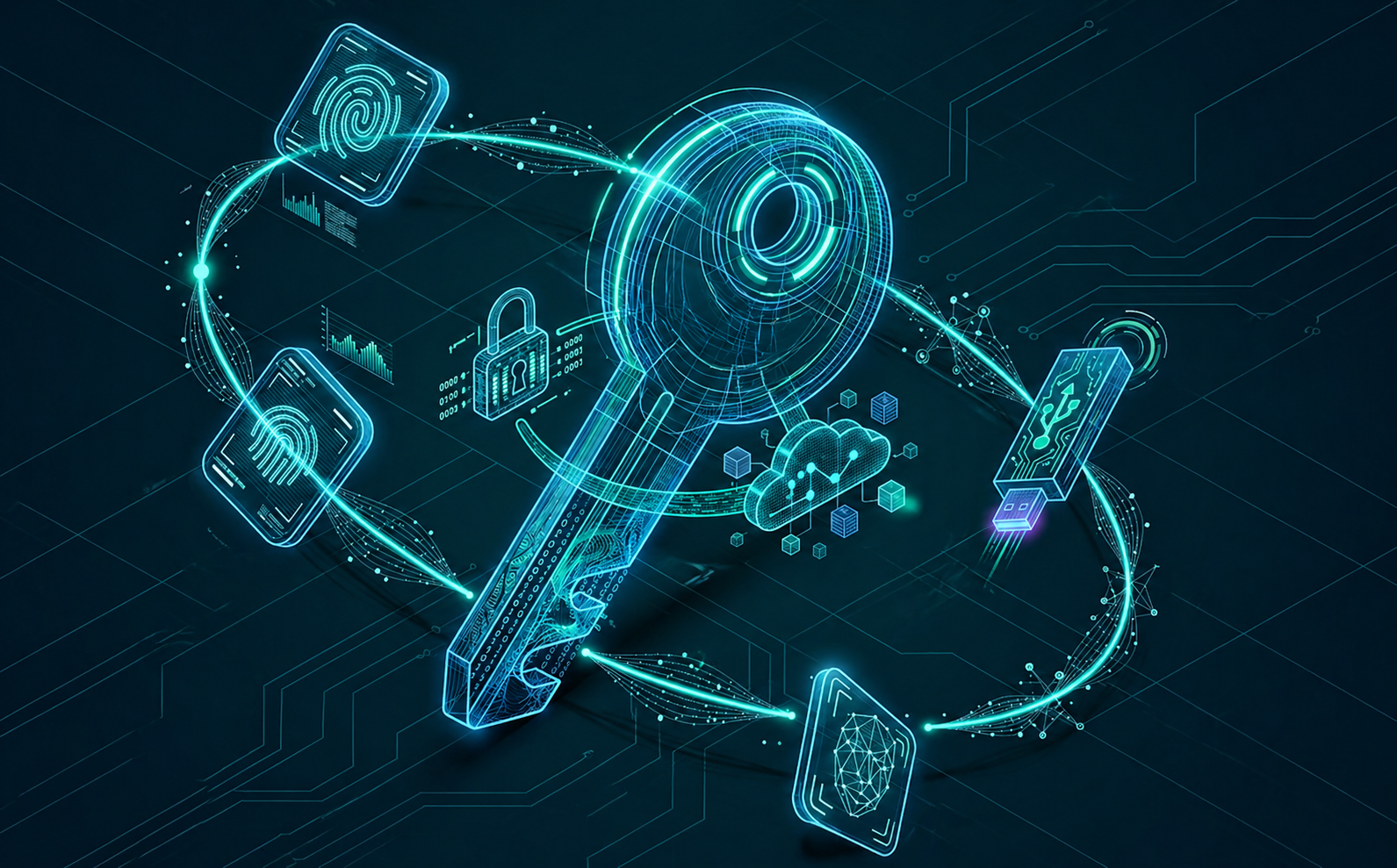
Instead, it means removing the need for users to rely on passwords as the primary way to log in. Rather than typing a password, users can authenticate using:
- Biometrics like fingerprints or facial recognition
- A trusted device
- Secure authentication prompts
The goal is simple: eliminate the risks that come with passwords while making access easier for users.
Why Passwords Are No Longer Enough
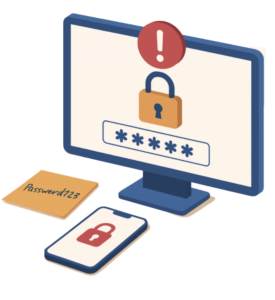
Passwords create friction for users and risk for businesses.
Employees often:
- Reuse passwords across multiple accounts
- Choose weak or easy-to-guess credentials
- Fall victim to phishing emails that steal login information
Even with strong password policies, these issues persist. And once a password is
compromised, attackers can often access systems without triggering immediate alerts.
The Minimum Standard: Multi-Factor Authentication (MFA)
For most businesses today, multi-factor authentication (MFA) should be considered the baseline.
MFA adds an extra layer of protection by requiring something beyond a password. Examples include a code sent to a phone, using an authentication app or a hardware token
This significantly reduces the likelihood of unauthorized access, even if a password is exposed. However, MFA still relies on passwords as a starting point—which means some risk remains.
The Next Step: Passkeys and Passwordless Authentication
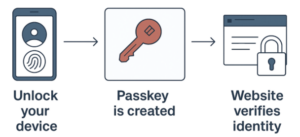
This is where passkeys and passwordless solutions come in. A passkey replaces the password entirely with a more secure, device-based method of authentication.
Instead of creating and remembering a password:
- A secure cryptographic key is generated
- The private portion stays on the user’s device
- The login is approved using biometrics or a device PIN
Because there is no password:
- Nothing can be reused across accounts
- Nothing can be phished or stolen in transit
- Authentication is tied directly to a trusted device
In simple terms, your device verifies it’s you—without ever sharing a secret.
A Better Experience for Users
Security improvements often come at the cost of convenience. Passwordless flips that.
Users can:
- Log in with a fingerprint or face scan
- Avoid password resets and lockouts
- Access systems more quickly and seamlessly
This reduces frustration while also lowering the number of IT support requests related to login issues.
What This Means for SMBs
Many SMBs don’t have large security teams or resources to respond to breaches. Preventing access issues at the source is one of the most effective ways to reduce risk.
Adopting passwordless methods can help strengthen overall security posture, reduce reliance on user behavior and improve efficiency for both employees and IT teams.
Passwords aren’t disappearing overnight, but their role is changing. As more platforms support passkeys and passwordless authentication, businesses have an opportunity to move toward a more secure and user-friendly approach to access.
If you’re evaluating ways to improve access security for your business, we can help you understand what makes the most sense for your environment.
Contact us to learn more about implementing MFA, passkeys, and passwordless solutions.Schedule a free consultation or give us a call at (203) 443-1646 to see how we can support your business.