Engineering firms run one of the most demanding IT environments of any industry. Large file sizes, specialized design software, tight project deadlines, multi-site collaboration, and sensitive intellectual property add up to a technology requirement that generic IT setups almost never meet. When the infrastructure isn’t built for how engineering firms actually work, the consequences show up fast: rendering jobs that time out, files that corrupt mid-transfer, security gaps that expose proprietary designs, and systems that can’t keep pace as the firm wins more contracts and adds more staff.
CMIT Solutions of Austin East works with engineering and technical firms across East Austin, Bastrop, San Marcos, and New Braunfels, and the pattern is consistent: firms that outgrow generic IT lose time, lose bids, and take on risks they never anticipated. Firms that build IT infrastructure around how engineering actually works have a real, measurable edge over competitors who are still improvising.
What Makes Engineering IT Different
Most small businesses run on productivity software, email, and cloud apps with modest processing demands. Engineering firms stack several heavier layers on top of that baseline: CAD and drafting software like AutoCAD, Revit, SolidWorks, or Civil 3D that needs serious processing and GPU power; simulation and analysis tools that can run for hours or days; multi-gigabyte project files that need to move reliably across teams and job sites; and version control where an outdated drawing used on-site creates a costly real-world mistake. Each of these pushes past what a standard business IT setup was ever designed to handle.
Speed Is a Growth Issue, Not Just a Comfort Issue
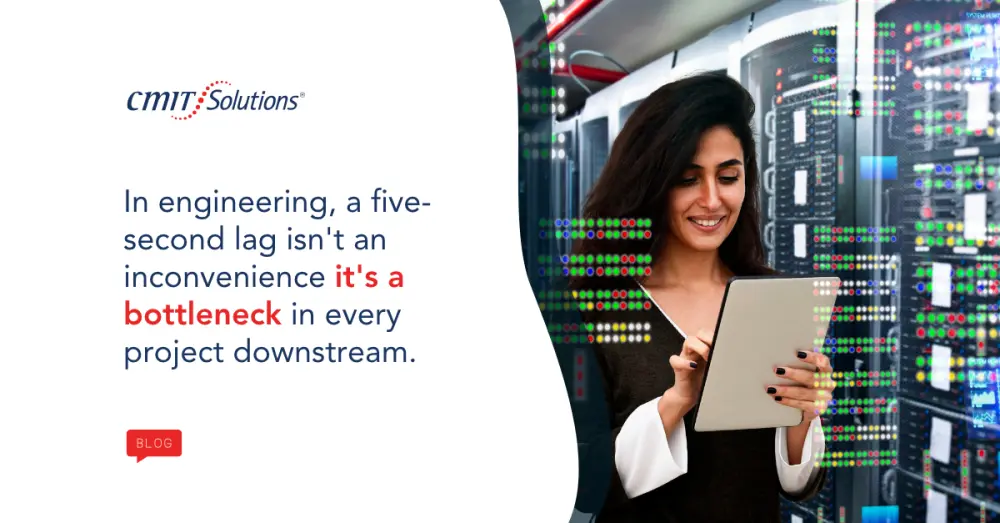
In engineering, time is rarely abstract. Deadlines are tied to permits, client milestones, and bid submissions, and every hour engineers spend waiting on slow technology is an hour not spent winning the next contract.
The most common bottlenecks we see: workstations built for general office use trying to run hardware-intensive CAD software, network infrastructure sized for email traffic instead of multi-gigabyte BIM file transfers, shared storage that can’t handle several engineers editing the same project simultaneously, and long rendering jobs that eat into bandwidth the rest of the team needs during the workday. A firm that fixes these bottlenecks isn’t just more comfortable, it’s able to take on more concurrent projects and hit deadlines that competitors miss.
Security Protects Revenue, Not Just Data
Engineering firms hold intellectual property with direct commercial value: proprietary designs, structural calculations, bid documents, and years of accumulated technical knowledge. Some also work on projects with security-sensitive considerations, from critical infrastructure to government contracts, which makes them a more attractive target than most firms realize.
The risks worth taking seriously: intellectual property theft that hands a competitor years of design work; ransomware targeting large, irreplaceable project archives, which is exactly the kind of pressure attackers look for; loosely managed access for subcontractors and external partners that lingers long after a project ends; unprotected remote connections from job sites, which are among the most common ransomware entry points; and business email compromise targeting project invoices, since large wire transfers make engineering and construction firms a favorite target for this kind of fraud. Our data backup services are built specifically to protect large project archives from the ransomware scenario above, with backups ransomware can’t reach through a compromised network.

Scalability: IT That Grows With the Contracts You Win
Many engineering firms hit a point where the IT setup that worked at ten people starts to visibly hold the business back. Onboarding takes longer than it should because nothing is standardized. Storage runs out right when a big project lands. A promising new client asks a security question nobody can answer confidently, and the deal stalls.
Scalable engineering IT means growth doesn’t require rebuilding everything every few years. That looks like standardized workstation and software setups so a new hire is productive in hours instead of days, centralized file management with real version control so project volume doesn’t multiply the risk of costly errors, and a cloud and network architecture matched to actual file sizes and licensing needs rather than a one-size-fits-all sales pitch. Our network management services and cloud migration services are built around finding that balance for technical workflows specifically, not general office use.
Compliance Increasingly Decides Which Contracts You Can Bid On
Compliance in engineering isn’t as uniformly regulated as healthcare or finance, but it’s far from absent, and it’s becoming a growth lever rather than a back-office concern. Firms pursuing federal or defense work increasingly need to meet Cybersecurity Maturity Model Certification (CMMC) or NIST-based requirements. Firms on critical infrastructure projects may face sector-specific security expectations from clients or regulators. And even private-sector clients now routinely build security requirements into contracts, asking for evidence of data protection, secure file transfer, and access controls before signing. A firm that can answer these questions confidently wins bids that firms who can’t answer them lose. Our compliance support services help engineering firms figure out which frameworks actually apply to their work and build the controls to meet them before a client questionnaire forces the issue.
Growth Across Central Texas Adds Complexity
Engineering firms rarely stay in a single office once they’re growing. Project sites, client locations, and firms expanding from East Austin into Bastrop, San Marcos, or New Braunfels all add complexity that single-location IT was never built to handle. The challenge isn’t just wiring up a new location, it’s keeping the same security standards, the same file access controls, and the same support quality no matter which site an engineer is working from that day. Our Bastrop IT services team supports firms expanding beyond their original Austin footprint for exactly this reason.
Backup and Recovery for Project Data That Can’t Be Recreated
Engineering backup needs are more demanding than most businesses face, for two reasons. The data is larger, with active projects running hundreds of gigabytes and firm archives reaching into the terabytes. And the data is often irreplaceable: a lost or corrupted structural design can’t easily be recreated, and the cost of trying often exceeds the original project fee. A real strategy needs to account for volume, long retention periods driven by professional liability, the ability to restore a specific version of a file from a specific date, and fast recovery, since a disaster recovery plan that takes days doesn’t fit most project timelines.
What This Actually Costs a Growing Firm
The cost of getting engineering IT wrong rarely shows up as one dramatic incident. It accumulates: engineers waiting on slow systems instead of billing hours productively, missed deadlines that strain client relationships, a ransomware attack encrypting years of project archives, a bid lost because a security questionnaire couldn’t be answered with confidence, and a government contract missed entirely because the firm couldn’t demonstrate the required security posture. None of these show up on a balance sheet as “IT costs,” but they show up in revenue.

The People Side Still Matters
Technology alone doesn’t make a firm resilient. Engineers are highly skilled at their discipline, and that skill doesn’t automatically translate into safe computing habits, which attackers count on. The gaps we see most often: engineers using personal cloud accounts to move large files because the firm’s tools are too slow, reused passwords across professional and personal accounts, links clicked in project emails without verifying the sender, and no formal process for cutting off access once a project ends or someone leaves the firm. Fixing this is mostly about making the secure option the easy option. When the approved tools are faster than the workaround, people use them.
What to Ask Before Choosing an IT Partner
Not every managed IT provider has real experience with engineering environments. Worth asking directly: do they have experience supporting CAD, BIM, or simulation software; how do they handle backup for data sets measured in terabytes; have they supported clients with government contract security requirements; and what does their incident response actually look like if a ransomware attack hits a large project archive.
How We Can Help
Our services for engineering and technical firms in Central Texas address performance, security, and scalability together, not as separate add-ons. When you’re ready to talk through your firm’s specific setup, schedule a consultation. Existing clients can reach us through the client support portal.
Frequently Asked Questions