Passwords have been the backbone of digital security for decades but they’re also one of the greatest weaknesses in business IT. From phishing scams to reused credentials, a single stolen password can lead to downtime, financial loss, or a major breach. Passkeys, a passwordless authentication method, promise to change that. For small and midsize businesses (SMBs), understanding and planning for passkeys isn’t just a tech trend it’s a strategic move that strengthens security and supports growth.
This guide explains what passkeys are, how they work, and why business leaders should start preparing for this shift today.
What Are Passkeys?
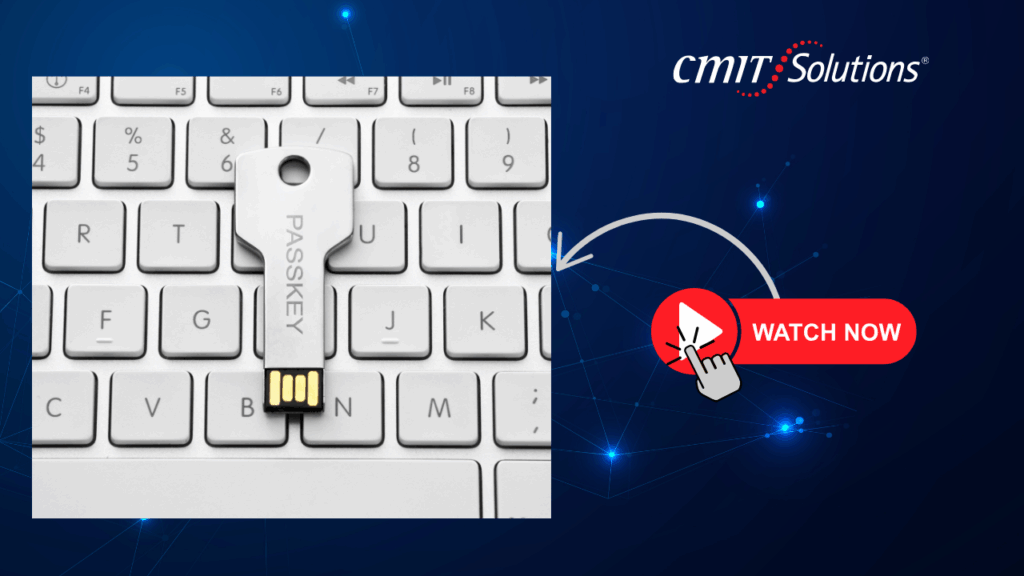
Passkeys are a next-generation login method designed to eliminate passwords entirely. Instead of typing a secret string of characters, users authenticate with cryptographic keys stored securely on their device. A private key stays on the user’s phone or computer, while a public key sits with the service. Login is verified using biometrics like Face ID, fingerprints, or a trusted device without exposing credentials to phishing or brute-force attacks. Because passkeys remove the need to remember or share passwords, they’re easier for employees to use and significantly harder for attackers to steal.
Why Passkeys Matter for SMBs
For business leaders, the shift to passkeys isn’t about novelty—it’s about risk reduction and operational efficiency.
- Stronger Security: Passkeys resist phishing, credential stuffing, and password reuse attacks.
- Better User Experience: Employees log in with a fingerprint or facial recognition, speeding access to critical tools.
- Lower Support Costs: Fewer password resets free IT staff for higher-value projects.
- Regulatory Compliance: Password less authentication supports frameworks like Zero Trust and privacy regulations that demand stronger identity controls.
If your team works remotely, passkeys also reduce reliance on weak home passwords and insecure networks critical when evaluating whether your remote work setup is truly secure.

How Passkeys Work in a Business Environment
Passkeys rely on public key cryptography. When an employee registers a device, the system generates a unique key pair.
- The private key stays on the employee’s device and never leaves.
- The public key is stored on the company’s servers.
During login, the service sends a challenge that can only be solved with the private key, verified by a fingerprint, facial scan, or device PIN
Business Benefits Beyond Security
Passkeys aren’t just safer they improve everyday operations:
- Reduced Downtime: Eliminating password-related lockouts lowers the need for emergency IT support.
- Simplified Audits: Strong authentication supports regulatory needs, easing compliance requirements.
- Improved Productivity: Employees can access cloud services faster, supporting hybrid and mobile work as highlighted in mobile-ready IT strategies.
Passkeys also complement ongoing efforts to move from reactive fixes to proactive improvements. Pairing passwordless login with proactive IT monitoring ensures your infrastructure remains secure and efficient.
Steps to Prepare Your Business for Passkeys
Although passkeys are gaining support from major platforms, most organizations will need a phased approach.
1. Assess Your Current Environment
Start with a simple IT assessment to map user accounts, devices, and apps. Identify systems that already support passwordless login and prioritize them for early adoption.
2. Integrate with Existing Security Frameworks
Align passkey rollout with Zero Trust strategies to ensure continuous verification of users and devices.
3. Pilot in High-Value Areas
Begin with cloud applications or administrative portals where the impact of a breach is highest. Test how passkeys interact with backup and recovery processes to maintain operational continuity.
4. Train Employees and Leaders
Educate staff on how passkeys work and why they’re safer than passwords. Reinforce broader cybersecurity awareness with resources like cybersecurity essentials and quick tech wins.
5. Plan for Transition
Create a roadmap to phase out passwords as systems and vendors add passkey support. Use proactive IT strategies to manage updates, backups, and hardware replacements.
Overcoming Common Concerns
Some leaders worry about complexity or compatibility. In reality, most passkey systems integrate with current devices and browsers. If you’re considering hardware refreshes, coordinate with your provider to avoid unnecessary upgrades an approach similar to planning strategic replacements rather than reacting to failures. Another concern is vendor lock-in. Leading standards like FIDO2 are open and interoperable, ensuring future flexibility as more services adopt passwordless authentication.
The Bigger Picture: Passkeys and Business Growth
Moving beyond passwords isn’t just about IT security it’s about positioning your company for the future. Businesses that adopt passkeys early will:
- Strengthen client trust, especially in sectors like finance and healthcare where partners already demand strong cybersecurity partnerships.
- Reduce costs tied to password resets, breach recovery, and underperforming technology.
- Support seamless hybrid work for employees who need to stay secure while traveling.
Conclusion
Passkeys mark a turning point in business security a future where stolen passwords no longer threaten operations or customer confidence. By planning your strategy now, integrating with Zero Trust, and leveraging proactive IT support, you can move beyond passwords and into a safer, more efficient digital era.
Forward-thinking SMB leaders who embrace passkeys today will be ready for tomorrow’s threats and gain a security advantage that sets them apart in a competitive market. Partnering with a trusted local IT expert like CMIT Solutions of Boston ensures a smooth transition and the long-term support needed to keep your business ahead of attackers and ahead of the curve.