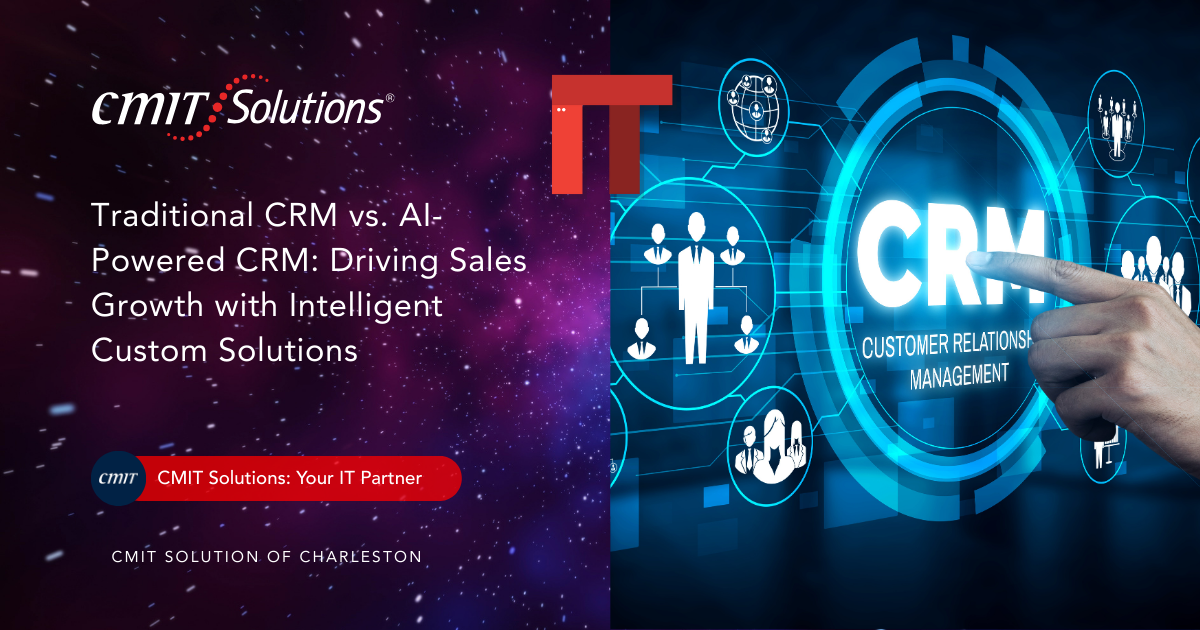
Customer relationship management systems have long been the backbone of sales operations. For years, traditional CRM platforms helped organizations centralize customer data, track interactions, and manage pipelines. However, as buyer behavior becomes more complex and sales cycles more competitive, traditional CRMs are showing their limitations.
AI-powered CRM solutions represent the next evolution transforming CRMs from passive record-keeping tools into intelligent systems that actively support sales growth. By embedding artificial intelligence into customer data, workflows, and decision-making, AI-powered CRMs enable more personalized engagement, better forecasting, and higher sales productivity. Below, we explore how these two approaches differ and how businesses can leverage intelligent CRM solutions to drive measurable sales growth.
How traditional CRM systems support sales teams
Traditional CRM systems are primarily designed to store and organize customer information. They provide a centralized database where sales teams can log activities, track opportunities, and manage contact details. For many organizations, this structure improves visibility and accountability across the sales pipeline.
While effective for basic sales management, traditional CRMs rely heavily on manual input and predefined workflows, limiting their ability to adapt to changing conditions. As more companies modernize core systems, CRM stability and uptime often become part of a broader push toward proactive IT management that improves productivity, ensuring sales tools remain reliable and responsive.
Traditional CRM platforms typically help sales teams by:
- Centralizing customer and prospect data
- Tracking sales activities and interactions
- Managing pipelines and deal stages
- Providing standard reports and dashboards
The limitations of traditional CRM in modern sales environments
As sales environments become faster and more data-driven, traditional CRMs struggle to keep pace. They depend on sales reps to update records, interpret data, and identify opportunities—often resulting in incomplete data and delayed insights.
Without intelligence built in, these systems offer visibility but not guidance. That gap becomes even more costly when organizations lack real-time visibility into performance and system health—something many teams address with stronger operational oversight tools like network monitoring that enhances visibility and troubleshooting.
Common challenges with traditional CRM systems include:
- Heavy reliance on manual data entry
- Limited predictive or analytical capabilities
- Static workflows that don’t adapt to buyer behavior
- Inconsistent data quality across teams
What defines an AI-powered CRM
An AI-powered CRM goes beyond data storage by actively analyzing customer information, engagement patterns, and sales performance. These systems use machine learning and automation to identify trends, predict outcomes, and recommend next best actions.
Instead of waiting for users to interpret data, AI-powered CRMs surface insights proactively. As businesses explore practical AI adoption, many follow a path similar to how AI is transforming SMB operations—starting with high-impact tools that reduce manual work while improving outcomes.
AI-powered CRM platforms are defined by their ability to:
- Analyze customer behavior in real time
- Learn from historical sales data
- Automate insights and recommendations
- Adapt workflows dynamically
Intelligent lead scoring and prioritization
One of the most impactful differences between traditional and AI-powered CRMs is lead management. Traditional CRMs often use static scoring models based on limited criteria. AI-powered CRMs continuously analyze engagement signals, demographics, and behavior to identify high-intent prospects.
This ensures sales teams focus their efforts where they matter most. For organizations strengthening pipeline reliability and speed, modern CRM intelligence often pairs with broader infrastructure improvements—including best practices for securing network infrastructure that keep customer systems fast and protected.
Intelligent lead scoring improves sales efficiency by enabling:
- Real-time prioritization of high-value leads
- Reduced time spent on unqualified prospects
- Better alignment between marketing and sales
- Higher conversion rates

Personalized customer engagement at scale
Traditional CRMs store interaction history but leave personalization up to individual reps. AI-powered CRMs analyze customer preferences, behaviors, and past interactions to tailor messaging automatically across channels.
This allows sales teams to deliver consistent, relevant engagement—even as pipelines grow. In many organizations, personalization initiatives expand alongside modern productivity capabilities, especially when teams adopt tools like Microsoft Copilot to streamline everyday workflows and reduce time spent on repetitive communication tasks.
AI-driven personalization supports sales growth by enabling:
- Customized outreach based on customer behavior
- More relevant messaging across touchpoints
- Improved engagement and response rates
- Stronger long-term customer relationships
Predictive sales forecasting and pipeline visibility
Forecasting is often one of the weakest areas of traditional CRM systems. Forecasts are typically based on manual inputs and subjective assessments. AI-powered CRMs use predictive analytics to assess pipeline health, identify risks, and forecast revenue with greater accuracy.
This gives leadership clearer insight into future performance. To make forecasting trustworthy, organizations also need resilient data environments supported by strong protection standards such as maximizing data protection with a proactive approach.
Predictive forecasting enhances decision-making by providing:
- More accurate revenue projections
- Early identification of at-risk deals
- Improved quota and resource planning
- Greater confidence in strategic decisions

Sales productivity through automation and guidance
AI-powered CRMs reduce administrative burden by automating routine tasks such as data updates, follow-ups, and activity logging. More importantly, they guide reps with actionable recommendations rather than static reports.
This shifts sales teams’ focus from administration to relationship-building. At the operational level, automation becomes even more powerful when it’s reinforced with practices like event-driven automation for incident response to keep CRM environments stable and responsive—especially when sales teams depend on them daily.
Sales automation and guidance improve productivity by enabling:
- Reduced manual CRM maintenance
- Timely reminders and follow-ups
- Suggested next best actions
- More time spent selling
Customization and scalability with intelligent CRM solutions
Modern sales organizations rarely operate with one-size-fits-all solutions. AI-powered CRMs are designed to be customized and scaled according to business needs, industry requirements, and growth plans.
Intelligence adapts as processes evolve, ensuring long-term value. Many organizations support scalability by modernizing infrastructure through strategies like effective cloud migration and adopting flexible architectures that can grow with users, data, and automation demands.
Custom AI-powered CRM solutions offer benefits such as:
- Tailored workflows aligned with sales processes
- Scalable architecture for growing teams
- Industry-specific insights and automation
- Flexibility to support evolving strategies
Data quality, governance, and trust in AI-driven CRM
AI-powered CRMs depend on high-quality data to deliver reliable insights. These systems actively monitor data consistency, flag anomalies, and reduce duplication—improving trust in CRM data.
Strong governance ensures AI enhances decision-making without introducing risk. For organizations tightening controls, CRM governance often aligns with broader readiness efforts such as compliance solutions that keep businesses audit-ready and resilient recovery planning like data backup and recovery solutions that protect critical customer records.
Improved data governance supports organizations by enabling:
- Cleaner, more reliable CRM data
- Better compliance and audit readiness
- Consistent reporting across teams
- Greater confidence in AI-driven insights
How CMIT Solutions of Charleston helps businesses adopt intelligent CRM solutions
Transitioning from a traditional CRM to an AI-powered CRM requires thoughtful planning, secure infrastructure, and expert support. At CMIT Solutions of Charleston, we help businesses design, implement, and optimize intelligent CRM solutions that align with sales goals and IT strategy.
Our focus is on ensuring CRM platforms drive real sales growth—not just system adoption. That means building on secure foundations such as firewalls as a core cyber defense layer and maintaining reliability through proven support models like 24/7 IT support that keeps businesses running.
We help organizations succeed by:
- Assessing CRM readiness and sales workflows
- Designing customized AI-powered CRM solutions
- Ensuring secure integration with existing systems
- Providing ongoing support and optimization
Conclusion
Traditional CRM systems laid the groundwork for organized sales operations, but they are no longer enough to compete in a data-driven market. AI-powered CRM solutions transform customer data into actionable intelligence—helping sales teams work smarter, engage better, and close deals faster.
For organizations focused on sustainable sales growth, the future lies in intelligent, customized CRM platforms that adapt alongside the business. With the right strategy and support backed by secure, scalable platforms like hybrid cloud solutions that balance flexibility and security and forward-looking planning around cloud services trends and innovations AI-powered CRM becomes a powerful engine for revenue and customer success.