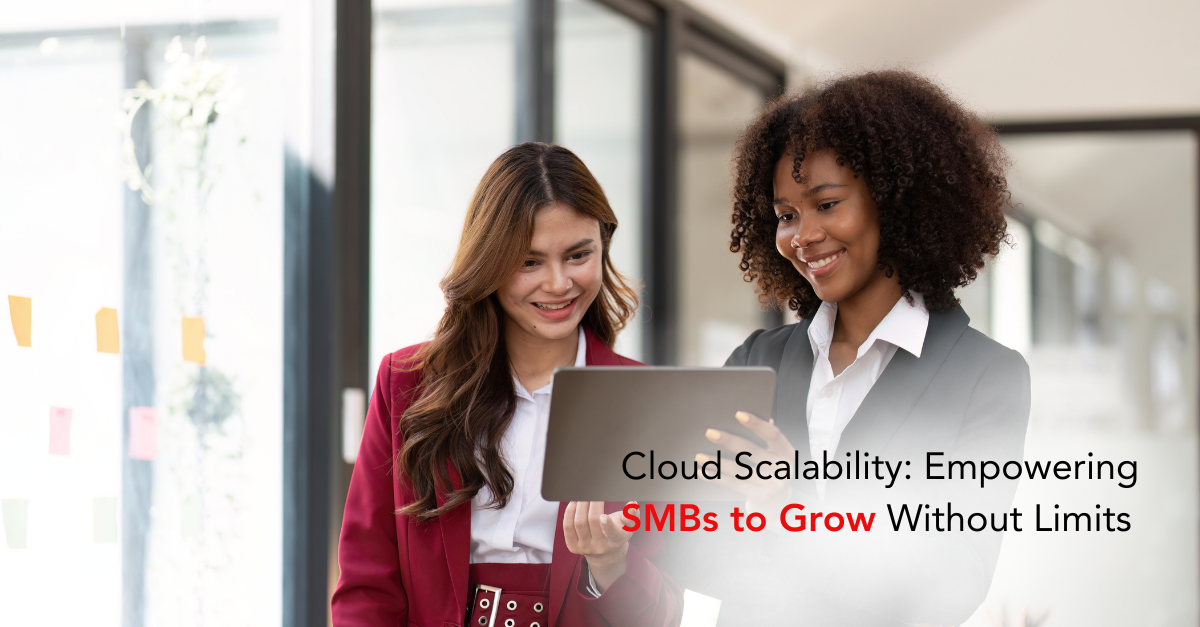
Introduction: The Power of Scalable Growth
Growth is the goal of every small and mid-sized business but scaling that growth efficiently is the real challenge. Traditional IT infrastructures can’t always keep pace with expansion. Hardware investments, software limits, and performance bottlenecks often slow success.
Enter cloud scalability a game-changing solution that allows SMBs to expand or contract their IT resources instantly, without overpaying or overprovisioning. For Dallas businesses ready to compete at enterprise levels, scalable cloud infrastructure delivers the flexibility, cost control, and innovation needed to thrive. Partnering with CMIT Solutions of Dallas ensures this transformation happens securely, strategically, and seamlessly.
What Cloud Scalability Really Means
Cloud scalability refers to the ability to adjust computing resources on demand, ensuring systems always operate at optimal performance levels. It allows businesses to respond quickly to growth, traffic spikes, or market fluctuations without investing in new hardware.
Key dimensions of cloud scalability:
- Vertical scaling: Increasing power CPU, RAM, or storage within existing systems.
- Horizontal scaling: Adding more servers or resources to handle demand.
- Elastic scaling: Automatically adjusting resources up or down as needed.
Through cloud-smart strategies, Dallas SMBs can build infrastructures that grow intelligently with their business needs.
Why Scalability Matters for SMBs
Scalability is not just about technology it’s about business agility. It enables organizations to handle growth smoothly, reduce downtime, and respond faster to new opportunities.
For SMBs, scalability provides:
- Financial flexibility: Pay only for what you use.
- Faster deployment: Launch new services quickly.
- Operational resilience: Adapt to demand spikes effortlessly.
- Strategic focus: Spend more time innovating, less on IT issues.
This flexibility mirrors the results seen with digital strategy frameworks that help SMBs align IT with their long-term growth goals.
Overcoming the Limits of Traditional IT
Conventional IT infrastructure relies on physical servers, storage, and networking equipment. While reliable, it’s inflexible—hardware cannot expand instantly, and costs scale poorly.
Limitations of on-premises infrastructure:
- High capital expenses for new servers or data centers.
- Slow provisioning for upgrades or expansions.
- Maintenance overhead requiring constant monitoring.
- Limited scalability constrained by hardware capacity.
By contrast, cloud ecosystems are built for elasticity businesses can deploy, scale, and recover faster than ever before, often using intelligent network management tools that optimize performance automatically.
Financial Efficiency Through Pay-as-You-Go Models
One of the most significant advantages of scalable cloud solutions is cost efficiency. Businesses no longer need to over-invest in infrastructure to prepare for growth. Instead, they can pay only for the resources they consume.
Benefits of cloud-based cost control:
- Predictable spending through subscription-based billing.
- Reduced capital expenditure with no upfront hardware costs.
- Instant resource allocation for seasonal or project-based demand.
- Transparent usage metrics to manage budgets effectively.
This shift echoes the ROI of managed IT approach investing smartly in adaptable systems instead of rigid, one-time purchases.
Scaling Performance Without Compromise
When demand rises, performance must keep up. Scalable cloud systems ensure consistent speed, uptime, and efficiency no matter how many users or workloads are added.
Performance advantages of scalable infrastructure:
- Dynamic load balancing prevents overloads during traffic peaks.
- Global redundancy ensures data availability and uptime.
- Optimized resource distribution enhances app performance.
- Auto-scaling adjusts compute power in real time.
For Dallas companies adopting cloud optimization strategies, this means better customer experiences and more reliable business operations.
Enabling Remote Work and Collaboration
Scalable cloud environments make remote work practical and secure by providing consistent access to company data and collaboration tools anytime, anywhere.
Remote-ready cloud advantages:
- Secure access via encrypted connections.
- Real-time document collaboration with Microsoft 365 integration.
- Centralized file storage to eliminate data silos.
- Consistent user experience across devices.
Businesses implementing collaboration platforms built on scalable cloud backbones empower their teams to work efficiently no matter where they are.

Security at Scale: Protecting Data as You Grow
With scalability comes greater responsibility. As businesses grow, so does their exposure to cyber threats. Scalable security solutions in the cloud provide automated, intelligent protection that adjusts as networks expand.
Security benefits of scalable clouds:
- AI-driven monitoring for threat detection.
- End-to-end encryption across data in motion and at rest.
- Multi-factor authentication (MFA) for secure access.
- Compliance automation for regulated industries.
By adopting multi-layered cybersecurity principles, Dallas SMBs ensure their growth doesn’t come at the cost of safety or compliance.
Hybrid Cloud: The Best of Both Worlds
Not every business wants to move completely to the cloud and that’s where hybrid environments shine. They combine the control of on-premises systems with the flexibility of cloud scalability.
Hybrid cloud benefits:
- Seamless workload mobility between environments.
- Better cost management for critical applications.
- Stronger compliance with localized data control.
- Scalable disaster recovery options.
The cloud-smart hybrid model helps SMBs scale strategically—maximizing performance while meeting industry-specific needs.
Backup and Disaster Recovery at Scale
Cloud scalability isn’t just about growing resources it’s about ensuring business continuity during disruptions. Scalable cloud backup systems allow companies to recover quickly from failures, breaches, or disasters.
Key benefits of scalable data protection:
- Automated backups that scale with data growth.
- Geo-redundant storage to ensure resilience.
- Rapid restoration of systems and files.
- Immutable backups for ransomware protection.
This strategy reflects ransomware-proof backup plans that keep Dallas companies operational even during cyber crises.
Compliance and Data Governance in the Cloud
Regulatory compliance is a major concern for growing SMBs, especially as they expand operations. Scalable clouds come with built-in compliance controls, automating key processes to meet legal and industry standards.
Compliance management through scalability:
- Centralized data tracking for transparency.
- Automated reporting for audits and certifications.
- Policy enforcement across multi-cloud environments.
- Data lifecycle management with retention controls.
Integrating compliance automation through IT governance tools simplifies oversight while keeping businesses fully protected.
The Role of AI and Automation in Cloud Scaling
Artificial intelligence and automation are transforming how SMBs use the cloud. Instead of manual scaling or monitoring, intelligent systems now adjust resources autonomously.
AI-driven cloud scaling includes:
- Predictive analytics for demand forecasting.
- Automated scaling based on real-time usage.
- Intelligent security detection for anomalies.
- Optimized cost allocation through usage insights.
Companies adopting AI-powered tools can maintain consistent performance and maximize ROI without constant IT intervention.
Empowering SMB Innovation and Agility
Scalable cloud systems empower small businesses to innovate like large enterprises. Whether launching new services, entering new markets, or testing digital tools, scalability ensures resources never limit progress.
How scalability drives innovation:
- Rapid prototyping without infrastructure constraints.
- Instant testing environments for new software or features.
- Faster deployment cycles accelerating go-to-market strategies.
- Cross-department integration supporting unified operations.
For Dallas SMBs building modern IT ecosystems, scalability is the secret to long-term innovation and sustained competitiveness.
How Managed IT Simplifies Cloud Scalability
Managing a scalable cloud environment can be complex. That’s why SMBs partner with managed IT providers who handle setup, optimization, and ongoing monitoring.
Benefits of managed cloud scalability:
- 24/7 monitoring for performance and uptime.
- Cost optimization through intelligent provisioning.
- Cybersecurity integration at every layer.
- Continuous improvement through expert analysis.
This partnership model mirrors managed IT services that empower SMBs to focus on business growth while leaving technical management to professionals.
Real-World Example: A Dallas SMB Scaling with Confidence
Consider a growing Dallas-based architecture firm transitioning to hybrid work. Initially relying on local servers, they faced slow performance, limited storage, and inconsistent access for remote staff.
After migrating to scalable cloud solutions:
- File sharing became instant across all locations.
- Backup automation ensured zero data loss.
- Resource allocation adapted to seasonal project loads.
- Costs dropped by 30% due to pay-as-you-go billing.
This transformation, guided by CMIT Solutions, demonstrates how scalability directly drives agility, profitability, and employee satisfaction.
Preparing for the Future of Cloud Scalability
As AI, edge computing, and 5G technologies advance, scalability will become even more essential. The future of business depends on infrastructures that adapt automatically responding to real-time data, not static configurations.
Emerging scalability trends:
- Edge computing integration for faster local processing.
- Autonomous resource management powered by AI.
- Stronger data compliance using intelligent policy automation.
- Sustainability optimization reducing energy footprints.
Companies adopting cloud evolution strategies today are building the foundation for limitless growth tomorrow.
Conclusion: Grow Freely, Securely, and Strategically
Cloud scalability is more than a feature it’s a mindset. It allows businesses to grow freely without constraints, adapt to change without disruption, and innovate without fear of failure.
In summary:
- Cloud scalability delivers cost efficiency, flexibility, and resilience.
- Hybrid environments combine control with agility.
- AI and automation ensure resources adjust intelligently.
- Managed IT ensures every system scales securely and strategically.
With CMIT Solutions of Dallas, SMBs can confidently embrace scalable cloud solutions that align technology with ambition. Whether expanding operations, launching new ventures, or streamlining collaboration, scalable cloud infrastructure ensures your growth never hits a ceiling.