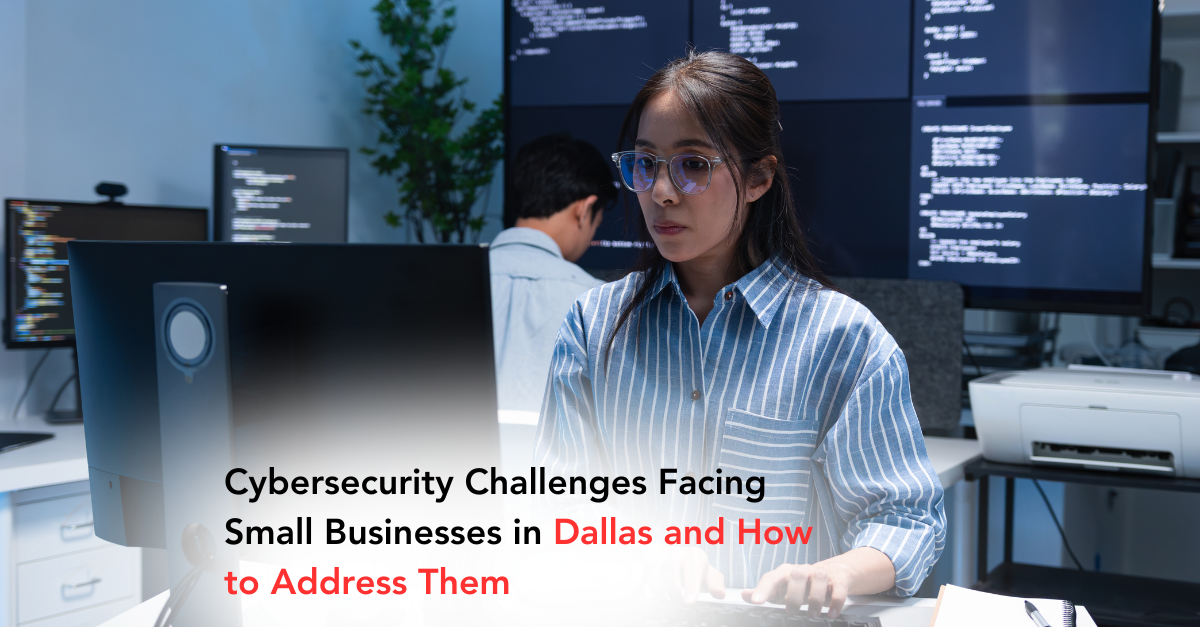
Walk into a typical small business in Dallas on a busy weekday.
Employees are checking emails, accessing cloud platforms, sharing files, and collaborating with clients and coworkers. Technology connects every part of the workday from communication and accounting to project management and customer support.
Everything appears to be running smoothly.
But behind the scenes, many small businesses face a growing challenge.
Cyber threats are becoming more frequent, more sophisticated, and more disruptive. What used to be occasional technical risks have evolved into serious operational concerns.
For small businesses in Dallas, cybersecurity is no longer something that can be handled occasionally or addressed only after problems appear. It has become an essential part of protecting business operations, customer data, and long-term growth.
Understanding the most common cybersecurity challenges and how to address them can help organizations strengthen their defenses and reduce risk.
Why Small Businesses Are Increasingly Targeted
Many small business owners assume cybercriminals mainly target large corporations.
In reality, small businesses are often attractive targets because attackers expect their security protections to be weaker.
Smaller organizations may not have dedicated security teams. Systems may not be monitored continuously. Security policies may evolve slowly as the business grows.
At the same time, small businesses still manage valuable information such as:
Customer records
Financial data
Payment information
Internal business documents
Employee information
This combination of valuable data and limited resources makes small businesses appealing targets for cyber attacks. Many organizations are responding by focusing more on digital preparedness and stronger cyber resilience.
Challenge 1: Phishing and Email-Based Attacks
One of the most common cybersecurity threats facing small businesses is phishing.
Phishing attacks typically arrive through email and attempt to trick employees into clicking malicious links, downloading harmful attachments, or sharing login credentials.
These messages often appear legitimate. Attackers may impersonate trusted contacts, vendors, or even internal staff members.
Because employees interact with email constantly throughout the day, it only takes one mistake for attackers to gain access to company systems.
How to Address It
Businesses can reduce phishing risks by implementing email security tools and encouraging employees to verify unusual requests before responding.
Security awareness training can also help teams recognize suspicious messages and avoid common phishing tactics.
When employees know what to watch for, the organization becomes far more resilient. Recognizing breach signs early and building stronger security habits can make a major difference.
Challenge 2: Weak Passwords and Poor Access Control
Passwords remain one of the primary ways employees access business systems.
However, weak passwords or reused credentials can make it easier for attackers to gain unauthorized access.
When businesses lack clear access policies, employees may also have more system privileges than necessary. This increases the potential damage if an account becomes compromised.
How to Address It
Strong password policies and multi-factor authentication can significantly improve security.
Multi-factor authentication requires users to verify their identity through additional steps beyond a password, making unauthorized access much more difficult.
Businesses should also limit system access based on job roles so employees only interact with the information necessary for their work. Better password management, stronger multi-factor authentication, and modern passkey security all strengthen access control.

Challenge 3: Outdated Software and Unpatched Systems
Technology systems require regular updates to address newly discovered vulnerabilities.
When software updates are delayed, systems may remain exposed to security weaknesses that attackers already know how to exploit.
Small businesses sometimes postpone updates because they worry about disrupting workflows or because they lack the time to manage system maintenance.
Unfortunately, outdated software often becomes one of the easiest entry points for cyber attackers.
How to Address It
Regular patch management ensures that operating systems, applications, and devices remain updated with the latest security protections.
Automating updates whenever possible helps businesses maintain consistent protection without interrupting operations.
Keeping systems current is one of the simplest and most effective cybersecurity practices. Many businesses are improving this through Windows 11 transitions and stronger endpoint security.
Challenge 4: Limited Visibility Across IT Systems
Many small businesses operate with a mix of cloud services, devices, applications, and networks.
Without clear visibility across these systems, it becomes difficult to detect unusual activity or identify potential vulnerabilities.
For example, businesses may not immediately notice:
Unexpected login attempts
Unusual network activity
Unauthorized access to files
Changes to system configurations
Without monitoring tools, these warning signs can go unnoticed until a larger issue occurs.
How to Address It
Continuous monitoring helps businesses gain visibility into how their systems operate.
Monitoring tools track activity across networks, devices, and applications, allowing IT teams to identify suspicious behavior quickly and respond before it escalates into a serious security incident. Better network visibility and stronger SOC monitoring give businesses more control over their environments.
Remote and hybrid work enviro
Challenge 5: Remote Work Security Risks
Have introduced new cybersecurity challenges.
Employees often access company systems from home networks, personal devices, or public Wi-Fi connections. These environments may not provide the same level of protection as office networks.
Without proper safeguards, remote access can create additional vulnerabilities.
How to Address It
Secure remote access tools help businesses maintain protection while supporting flexible work environments.
Using encrypted connections, strong authentication, and clearly defined security policies ensures employees can work from anywhere without exposing company data to unnecessary risk. Stronger remote security and more dependable secure Wi-Fi help reduce these risks.
Challenge 6: Lack of Employee Cybersecurity Awareness
Technology tools play an important role in cybersecurity, but people remain one of the most important factors.
Employees interact with company systems constantly. They receive emails, share files, and access sensitive information as part of their daily work.
Without proper awareness, even well-meaning employees may unknowingly expose the organization to risk.
How to Address It
Cybersecurity awareness training helps employees recognize threats and respond appropriately.
Training programs can cover topics such as identifying phishing emails, securing sensitive information, and reporting suspicious activity.
When cybersecurity awareness becomes part of the company culture, employees help strengthen the organization’s defenses. Building a stronger security culture and better team protection can reduce avoidable mistakes.

Challenge 7: Insufficient Data Backup and Recovery Planning
Cyber incidents can disrupt business operations and make critical information temporarily inaccessible.
Without reliable backups, recovering lost data can become extremely difficult.
Small businesses sometimes underestimate the importance of structured backup systems until they experience a disruption.
How to Address It
Regular data backups ensure that important business information can be restored quickly if systems are compromised.
Backup systems should be secure, automated, and tested regularly to confirm that recovery processes work when needed.
A strong backup strategy provides an essential safety net for business continuity. Better data backup, stronger recovery planning, and reliable business continuity all help organizations recover faster.
Why Proactive Cybersecurity Matters for Dallas Businesses
Cybersecurity is not just about reacting to incidents.
It is about building systems and processes that reduce risk before problems occur.
For Dallas small businesses operating in a fast-moving digital environment, proactive cybersecurity strategies help maintain stable operations while protecting valuable data.
Businesses that take a proactive approach gain greater visibility into their systems, stronger protection against evolving threats, and more confidence in their technology infrastructure. That is why many are investing in AI security, stronger threat monitoring, and smarter tech planning.
Conclusion
Cybersecurity challenges facing small businesses in Dallas continue to evolve as technology becomes more central to daily operations. From phishing attacks and weak passwords to outdated systems and limited visibility, these risks can disrupt operations if they are not addressed proactively.
By strengthening access controls, maintaining updated systems, improving monitoring capabilities, and building cybersecurity awareness among employees, businesses can significantly reduce their exposure to cyber threats.
A proactive cybersecurity strategy allows organizations to protect their systems while continuing to grow and serve their customers with confidence. CMIT Solutions of Dallas helps small businesses strengthen their cybersecurity defenses through proactive monitoring, secure IT infrastructure, and strategic technology management. If your business is looking to better protect its systems and data from evolving cyber threats, contact us to build a stronger and more resilient security foundation.