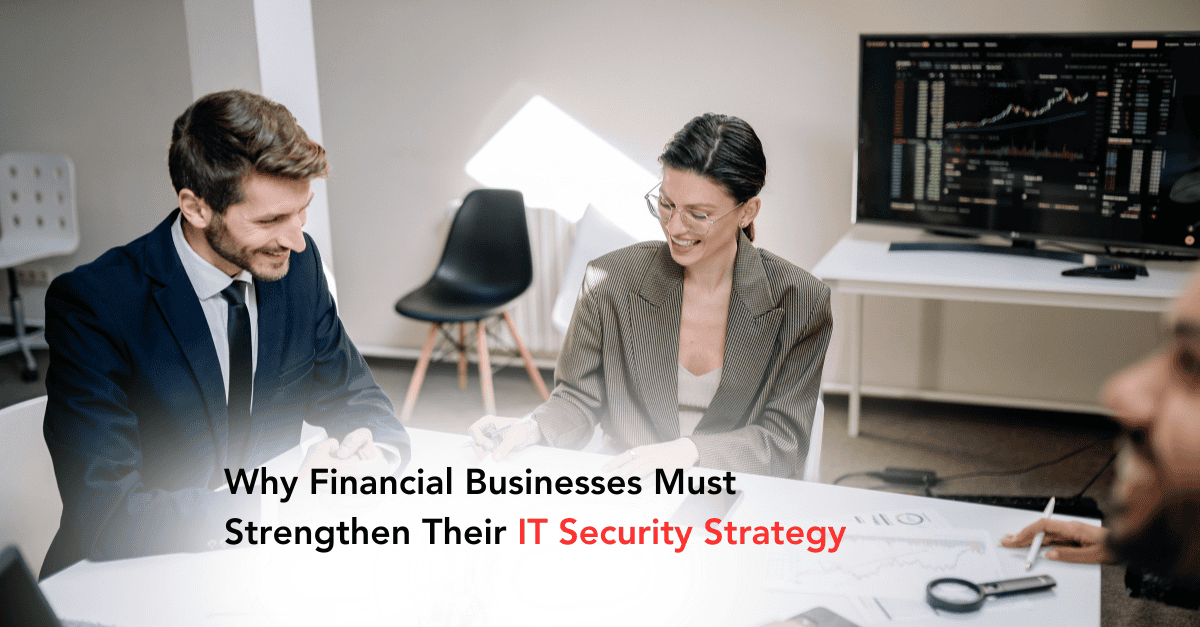
Walk into a typical financial services office during a normal workday.
Advisors are reviewing investment portfolios, accountants are processing financial reports, and teams are communicating with clients about sensitive financial matters. Transactions, account details, and confidential records move through digital systems every minute.
Technology makes these operations faster and more efficient.
But it also introduces an important responsibility.
Financial businesses manage some of the most sensitive information in the modern economy. Banking details, payment records, tax information, and client financial histories all require strong protection.
If that data becomes exposed or compromised, the consequences can extend beyond technology issues. Client trust can be damaged, operations can be disrupted, and regulatory challenges may follow.
That’s why financial businesses are increasingly strengthening their IT security strategies to protect both their clients and their operations.
Why Financial Businesses Are High-Value Targets
Financial organizations handle information that is extremely valuable to cybercriminals.
Account numbers, payment details, personal identification information, and financial transaction records can all be used for fraud or identity theft.
Because of this, attackers frequently target financial businesses in an attempt to gain access to these systems.
Unlike many other industries, even small financial firms often manage significant volumes of sensitive information. A single breach could affect multiple clients and create serious operational challenges.
This makes strong IT security essential for protecting both data and reputation. Many firms are responding by paying closer attention to financial records and evolving fraud risks.
The Expanding Digital Environment of Financial Services
Financial businesses rely heavily on technology to manage operations.
Client portals allow customers to access financial information. Cloud platforms store records and reports. Communication tools help advisors collaborate with clients and colleagues.
While these tools improve efficiency, they also increase the complexity of the technology environment.
Financial data now moves between multiple systems, devices, and locations. Employees may access systems remotely, and digital platforms often integrate with third-party services.
Without proper oversight, this expanding digital environment can create vulnerabilities that attackers may attempt to exploit. Many organizations are addressing this through better cloud protection and broader digital modernization.
Where Security Risks Often Appear in Financial Organizations
Cybersecurity incidents rarely begin with a dramatic system breach.
More often, they start with small everyday actions that seem harmless at first.
An employee clicks a link in a suspicious email.
A password is reused across multiple systems.
Software updates are delayed.
Sensitive files are stored in locations with limited access controls.
These situations can create entry points for attackers.
When financial data is involved, even minor vulnerabilities can carry serious consequences. Recognizing warning signs early and tracking threat behavior can reduce exposure.

Strengthening Access Controls to Protect Financial Data
One of the most effective ways financial businesses can protect their systems is by carefully controlling access to sensitive information.
Not every employee needs access to every client record or financial report.
Access control policies ensure that individuals only interact with the information necessary for their responsibilities.
This approach reduces the risk of accidental exposure while limiting potential damage if an account becomes compromised.
Many financial organizations also implement identity checks, which require additional identity verification before granting access to systems. Many are also adopting zero trust and stronger access security.
Securing Communication Channels
Financial professionals communicate frequently with clients through email, messaging platforms, and online portals.
These communications often contain confidential information related to financial accounts, investments, or transactions.
Because of this, attackers sometimes attempt to impersonate trusted contacts in order to gain access to systems or trick employees into sharing sensitive data.
Implementing secure communication systems and verifying unusual requests can help reduce the risk of these attacks.
Strong communication security helps protect both client information and business operations. Better password hygiene and stronger staff awareness also support safer client communication.
Keeping Systems Updated and Maintained
Financial systems rely on a variety of software platforms, including accounting tools, financial planning systems, and client management applications.
These platforms must be updated regularly to maintain strong security protections.
Outdated software may contain vulnerabilities that attackers can exploit to gain access to networks or data.
Routine updates and patch management help ensure systems remain protected against emerging threats.
Maintaining updated systems is one of the most fundamental components of a strong IT security strategy. Many firms support this with secure upgrades and modern endpoint defense.
Protecting Data With Reliable Backup Systems
Financial businesses depend on reliable access to records and reports.
If systems become unavailable due to cyber incidents, hardware failures, or accidental data loss, the impact on operations can be significant.
Reliable backup systems ensure that important financial information can be restored quickly when needed.
Backups should be automated, stored securely, and tested regularly to ensure recovery processes function properly.
This protection allows businesses to maintain continuity even when unexpected events occur. Stronger backup planning, dependable recovery strategy, and better continuity planning all help protect operations.
Building Cybersecurity Awareness Among Employees
Employees interact with financial systems constantly throughout the workday.
They open emails, share documents, process transactions, and update client records.
Without proper awareness, even routine tasks can introduce risk.
Cybersecurity awareness training helps employees recognize suspicious activity, verify unusual requests, and follow best practices for protecting sensitive data.
When teams understand how cyber threats work, they become an important part of the organization’s security strategy. Building a stronger security culture and improving protection habits can reduce preventable mistakes.

Monitoring Systems for Unusual Activity
Strong IT security also requires visibility across financial systems and networks.
Monitoring tools track activity across devices, applications, and user accounts to identify unusual behavior.
For example, monitoring systems may detect:
Unexpected login attempts
Unusual data access patterns
Unauthorized system changes
Large data transfers
Early detection allows IT teams to investigate potential threats quickly and prevent attackers from gaining deeper access to financial systems. Better network insight, stronger real-time monitoring, and smarter AI defense all improve response speed.
Why Proactive IT Security Is Essential
In financial services, trust is fundamental.
Clients expect their financial information to remain secure and confidential.
A proactive IT security strategy focuses on preventing problems before they disrupt operations. Systems are monitored continuously, vulnerabilities are addressed early, and security practices evolve alongside new technology.
This proactive approach helps financial businesses maintain secure systems while continuing to deliver reliable service to their clients. It also supports stronger managed protection, better strategic guidance, and more dependable risk readiness.
Conclusion
Financial businesses manage highly sensitive information that must remain protected at all times. As technology becomes more central to financial operations, strengthening IT security strategies has become essential for safeguarding client data and maintaining operational stability.
By implementing strong access controls, securing communication channels, maintaining updated systems, and building cybersecurity awareness among employees, financial organizations can significantly reduce their exposure to cyber threats.
A proactive approach to IT security helps financial businesses protect their clients, maintain trust, and operate confidently in an increasingly digital environment. CMIT Solutions of Dallas helps financial businesses strengthen their IT security through proactive monitoring, secure infrastructure management, and strategic technology support. If your organization is looking to enhance its cybersecurity strategy and protect sensitive financial data, contact us to build a stronger and more resilient IT environment.