
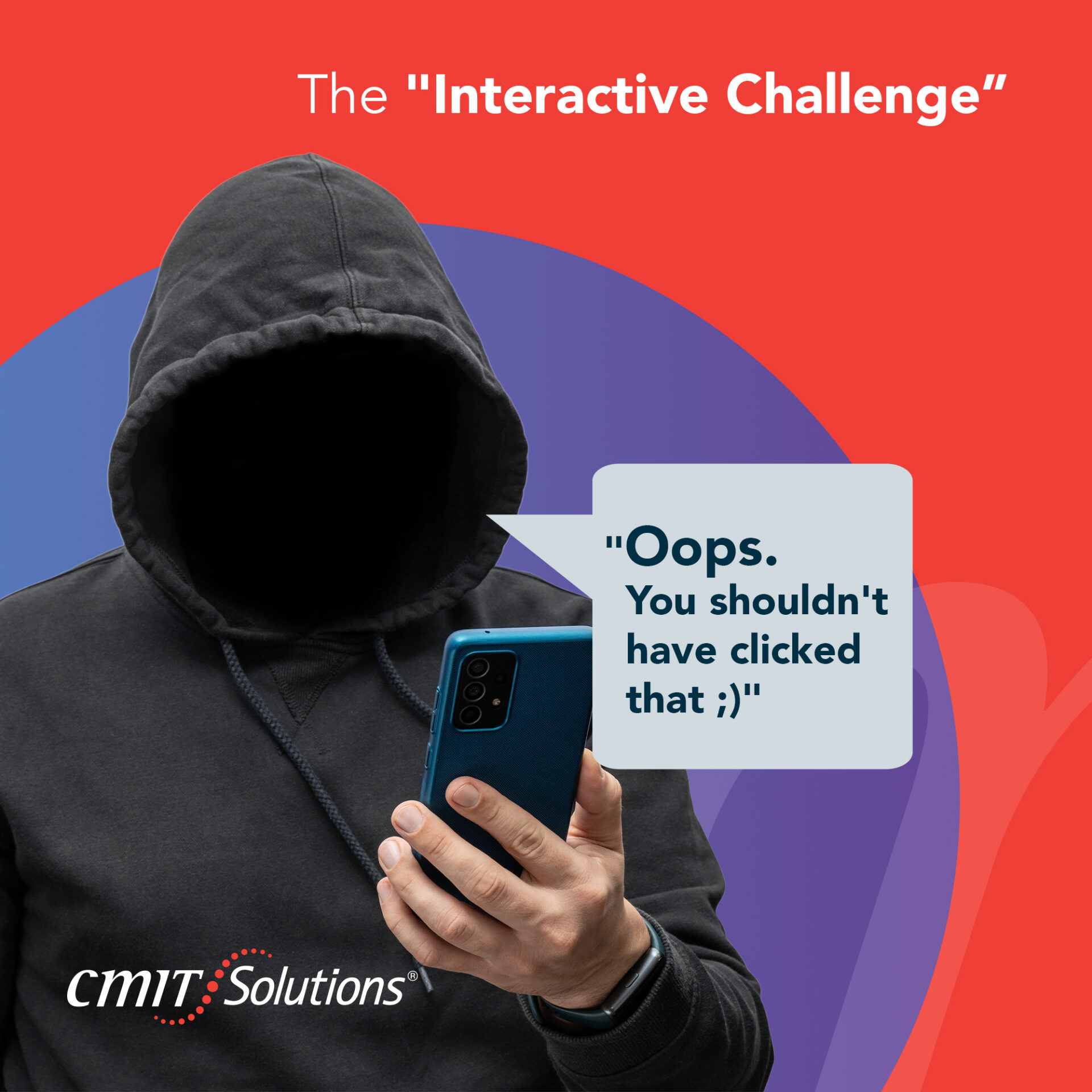
1. You receive an email from a “Hacker” that says: “Oops. You shouldn’t have clicked that ;)” accompanied by a timer.
What is the very first thing you should do?
- A) Pay the requested amount immediately to save the company data.
- B) Unplug your computer and run to the IT department.
- C) Do not click any further links and report it to your security lead/CMIT partner immediately.
- D) Delete the email and hope it goes away.
- True or False: If an email looks like it’s from a trusted colleague and uses your name, it is guaranteed to be safe.
- What percentage of data breaches involve some form of human error (like poor password management or clicking a bad link)?
- A) 25%
- B) 50%
- C) 83%
- D) 95%
4. You find a USB drive in the breakroom or the parking lot.
What do you do?
- A) Plug it in to see who it belongs to so you can return it.
- B) Give it to your office manager to put in the “Lost and Found.”
- C) Leave it there; it’s not your problem.
- D) Hand it directly to your IT/Security team without plugging it into any device.
- Why is “Security Awareness” considered your first line of defense?
- A) Because it’s cheaper than buying a firewall.
- B) Because empowered employees can spot threats that software sometimes misses.
- C) Because it’s a legal requirement for all businesses.
- D) Because hackers don’t like smart people.
Answer Key & Insights
- C is the correct answer. Early reporting is the best way to contain a potential breach before it spreads.
- False. Always verify unusual requests (like wire transfers or password resets) through a second channel, like a quick phone call.
- C (83%). This is why training is just as important as your antivirus software.
- D. “Rubber Ducky” attacks use lost USB drives to auto-install malware the second they are plugged in.
- B. Technology is a tool, but a team that knows the “why” behind the threats is a much harder target.
The CMIT Difference
Security isn’t just about a one-time quiz; it’s about a dedicated partner who grasps your unique business needs and priorities. We provide a proactive shield that ensures your team stays focused on your business objectives, not waiting for a reboot after a malware scare.
Don’t let sophisticated cyber threats—which cost North American companies an average of $4.45 million per breach—become an anchor on your budget. Let’s work together to transform your IT into a strategic advantage.
Ready to strengthen your first line of defense? Schedule your call today
