
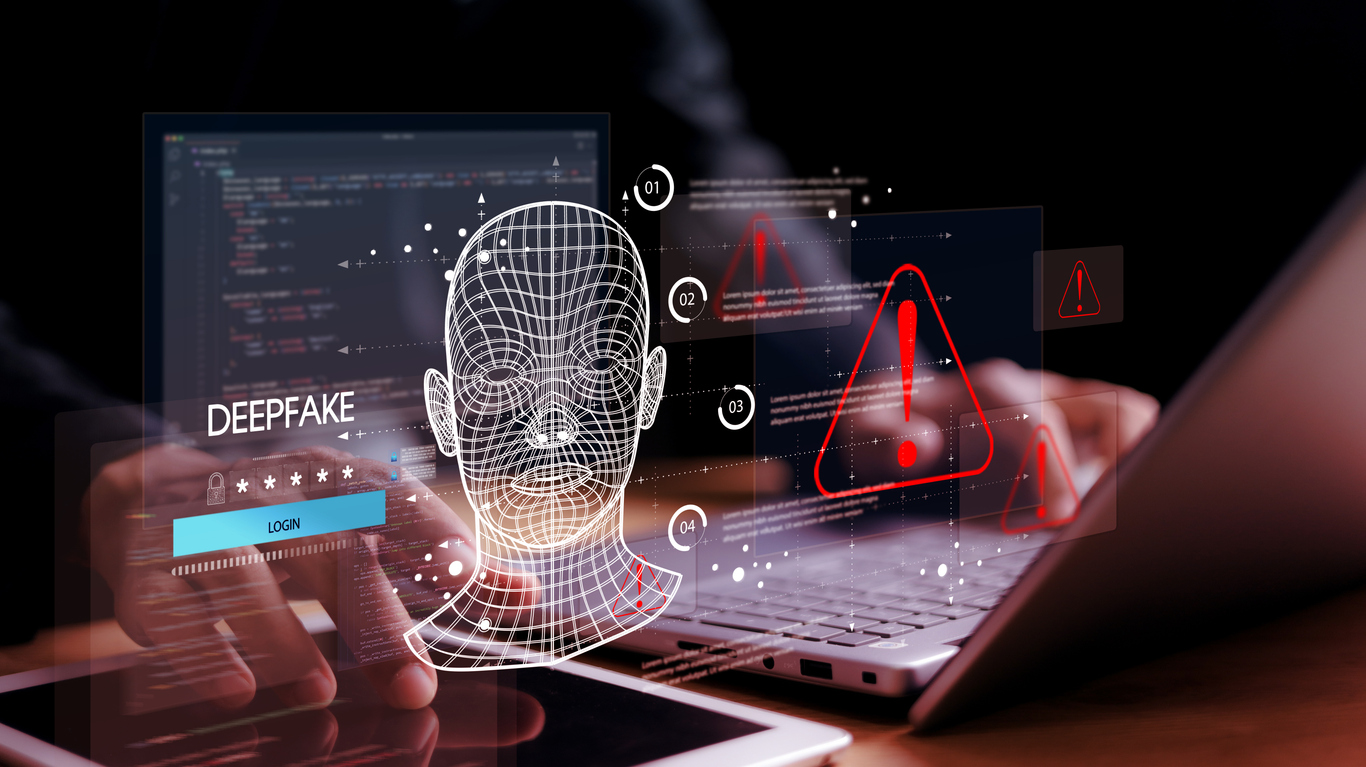
Remember when you could trust what you saw and heard? Those days are rapidly fading. Deep fakes—AI-generated imitations of voices, faces, or actions—are becoming increasingly sophisticated and harder to detect. These synthetic media creations are designed to appear completely authentic, making it difficult to distinguish genuine content from digitally altered media.
Cybercriminals are using deep fake technology to:
- Impersonate CEOs or executives in video calls to authorize fraudulent wire transfers
- Create fake audio recordings to manipulate stock prices or damage reputations
- Produce convincing video messages that spread disinformation within organizations
For Cincinnati-area businesses, this represents a growing challenge to trust and security. When you can no longer rely on seeing or hearing someone to verify their identity, traditional security protocols need a serious upgrade.
Whaling: When Cybercriminals Go After the Big Fish
While most employees are familiar with phishing attacks, whaling attacks represent a more targeted and dangerous threat. These attacks specifically focus on high-level executives and their assistants—the individuals with access to financial accounts, strategic information, and decision-making authority.
What makes whaling so effective? Several factors:
Access to valuable information: Senior leadership has their fingers on the pulse of company finances, merger discussions, and sensitive strategic plans.
Authority without oversight: Executives often have the power to authorize large transactions or data transfers with minimal scrutiny.
Time constraints: Busy executives may rush through emails and miss red flags that others might catch. Many are so overwhelmed with daily responsibilities that they fall behind on awareness training and phishing simulations—leaving them vulnerable at precisely the moment attackers strike.
One whaling attack can result in six or seven-figure losses in a matter of hours. For small to medium-sized businesses in the Greater Cincinnati area, this kind of financial hit can be devastating.
AI-Powered Spear-Phishing: Personalization Gone Wrong
Generic spam emails are easy to spot—poor grammar, suspicious links, and impersonal greetings make them obvious. But AI has changed the game entirely. AI-powered spear-phishing attacks are convincing because they:
Mine data from social media and public sources: Attackers use AI to scrape LinkedIn profiles, Facebook posts, company websites, and public records to build detailed profiles of their targets.
Create highly personalized and authentic messages: Using this data, AI generates emails that reference specific projects you’re working on, colleagues you interact with, or interests you’ve shared online. The message might mention your recent promotion, your alma mater, or a charity you support—details that make you think, “This person really knows me.”
AI-driven attacks look and feel like legitimate communications from people you trust, making them exponentially more dangerous.
Protecting Your Business: Actions That Actually Work
So what can Cincinnati-area businesses do to protect themselves against these AI-powered threats? Two critical strategies stand out:
1. Verify Suspicious Requests Independently
When you receive an urgent email requesting a wire transfer, password reset, or sensitive information—even if it appears to come from your CEO—take a moment to verify it through a separate communication channel. Call the person directly using a number you already have on file (not one provided in the suspicious message), send a text, or walk to their office if possible.
This simple step of independent verification can prevent devastating losses. Yes, it might feel awkward to question your boss, but any reasonable executive would rather endure a quick verification call than lose hundreds of thousands of dollars to a scammer.
2. Invest in Comprehensive Awareness Training
Technology alone cannot protect your business from AI-powered threats. Your employees are your first and most important line of defense. Participating in regular awareness training programs teaches your team how to:
- Recognize the subtle signs of AI-generated content
- Identify social engineering tactics
- Respond appropriately to suspicious requests
- Stay current on evolving attack methods
Training shouldn’t be a one-time checkbox exercise. As AI capabilities evolve, so do attack techniques. Ongoing education ensures your team stays ahead of the curve rather than playing catch-up after an incident.
Don’t Rely Blindly on Automation
While automated security systems are valuable, they’re not infallible—especially against sophisticated AI-powered attacks designed to evade detection. Always cross-check important requests, even when automated systems give them a green light. The combination of human judgment and technological safeguards provides the strongest defense.
Take Action Today: Protect Your Cincinnati Business
Understanding these threats is the first step, but knowledge without action leaves your business vulnerable. CMIT Solutions specializes in helping Florence, Northern Kentucky, and Greater Cincinnati businesses implement comprehensive cybersecurity strategies that address both technological and human vulnerabilities.
Get Your Free IT Security Audit
Our complimentary assessment will:
- Identify vulnerabilities in your current security setup
- Evaluate your team’s readiness to handle AI-powered threats
- Provide actionable recommendations tailored to your business
- Show you exactly where your defenses need strengthening
Don’t wait until you’re the next cautionary tale. Contact CMIT Solutions in Florence and Northern Kentucky today to protect your business from the AI-powered threats that are already targeting companies just like yours.