Guests rarely think about the technology running behind the scenes at a hotel, resort, or restaurant until something goes wrong. A slow check in process, unreliable Wi-Fi, a payment system that goes down at the worst possible moment, or a booking that mysteriously disappears from the reservation system all shape a guest’s impression of a property just as much as the room itself or the quality of the meal. In hospitality, technology reliability is not a background concern. It is directly tied to the guest experience.
CMIT Solutions of Fort Myers South works with hotels, resorts, restaurants, and property management groups across Southwest Florida that understand this connection and are looking to build a technology foundation guests never have to think about, because it simply works. This article explains how reliable IT translates directly into better guest experiences, stronger reviews, and more resilient operations.
Why Technology Reliability Directly Shapes Guest Perception
Hospitality is a service industry built on impressions formed in short windows of time. A guest’s opinion of a property is often shaped within the first few minutes of arrival, and increasingly, that impression depends on how smoothly technology performs. A slow front desk system that delays check in, a Wi-Fi network that cannot handle guest demand, or a payment terminal that fails during checkout all create friction that guests remember and often mention in reviews.
Common technology touchpoints that shape guest perception include:
- Speed and reliability of check in and check out processes
- Consistency and speed of guest Wi-Fi throughout the property
- Whether online booking and reservation systems stay accurate and available
- How smoothly point of sale systems handle transactions at restaurants, bars, and gift shops
- Reliability of in room technology, from smart TVs to keyless entry systems
A comprehensive IT management approach treats these systems as core to the guest experience rather than background infrastructure, since a technology failure in hospitality is rarely invisible to the people it affects.
Guest Wi-Fi as a Core Amenity
Reliable Wi-Fi has moved from a nice to have amenity to an expectation guests consider nearly as essential as hot water. Business travelers need stable connections for work, leisure travelers stream content and stay connected with family, and nearly every guest expects the network to simply work without complicated login steps or dead zones throughout the property.
Properties should evaluate their guest network for:
- Sufficient bandwidth to handle peak occupancy without slowdowns
- Consistent coverage across every guest area, not just the lobby
- A simple, fast login process that does not frustrate arriving guests
- Proper separation from internal systems handling reservations and payments
Guest network management built specifically around hospitality demand patterns helps properties avoid the frustrating slowdowns that tend to happen during peak check in times or large events, when network demand spikes suddenly and unpredictably.
Protecting Guest Payment Data
Hospitality businesses process a constant stream of payment transactions across front desk, dining, and retail operations, making payment security a continuous responsibility rather than a one time setup task. A single payment system compromise can affect a large number of guests at once and cause lasting damage to a property’s reputation.
Meeting payment card industry requirements consistently requires ongoing attention, not just an annual compliance check. Reliable payment compliance support helps properties maintain the technical safeguards required to protect guest payment data across every point of sale system on the property, from the front desk to the poolside bar.
Property Management System Uptime and Reliability
The property management system sits at the center of nearly every hospitality operation, handling reservations, room assignments, billing, and housekeeping coordination. When the PMS goes down, front desk staff often have no reliable way to check guests in, verify reservations, or process payments, creating immediate and highly visible disruption.
Reducing PMS related downtime requires:
- Reliable internet connectivity with backup options in case the primary connection fails
- Regular system updates applied during low occupancy periods rather than peak times
- Reservation data backup systems tested regularly to confirm reservation and guest data can be recovered quickly
- Clear manual backup procedures staff can follow during an unexpected outage
Cybersecurity Threats Facing Hospitality Businesses
Hospitality has become an increasingly attractive target for cybercriminals due to the large volume of guest payment data, personal information, and loyalty program details properties collect and retain. Attackers understand that hospitality businesses often prioritize guest facing operations over background security infrastructure, creating exploitable gaps.
Comprehensive hospitality cybersecurity protection needs to account for the unique mix of guest facing systems, back office operations, and connected devices found throughout a typical property, since a vulnerability in any one area can potentially expose the entire operation.
Phishing attacks targeting hospitality staff have also grown significantly more convincing. A closer look at modern phishing tactics explains why front desk and reservations staff need updated training to recognize threats that look far more legitimate than the phishing attempts of just a few years ago.
Managing Staff Access Across Departments
Hospitality properties involve a wide range of roles, from front desk to housekeeping to food and beverage, each requiring different levels of system access. Without clear structure, staff often accumulate access to systems well beyond what their role actually requires, and seasonal turnover common in hospitality makes this risk even harder to manage consistently.
Modern approaches to staff access management allow properties to define clear role based permissions that automatically adjust as staff move between departments or leave the organization, reducing the manual burden on management during high turnover seasons.
Seasonal Staffing and Technology Consistency
Hospitality businesses in Southwest Florida experience significant seasonal fluctuation, bringing on additional staff during peak season and scaling back during slower months. This cycle creates a recurring technology challenge, since new staff need to be onboarded quickly without cutting corners on security or training.
Properties benefit from having standardized onboarding procedures that can be executed quickly and consistently regardless of how many new staff members need to be added at once, supported by staff productivity software that simplifies training and reduces the learning curve for seasonal employees.
Front Office Efficiency Through Automation
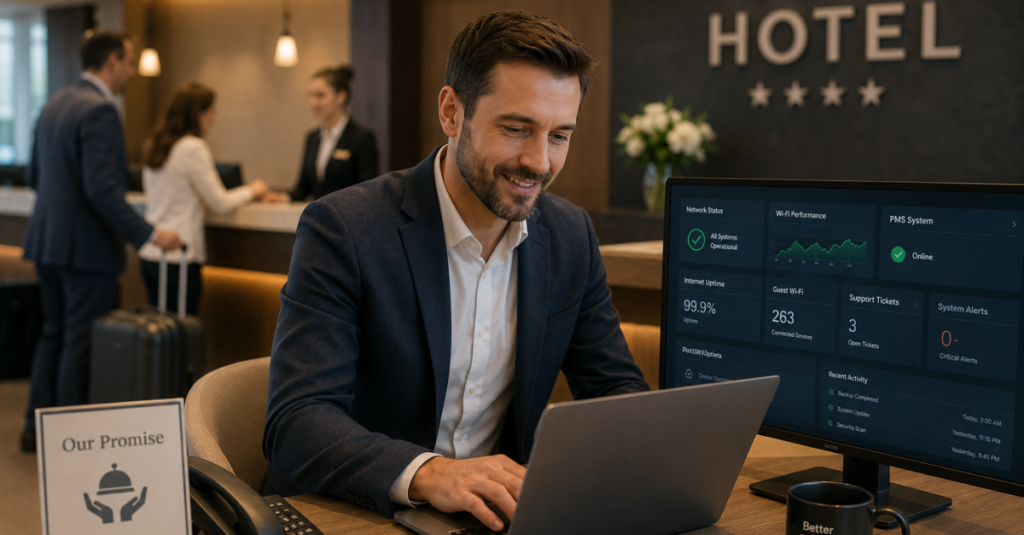
Front desk and reservations teams handle a significant volume of repetitive tasks, from confirmation emails to routine billing inquiries, that can consume time better spent on direct guest interaction. Automating these routine processes allows staff to focus on the parts of guest service that genuinely benefit from a human touch.
Properties exploring automation are seeing measurable front office automation benefits from tools that handle routine communication and administrative tasks automatically, freeing staff to spend more time on the guest interactions that actually shape a property’s reputation.
Cloud Platforms Supporting Modern Hospitality Operations
Cloud based systems have become central to hospitality operations, supporting everything from reservations to revenue management to guest communication. Moving these systems to the cloud allows properties to access data from anywhere, which is particularly valuable for management groups overseeing multiple properties.
A well managed hospitality cloud solutions environment allows properties to scale capacity during peak season without maintaining excess on premises infrastructure year round. Properties transitioning systems to the cloud for the first time should be aware of common cloud transition mistakes that can create unexpected downtime or security gaps if the migration is rushed without proper planning.
Multi Property Technology Consistency
Hospitality groups operating multiple properties face many of the same challenges as any multi location business, with the added pressure that guest experience needs to feel consistent across every property under the same brand, regardless of size or location.
An overview of how distributed property security approaches help multi property hospitality groups maintain consistent protection standards across every location is particularly relevant for management companies overseeing several properties with varying levels of local IT support.
Real Time Monitoring for Guest Facing Systems
Hospitality operations run around the clock, meaning system issues can arise at any hour, including times when on site staff may not have the technical expertise to diagnose a problem quickly. Continuous monitoring allows issues to be caught and addressed before guests are ever affected.
An increasing number of properties are investing in guest network monitoring services that provide continuous visibility into network performance and security, catching problems during off hours before they escalate into a guest facing disruption during the next business day.
Hurricane Season and Business Continuity Planning
Southwest Florida hospitality businesses face a unique operational challenge that many other regions do not need to plan around as seriously: hurricane season. Properties need a technology continuity plan that accounts for potential power outages, connectivity disruptions, and the need to communicate quickly with guests and staff during severe weather events.
Modern approaches to continuity planning updates now incorporate cloud dependencies and remote access considerations alongside traditional physical preparedness measures, helping properties maintain guest communication and operational continuity even when a storm disrupts normal operations.
Communication Systems That Keep Staff Connected
Front desk, housekeeping, maintenance, and management all need to coordinate constantly throughout a typical day, often across a large physical property where staff are rarely in the same location at the same time. Reliable communication tools directly affect how quickly staff can respond to guest requests and resolve issues.
Front desk communication tools that connect phone, messaging, and internal coordination across departments help ensure guest requests are routed quickly to the right team, rather than getting lost between disconnected systems or handheld radios alone.
Using AI to Enhance, Not Replace, Guest Service
Many hospitality properties are exploring AI powered chatbots, automated guest messaging, and predictive tools for staffing and inventory management. Used thoughtfully, these tools can improve response times and operational efficiency, but they require clear guidelines to ensure they enhance rather than detract from the personal service guests expect.
A documented guest service AI policy helps properties define where AI tools are appropriate, such as answering routine questions, and where human interaction remains essential to the guest experience.
Before rolling out new AI tools broadly, a hospitality AI evaluation can help property management understand which tools are actually ready for guest facing use and which need further refinement first.
Moving From Reactive Support to Predictive Reliability
Many hospitality properties still rely on reactive IT support, only addressing problems after a guest has already been affected. A more proactive model catches warning signs before they escalate into a visible service disruption.
A broader look at the shift toward a predictive support model explains why hospitality businesses in particular benefit from catching infrastructure issues early, since even brief system outages can directly and visibly affect guests in ways that are far more noticeable than in many other industries.
Everyday Technology Support Behind the Scenes
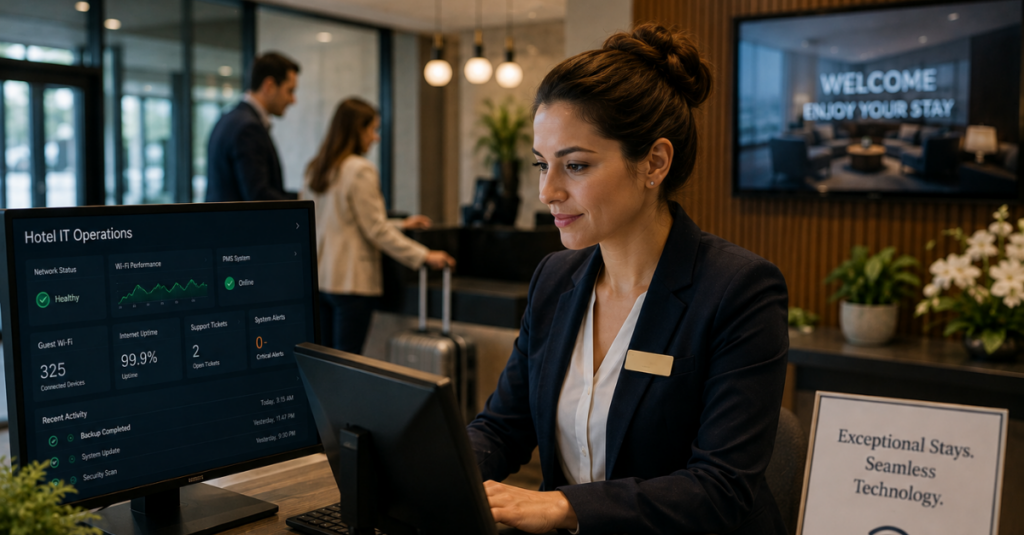
Beyond guest facing systems, properties depend on a wide range of everyday technology to keep operations running smoothly, from back office accounting to procurement to staff scheduling. Reliable support for these systems prevents the small frictions that can add up to meaningful operational strain over time.
Supporting infrastructure worth prioritizing includes:
- Hospitality IT support available around the clock, matching the operational hours of most properties
- Property technology procurement that ensures aging equipment is replaced proactively before it affects guest facing operations
- A hospitality IT insights library covering practical guidance relevant to property management and operations teams
Choosing a Technology Partner That Understands Hospitality
Not every IT provider understands the round the clock operational demands and guest facing sensitivity unique to hospitality. Properties evaluating outside support should look for a provider with direct experience supporting hotels, resorts, and hospitality groups specifically.
Helpful indicators to evaluate include:
- Hospitality client results demonstrating real experience with similar properties
- Property owner reviews from other hospitality operators
- Technology vendor credentials reflecting credibility with major hospitality and IT platforms
- Scalable support plans that adjust with seasonal occupancy changes
- A company experience overview explaining the provider’s background and approach
- A clear explanation of hospitality partnership advantages specific to properties balancing guest experience with operational reliability
CMIT Solutions of Fort Myers South has worked with hospitality businesses throughout the region looking to build technology that guests never have to think about, supported by guest focused IT strategy designed around the operational realities of round the clock hospitality service. Local properties can learn more through the Southwest Florida hospitality team serving hotels, resorts, and restaurants across the area.
Conclusion
In hospitality, technology reliability is inseparable from guest experience. A property can invest heavily in beautiful rooms, excellent dining, and attentive staff, but a slow Wi-Fi connection or a failed payment system at checkout can undo much of that positive impression in a matter of minutes. Properties that treat IT reliability as a core part of the guest experience, backed by proactive monitoring, strong security, and consistent support, are far better positioned to deliver the seamless experience guests increasingly expect.
Investing in reliable technology infrastructure is not just about avoiding problems. It is about creating the kind of consistently smooth experience that turns first time guests into repeat visitors and positive online reviews.
Reliable technology works quietly in the background, but its absence is immediately noticeable to every guest who walks through the door. Hospitality businesses ready to strengthen their technology foundation can schedule a consultation with a team that understands the operational demands of delivering exceptional guest experiences in Southwest Florida.
Frequently Asked Questions