
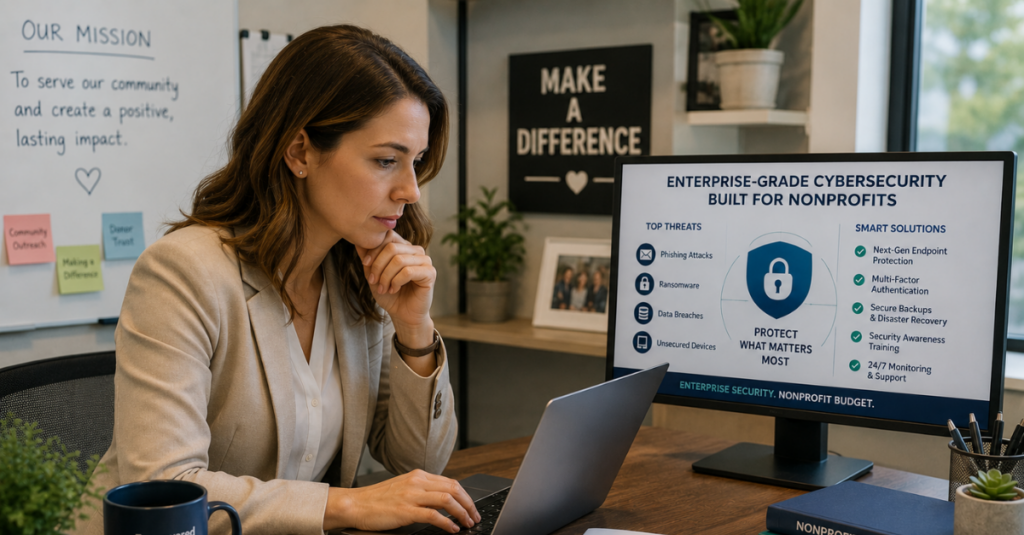
Nonprofit organizations often assume cybercriminals have little interest in them, since they are not sitting on the kind of profit margins a typical business protects. That assumption is incorrect, and it is one of the reasons nonprofits have become an increasingly common target. Donor databases, grant records, and financial systems all hold valuable information, while limited IT budgets and small administrative teams often leave nonprofits with far weaker defenses than the businesses attackers might otherwise target.
CMIT Solutions of Fort Myers South works with nonprofit organizations across Southwest Florida that are trying to protect donor trust and organizational data without the budget of a large enterprise. This article explains why nonprofits face real cybersecurity risk, and how limited budget organizations can still build a genuinely strong defense.
Why Nonprofits Are Attractive Targets
Nonprofits hold a surprising amount of sensitive data for organizations of their size. Donor names, addresses, payment information, and giving history sit alongside grant documentation, board records, and sometimes sensitive information about the populations they serve. That combination makes nonprofits valuable targets even without the large revenue figures typical of a for profit business.
Several factors make nonprofits especially vulnerable:
- Small or nonexistent internal IT staff managing security alongside many other responsibilities
- Heavy reliance on volunteers who may not receive the same security training as paid staff
- Frequent staff and volunteer turnover, making consistent access control difficult
- Limited budgets that often push cybersecurity spending to the bottom of the priority list
- A common assumption that nonprofit status somehow reduces attractiveness to attackers
The Real Cost of a Nonprofit Data Breach
A breach at a nonprofit organization carries consequences that extend well beyond the immediate financial cost. Donor trust, once damaged, can be extremely difficult to rebuild, and many donors will hesitate to continue giving to an organization that failed to protect their personal and financial information.
Beyond reputational damage, nonprofits face:
- Direct costs associated with breach notification and credit monitoring for affected donors
- Potential loss of grant funding if funders require demonstrated security practices
- Legal and regulatory obligations depending on the type of data involved
- Operational disruption during recovery, pulling staff away from mission critical work
Common Cybersecurity Gaps in Nonprofit Organizations
Most nonprofit breaches do not result from sophisticated attacks. They result from basic gaps that would be relatively inexpensive to close if properly prioritized. A closer look at typical nonprofit environments reveals a recurring set of weaknesses.
Frequent gaps include:
- No multi factor authentication on email, donor management, or financial systems
- Volunteers and former staff retaining system access long after their involvement ends
- Donor and financial data stored without encryption
- No formal incident response plan if a breach does occur
- Reliance on free or consumer grade tools not designed for organizational security needs
Nonprofit cybersecurity services designed specifically around these budget and staffing realities can close many of these gaps without requiring the level of investment a large enterprise security program would demand.
Protecting Donor and Financial Data
Donor data protection deserves particular attention, since it directly affects the trust relationship at the core of nonprofit fundraising. Payment information collected through online donation platforms, donor management systems, and event registration tools all needs to be handled with the same care a business would apply to customer financial data.
Practical steps nonprofits can take include:
- Using donation platforms that are PCI compliant rather than handling payment data directly
- Encrypting donor databases both at rest and during transmission
- Limiting access to financial systems to only the staff who genuinely need it
- Reviewing third party fundraising platforms for their own security practices before adopting them
Reliable donor data backup systems, tested regularly, also ensure that donor records and giving history can be recovered quickly in the event of a system failure or ransomware incident, without relying on manual reconstruction from paper records or scattered spreadsheets.
Volunteer and Staff Turnover Creates Ongoing Risk
Nonprofit organizations often rely heavily on volunteers and seasonal staff, creating a level of turnover that most businesses do not experience to the same degree. Every volunteer or staff member who gains system access represents a potential vulnerability if that access is not properly managed and revoked once their involvement ends.
Organizations should establish:
- A clear onboarding process that grants access only to systems relevant to each role
- An offboarding checklist that immediately revokes access when someone leaves
- Periodic access reviews to catch permissions that were never properly removed
- Basic security training for every volunteer who touches organizational systems, not just paid staff
Phishing and Social Engineering Targeting Nonprofits
Nonprofits are frequently targeted by phishing campaigns specifically designed to exploit the trust based culture common in mission driven organizations. Attackers impersonate board members, donors, or vendors, often requesting urgent wire transfers or gift card purchases that exploit the collaborative, less formal communication style many nonprofits rely on.
A closer look at how evolving email threats have changed in recent years highlights why phishing attempts today are far more convincing than the obvious scam emails staff may have learned to recognize in the past, particularly with AI tools now available to attackers.
Password Practices That Still Fall Short
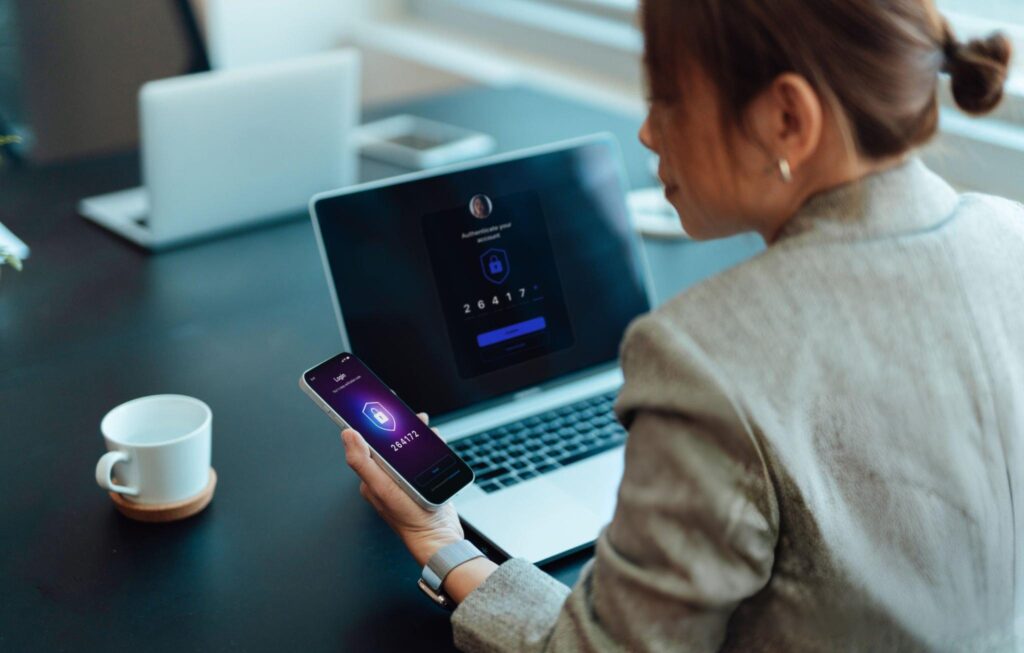
Weak password practices remain one of the most common causes of nonprofit security incidents, particularly in organizations relying on shared logins across multiple staff and volunteers to save on software licensing costs.
Many nonprofit organizations are still following modern password standards guidance that has become outdated as password cracking tools have grown more sophisticated. Updating policies to require longer passphrases, unique logins for each individual, and mandatory multi factor authentication is one of the most cost effective security improvements a nonprofit can make.
Cloud Tools Built for Limited Budgets
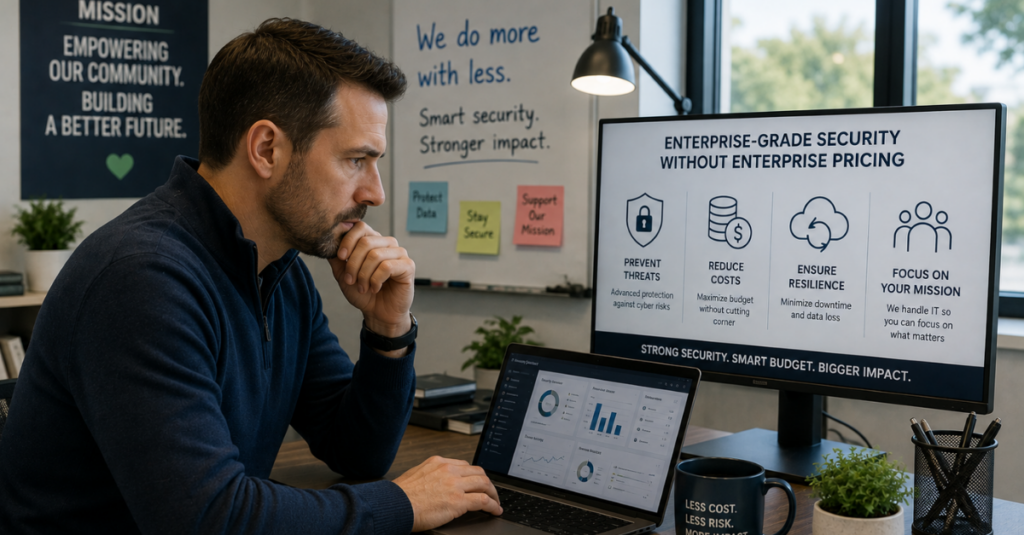
Cloud platforms have made enterprise grade tools more accessible to nonprofits than ever before, often through discounted or donated licensing programs available specifically to qualifying organizations. Taking advantage of these programs allows small nonprofits to use the same security capable tools that much larger organizations rely on.
A cost effective cloud services approach helps nonprofits identify which discounted programs they qualify for and how to configure them properly, since even donated enterprise tools require correct setup to deliver their full security benefit.
Nonprofits moving systems to the cloud for the first time should also be aware of common cloud migration pitfalls that can undermine the security benefits of the move if the transition is not planned carefully.
Grant and Regulatory Compliance Requirements
Many nonprofits receive funding tied to specific data protection or reporting requirements, and larger institutional funders increasingly expect grantees to demonstrate reasonable cybersecurity practices as part of the funding relationship. Falling short of these expectations can jeopardize future funding opportunities.
Organizations handling data tied to international donors or programs should also understand broader data privacy compliance obligations that may apply depending on where donors and program participants are located.
Ongoing nonprofit compliance assistance helps organizations stay aligned with funder expectations and applicable regulations without requiring a dedicated compliance staff member, which few nonprofits can afford to maintain.
Data Governance for Small Organizations
Nonprofits frequently accumulate years of donor records, program data, and administrative files across multiple systems, often without a clear policy for how long that data should be retained or who should have access to it. This is especially common in organizations that have gone through several changes in staff or leadership over time.
Establishing nonprofit data governance practices, even at a small scale, helps organizations understand exactly what data they hold, where it lives, and who is responsible for protecting it, which is often the first step toward meaningfully improving overall security.
Network Security Without a Large Budget
Nonprofits often operate out of shared office space, community centers, or converted residential buildings, environments that were not originally designed with organizational network security in mind. Basic network hygiene can dramatically reduce risk without requiring significant financial investment.
A budget friendly network management approach focuses on the highest impact, lowest cost improvements first, such as:
- Separating guest and public Wi-Fi from internal administrative systems
- Ensuring network equipment firmware stays current
- Replacing default passwords on routers and other network hardware
- Applying basic network segmentation between donor systems and general office use
Monitoring for Threats Without a Dedicated Security Team
Continuous monitoring often sounds like a luxury reserved for organizations with dedicated security staff, but affordable monitoring options now exist specifically for smaller organizations that cannot support an internal security team of their own.
Affordable threat monitoring services give nonprofits access to the kind of ongoing visibility that would otherwise require hiring dedicated staff, allowing suspicious activity to be caught and addressed quickly even without an internal security expert on hand.
Business Continuity Planning on a Nonprofit Budget
A cybersecurity incident, natural disaster, or simple system failure can disrupt a nonprofit’s ability to deliver services, especially for organizations providing time sensitive assistance to the communities they serve. Continuity planning does not need to be elaborate to be effective, but it does need to be documented and tested.
A practical look at continuity planning basics relevant to organizations of any size covers the core elements every nonprofit should have in place, regardless of how small the administrative team might be.
Communication Tools for Distributed Teams and Volunteers
Nonprofits frequently coordinate across staff, board members, and volunteers who are rarely all in the same location at the same time. Reliable communication tools help keep everyone aligned without relying on a patchwork of personal phone numbers and inconsistent messaging platforms.
Volunteer communication tools built for organizational use, rather than relying entirely on personal devices and consumer apps, help maintain both security and consistency as an organization coordinates across a distributed team.
Using AI Responsibly on a Limited Budget
Nonprofits are increasingly exploring AI tools to help with grant writing, donor communication, and administrative efficiency, often out of necessity given limited staff capacity. Without clear guidelines, however, staff may inadvertently share sensitive donor or program data with public AI tools that were never designed to handle that kind of information securely.
A documented responsible AI policy helps nonprofit staff and volunteers understand what information can and cannot be shared with AI tools, reducing the risk of accidental data exposure while still allowing the organization to benefit from efficiency gains.
Before adopting new AI tools broadly, a nonprofit AI assessment can help identify which tools are actually appropriate for the organization’s data sensitivity level and existing infrastructure.
Turning Security Into Donor Confidence
Cybersecurity does not have to be viewed purely as a cost center. Nonprofits that can clearly demonstrate strong data protection practices often find that it strengthens donor confidence, particularly among larger institutional donors who increasingly ask about data handling practices before committing significant funding.
A broader discussion of cybersecurity as strategy shows how organizations across sectors are using strong security practices as a trust building tool, an approach that applies just as directly to donor relationships as it does to customer relationships in the business world.
Everyday Technology Support for Nonprofit Teams
Beyond security specifically, nonprofits depend on reliable, everyday technology support to keep programs running smoothly with limited administrative staff. A missed email, a broken donor database connection, or a printer that will not cooperate can consume disproportionate amounts of time for a small team already stretched thin.
Supporting infrastructure worth prioritizing includes:
- Affordable IT support structured around nonprofit budget realities
- Nonprofit productivity software configured appropriately for small teams and volunteers
- Discounted technology procurement that takes advantage of nonprofit specific pricing and donation programs
- A nonprofit technology resources library covering practical guidance for organizations with limited internal IT expertise
Choosing the Right Technology Partner
Nonprofits considering outside IT support should look for a provider who genuinely understands nonprofit budget constraints and mission driven priorities, rather than applying a standard enterprise pricing model that does not fit the realities of nonprofit funding.
Helpful signals to evaluate include:
- Nonprofit success stories demonstrating real experience with mission driven organizations
- Nonprofit client testimonials reflecting genuine outcomes from similar organizations
- Certified vendor relationships that can help identify discounted or donated software programs
- Transparent nonprofit service packages structured with limited budgets in mind
- A team and mission page explaining the provider’s background and community involvement
- A clear explanation of mission driven partnership options built specifically for nonprofit organizations
CMIT Solutions of Fort Myers South has worked with nonprofit organizations throughout the region looking to protect donor trust and organizational data without stretching already limited budgets, offering an outsourced IT management approach designed around nonprofit realities rather than a generic enterprise pricing model. Local organizations can learn more through the Southwest Florida nonprofit support team serving mission driven groups across the area, backed by nonprofit technology guidance tailored to organizations balancing mission impact with limited resources.
Conclusion
Nonprofits face many of the same cybersecurity threats as large enterprises, often with a fraction of the budget and staff available to address them. The good news is that meaningful protection does not require an enterprise sized budget. Prioritizing the highest impact improvements, taking advantage of nonprofit specific discounts, and working with a partner who understands the unique constraints nonprofits operate under can go a long way toward closing the gap between what a large organization can afford and what a small nonprofit actually needs.
Donor trust is one of the most valuable assets a nonprofit has, and protecting the data behind that trust deserves the same level of seriousness as any other core organizational priority.
Donor trust depends on how seriously an organization protects the data behind it, and meaningful protection is achievable even on a limited nonprofit budget. Organizations ready to strengthen their security posture can schedule a consultation with a team that understands the unique constraints nonprofits face in Southwest Florida.
“`html id=”nonprofit-cybersecurity-faq”
Frequently Asked Questions
“`