The modern workplace has changed dramatically over the past few years. Employees are no longer tied to a single office location or traditional corporate network. In 2026, businesses are operating in hybrid environments where teams work from offices, homes, coworking spaces, and while traveling.
This flexibility has improved productivity and collaboration, but it has also created major cybersecurity and network management challenges for businesses.
Traditional security models were built around the idea that employees and devices operated inside a centralized office network protected by firewalls and on-premise security systems. That model no longer works effectively for today’s distributed workforce.
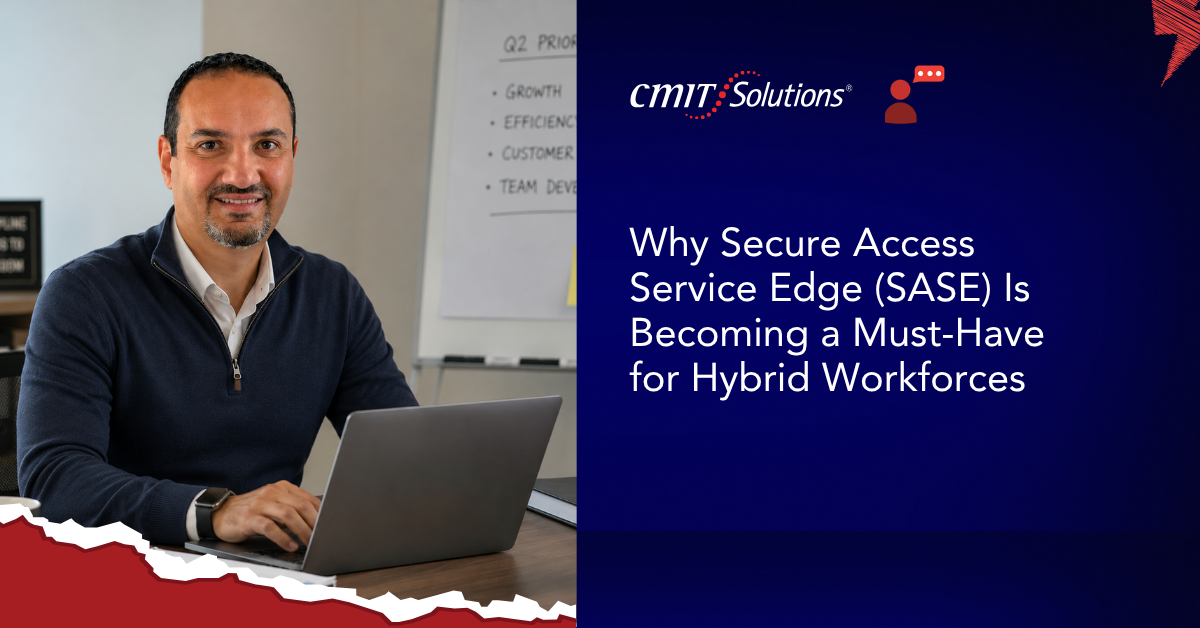
As businesses continue adopting cloud platforms, remote access tools, and mobile work environments, Secure Access Service Edge (SASE) is emerging as one of the most important technologies supporting modern business IT infrastructure.
For businesses managing hybrid teams, SASE is becoming essential for maintaining secure access, improving network performance, and simplifying cybersecurity management across multiple locations and devices.
What Is Secure Access Service Edge (SASE)?
Secure Access Service Edge, commonly known as SASE, is a modern networking and cybersecurity framework that combines network connectivity and security services into a single cloud-based solution.
Instead of relying on traditional on-premise security appliances, SASE delivers security and network protection directly through the cloud.
This allows employees to securely access business applications, systems, and data from anywhere while maintaining consistent security policies across all devices and locations.
SASE typically combines several technologies into one platform, including:
- Secure web gateways
- Zero Trust network access
- Cloud firewall services
- SD-WAN networking
- Cloud access security brokers
- Threat protection and monitoring
By integrating networking and security into a unified system, businesses can better support hybrid work environments while reducing complexity through advanced cybersecurity solutions.
Businesses exploring modern security frameworks are also reviewing Zero Trust security and cloud security strategies.
Hybrid Work Has Changed the Security Landscape
Traditional office networks were designed around centralized infrastructure. Employees worked inside the office, connected to internal servers, and accessed business systems through company-controlled networks.
Hybrid work has completely disrupted that structure.
Today, employees regularly connect to business systems from:
- Home Wi-Fi networks
- Public internet connections
- Personal devices
- Mobile hotspots
- Cloud applications
This creates a much larger attack surface for cybercriminals.
Businesses now face challenges such as:
- Unsecured remote access
- Inconsistent security policies
- Poor visibility into endpoint activity
- Increased phishing attacks
- Cloud application vulnerabilities
- Difficulty managing distributed users
Traditional VPNs and legacy security systems often struggle to handle these modern requirements efficiently.
SASE was developed specifically to solve these problems while improving remote workforce security.
Businesses adapting to hybrid work environments are also reading about digital workplace security and secure remote access.

Why Businesses Are Moving Away From Traditional VPNs
For years, VPNs were the standard solution for remote access. While VPNs still play a role in some environments, many businesses are finding they are no longer sufficient for large-scale hybrid workforces.
VPNs were designed for occasional remote access, not for supporting an always-connected distributed workforce.
As businesses adopt more cloud applications and remote work models, VPN limitations have become more noticeable.
Slow Performance
Routing all traffic through centralized networks often creates latency and poor user experiences.
Limited Scalability
Managing large numbers of remote connections can become difficult as businesses grow.
Security Gaps
VPNs often provide broad network access instead of limiting users only to the systems they need.
Complex Management
Maintaining VPN infrastructure across multiple locations increases IT complexity.
SASE helps businesses move beyond these limitations by providing secure, cloud-native access designed specifically for hybrid environments using scalable network management services.
Businesses modernizing remote access are also exploring network optimization and secure connectivity.
SASE Improves Security for Remote Employees
One of the biggest reasons businesses are adopting SASE is its ability to improve cybersecurity for remote and hybrid teams.
Instead of assuming users inside a network are trustworthy, SASE follows a Zero Trust security model.
This means every user, device, and connection is continuously verified before access is granted.
With SASE, businesses can enforce security policies consistently regardless of where employees are working.
This helps protect against:
- Unauthorized access
- Stolen credentials
- Malware infections
- Phishing attacks
- Risky devices
- Data breaches
By securing access at the user and device level, businesses can significantly reduce cybersecurity risks in remote work environments with proactive endpoint protection.
Businesses strengthening remote security are also reading about identity protection and modern authentication.
Cloud Applications Require Modern Security Approaches
Businesses today rely heavily on cloud-based tools and platforms for communication, collaboration, file sharing, and business operations.
Employees use applications like:
- Microsoft 365
- Google Workspace
- Cloud CRM systems
- Video conferencing platforms
- Project management software
- Cloud storage services
Traditional security models were not built for cloud-first environments.
SASE helps businesses secure cloud application access directly through cloud-delivered security controls rather than routing traffic through corporate data centers.
Better Performance
Users can connect directly to cloud applications without unnecessary network delays.
Improved Visibility
Businesses gain better insight into how employees access cloud platforms and data.
Stronger Data Protection
Sensitive information can be monitored and protected across cloud environments.
Simplified Security Management
IT teams can manage security policies centrally across all cloud applications and remote users.
For businesses embracing cloud transformation, SASE is becoming a critical part of modern IT strategy alongside scalable cloud services.
Businesses adopting cloud-first environments are also exploring cloud management and cloud security controls.
SASE Simplifies IT Management
Managing cybersecurity across hybrid workforces can become extremely complex.
Businesses often rely on multiple disconnected tools for networking, endpoint security, VPN access, cloud security, and threat monitoring.
This fragmented approach increases operational complexity and makes it harder for IT teams to maintain visibility and control.
SASE simplifies IT management by combining networking and security into one centralized platform.
This allows businesses to:
- Manage security policies more efficiently
- Improve network visibility
- Reduce infrastructure complexity
- Streamline remote access management
- Simplify troubleshooting and support
For SMBs with limited internal IT resources, this simplification can significantly reduce operational strain with proactive managed IT support.
Businesses improving IT operations are also reviewing proactive IT management and modern IT strategies.
Better User Experience Matters for Productivity
Security is important, but businesses also need to ensure employees can work efficiently without constant connectivity issues or slow application performance.
Poor network performance can frustrate employees and reduce productivity, especially for remote teams relying heavily on cloud applications and video conferencing.
SASE improves user experiences by optimizing how traffic is routed and secured.
Instead of forcing all traffic through centralized office networks, users connect to the nearest cloud-based SASE service point.
This helps reduce latency and improve application performance.
Employees benefit from:
- Faster cloud access
- More stable remote connections
- Improved collaboration performance
- Fewer connectivity disruptions
Businesses adopting SASE are often able to improve both security and employee productivity at the same time with reliable business communication platforms.
Businesses focused on collaboration efficiency are also reading about team communication tools and workplace productivity.
Cybersecurity Threats Are Driving SASE Adoption
Cyber threats continue to evolve rapidly, especially in hybrid work environments.
Attackers are increasingly targeting remote users, cloud applications, and distributed endpoints because they know traditional security models often leave gaps.
Businesses are facing rising threats such as:
- Credential theft
- Ransomware attacks
- Cloud account compromises
- Phishing campaigns
- Shadow IT risks
SASE helps businesses strengthen security by continuously monitoring access requests, verifying device security, and applying intelligent threat protection across all users and locations.
This proactive approach is becoming increasingly important as businesses expand remote work capabilities with advanced threat monitoring.
Businesses improving cybersecurity posture are also exploring shadow IT risks and business cybersecurity planning.

SASE Supports Future Business Growth
Hybrid work is not a temporary trend. Businesses are continuing to invest in flexible work environments because they improve employee satisfaction, operational agility, and talent acquisition opportunities.
As businesses grow, they need scalable IT infrastructure capable of supporting employees regardless of location.
SASE provides the flexibility businesses need to scale securely without constantly expanding traditional network infrastructure.
Organizations can onboard remote employees faster, secure new locations more efficiently, and adapt more easily to changing operational needs.
For growing businesses, SASE supports long-term scalability while reducing infrastructure limitations through strategic IT planning.
Businesses preparing for future growth are also reviewing future-ready IT roadmaps and technology scalability.
Why Businesses Are Partnering With Managed IT Providers
Implementing SASE solutions can be complex without the right expertise.
Businesses must evaluate network architecture, cloud environments, endpoint security, access controls, and compliance requirements before deploying a SASE framework successfully.
Many SMBs are turning to managed IT providers for guidance and implementation support.
Managed IT services help businesses:
- Design secure SASE architectures
- Configure Zero Trust access controls
- Manage cloud security
- Monitor remote environments
- Improve network performance
- Reduce cybersecurity risks
Working with experienced IT professionals helps businesses adopt modern networking and security solutions more efficiently while minimizing operational disruption through reliable IT consulting services.
Businesses evaluating IT partnerships are also exploring technology consulting and managed security support.
The Future of Hybrid Workforce Security
As businesses continue embracing hybrid work models, traditional network security approaches will become increasingly outdated.
Cloud-first environments, distributed workforces, and evolving cyber threats require more flexible and intelligent security frameworks.
SASE is quickly becoming one of the most important technologies supporting the future of secure business operations.
Businesses that modernize their networking and security strategies now will be better prepared to support long-term growth, improve operational agility, and maintain stronger cybersecurity protection.
Organizations preparing for evolving threats are also reviewing future cybersecurity trends and next-generation security tools.
Conclusion
Hybrid work has permanently changed the way businesses manage technology, security, and connectivity.
Traditional security models are no longer enough to protect distributed teams operating across cloud platforms, remote locations, and mobile devices.
Secure Access Service Edge (SASE) provides businesses with a modern framework for securing remote access, improving network performance, and simplifying IT management in hybrid work environments.
By combining networking and cybersecurity into a unified cloud-based solution, businesses can better protect users, support productivity, and adapt to the demands of modern digital operations.
CMIT Solutions of Long Beach helps businesses modernize their IT infrastructure with advanced cybersecurity solutions, cloud networking strategies, and proactive managed IT services designed for today’s hybrid workforce.
From secure remote access and cloud security to endpoint protection and network optimization, CMIT Solutions provides businesses with the expertise needed to build secure, scalable, and future-ready IT environments. To strengthen your hybrid workforce security strategy , contact our team today.