Introduction: Medical Technology Is Expanding Faster Than Security
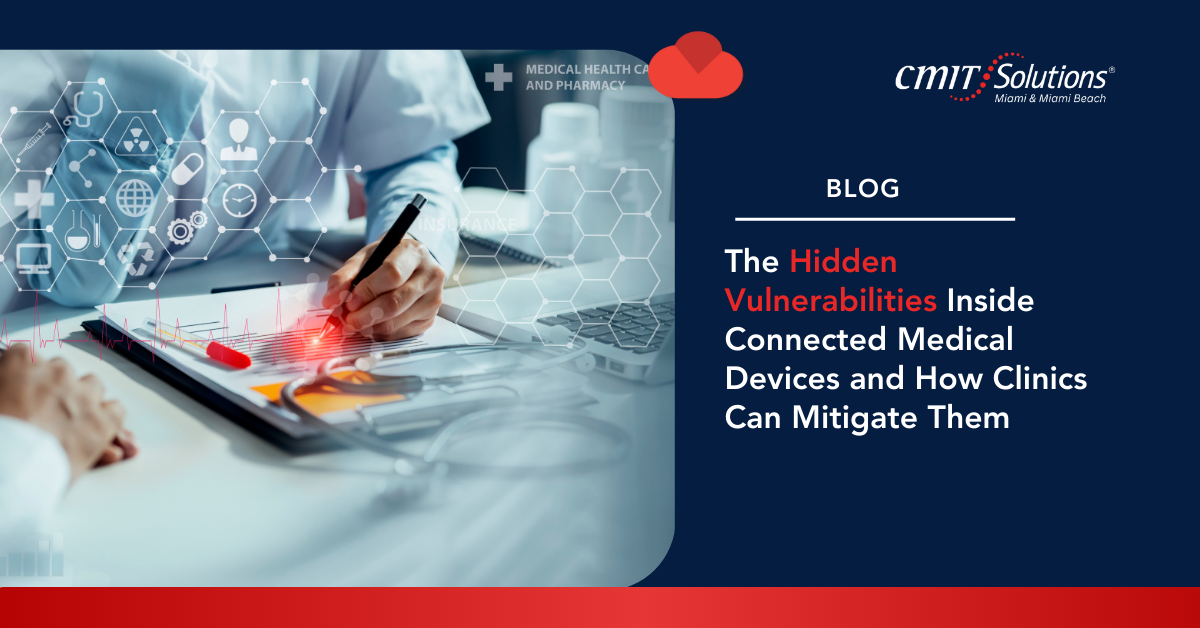
Connected medical devices are now central to modern clinical care. Imaging systems, patient monitoring tools, and diagnostic devices rely on constant connectivity to function efficiently. While these systems improve outcomes, they also introduce risks that many clinics overlook until disruption occurs.
As healthcare cyber incidents increase, clinics are strengthening their digital defenses to protect patient safety, uptime, and regulatory standing.
• Patient care depends on system availability
• Cyber incidents directly affect treatment delivery
• Downtime disrupts clinical workflows
• Security gaps increase operational risk
Why Connected Medical Devices Carry Hidden Security Risks
Medical devices are built for longevity and clinical accuracy, not rapid security updates. Many devices operate on outdated software and connect continuously to clinic networks, increasing exposure.
These risks grow when devices are not included in broader cybersecurity planning.
• Limited patching capabilities
• Continuous network exposure
• Low visibility into device behavior
• Vendor-controlled configurations
These gaps often intersect with broader IT challenges faced by clinics.
How Cyber Threats Enter Through Medical Devices
Attackers often use medical devices as indirect entry points into healthcare networks. Once a device is compromised, it can be used to access clinical systems, records, and administrative platforms.
This lateral movement is difficult to detect without monitoring.
• Flat network architecture
• Shared system credentials
• No alerts for abnormal behavior
• Limited real-time visibility
This mirrors patterns seen in mastering cybersecurity across SMB environments.
Patient Safety Is Directly Tied to Device Reliability
When medical devices are disrupted, patient care suffers immediately. Delays, inaccurate readings, or system failures create clinical risk and erode patient trust.
Technology failures quickly become care failures.
• Delayed diagnostics
• Inaccurate clinical data
• Appointment cancellations
• Reduced patient confidence

Compliance Risks Grow When Devices Are Overlooked
Healthcare compliance extends to any system handling patient data, including connected medical devices. Many clinics fail audits because devices are excluded from documentation and access controls.
This creates unnecessary exposure.
• Missing audit trails
• Unclear device ownership
• Higher regulatory scrutiny
• Increased post-incident risk
Strong IT compliance practices help close these gaps.
Network Architecture Determines Device Security
When devices share networks with administrative systems, attackers can move freely once inside. Segmented networks reduce risk and limit damage.
Design matters as much as tools.
• Restricted communication paths
• Controlled access zones
• Reduced lateral movement
• Improved traffic monitoring
This is especially critical when evaluating cloud vs on-prem environments.
Email and Remote Access Increase Device-Related Risk
Email-based attacks often provide attackers with credentials that lead to deeper system access. Once inside, devices connected to shared systems become vulnerable.
Access control failures amplify risk.
• Compromised email credentials
• Unmonitored vendor access
• Weak remote session controls
• Delayed access removal
Strong email security reduces this exposure.
Backup and Recovery Protect Clinical Continuity
When device systems fail, clinics must restore operations quickly to avoid patient disruption. Backup and recovery planning ensures systems and data can be restored reliably.
Prepared clinics recover faster.
• System restoration capability
• Reduced patient care disruption
• Support for investigations
• Faster operational recovery
Reliable data backup and disaster recovery planning are essential.

Monitoring Helps Detect Device Issues Early
Without monitoring, clinics may not notice abnormal device behavior until care is impacted. Continuous oversight allows earlier detection and response.
Visibility improves resilience.
• Network traffic visibility
• Unauthorized access alerts
• Faster containment
• Reduced operational impact
Ongoing proactive IT maintenance supports stability.
Why Managed IT Support Is Critical for Clinics
Most clinics lack the internal resources to manage device security alone. Managed IT support provides continuous oversight and specialized expertise.
External support reduces risk.
• Vendor coordination
• Rapid incident response
• Security update management
• Compliance risk reduction
Many clinics rely on managed IT services to protect connected systems.
Conclusion: Securing Devices Is Now a Core Healthcare Responsibility
Connected medical devices are essential to modern care, but they also introduce risks that clinics must manage proactively. As healthcare technology becomes more interconnected, security failures can directly affect patient safety and clinic operations.
Clinics that prioritize device security are better positioned to:
• Maintain compliance
• Reduce downtime
• Strengthen trust
• Support long-term growth