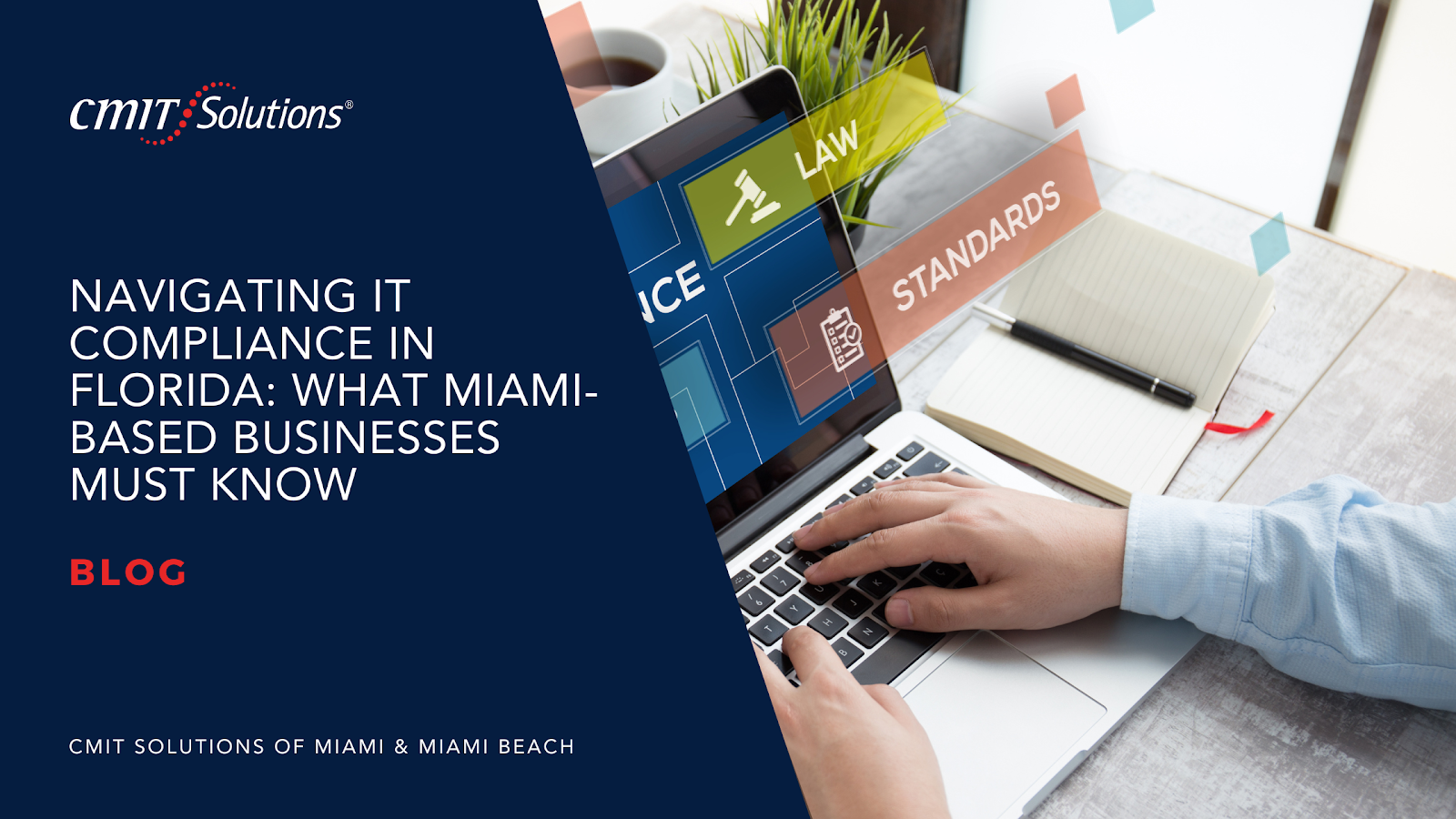
Introduction: Why IT Compliance Is Vital for Miami Businesses
The digital age has ushered in an era where IT compliance is no longer optional — it’s a critical component for any Miami-based business aiming to thrive in 2025. Regulatory landscapes continue to tighten, data protection expectations are growing, and cyber threats are evolving rapidly.
Ignoring IT compliance not only increases your vulnerability to attacks but could also lead to costly fines and lawsuits. With cyber threats rising and SMBs needing stronger digital defenses, Miami businesses must take proactive steps to secure sensitive information, protect customer trust, and align operations with the latest regulations.
Understanding the Foundations of IT Compliance
IT compliance means adhering to a set of legal, regulatory, and industry standards that govern how data is collected, stored, managed, and protected. Regulations like HIPAA, PCI DSS, FIPA (Florida Information Protection Act), and even GDPR are shaping how Miami businesses operate, even when their primary market is local.
Compliance today goes hand-in-hand with building a multi-layered cybersecurity approach, which ensures that your defenses address not just known threats, but evolving risks too.
Florida’s Unique IT Compliance Landscape
Miami businesses face distinct challenges, given Florida’s combination of strong tourism, healthcare, and financial sectors. The Florida Information Protection Act (FIPA) mandates businesses to protect personal information and report breaches quickly — a requirement that can severely impact operations if not addressed with proper planning.
Implementing managed IT services to boost efficiency and security helps organizations stay compliant by ensuring continuous system monitoring, real-time threat detection, and expert support.
The Key Regulations You Cannot Ignore
1. HIPAA for Healthcare
Healthcare providers and their vendors must ensure compliance with HIPAA, securing Protected Health Information (PHI) from breaches and misuse.
2. PCI DSS for Retailers
Businesses that process credit card transactions must comply with PCI DSS standards to protect payment data and avoid massive fines.
3. FIPA for All Organizations
Even if you’re not in healthcare or retail, any business that collects consumer information falls under FIPA guidelines, emphasizing the importance of secure storage, prompt breach reporting, and customer notification protocols.
Failing to implement email security best practices can lead to breaches that violate several compliance mandates simultaneously.
How Compliance Helps Your Business Beyond Avoiding Penalties
IT compliance does more than prevent fines; it strengthens your market reputation, builds customer trust, and opens doors to new opportunities.
For instance, many corporate contracts now require small vendors to demonstrate compliance readiness. Those who leverage Microsoft 365 to boost productivity and security not only streamline operations but also enhance compliance across collaboration and data storage functions.
Moreover, compliance frameworks often serve as a cybersecurity roadmap, helping businesses build systems that are resilient against modern attacks.
The Most Common IT Compliance Pitfalls for Miami SMBs
Even businesses that are aware of IT compliance requirements often fall into predictable traps:
- Lack of cybersecurity policies: No clear incident response plans.
- Poor backup procedures: Insufficient disaster recovery planning.
- Outdated security measures: Ignoring basic protections like firewalls and anti-malware tools.
- Reactive IT maintenance: Waiting for something to break before fixing it.
Many of these challenges are avoidable when businesses understand the importance of proactive IT maintenance and monitoring to prevent problems before they escalate into compliance violations.

How Cloud Solutions Support Compliance Efforts
More Miami businesses are embracing the cloud for its scalability and security benefits. However, not all cloud services are equal when it comes to compliance.
When evaluating providers, it’s crucial to understand the difference between cloud services versus on-premise infrastructure to ensure your choice aligns with HIPAA, PCI DSS, and other regulatory standards.
Well-architected cloud environments offer encryption, access control, audit trails, and disaster recovery options — all critical for compliance success.
Disaster Recovery and IT Compliance: An Inseparable Duo
Many compliance frameworks, including HIPAA and FIPA, require businesses to demonstrate that they can recover quickly after an incident.
Unfortunately, downtime is still a massive problem for SMBs, as downtime disruptions are incredibly costly in terms of revenue loss, productivity dips, and customer churn.
Implementing strong backup and disaster recovery solutions is essential. For Miami businesses planning for 2025, investing in the right backup solutions for the future could mean the difference between staying open after a cyberattack or facing permanent closure.
Strengthening Internal Policies and Staff Training
Compliance isn’t just a technology problem; it’s also about human behavior. Businesses must build policies around password management, data access, encryption, and security training.
Regular cybersecurity awareness programs that reflect effective cybersecurity training strategies ensure employees recognize phishing attempts, social engineering tactics, and suspicious behaviors.
The goal is to make compliance an everyday part of workplace culture, not just an annual checklist exercise.
Future Trends: Where IT Compliance Is Heading in Florida
The coming years will see new requirements around:
- AI governance and ethical data use
- Stricter breach reporting timeframes
- Stronger customer privacy rights
- Extended compliance to IoT and connected devices
Keeping pace with these changes means looking beyond traditional cybersecurity and into areas such as technology-driven business resilience strategies that prepare companies for a wide range of disruptions.
Conclusion: Compliance Is Your Competitive Advantage
In 2025, IT compliance will be the new currency of trust. Miami businesses that prioritize compliance will not only meet legal obligations but also attract more clients, build better partnerships, and grow faster.
Whether you’re investing in cloud scalability and cybersecurity, strengthening internal training programs, or preparing disaster recovery protocols, staying compliant offers advantages that go far beyond survival — it’s the foundation for thriving.
As regulations evolve, proactive businesses that integrate compliance into daily operations will secure not just their data, but also their future.