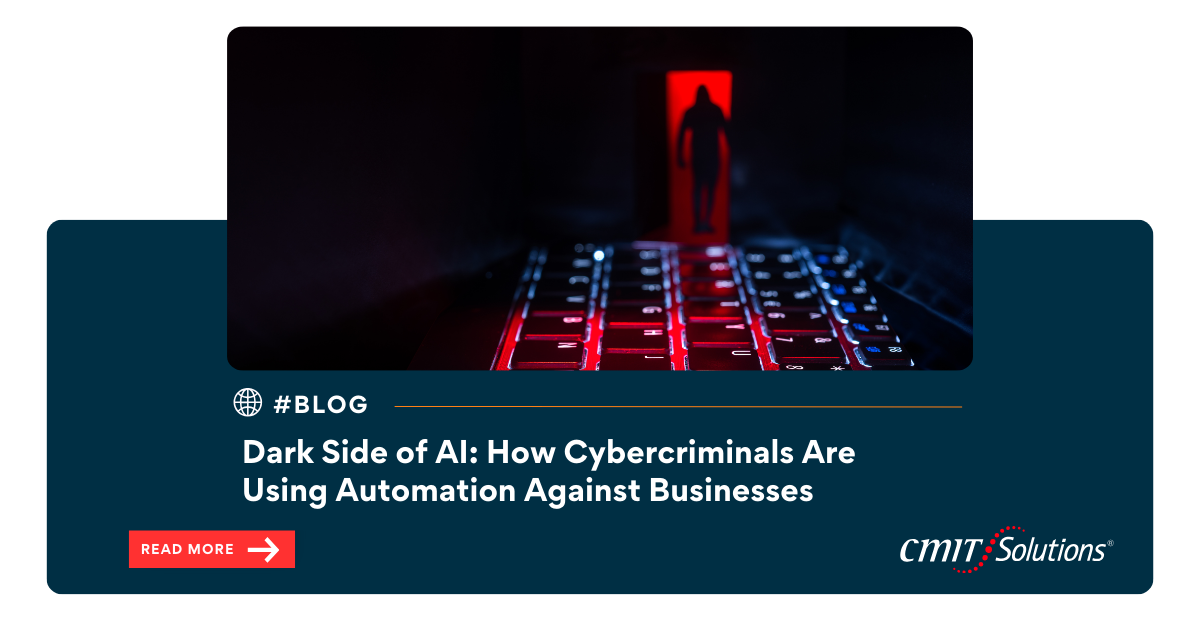
Artificial Intelligence (AI) is transforming the way businesses operate. From predictive analytics to smarter cybersecurity tools, AI gives small and midsize businesses (SMBs) powerful ways to improve efficiency and decision-making. Unfortunately, the same technology is now being used by cybercriminals to launch faster, more targeted, and more damaging attacks.
For companies in Oak Park, Hinsdale, and Oak Brook, understanding how criminals leverage AI and how to defend against it is critical for keeping data and operations secure.
How Criminals Use AI to Launch Smarter Attacks
AI allows hackers to scale and refine attacks that once required manual effort. Today’s criminals use automation to:
- Create phishing emails that perfectly imitate a company’s writing style.
- Build adaptive malware capable of changing its code to avoid detection.
- Scan networks for weak spots in real time.
- Analyze stolen data to identify high-value targets quickly.
These tactics enable more attacks in less time, increasing the odds of success and making detection much harder.

AI-Powered Phishing
Phishing remains the number one entry point for cyberattacks, and AI makes it far more dangerous.
- Natural language generation enables emails that sound authentic and personal.
- Attackers can automate campaigns, sending thousands of variations and tracking responses to fine-tune future attempts.
- Fake invoices, login pages, and customer notices are produced in seconds, tricking even cautious employees.
Solutions like Microsoft Copilot cybersecurity demonstrate how AI can defend against these threats, but only if businesses adopt strong protections before criminals exploit the same technology.
Malware and Ransomware Automation
AI also builds smarter malware that:
- Learns which defenses are active and modifies code to bypass them.
- Targets critical systems during off-hours to maximize damage.
- Encrypts backups, making recovery harder without a tested cyber-resilient plan.
Because AI can adapt faster than human security teams, traditional antivirus software alone is no longer enough.
Automated Reconnaissance and Data Theft
AI thrives on data, and cybercriminals use it to:
- Collect public information about employees and vendors.
- Predict passwords or security answers with alarming accuracy.
- Identify the most valuable files or systems to attack first.
This automated scouting allows criminals to plan attacks with precision and exploit vulnerabilities before they are patched.
Why Small Businesses Are Prime Targets
Large enterprises typically have dedicated cybersecurity teams and layered defenses. SMBs, however, often:
- Operate with smaller IT budgets and limited internal staff.
- Delay software updates or patches, leaving security gaps.
- Lack 24/7 monitoring that detects threats in real time.
As highlighted in reducing downtime, even a short disruption can lead to lost revenue and damaged customer trust.
Fighting Back With Defensive AI
The good news is that AI can also protect businesses when used proactively. Modern AI-powered tools can:
- Detect anomalies across networks and devices in real time.
- Automate patch management to close vulnerabilities quickly.
- Filter phishing attempts with machine learning that learns from every attack.
- Predict risks by analyzing global threat patterns.
Examples like AI-driven automation show how automation can strengthen defenses while improving efficiency.
Best Practices to Counter AI-Powered Threats
Technology alone isn’t enough. Businesses must combine AI security tools with strong practices:
- Multi-Factor Authentication (MFA): Adds critical identity verification for every login.
- Regular updates and patch management: Keeps systems protected from known exploits.
- Employee training: Ensures staff can recognize suspicious messages and report them quickly.
- Encrypted data backups: Provide fast recovery during a ransomware attack, as reinforced in cyber-resilient recovery plans.
Layering these defenses creates a safety net that adapts to evolving threats.
Managed IT Services: Essential for SMB Protection
Building and maintaining these defenses internally can overwhelm smaller teams. A trusted managed IT partner like CMIT Solutions of Oak Park, Hinsdale & Oak Brook offers:
- 24/7 monitoring to detect suspicious activity instantly.
- Advanced AI-based security tools for real-time threat analysis.
- Compliance support for HIPAA, PCI DSS, and GDPR.
- Strategic planning for emerging challenges like post-quantum security.
With enterprise-grade tools and local expertise, CMIT helps SMBs defend themselves with the same sophistication as larger organizations.
Preparing for the Next Wave of AI Threats
AI-powered attacks will continue to grow in speed and complexity. To stay ahead, businesses should:
- Conduct a security assessment to identify vulnerabilities.
- Deploy AI-enabled monitoring tools to catch anomalies in real time.
- Train employees regularly to recognize new attack methods.
- Create an incident response plan to ensure fast recovery when needed.
These steps form a layered, proactive defense that evolves alongside the threat landscape.
Conclusion: Using AI to Stay Ahead
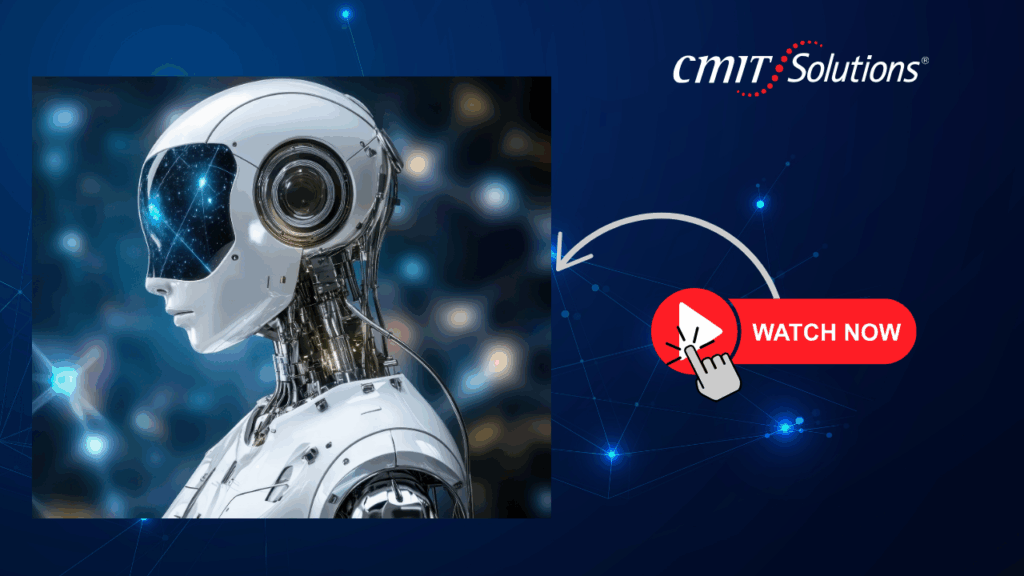
Artificial Intelligence offers tremendous opportunities for innovation, but it also arms cybercriminals with tools to attack faster and more effectively than ever before. The best defense is proactive action combining AI-powered security with expert guidance and employee awareness.
By partnering with CMIT Solutions of Oak Park, Hinsdale & Oak Brook, your business can:
- Implement AI-driven defenses to counter automated attacks.
- Automate updates and monitoring to reduce vulnerabilities.
- Build a future-ready strategy that protects both data and reputation.
Cybercriminals are already using AI to scale their operations. With the right technology and a trusted IT partner, you can use AI to stay one step ahead.