
Traditional cybersecurity strategies were built on the assumption that everything inside a company’s network could be trusted. Once users or devices passed the firewall, they were free to move about. Unfortunately, today’s threat landscape marked by remote work, cloud computing, and sophisticated attacks has rendered that model obsolete.
For small and midsized businesses (SMBs) in Oak Park, Hinsdale, and Oak Brook, adopting a Zero Trust security model is no longer optional; it’s essential for survival in a world of escalating cyber risks.
What Is Zero Trust Security?
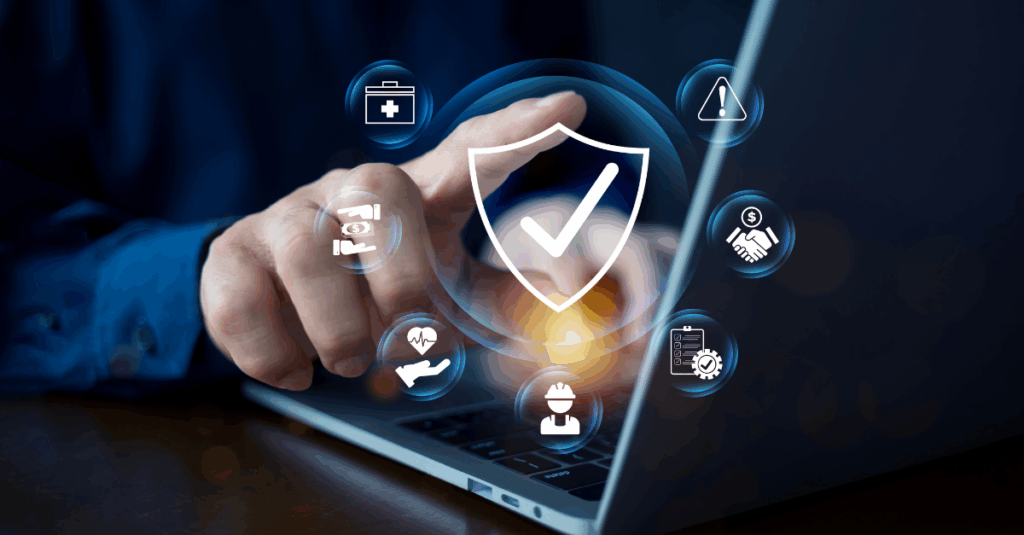
Zero Trust is a cybersecurity approach that operates on a simple principle: “Never trust, always verify.” Instead of automatically trusting users, devices, or applications, Zero Trust requires continuous verification of every interaction before granting access to resources.
Core Principles of Zero Trust
- Identity Verification: Every user and device must prove their identity at all times.
- Least Privilege Access: Users receive only the minimum permissions needed for their tasks.
- Micro-Segmentation: Networks are divided into smaller zones to limit lateral movement.
- Continuous Monitoring: Real-time analytics detect and respond to suspicious activity.
Unlike traditional perimeter-based security, Zero Trust assumes that threats can exist anywhere – inside or outside the network.
Why Traditional Security Falls Short
In the past, companies relied heavily on firewalls and VPNs to create a secure perimeter around their networks. But today’s business environment has changed:
- Remote Work: Employees connect from home, coffee shops, and mobile devices.
- Cloud Adoption: Applications and data now live outside the company’s physical network.
- Sophisticated Threats: Hackers use advanced tactics to bypass perimeter defenses.
The result is a network with blurred boundaries, where relying on a single gatekeeper is no longer enough. As highlighted in cyber-resilient recovery strategies, modern threats require layered, proactive defenses that extend beyond the firewall.
Key Benefits of a Zero Trust Framework
Adopting a Zero Trust architecture gives SMBs a powerful way to reduce risk and improve resilience.
Security Advantages
- Stronger Data Protection: Continuous verification prevents unauthorized access.
- Reduced Attack Surface: Micro-segmentation isolates breaches before they spread.
- Faster Threat Detection: AI-powered monitoring identifies anomalies in real time.
- Regulatory Compliance: Meets HIPAA, GDPR, PCI DSS, and other requirements.
Zero Trust not only strengthens security but also supports productivity by enabling secure, seamless access for employees and partners.
How Zero Trust Works in Practice
Zero Trust is not a single product, it’s a comprehensive strategy that integrates multiple technologies and policies. Key components include:
- Multi-Factor Authentication (MFA): Adds an extra layer of identity verification.
- Endpoint Security: Protects laptops, smartphones, and IoT devices.
- Identity and Access Management (IAM): Controls who can access specific resources.
- Encryption: Secures data both in transit and at rest.
- Network Segmentation: Creates secure “micro-perimeters” around sensitive data.
Solutions like Microsoft Copilot cybersecurity are helping businesses automate these processes by using AI to detect and respond to threats faster than ever.
Why SMBs Should Move Toward Zero Trust Now
Many SMB owners believe Zero Trust is only for large enterprises. In reality, small businesses are increasingly targeted by cybercriminals because they often lack robust defenses.
Reasons SMBs Can’t Wait
- Growing Remote Workforce: Hybrid work expands the attack surface.
- Cloud Migration: SaaS applications require secure, identity-based access.
- Sophisticated Threats: AI-driven attacks can breach outdated security models.
As seen in reducing downtime, proactive investment in advanced IT strategies saves money and protects operations compared to reactive “break-fix” approaches.
Integrating Zero Trust With Emerging Technologies
Zero Trust becomes even more powerful when combined with new technologies such as AI, quantum computing, and 5G:
- AI + Zero Trust: Automates threat detection and access verification.
- Quantum-Safe Encryption: Protects against future quantum decryption attacks, as explained in post-quantum cryptography.
- 5G Networks: Enables secure, high-speed connections but requires robust identity controls to manage new endpoints.
These integrations create a layered, future-proof cybersecurity framework for businesses of all sizes.
Overcoming Common Challenges
Adopting Zero Trust is not without obstacles. SMBs may face:
- Budget Constraints: Upfront investments in tools and training.
- Complexity: Integrating multiple technologies into existing systems.
- Cultural Change: Shifting employees to a “verify-first” mindset.
Working with a trusted partner like CMIT Solutions of Oak Park, Hinsdale & Oak Brook simplifies this process by providing tailored solutions and ongoing support.
The Business ROI of Zero Trust
Beyond security, Zero Trust delivers measurable returns by:
- Reducing data breach costs and downtime.
- Improving employee productivity with secure, seamless access.
- Enhancing customer trust through stronger data protection.
As demonstrated in cyber-resilient recovery planning, investing in proactive IT frameworks pays off by preventing costly incidents and preserving business continuity.
How CMIT Solutions Helps Businesses Transition to Zero Trust
At CMIT Solutions of Oak Park, Hinsdale & Oak Brook, we provide a step-by-step path to Zero Trust adoption, including:
- Comprehensive security assessments and gap analysis.
- Implementation of multi-factor authentication and role-based access controls.
- Continuous monitoring and threat detection with AI-driven tools.
- Regular updates and patch management to close vulnerabilities.
Our team combines local expertise with enterprise-grade technologies, ensuring that SMBs can achieve maximum security without sacrificing flexibility or performance.

Practical Next Steps for SMBs
To start your Zero Trust journey, businesses should:
- Engage a trusted IT partner to evaluate infrastructure and access controls.
- Deploy multi-factor authentication as a foundational layer of protection.
- Gradually segment networks and implement AI-driven monitoring.
- Train employees on the importance of continuous verification.
These incremental steps create a strong security culture while avoiding major disruptions to daily operations.
Conclusion: Maximum Security Starts With Zero Trust
The old “castle-and-moat” approach to cybersecurity is no match for today’s threats. Zero Trust offers a smarter, more adaptive framework that verifies every user, device, and connection every time.
By partnering with CMIT Solutions of Oak Park, Hinsdale & Oak Brook, your business can:
- Implement a Zero Trust architecture that protects sensitive data.
- Strengthen compliance with evolving industry regulations.
- Leverage AI and advanced monitoring for real-time threat detection.
Cybersecurity is no longer just an IT issue, it’s a business imperative. Don’t wait for the next breach to expose your vulnerabilities. Secure your future today with Zero Trust and a trusted local IT partner that understands the unique needs of Oak Park, Hinsdale, and Oak Brook.