
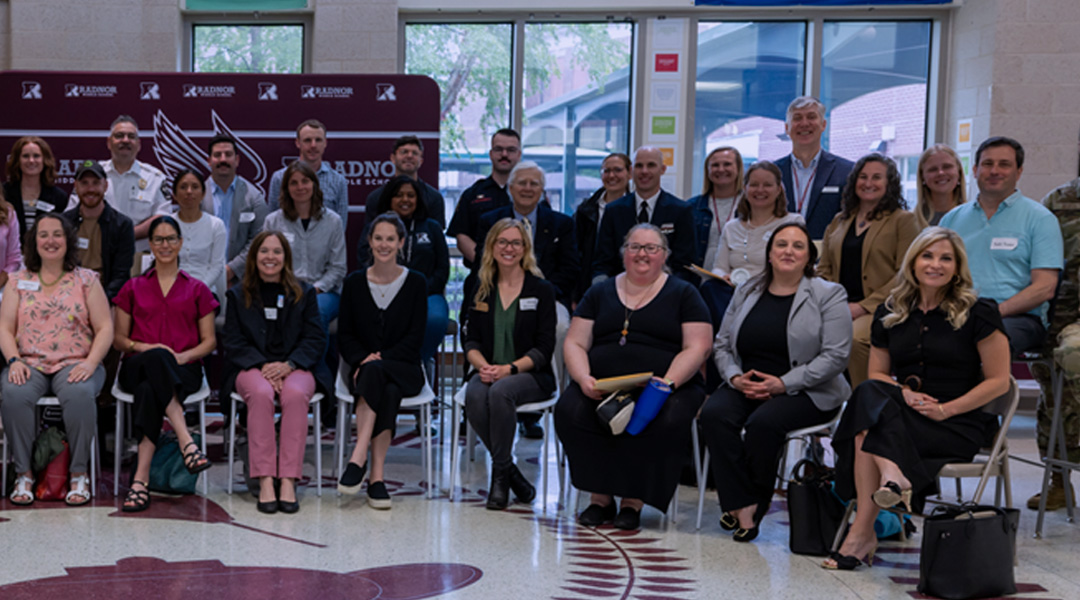
Recently, I was invited to speak at a middle school career day. It was going to be a 15-minute talk, one of many in a rotation of speakers. The audience? Seventh and eighth graders. The setting? A school gym – you know, folding chairs, lots of noise. I didn’t prepare much, expecting short attention spans and a lot more interest in jobs like fighter pilot or fashion designer.
I agreed to speak, but to be honest, in my head I saw this as a favor to the school administration. I didn’t stop to give much consideration to the audience because, hey, they’re just kids and I like talking about what I do, so how hard could it be?
Spoiler alert: harder than I thought.
I didn’t prepare like I usually do
When I talk to adults — clients, business owners, peer groups — I prepare. I don’t write a script, but I think through what I want to say, make notes, anticipate questions, build a few metaphors to help explain the technical stuff, and generally show up with a plan. And maybe a slide deck.
But for this? I figured I could wing it.
After all (I rationalized), I wasn’t going to be the flashiest speaker there. The lineup was sure to include more exciting speakers. I was pretty sure we’d see a firefighter, a doctor, a news anchor, and maybe someone from a sports team. Compared to that, “I run a company that helps other companies with their technology” didn’t seem like it would hold their attention.
I walked in expecting yawns and eye rolls. I got a grilling.
By the time it was my turn, the kids had heard from many others. I expected glazed-over eyes and polite nods.
But instead, they sat up. Leaned in. Asked real questions. Good ones.
- “Can you tell if someone’s spying on your phone?”
- “What’s the worst thing a hacker’s ever done that you’ve seen?”
- “Is AI going to be used more by the good guys or the bad guys?”
These weren’t throwaway questions. They were thoughtful and serious. I answered them, but I was a little embarrassed that I hadn’t anticipated them.
Ditch the high-level talk and make it real
In that moment, I realized I had to drop the acronyms, the client references, the tech jargon… and my assumptions.
Instead, I told them about stopping a ransomware in progress. I explained how firewalls are like security guards. And I revealed how we can trace a hacker’s digital footprints. They wanted more.
Preparation isn’t about polish. It’s about respect.
If you’ve ever caught yourself saying, “It’s just a quick meeting” or “I’ll figure it out when I get there,” I know exactly how that feels. I do it too.
Look, we all improvise. But sometimes, that mindset backfires.
When I walked into that gym, I hadn’t shown the same respect to the kids that I usually do with adults, and I also underestimated the importance of what I was there to talk about. I thought my job wouldn’t interest them, so I treated this encounter like a chore rather than an opportunity.
That’s the kind of miscalculation I usually don’t make, and it made me uncomfortable.
Clients are smart. So is your kid’s homeroom. So prepare.
I understand the temptation to take shortcuts with time. As a small business owner, I realize we do this all the time because we’re stretched thin. We need to accomplish as much as we can every day, so we wing it in ways that feel harmless. “I just want to cross this off my to-do list,” we tell ourselves to justify it.
For example, we take client calls without reviewing the notes first. We send proposals with generic language instead of customizing the approach for a specific prospect. We pitch without practicing. We walk into meetings thinking, “I’ll just read the room and figure it out.”
Or in my case, I assumed whatever I said in the moment would be good enough.
But I walked out thinking, “That could have gone better.”
When that happens, the problem usually isn’t the audience. It’s the prep.
Prep is what prevents you from underestimating the audience.
We talk a lot in business about “knowing your audience.” But what we don’t always admit is how easy it is to underestimate your audience.
Without thoughtful preparation, including making time to learn more about my audience in advance, it was easy to assume students wouldn’t care about my job. Turns out, I was wrong.
Sometimes we think our clients won’t care about the details of what we do. Or our employees won’t care about our strategy. But they do, especially when we give advance thought to what they really care about and how we’ll explain it.
One more thing: if you can explain it to a seventh grader…
I’ll leave you with one last takeaway, because it stuck with me.
The skill of translating something complex into something real isn’t just useful for kids. It’s essential for business. Whether you’re pitching a service, training a new hire, or trying to sell your investors on a new direction, the clearer your story, the more likely it lands.
If you want to test your communication skills, forget the conference room. Try a middle school.
The next time I do, I’ll be bringing my A-game.
Pictured: Me with some of the other Career Day speakers at a local middle school.