
Introduction
For many organizations, the answer is uncomfortable.
Across many of the Boston-area businesses we support, we’ve found that companies are often more dependent on their provider than they realize—and they only discover it when something goes wrong.
Security Monitoring and Response
Most businesses rely on their IT provider to monitor threats in real time.
If that disappears:
- Alerts go unnoticed
- Suspicious activity isn’t investigated
- Threats remain active longer
Cyber risks don’t pause just because your provider is gone. This is especially true for industries like finance and healthcare, where threats are persistent and the stakes are high. Organizations evaluating their security readiness can benefit from reviewing our insights on why finance and healthcare organizations trust local IT partners for smarter cybersecurity.

Backup and Recovery Systems
Backups are only valuable if they are actively managed and tested.
Without oversight:
- Backup failures may go undetected
- Recovery processes may be unclear
- Data restoration could be delayed or incomplete
We see this often when working with new clients: they assume their backups are running successfully, only to discover gaps that could have become major issues during a real recovery event.
In many cases, the backups technically existed, but nobody had verified whether data could actually be restored. As we’ve discussed in World Backup Day: Don’t Just Back Up, Test Restores, testing recovery procedures is just as important as running backups in the first place.
System Updates and Patch Management
Software requires constant updating to remain secure.
If patching stops:
- Vulnerabilities remain open
- Systems fall out of compliance
- Performance issues increase over time
What was once a routine process quickly becomes a growing liability. Staying current on patch cadence is one of the simplest, highest-impact things any business can do for its security posture. Our guide to spring cyber hygiene, password managers, MFA, and patch cadence explores why these fundamentals remain so important.
Vendor and License Management
Your IT provider often manages relationships with software vendors and service providers.
Without them:
- Subscription renewals may be missed
- Licenses may expire unexpectedly
- Support contacts may be unclear
Even basic operations can be disrupted by overlooked details. Vendor oversight is becoming increasingly important as organizations rely on more third-party platforms and cloud services. Businesses concerned about these dependencies should also consider the growing impact of vendor risk in 2026.
The Real Risk: Lack of Preparedness
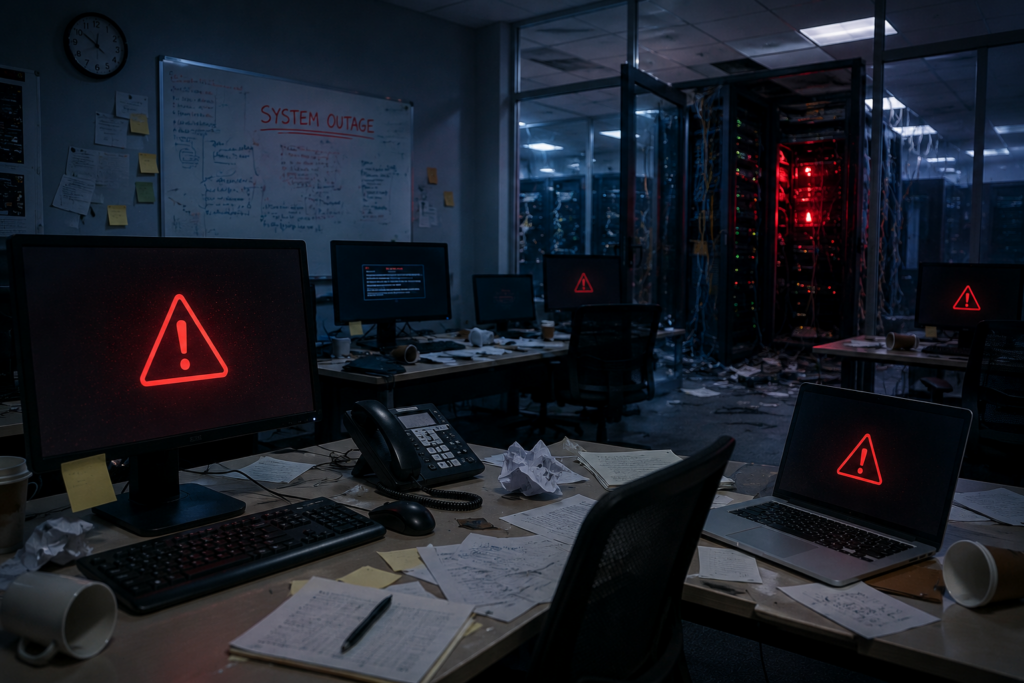
The issue isn’t that your IT provider might disappear.
The issue is whether your business could continue operating if they did.
Many organizations rely heavily on external support without ensuring:
- Internal visibility into systems
- Clear documentation
- Defined processes and ownership
This creates a single point of dependency that many businesses don’t recognize until they’re forced to operate without it. That’s why business continuity planning remains a priority for Boston-area organizations.
Maintain Clear Documentation
Ensure critical information is documented and accessible:
- Network diagrams
- Admin access credentials
- Vendor contacts
- System configurations
The goal isn’t to replace your provider. It’s to ensure critical information remains accessible regardless of who is supporting your environment. Many organizations formalize this process through ongoing IT guidance and strategic planning.
Conduct Regular IT Reviews
Periodic reviews help ensure your systems, processes, and dependencies are aligned with business needs.
Across organizations we work with throughout Greater Boston, these reviews often uncover outdated assumptions, undocumented processes, or technology dependencies that leadership wasn’t aware existed.
They can reveal gaps before they become problems and provide a clearer picture of where the business actually stands. An annual technology health check is often enough to identify risks before they become operational issues.
Conclusion
Your IT provider plays a critical role in your daily operations.
But your business should never rely on them to the point where their absence creates chaos.
By maintaining documentation, ensuring visibility, and building internal awareness, you can protect your operations and reduce risk.
Because true reliability isn’t just about support it’s about resilience.
If you’re evaluating your organization’s IT dependencies or looking to improve business continuity, explore our Managed IT Services or contact our Boston team for a conversation about your current environment.
Call us at (617) 657-1075, or book a quick discovery call.