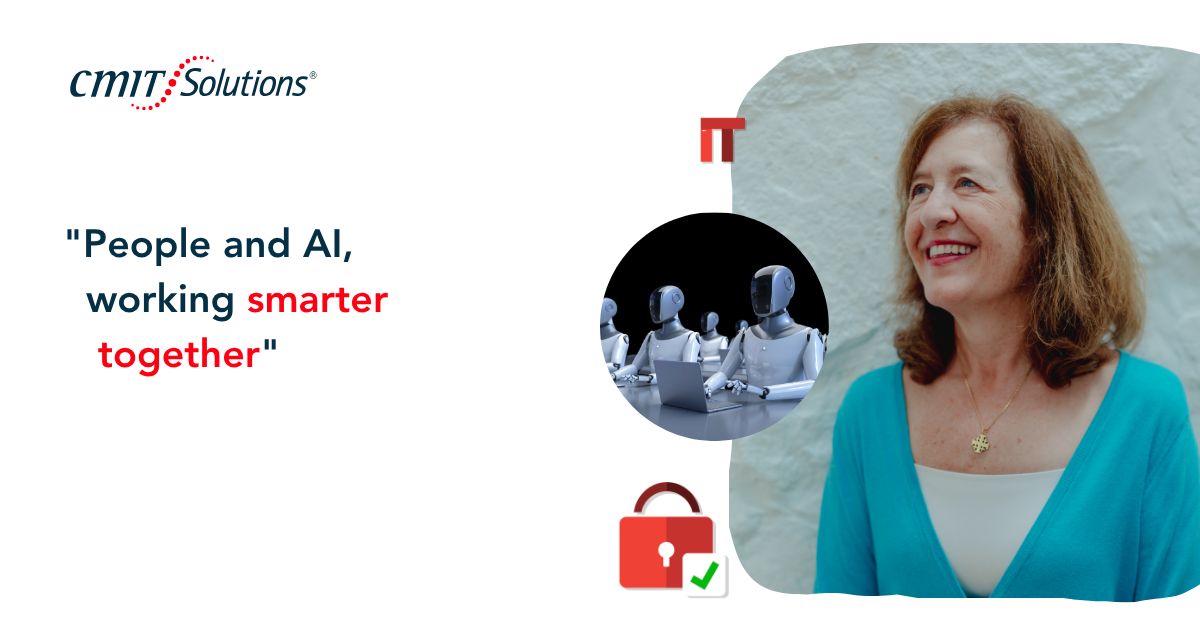
Artificial intelligence is no longer a future technology reserved for large enterprises.
Today, small and mid-size businesses are increasingly using AI to improve operations, reduce repetitive work, strengthen customer service, and support employee productivity. From automated scheduling tools and AI-powered customer support to predictive analytics and workflow automation, AI is quickly becoming part of everyday business operations.
But one of the biggest misconceptions about AI is that it exists only to replace jobs.
In reality, many businesses are using AI not just for automation, but for augmentation helping employees work more efficiently rather than eliminating human involvement entirely.
This shift is reshaping how businesses think about workforce productivity, collaboration, and long-term growth.
Businesses working with CMIT Solutions of Charleston are increasingly exploring AI-driven technologies to improve operational efficiency while supporting employees with smarter, more secure technology environments.
Understanding the Difference Between Automation and Augmentation
Automation focuses on replacing repetitive tasks with technology.
For years, businesses have used automation to handle activities such as:
- Data entry
- Appointment scheduling
- Invoice processing
- Inventory updates
- Basic customer communication
AI takes automation further by allowing systems to analyze information, identify patterns, and support decision-making processes.
However, augmentation works differently.
Instead of replacing employees, AI augmentation helps workers perform tasks more effectively by providing:
- Faster access to information
- Predictive insights
- Workflow assistance
- Real-time recommendations
- Improved productivity tools
In many cases, AI becomes a support system that enhances human capabilities rather than replacing them completely.
This is why businesses increasingly view AI as a workforce enhancement tool rather than simply a labor reduction strategy.
Organizations exploring AI operations are discovering how automation can improve workforce productivity.
SMBs Are Adopting AI Faster Than Expected
For many years, advanced AI technologies were mostly associated with large corporations and enterprise-level budgets.
That is changing rapidly.
Cloud-based AI tools and automation platforms are becoming more accessible and affordable for SMBs across industries.
Businesses now use AI for areas such as:
- Customer service
- Marketing automation
- IT support
- Data analysis
- Scheduling
- Sales forecasting
- Cybersecurity monitoring
As AI adoption increases, SMBs are discovering that even small operational improvements can create significant long-term efficiency gains.
Organizations implementing AI-driven business solutions often improve productivity while reducing manual workload pressure on employees.
Businesses investing in managed IT services
can better support AI-driven infrastructure and business applications.

AI Is Helping Employees Focus on Higher-Value Work
One of the biggest workforce benefits of AI is reducing repetitive administrative work.
Many employees spend large portions of their day handling tasks such as:
- Searching for information
- Updating records
- Managing repetitive emails
- Entering data manually
- Organizing schedules
AI-powered systems can automate many of these repetitive processes, allowing employees to focus on more strategic and customer-focused work.
For example:
Instead of manually reviewing large data sets, employees can use AI tools to generate insights faster.
Instead of spending hours responding to routine customer questions, support teams can focus on more complex interactions while AI handles basic inquiries.
This shift helps businesses improve efficiency without removing the need for human expertise and decision-making.
Organizations using productivity apps often improve collaboration and workflow automation.
Customer Service Is Changing Rapidly
Customer expectations continue growing.
People now expect businesses to provide:
- Faster response times
- Personalized experiences
- 24/7 availability
- Consistent communication
AI-powered customer support tools help businesses improve responsiveness while reducing pressure on internal teams.
Many SMBs now use AI-driven solutions such as:
- Chatbots
- Virtual assistants
- Automated ticket routing
- Customer sentiment analysis
These tools help employees respond faster while improving overall customer experiences.
However, human interaction still plays a major role in building trust and resolving complex issues.
This is where augmentation becomes important.
AI handles repetitive support requests while employees focus on relationship management and higher-value conversations.
Businesses working with CMIT Solutions of Charleston often implement technology solutions designed to improve operational efficiency without sacrificing customer experience.
Companies improving customer experience often combine AI with human collaboration strategies.
AI Is Supporting Smarter Decision-Making
Businesses generate enormous amounts of data every day.
This includes information related to:
- Sales performance
- Customer behavior
- Financial operations
- Marketing campaigns
- Inventory management
- IT infrastructure
Manually analyzing this information can be time-consuming and difficult for SMBs with limited resources.
AI-powered analytics tools help businesses identify trends, risks, and opportunities much faster.
For example:
AI systems can help identify:
- Customer purchasing patterns
- Operational inefficiencies
- Inventory forecasting needs
- Potential cybersecurity threats
- Sales pipeline opportunities
Instead of replacing management decisions, AI provides faster insights that help business leaders make more informed choices.
Businesses exploring business intelligence can improve operational visibility and forecasting.
Cybersecurity and AI Are Becoming Closely Connected
As businesses adopt more digital tools, cybersecurity risks continue growing.
AI is now playing a major role in both cyberattacks and cybersecurity defense.
Cybercriminals increasingly use AI for:
- Automated phishing attacks
- Credential theft
- Malware development
- Social engineering scams
At the same time, businesses are using AI-powered cybersecurity tools to improve:
- Threat detection
- Endpoint monitoring
- Security analytics
- Incident response
- Network visibility
This creates a growing need for businesses to strengthen both cybersecurity infrastructure and employee awareness.
Organizations implementing proactive cybersecurity strategies are often better prepared to handle evolving AI-driven threats.
Businesses strengthening cybersecurity services can better defend against AI-powered threats.
Organizations researching AI threats can better understand evolving cybersecurity risks.
Workforce Skills Are Evolving
As AI adoption increases, workforce expectations are also changing.
Businesses increasingly need employees who can:
- Work alongside AI tools
- Interpret data insights
- Manage digital workflows
- Adapt to evolving technologies
- Focus on problem-solving and communication
This means employee training and technology education are becoming more important.
Rather than replacing employees, many businesses are helping workers develop skills that complement AI-driven systems.
Companies investing in workforce development often position themselves more effectively for long-term operational growth.
Organizations improving digital transformation strategies often prioritize workforce adaptability and AI readiness.

Remote and Hybrid Work Are Accelerating AI Adoption
Remote and hybrid work environments have increased the demand for automation and digital collaboration tools.
Businesses now rely heavily on:
- Cloud platforms
- Collaboration software
- Virtual communication tools
- Workflow automation
- Remote monitoring systems
AI helps improve productivity in distributed work environments by simplifying workflows and reducing manual administrative tasks.
For example:
AI tools can assist with:
- Meeting summaries
- Task prioritization
- Automated scheduling
- Workflow recommendations
- Remote support management
As remote work continues evolving, AI-driven productivity tools will likely become even more common across SMB environments.
Businesses using cloud solutions can improve flexibility and remote collaboration.
Organizations supporting remote work often adopt AI-driven collaboration platforms.
Why SMBs Must Balance AI With Human Oversight
While AI offers major operational advantages, businesses must also recognize its limitations.
AI systems may still struggle with:
- Contextual judgment
- Emotional intelligence
- Ethical decision-making
- Relationship building
- Complex problem-solving
This is why human oversight remains essential.
Businesses that rely too heavily on automation without proper oversight may face risks related to:
- Inaccurate decisions
- Poor customer experiences
- Security vulnerabilities
- Compliance concerns
Successful businesses typically use AI to support employees rather than remove human involvement entirely.
The goal is not to replace people.
The goal is to help employees work more efficiently and effectively.
Businesses focused on compliance readiness should balance automation with security oversight and governance.
Why Businesses Are Taking a More Strategic Approach to AI
Many SMBs initially viewed AI as a simple automation tool.
Today, businesses increasingly recognize AI as part of broader digital transformation strategies.
Organizations now focus on how AI can support:
- Operational efficiency
- Employee productivity
- Customer experience
- Cybersecurity resilience
- Long-term scalability
This shift requires businesses to think strategically about technology investments, workforce training, and IT infrastructure.
Businesses working with CMIT Solutions of Charleston often implement proactive IT strategies designed to support secure, scalable, and AI-ready business environments.
Companies using IT guidance can develop long-term AI adoption roadmaps.
Businesses evaluating technology trends can better prepare for future workforce transformation.
The Future of AI in SMB Workforces
AI adoption will likely continue accelerating across industries.
Businesses are expected to increasingly use AI for:
- Workflow optimization
- Predictive analytics
- Cybersecurity monitoring
- Customer support
- IT operations
- Business intelligence
At the same time, human skills such as communication, leadership, creativity, and strategic thinking will remain highly valuable.
The future workforce will likely involve stronger collaboration between employees and AI-powered systems rather than full workforce replacement.
Businesses that adapt early and invest in both technology and employee development may gain significant long-term advantages.
Organizations improving endpoint security can better protect AI-enabled digital work environments.
Businesses implementing network management solutions can strengthen visibility across growing digital infrastructures.
Companies investing in data backup strategies can improve resilience against AI-driven cyber threats.
Organizations improving IT support can better manage AI-integrated business operations.
Conclusion
Artificial intelligence is reshaping how SMBs operate by helping businesses automate repetitive tasks, improve decision-making, strengthen customer service, and support employee productivity. As businesses move from simple automation toward workforce augmentation, AI is increasingly becoming a tool that enhances human capabilities rather than replacing them entirely.
Organizations that take a strategic approach to AI adoption can improve operational efficiency while creating more flexible, scalable, and resilient business environments.
Businesses looking to modernize IT infrastructure and support evolving workforce technologies can work with CMIT Solutions of Charleston to implement proactive technology solutions designed for long-term business growth and operational success.
Ready to prepare your workforce for the future of AI? Contact us today to learn how CMIT Solutions of Charleston can help your business implement secure and scalable AI-ready technology solutions.