For most of the last decade, the assumption behind business technology was simple. Data gets created somewhere, travels to a centralized data center or cloud region, gets processed, and the result travels back. That model worked well when the biggest concern was email and spreadsheets. It works far less well now that businesses run security cameras analyzing footage in real time, sensors monitoring equipment continuously, and applications that need to respond in milliseconds rather than seconds.
Edge computing is the response to that shift. Instead of sending everything to a distant data center, processing happens closer to where the data is actually generated, at the edge of the network rather than its center. The concept sounds technical and somewhat abstract until you look at what it actually changes for a growing business: faster applications, lower bandwidth costs, better reliability when internet connections falter, and new security considerations that did not exist under the old centralized model.
This guide breaks down what edge computing actually means in practical terms, why it has moved from a niche enterprise concept to something mid sized businesses genuinely need to understand, and what it changes about how a network should be designed and protected.
What Edge Computing Actually Means
Strip away the marketing language and edge computing describes one core idea: processing data physically closer to where it originates instead of routing everything to a centralized location first.
Picture a retail store with security cameras. In the traditional model, every camera streams raw footage to a cloud service or central server, which analyzes the video, detects anything unusual, and sends an alert back. That round trip takes time and consumes significant bandwidth, especially across many camera feeds.
In an edge model, a small local device processes the video feed directly at the store, identifying anything relevant in real time and sending only the important information, an alert, a summary, a flagged clip, back to the central system. The bulk of the raw data never has to travel anywhere.
That pattern repeats across countless business scenarios:
- A manufacturing sensor detecting an equipment anomaly before it becomes a costly failure
- A retail point of sale system continuing to process transactions during an internet outage
- A healthcare device monitoring patient vitals with immediate local alerting
- A logistics tracking system processing location data without constant cloud dependency
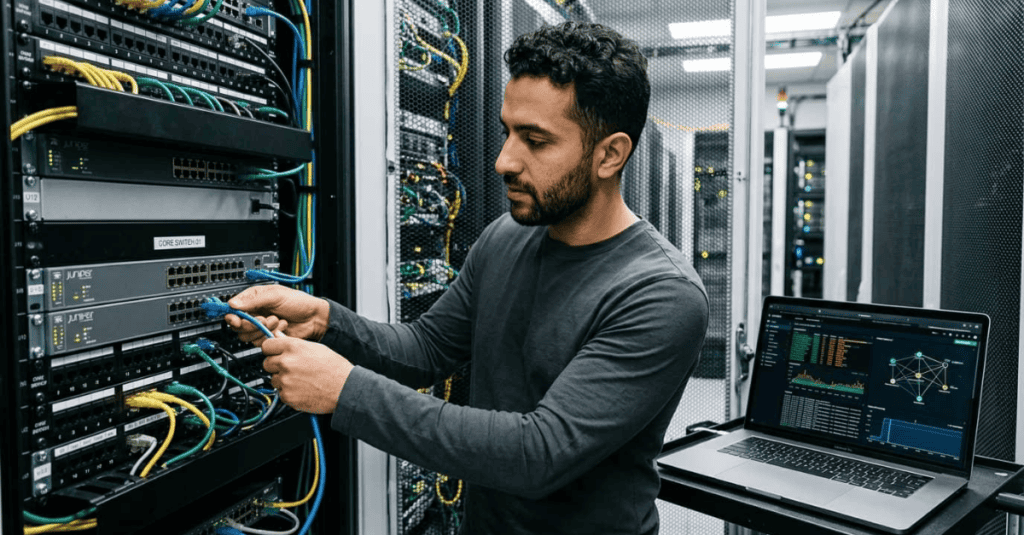
The edge is not a single location. It describes any point in the network that sits closer to the data source than a centralized cloud region or data center, which might mean a device on a factory floor, a small server in a branch office, or specialized hardware embedded in equipment itself.
Why This Shift Is Happening Now
Edge computing existed conceptually for years before it became practically necessary for mid sized businesses. Several forces converged to change that.
Data volume exploded past what centralized processing can handle efficiently. Modern security systems, sensors, and connected devices generate enormous continuous data streams. Sending every byte to a distant cloud region for processing creates both cost and latency problems that scale badly as device counts grow.
Applications now demand real time response. A cloud round trip measured in a few hundred milliseconds sounds fast until it is the difference between a safety system catching a hazard and missing it, or a point of sale system freezing during a transaction. Some applications simply cannot tolerate the delay inherent in centralized processing.
Bandwidth costs and limitations remain real constraints. Even with faster internet circuits, continuously streaming raw data from every connected device to the cloud consumes bandwidth that could otherwise support core business operations. Reviewing broader cloud spending optimization strategies often surfaces exactly this kind of unnecessary data movement as a hidden cost driver.
Connectivity is not always reliable. Remote job sites, satellite offices, and field locations do not always have dependable, high bandwidth internet access. Edge processing lets critical operations continue functioning even when the connection to a central system drops temporarily.
AI and machine learning moved from research labs into everyday applications. Many AI powered features, from video analysis to predictive maintenance, benefit enormously from processing data close to its source rather than incurring the cost and delay of sending it elsewhere.
Firms already investing in predictive analytics for smbs often find edge processing is what makes real time predictive capability actually feasible rather than theoretical.
Edge Computing Versus Cloud Computing: Not a Replacement
A common misunderstanding treats edge computing as competition for cloud computing, as though a business must choose one or the other. In practice, they work together, each handling what it does best.
Cloud computing excels at:
- Centralized storage and long term data retention
- Heavy computational workloads that are not time sensitive
- Coordinating information across many locations
- Running applications that benefit from massive shared computing resources
- Backup and disaster recovery infrastructure
Edge computing excels at:
- Time sensitive processing where milliseconds matter
- Reducing bandwidth consumption by filtering data before transmission
- Maintaining functionality during connectivity interruptions
- Processing sensitive data locally before it travels anywhere
- Supporting devices and sensors distributed across multiple physical locations
Most modern architectures blend both. Edge devices handle immediate, local processing and filtering, while the cloud handles storage, deeper analysis, and coordination across an entire organization. Well designed secure cloud service solutions increasingly account for this hybrid pattern rather than assuming every workload belongs entirely in one place or the other.
Real World Business Applications
Edge computing sounds abstract until connected to scenarios businesses actually encounter.
Retail and Hospitality
Point of sale systems that continue processing transactions during internet outages, inventory sensors tracking stock levels in real time, and security systems analyzing footage locally all rely on edge processing. A restaurant or retail location losing internet connectivity used to mean halted transactions. Edge enabled systems keep the business running locally, syncing data once connectivity returns.
Manufacturing and Industrial Operations
Equipment sensors monitoring vibration, temperature, and performance can detect anomalies and trigger alerts immediately, without waiting for data to travel to a distant server and back. Catching a bearing failure early through local processing can prevent a production line shutdown that costs far more than the sensor infrastructure itself.
Healthcare Facilities
Patient monitoring equipment benefits enormously from local processing that generates immediate alerts rather than depending on network reliability for potentially critical timing. Facilities exploring telehealth technology solutions increasingly encounter edge processing requirements as remote monitoring becomes more sophisticated.
Professional Services and Multi Location Businesses
Branch offices and satellite locations benefit from local processing that reduces dependency on connectivity back to a central office, particularly for applications like video conferencing, local file access, and security systems. This matters directly for firms managing unified communication systems across distributed teams, since local processing can reduce the latency that makes video calls feel choppy or delayed.
Logistics and Field Operations
Vehicle tracking, delivery routing, and field equipment monitoring all benefit from edge processing that continues functioning in areas with weak or intermittent cellular coverage, syncing data once a stronger connection becomes available.
What Edge Computing Means for Network Design
Adopting edge computing is not simply a software decision. It changes what the underlying network needs to support, and businesses that treat it purely as an application layer choice often discover their infrastructure was never built to handle the shift.
Distributed Processing Requires Distributed Management
When processing happens at dozens of locations instead of one centralized point, managing and securing that infrastructure becomes considerably more complex. Each edge device or local server represents a potential point of failure or vulnerability that needs the same attention a central data center would receive.
Consistent proactive network monitoring becomes essential rather than optional once edge infrastructure spreads across multiple locations, since problems at any single point can now disrupt operations locally without necessarily showing up as an obvious central outage.
Connectivity Between Edge and Center Still Matters
Even though edge processing reduces dependency on constant connectivity, the connection between edge locations and central systems remains important for coordination, updates, and data synchronization. A network architecture built around edge computing still needs reliable connectivity, just with different tolerance for temporary interruption than a purely centralized model would allow.
Reliable Wi-Fi connectivity solutions at every location running edge devices matter as much as the core office network, since a poorly connected edge device provides far less value than a properly supported one.
Bandwidth Patterns Shift
Rather than continuous streams of raw data flowing to a central location, edge architectures typically produce periodic, filtered transmissions, summaries, alerts, and processed results rather than everything. Network capacity planning needs to account for this different pattern rather than assuming traditional centralized traffic behavior.
Security Perimeter Expands Significantly
Every edge device represents a new point that needs protection, monitoring, and management. A retail chain with edge processing in fifty locations has fifty times the physical attack surface a single centralized data center would present. This is where edge computing adoption most commonly goes wrong for businesses that have not planned for it properly.
Security Considerations Unique to Edge Environments
Physical Security of Distributed Devices
Unlike a data center with controlled physical access, edge devices often sit in retail locations, warehouses, or field environments where physical security is considerably harder to guarantee. A device that can be physically accessed by an unauthorized person represents a different category of risk than equipment locked in a secured facility.
Practical mitigations:
- Tamper evident and tamper resistant hardware where the application warrants it
- Encrypted storage on every edge device, so physical access does not equal data access
- Remote wipe capability for devices that may be lost, stolen, or compromised
- Physical access logging where feasible at each location
Identity and Access Across Distributed Infrastructure
Managing who can access and configure edge devices across many locations requires the same discipline as managing central systems, arguably more given the larger number of individual points involved.
Requirements that carry over directly:
- Individual named accounts, never shared credentials, for anyone managing edge infrastructure
- Multifactor authentication on remote management access without exception
- Conditional access evaluating device health before granting configuration access
- Prompt deprovisioning tied to staff departure or role changes
Foundational understanding of multi factor authentication basics applies just as directly to edge device management as it does to any other system access. The architectural principle behind modern defense, a zero trust security model, fits edge computing particularly well, since no device or location should be inherently trusted simply because it sits on the corporate network.
Patching and Update Management at Scale
Updating software across dozens or hundreds of distributed edge devices is considerably harder than patching a handful of centralized servers. Without a structured update process, edge devices commonly run outdated software for far longer than centralized infrastructure would tolerate, creating exactly the kind of unpatched vulnerability attackers actively search for.
A staged rollout approach, testing updates on a representative device before pushing broadly, reduces the risk of an update breaking production operations across every location simultaneously.
Data Sensitivity at the Point of Processing
Because edge computing processes data locally rather than centrally, sensitive information sometimes exists at the edge device itself, even temporarily, in ways it would not under a purely centralized model. This changes what protection each device needs.
Comprehensive layered cybersecurity protection needs to extend to edge infrastructure specifically, not just traditional endpoints and servers, since these devices increasingly hold or process data worth protecting.
Network Segmentation for Edge Traffic
Edge devices should generally sit on segmented network zones separate from core business systems, limiting how far a compromised edge device could reach if attacked. The broader argument for network visibility importance applies with particular force here, since a large number of distributed devices creates considerably more traffic to monitor for anomalies than a centralized architecture would.

Backup and Continuity Planning for Edge Infrastructure
Data processed at the edge still needs protection, even when it never touches a central server directly. Firms adopting edge computing sometimes overlook this, assuming that because processing is local, backup concerns do not apply the same way.
Considerations specific to edge environments:
- Determining what data needs to persist locally versus what can be discarded after processing
- Ensuring critical local data syncs to a protected central location on a defined schedule
- Building recovery procedures for edge device failure that do not depend on the central system being available
- Testing that local operations can continue if the connection to central systems is lost for an extended period
Purpose built reliable data backup systems need to account for this distributed pattern rather than assuming all critical data lives in one central, easily backed up location. Full business continuity planning should explicitly address what happens if an edge location becomes unreachable, not just what happens if the central office does.
Industries Where Edge Computing Delivers the Clearest Value
Retail operations with multiple locations benefit from continued point of sale functionality during outages, local inventory processing, and real time security monitoring without constant cloud dependency for every camera feed.
Manufacturing and industrial facilities gain immediate equipment monitoring and anomaly detection that can prevent costly downtime, along with reduced bandwidth demand from not streaming every sensor reading to the cloud continuously.
Healthcare providers benefit from local patient monitoring that does not depend on network reliability for time sensitive alerts, along with reduced latency for applications where delay genuinely matters.
Engineering and field service firms find edge processing valuable at job sites with limited connectivity, allowing equipment monitoring, data collection, and basic analysis to continue regardless of cellular or internet reliability at a given location.
Financial services and firms handling sensitive data sometimes use edge processing specifically to keep sensitive information from traveling further than necessary, processing and filtering locally before anything sensitive reaches a broader network.
The AI Connection
Edge computing and artificial intelligence have become closely intertwined, and understanding why clarifies a lot about where this technology is headed.
Many AI applications, particularly those involving video, image recognition, or sensor data analysis, perform significantly better with local processing. Sending every frame of video to the cloud for AI analysis introduces latency and cost that edge based AI processing avoids entirely, analyzing data where it originates and sending only relevant results onward.
This connects directly to the broader conversation many businesses are already having about AI reshaping business operations. Edge computing is frequently the infrastructure layer that makes practical AI deployment feasible rather than simply theoretical, particularly for applications involving physical security, equipment monitoring, or real time customer interaction.
The governance questions that apply to AI generally apply here too. Awareness of shadow AI risks matters even at the edge, since locally deployed AI models still process data that needs appropriate handling and oversight, not an exemption from governance simply because processing happens outside a central data center.
Cost Considerations
Edge computing is not universally cheaper than centralized processing, and understanding the actual cost pattern matters for realistic planning.
Where edge computing saves money:
- Reduced bandwidth consumption from not transmitting raw data continuously
- Lower cloud computing costs for applications that no longer need constant central processing
- Reduced downtime costs when operations continue during connectivity interruptions
- Potential prevention of costly failures through faster local anomaly detection
Where edge computing adds cost:
- Hardware investment at every location requiring edge processing
- Increased management complexity requiring more sophisticated monitoring and support
- Security infrastructure extended across distributed locations
- Staff time or managed service investment for ongoing maintenance across many devices
The right evaluation compares total cost of ownership across both approaches for a specific use case, rather than assuming edge computing is inherently cheaper or more expensive in the abstract. Disciplined smart technology procurement practices matter considerably when evaluating edge hardware investments, since poor initial device selection can create years of management headaches that outweigh any bandwidth savings.
Common Mistakes Businesses Make Adopting Edge Computing
Treating it purely as a hardware purchase. Buying edge devices without planning the management, security, and update processes that distributed infrastructure requires sets up problems that surface months later.
Underestimating the security perimeter expansion. Each new edge location is a new point requiring the same security discipline as core infrastructure, not a lighter touch simply because it feels peripheral.
Ignoring connectivity requirements between edge and center. Even edge architectures need reliable connections back to central systems for coordination, updates, and data synchronization. Skipping investment here undermines the whole architecture.
Failing to plan for scale from the start. A pilot deployment at one location often looks manageable with informal processes. The same approach breaks down completely once the same architecture needs to support twenty or fifty locations.
Overlooking backup and recovery for edge specific data. Assuming that because processing happens locally, backup concerns do not apply, then discovering a device failure has erased data that was never protected.
Deploying without a clear business case. Edge computing solves specific problems well. Adopting it because it is a current trend, without a clear use case demanding real time processing or connectivity resilience, often produces cost and complexity without proportional benefit.
Signs Your Business Might Benefit From Edge Computing
Consider whether these patterns sound familiar:
- Multiple locations experience disruption whenever internet connectivity drops
- Security or monitoring systems feel noticeably delayed in flagging important events
- Bandwidth costs are rising noticeably as connected devices and sensors multiply
- Field or remote operations struggle with unreliable connectivity to central systems
- Applications requiring real time response feel sluggish due to cloud round trip delay
- Equipment failures are discovered after the fact rather than caught through early monitoring
Several of these overlap with broader signs of outgrown IT infrastructure that growing businesses encounter as complexity increases. Edge computing is not the answer to every infrastructure strain, but it directly addresses several of the most common ones for businesses operating across multiple locations or handling real time sensitive data.
Building an Edge Computing Strategy: A Practical Sequence
Assessment phase
- Identify specific business processes where latency, bandwidth, or connectivity reliability create genuine problems
- Map current data flow from source to processing to determine where edge processing would help most
- Evaluate connectivity reliability at each location that might benefit from edge deployment
- Review current security posture and identify gaps that distributed infrastructure would create
Pilot phase
- Select one location or use case for initial deployment rather than attempting a full rollout immediately
- Implement edge devices with full security controls from the start, not as an afterthought
- Establish monitoring and management processes before expanding
- Measure actual results against the business case that justified the pilot
Scaling phase
- Expand deployment based on pilot results, adjusting the approach based on lessons learned
- Standardize device configuration and security policy across all locations
- Build centralized visibility into distributed edge infrastructure health and status
- Establish staged update and patching procedures appropriate for the device count involved
Ongoing management phase
- Continuous monitoring across all edge locations
- Regular security review extending to edge infrastructure specifically
- Scheduled backup verification for any data processed or retained at the edge
- Periodic reassessment of whether the architecture still matches actual business needs
Businesses without internal capacity to manage this properly increasingly work with outside partners who bring the network engineering, security, and monitoring discipline distributed infrastructure demands. Strategic IT guidance at the planning stage prevents the common mistake of deploying edge hardware without the surrounding management structure it requires to function safely and reliably.
Measuring Whether Edge Computing Is Delivering Value
Metrics worth tracking once edge infrastructure is deployed:
- Response time improvement for the specific application that justified deployment
- Bandwidth consumption change compared to the previous centralized approach
- Downtime avoided during connectivity interruptions at edge locations
- Number of issues caught by local monitoring before escalating into larger failures
- Security incidents or vulnerabilities identified across distributed edge infrastructure
- Total cost of ownership compared against the original business case projection
These connect to the same return calculation businesses apply to any infrastructure investment. The analysis behind managed IT return on investment generally shows the clearest value in avoided downtime and recovered productivity rather than simply reduced bandwidth cost alone.
Scoped flexible IT service packages can incorporate edge infrastructure management alongside broader network and security responsibilities, avoiding the gap that forms when edge devices sit outside the scope of standard IT support.
What This Means for a Typical Growing Business
Not every business needs a sophisticated edge computing strategy. A single location professional services firm with standard office applications likely has little practical need for distributed edge processing. The businesses that benefit most share specific characteristics: multiple physical locations, real time monitoring requirements, significant sensor or device data volume, or operations in areas with unreliable connectivity.
For businesses that do fit this profile, the decision is rarely whether to adopt edge computing eventually, since the trend toward distributed, real time processing continues to accelerate across nearly every industry. The decision is how to adopt it deliberately, with security and management built in from the start, rather than backing into it through a series of disconnected point solutions that create more risk than value.
CMIT Solutions of Dallas works with growing businesses evaluating exactly this kind of infrastructure decision, helping determine whether edge computing genuinely fits a specific operational need and, when it does, building the network foundation, security controls, and ongoing management that make distributed processing an asset rather than a liability.
Conclusion
Edge computing represents a genuine shift in how data gets processed, moving critical decisions and analysis closer to where information originates rather than routing everything through a distant central point. For businesses with multiple locations, real time monitoring needs, or operations in areas where connectivity cannot be guaranteed, that shift solves real problems around speed, bandwidth, and reliability that centralized architecture increasingly struggles with.
It also introduces genuine complexity. Distributed infrastructure means a distributed security perimeter, more points requiring management, and a network architecture that needs deliberate planning rather than default assumptions carried over from a purely centralized model. Businesses that approach this thoughtfully gain real operational advantage. Those that treat it as a simple hardware purchase often discover the management burden outweighs the benefit.
Working with a capable Dallas IT partner helps growing businesses evaluate whether edge computing genuinely fits their operations and, when it does, build the network, security, and monitoring foundation that makes it work reliably. Comprehensive managed IT support plans increasingly account for distributed infrastructure as a standard part of network management, not a specialized add on.
Curious whether edge computing makes sense for how your business actually operates? Schedule a consultation today for a clear assessment of your current infrastructure and where distributed processing could genuinely help.
Frequently Asked Questions