
Artificial Intelligence (AI) has become a transformative force in the manufacturing industry. From predictive maintenance to robotic automation, AI-driven technologies are revolutionizing how factories operate, enhancing productivity, reducing costs, and enabling smarter decision-making. This blog explores the real-world applications of AI in manufacturing and how its impact is shaping business strategy for long-term growth.
What Is AI in Manufacturing?
AI in manufacturing refers to the use of intelligent algorithms, machine learning models, and real-time data analytics to enhance operational efficiency, quality control, and production planning. Unlike traditional automation that follows fixed instructions, AI systems learn from data and adapt to changing conditions.
For instance, AI algorithms can detect equipment anomalies before a failure occurs, drastically reducing unplanned downtime costs. Manufacturers can also use AI for demand forecasting, inventory management, and supply chain optimization.
Key Use Cases of AI in Manufacturing
AI is not just theoretical—it’s already delivering real value in factories. Here are some practical use cases:
- Predictive Maintenance: AI monitors equipment health using IoT sensors and flags potential issues.
- Quality Inspection: Computer vision algorithms detect defects in products with higher accuracy than human inspectors.
- Production Forecasting: AI models predict future demand to reduce overproduction and inventory waste.
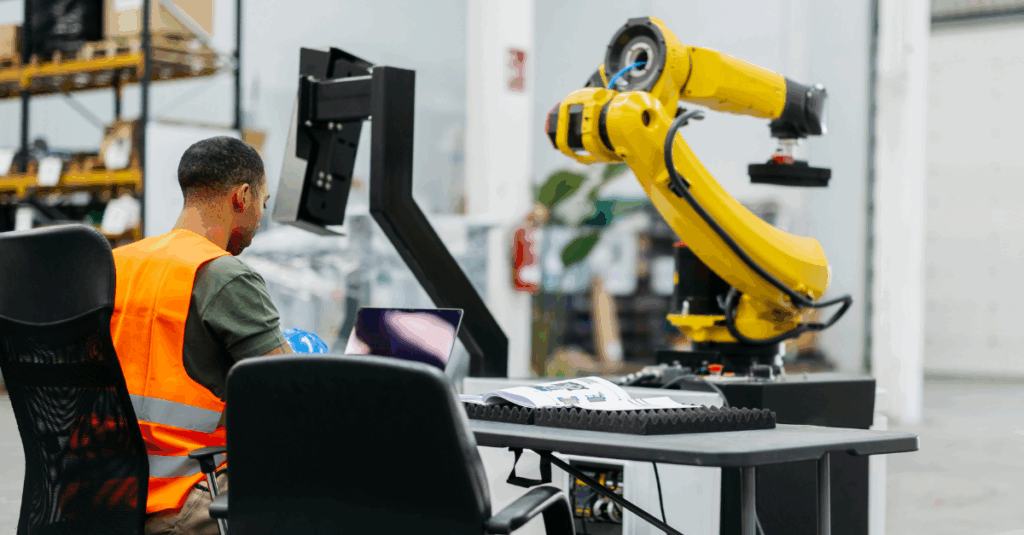
- Robotics and Automation: Collaborative robots (cobots) work alongside humans in repetitive or hazardous tasks.
- Energy Optimization: AI regulates power usage based on real-time operational data, cutting energy costs.
These innovations can be further supported by cloud services that provide scalable infrastructure for real-time analytics.
Benefits of AI in Manufacturing Operations
AI delivers a wide range of benefits to manufacturers, including:
- Increased Throughput: Smarter automation reduces bottlenecks and idle time.
- Higher Product Quality: AI-driven inspections identify flaws early in the production cycle.
- Lower Maintenance Costs: Predictive analytics helps avoid costly emergency repairs.
- Faster Time-to-Market: Automated planning and simulation tools accelerate product design and deployment.
With growing cyber threats in industrial networks, manufacturers must also prioritize cybersecurity alongside AI adoption.
How SMBs Can Leverage AI in Manufacturing
Small and medium-sized businesses (SMBs) may feel AI is reserved for large enterprises, but that’s changing. Low-cost sensors, cloud-based platforms, and plug-and-play AI solutions are making AI adoption accessible to SMBs.
Many SMBs already rely on proactive IT services to manage infrastructure. Integrating AI into existing workflows—like inventory planning, CRM, and ERP—requires alignment with strategic goals and technology readiness.
Partnering with managed IT services helps SMBs adopt AI securely and efficiently.
Overcoming Implementation Challenges
While promising, AI adoption comes with challenges:
- Data Silos: AI needs access to quality data across departments.
- Skill Gaps: Many businesses lack the in-house AI expertise.
- Integration Issues: Legacy equipment may not support AI tools.
- Regulatory Compliance: Manufacturers must ensure compliance with industry regulations and standards.
Collaborating with technology consultants and IT support professionals can accelerate the integration process.
Real-Time Analytics and Process Optimization
AI enables continuous monitoring and decision-making. Manufacturers can analyze real-time production data to adjust machine parameters, reduce material waste, and prevent bottlenecks.
For example, companies using AI for line balancing see reduced cycle time and labor cost. Integration with Microsoft 365 and other cloud tools supports seamless collaboration between engineers and managers.
AI-Driven Supply Chain Transformation
Supply chains are increasingly unpredictable. AI helps mitigate disruptions by predicting delays, optimizing routes, and improving supplier selection.
These improvements contribute to business resilience and flexibility, especially during global crises. SMBs that digitize their procurement and logistics systems with AI benefit from greater transparency and speed.
Why SMBs Need Managed IT Services for AI Adoption
AI implementation requires a reliable foundation—secure networks, scalable storage, and responsive support. IT support teams ensure your infrastructure can handle the demands of AI workloads.
Additionally, data backup and disaster recovery systems are critical to protect models, training datasets, and operational insights. These elements are best managed by experienced service providers.
Preparing for the Future: Trends to Watch
AI will continue to evolve. Here are key trends shaping the future of manufacturing:
- Edge AI: Real-time processing at the machine level for faster decisions.
- AI + Robotics: Smarter robots capable of adapting to human behaviors.
- Generative AI: Automating design and prototyping using intelligent suggestions.
- Cyber-Physical Systems: Full integration of AI into physical processes.
As the tech landscape advances, so do risks. Implementing strong cybersecurity training helps your team stay ahead.
Conclusion
AI in manufacturing is not a futuristic concept—it’s a present-day advantage. Whether optimizing maintenance, increasing quality, or transforming supply chains, AI empowers manufacturers to be faster, smarter, and more resilient.
For SMBs, success depends on secure systems, reliable cloud infrastructure, and strategic IT partnerships. With the right support, AI becomes a powerful tool for achieving long-term profitability and innovation.