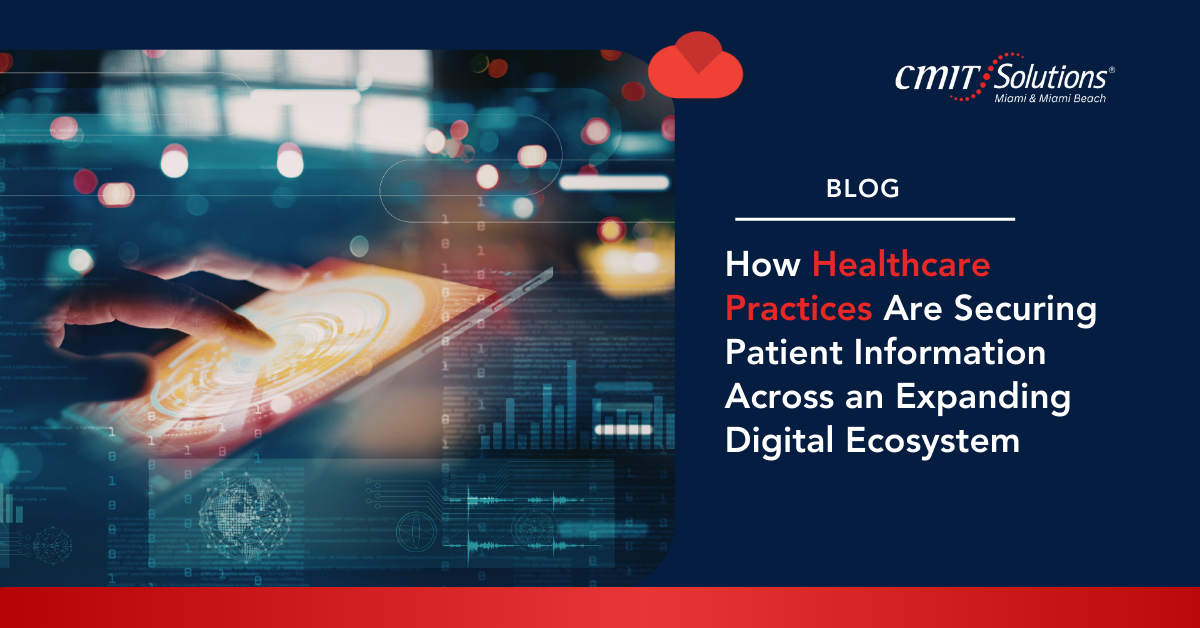
Healthcare practices are operating in a rapidly expanding digital ecosystem. Electronic health records, telehealth platforms, patient portals, connected medical devices, cloud systems, and third-party applications now play a central role in patient care. While these technologies improve accessibility and efficiency, they also introduce new risks to patient information security.
Protecting patient data is not only a regulatory obligation it is fundamental to patient trust and clinical integrity. As healthcare environments become more interconnected, practices must secure information across every system, device, and workflow without slowing care delivery. This requires a strategic approach that balances technology, policy, and daily operations.
At CMIT Solutions of Miami & Miami Beach, we work with healthcare practices to secure patient information while supporting digital growth. Below are ten key ways healthcare organizations are protecting sensitive data across today’s expanding digital ecosystem.
Redefining Data Security Beyond Traditional Clinical Systems
Patient information no longer resides solely within electronic health record systems. Scheduling platforms, billing software, imaging tools, telehealth applications, and communication systems all store or transmit sensitive data. Healthcare practices are redefining security to encompass the entire digital ecosystem rather than focusing on a single system.
This broader perspective helps practices identify risks that may otherwise go unnoticed and ensures consistent protection across platforms.
To effectively secure patient data, practices must recognize where information actually lives.
Key areas now included in patient data security include:
- Practice management and billing systems
- Telehealth and virtual care platforms
- Patient communication and messaging tools
- Integrated third-party healthcare applications
Strengthening Access Controls Across Multiple Systems
As healthcare staff interact with numerous digital tools throughout the day, controlling who can access patient information becomes increasingly complex. Practices are implementing stronger access controls to ensure only authorized users can view or modify sensitive data.
This approach reduces both external threats and internal risks, such as accidental exposure or misuse of information.
Access control is a foundational layer of patient data protection.
Effective access control strategies include:
- Role-based permissions aligned with job responsibilities
- Limiting access to only necessary patient information
- Regular reviews of user access rights
- Immediate removal of access when roles change

Securing Patient Information in Motion and at Rest
Patient data is constantly moving between systems, devices, and locations. From clinical documentation to lab results and telehealth consultations, protecting data both at rest and during transmission is critical.
Healthcare practices are prioritizing secure data handling methods that protect information throughout its lifecycle without interrupting care.
Data protection must be continuous, not situational.
Key methods for securing patient data include:
- Encryption of stored patient records
- Secure transmission between systems and platforms
- Protection of data shared with authorized third parties
- Monitoring of data movement for unusual activity
Managing Security Risks Introduced by Telehealth
Telehealth has expanded access to care, but it also introduces new security considerations. Patient data is now shared across video platforms, remote networks, and personal devices, increasing the potential for exposure.
Healthcare practices are implementing safeguards to ensure telehealth interactions meet the same confidentiality standards as in-person visits, especially as organizations address broader digital healthcare priorities.
Telehealth security is now part of standard patient care.
Common telehealth security considerations include:
- Secure platforms designed for healthcare use
- Controlled access to virtual sessions
- Protection of recorded or stored session data
- Clear guidelines for remote care environments
Protecting Patient Data Across Connected Devices
Modern healthcare environments rely on connected devices for diagnostics, monitoring, and treatment. These devices often collect, store, or transmit patient information, making them part of the broader digital ecosystem.
Healthcare practices are expanding security strategies to include medical and connected devices, ensuring they do not become weak points in data protection.
Device security is inseparable from patient data security.
Key device-related security measures include:
- Inventory and monitoring of connected devices
- Controlled access to device data
- Secure integration with clinical systems
- Regular updates and maintenance
Reducing Human Error Through Secure Workflow Design
Human error remains one of the most common causes of data exposure in healthcare settings. Busy environments, time pressure, and complex systems can lead to mistakes that compromise patient information.
Healthcare practices are redesigning workflows to minimize opportunities for error, using technology and process improvements to support staff.
Security improves when systems support correct behavior.
Workflow improvements that reduce risk include:
- Standardized processes for handling patient data
- Automated checks to prevent incorrect actions
- Clear guidelines for data sharing and communication
- Reduced reliance on manual data handling
Improving Visibility Into Data Access and Usage
Without visibility into who is accessing patient information, healthcare practices cannot effectively manage risk. Modern security strategies emphasize monitoring and oversight to identify unusual or unauthorized activity.
Greater visibility allows practices to respond quickly and maintain confidence in their data protection efforts, supported by stronger cybersecurity programs.
Awareness enables proactive security.
Benefits of improved visibility include:
- Early detection of suspicious access patterns
- Faster investigation of potential incidents
- Better understanding of system usage
- Stronger accountability across teams

Securing Remote and Hybrid Healthcare Operations
Administrative staff, clinicians, and support teams increasingly work remotely or in hybrid arrangements. While flexibility improves efficiency, it also introduces new access points to patient information.
Healthcare practices are implementing secure remote access solutions that protect data regardless of where work occurs, aligning with best practices for remote work.
Remote security must match in-office standards.
Key elements of secure remote operations include:
- Encrypted access to healthcare systems
- Device security requirements for remote users
- Centralized management of remote connections
- Ongoing monitoring of access activity
Aligning Digital Security With Healthcare Compliance Expectations
Healthcare organizations operate under strict requirements for patient privacy and data protection. As digital ecosystems expand, maintaining compliance becomes more complex but no less critical.
Practices are embedding security controls into daily operations to ensure compliance is consistently maintained rather than addressed reactively, supported by stronger IT compliance alignment.
Compliance is strongest when built into systems.
Compliance-focused security practices include:
- Documented data protection policies
- Consistent enforcement of access controls
- Clear audit trails for patient data access
- Regular reviews of security practices
Partnering With Managed IT Experts to Secure the Ecosystem
Securing an expanding digital healthcare ecosystem requires expertise, ongoing oversight, and adaptability. Healthcare practices benefit from working with IT partners who understand both healthcare workflows and patient data protection requirements.
At CMIT Solutions of Miami & Miami Beach, we help healthcare organizations design secure, resilient digital environments that support patient care without adding complexity. Our approach focuses on proactive protection, visibility, and long-term stability, backed by modern managed IT services.
The right partner strengthens security at every level.
Advantages of working with a healthcare-focused IT partner include:
- Expertise in securing healthcare systems and data
- Proactive monitoring and risk mitigation
- Scalable solutions for growing digital environments
- Ongoing guidance as technology evolves
Conclusion: Patient Trust Depends on Digital Security
As healthcare practices continue to expand their digital ecosystems, securing patient information has become more complex and more critical than ever. Protecting data requires a comprehensive approach that spans systems, devices, workflows, and people.
By strengthening security strategies and partnering with trusted experts like CMIT Solutions of Miami & Miami Beach, healthcare organizations can protect patient information while embracing the benefits of digital innovation. In today’s healthcare environment, strong security is not just about compliance it is about preserving trust and delivering quality care.