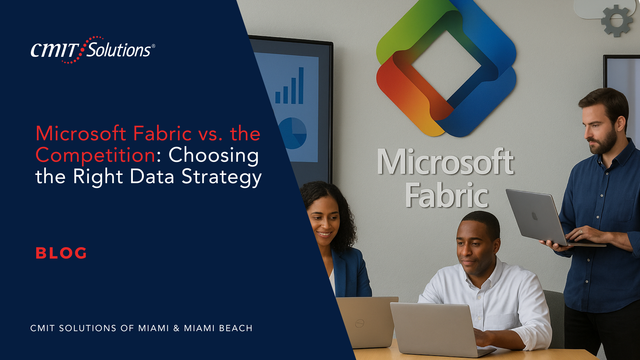
In today’s data-driven environment, choosing the right analytics platform is critical to maintaining competitive advantage. Microsoft Fabric, an all-in-one analytics solution, has emerged as a compelling choice for businesses seeking integrated data governance, AI, and cloud-native architecture. But how does it compare to other platforms? And what should SMBs consider when developing a sustainable data strategy?
This blog breaks down the real value of Microsoft Fabric, compares it to leading alternatives, and provides practical guidance on choosing a long-term data management solution.
What Is Microsoft Fabric?
Microsoft Fabric is an end-to-end analytics platform combining data movement, data lakes, data engineering, real-time analytics, and business intelligence under a single SaaS model. It’s designed to simplify data workflows by offering unified governance and integration with Microsoft tools like Power BI, Azure Synapse, and Data Factory.
Its strength lies in its seamless integration, especially for businesses already using Microsoft 365 or Azure infrastructure. For SMBs, this means reduced complexity and faster deployment, especially when paired with cloud services.
Core Features and Benefits
- Unified Data Fabric: Combines multiple analytics components into one ecosystem.
- Native AI Capabilities: Leverages Azure AI and Microsoft Copilot for predictive analytics.
- Security and Compliance: Built-in access controls and governance reduce cybersecurity and compliance risks.
- No-code/Low-code Tools: Enables faster deployment and analytics usage across non-technical teams.
These benefits are particularly meaningful for SMBs looking to minimize downtime and resource strain.

How Microsoft Fabric Compares to the Competition
When compared with platforms like Snowflake, Databricks, and Google BigQuery, Microsoft Fabric stands out for its native integration with existing Microsoft tools and SaaS delivery model.
- Snowflake is strong in performance but often requires additional licensing and tools to match Fabric’s integrated experience.
- Databricks is preferred for advanced data science but comes with a steeper learning curve.
- Google BigQuery offers excellent scalability but may not integrate as seamlessly with Microsoft-centric SMB infrastructures.
Choosing the right platform depends on whether your business prioritizes tight tool integration, simplified security, or data science workloads.
Why a Unified Data Strategy Matters
Inconsistent or disjointed data systems create major bottlenecks:
- Siloed Information: Teams can’t make informed decisions quickly.
- Redundant Workflows: Time wasted manually aligning data.
- Security Risks: Increases exposure to data breaches.
With Microsoft Fabric, you eliminate those silos through a single source of truth. It’s especially important for SMBs transitioning to hybrid work, where reliable access and data backup are essential.
What If You Choose the Wrong Platform?
Poor platform decisions lead to expensive migrations, lost productivity, and even security threats. Incompatibility with existing tools like Power BI or Microsoft 365 could create friction across departments.
Moreover, SMBs without dedicated IT teams risk underutilizing the platform’s full potential—delaying insights and cloud ROI.
The Role of AI and Automation in Data Strategy
Modern platforms like Microsoft Fabric use built-in AI to:
- Detect anomalies and outliers automatically
- Deliver real-time insights for better business decisions
- Streamline reporting through smart dashboards
Combining AI with a smart data platform improves forecasting and strengthens business continuity. When paired with proactive IT maintenance, businesses achieve consistent performance.

Why SMBs Need Managed IT Services for Data Strategy
Implementing Microsoft Fabric—or any enterprise-grade platform—without expert guidance can lead to:
- Misconfigured access policies
- Underutilized features
- Compliance violations
That’s where managed IT services come in. They provide:
- Strategy alignment for long-term growth
- Implementation support and vendor coordination
- Routine audits and disaster recovery planning
Conclusion: Data Strategy Is a Business Decision
Choosing the right data strategy isn’t just an IT decision—it’s a business one. Microsoft Fabric offers a powerful, integrated platform that gives SMBs the advantage of flexibility, cybersecurity, and performance.
Whether you’re focused on scaling operations, reducing IT costs, or improving compliance, the right data strategy lays the foundation for sustainable growth.
Investing in the right technology—backed by the right IT support—can make all the difference.