
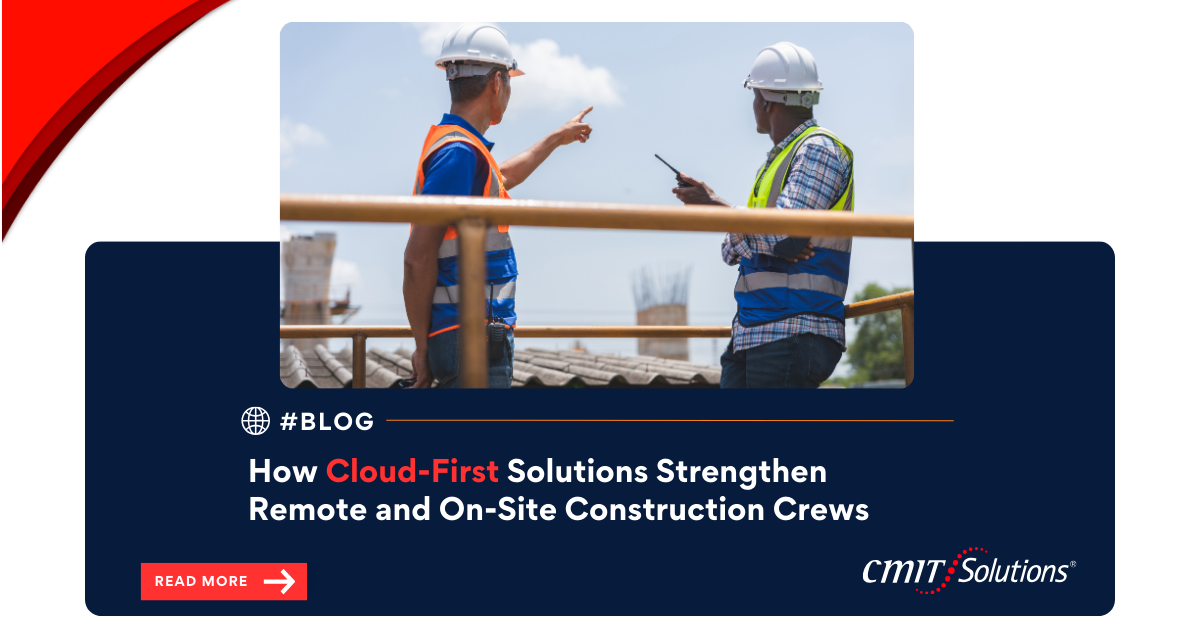
It’s early morning on a job site. Crews are checking plans, equipment is warming up, and a superintendent is fielding calls from three directions at once. Someone needs the latest drawing. Another crew is waiting for approval. Back at the office, a project manager is trying to reconcile updates that came in by email, text, and a phone call that ended mid-sentence.
Construction has always been hands-on. But today, it’s also digital and when information doesn’t move as fast as your crews do, productivity stalls.
That’s where cloud-first technology is quietly changing how construction companies operate, connecting field teams and remote workers in real time without slowing anyone down.
Why construction teams feel the disconnect
Construction work rarely happens at a desk. Teams are spread across job sites, offices, trailers, and home offices. Yet many companies still rely on systems designed for a single location.
The result is familiar:
- Outdated plans being used in the field
- Delays waiting for approvals or revisions
- Duplicate work caused by miscommunication
- Increased risk when files live on personal devices
- Frustration between office staff and field crews
When information isn’t accessible everywhere, the job slows even when the crew is ready to move.
What “cloud-first” really means for construction
Cloud-first does not mean abandoning job sites for laptops. It means designing systems so information is available where the work happens, not just where servers sit.
In practical terms, cloud-first construction tech enables:
- Real-time access to plans, schedules, and documents
- Instant updates shared across teams
- Secure collaboration between field and office staff
- Reliable communication without relying on one device or location
Instead of chasing the “latest version,” everyone works from the same source of truth.
How cloud tools support field teams
For crews in the field, cloud-based systems remove friction from daily tasks.
Access to current documents
Updated drawings, RFIs, and change orders are available instantly, no waiting for emails or printed copies.
Mobile-friendly workflows
Tablets and phones become tools for progress photos, punch lists, and approvals without returning to the trailer.
Faster decision-making
Supervisors can review and approve changes on the go, keeping momentum on the site.
Reduced errors and rework
Working from outdated information is one of the most expensive mistakes in construction. Cloud access helps prevent it.
Keeping remote and office teams aligned
Remote work is no longer limited to office staff. Project managers, estimators, and executives often work from multiple locations.
Cloud-first systems help by:
- Centralizing project data and communication
- Allowing secure access from anywhere
- Supporting collaboration across departments
- Creating visibility into project status without endless meetings
This alignment reduces confusion and keeps projects moving smoothly, even when teams are physically apart.

Security and reliability still matter
Construction firms often hesitate with cloud tools due to concerns about security or downtime. Those concerns are valid but modern cloud platforms, when properly managed, are often more secure and resilient than on-premise setups.
Key protections include:
- Secure user access controls
- Encrypted data storage and transfers
- Automatic backups and recovery options
- Monitoring for unusual or risky activity
When paired with proper IT oversight, cloud-first environments reduce risk rather than increase it.
Common mistakes construction companies make
Cloud-first success is not just about buying software. Many firms struggle because they:
- Adopt tools without a clear workflow plan
- Allow unmanaged personal devices on projects
- Skip training for field teams
- Ignore connectivity and security considerations
- Treat IT as a one-time setup instead of an ongoing strategy
These missteps can create more frustration than the old systems they replace.
What a smart cloud-first approach looks like
Successful construction firms take a practical, phased approach:
- Start with the most critical workflows
- Choose tools that work well in the field
- Secure access without overcomplicating it
- Train teams with real job-site scenarios
- Monitor and refine as projects evolve
The goal is not more technology, it’s smoother operations.

The business payoff for construction leaders
When cloud-first tech is implemented correctly, the benefits are clear:
- Fewer delays caused by missing information
- Better coordination between field and office
- Reduced rework and costly errors
- Improved accountability and visibility
- Happier crews who can focus on building, not chasing files
In an industry where time truly is money, these gains add up fast.
How CMIT Solutions helps construction firms move forward
At CMIT Solutions of Oak Park, Hinsdale & Oak Brook, we work with construction companies to modernize their technology without disrupting job sites. Our focus is on reliable access, secure collaboration, and systems that support how construction teams actually work whether they’re in the field, the office, or somewhere in between.
If your teams are still struggling with disconnected tools or outdated processes, we can help you evaluate your current setup and build a cloud-first strategy that fits your operations and budget.
Because when your technology works as hard as your crews do, everyone wins.