
For most businesses today, the network is the backbone of daily operations. Emails, cloud platforms, customer databases, security systems, VoIP phones, payment processing, and collaboration tools all rely on a stable network. But many organisations only react when something breaks.
Servers slow down. Internet connectivity drops. Applications fail. Employees stop working. Customers experience delays. Revenue and productivity take a hit. Downtime is usually predictable. In most cases, warning signals appear hours or days before the failure happens. The challenge is that without the right systems in place, businesses simply do not see those signals. That is where proactive network monitoring becomes critical.
Organisations that invest in effective network management practices in Orange County and professional network support in Anaheim can identify issues early, maintain performance, and prevent disruptions before they impact operations. This guide explains the network monitoring best practices businesses should follow to reduce downtime, improve security, and keep operations running smoothly.
Why Network Monitoring Matters for Business Operations
Modern business networks are complex environments that include the following:
- Cloud applications
- Local servers
- Wireless networks
- Remote employee connections
- Security devices
- Third-party integrations
- SaaS platforms
Even a small configuration issue can trigger large disruptions. Common causes of downtime include:
- Bandwidth overload
- Hardware failure
- Security threats
- Misconfigured routers or switches
- Network congestion
- ISP interruptions
- Outdated firmware or software
Without network performance monitoring, these issues often remain invisible until employees or customers report a problem. By implementing proactive monitoring, businesses gain visibility into the health of their entire infrastructure. Professional network support in Anaheim helps organisations detect problems early and maintain consistent network performance.
The Cost of Network Downtime
Many companies underestimate how expensive network interruptions can be. Downtime often results in:
- Lost productivity across teams
- Interrupted customer service operations
- Delayed transactions and payments
- Disrupted remote work environments
- Damaged customer trust
- Emergency IT repair costs
According to industry estimates, even a single hour of downtime can cost businesses thousands of dollars in lost productivity and revenue. Businesses that prioritise proactive network monitoring can significantly reduce downtime and avoid costly disruptions.
Effective Strategies for Network Monitoring
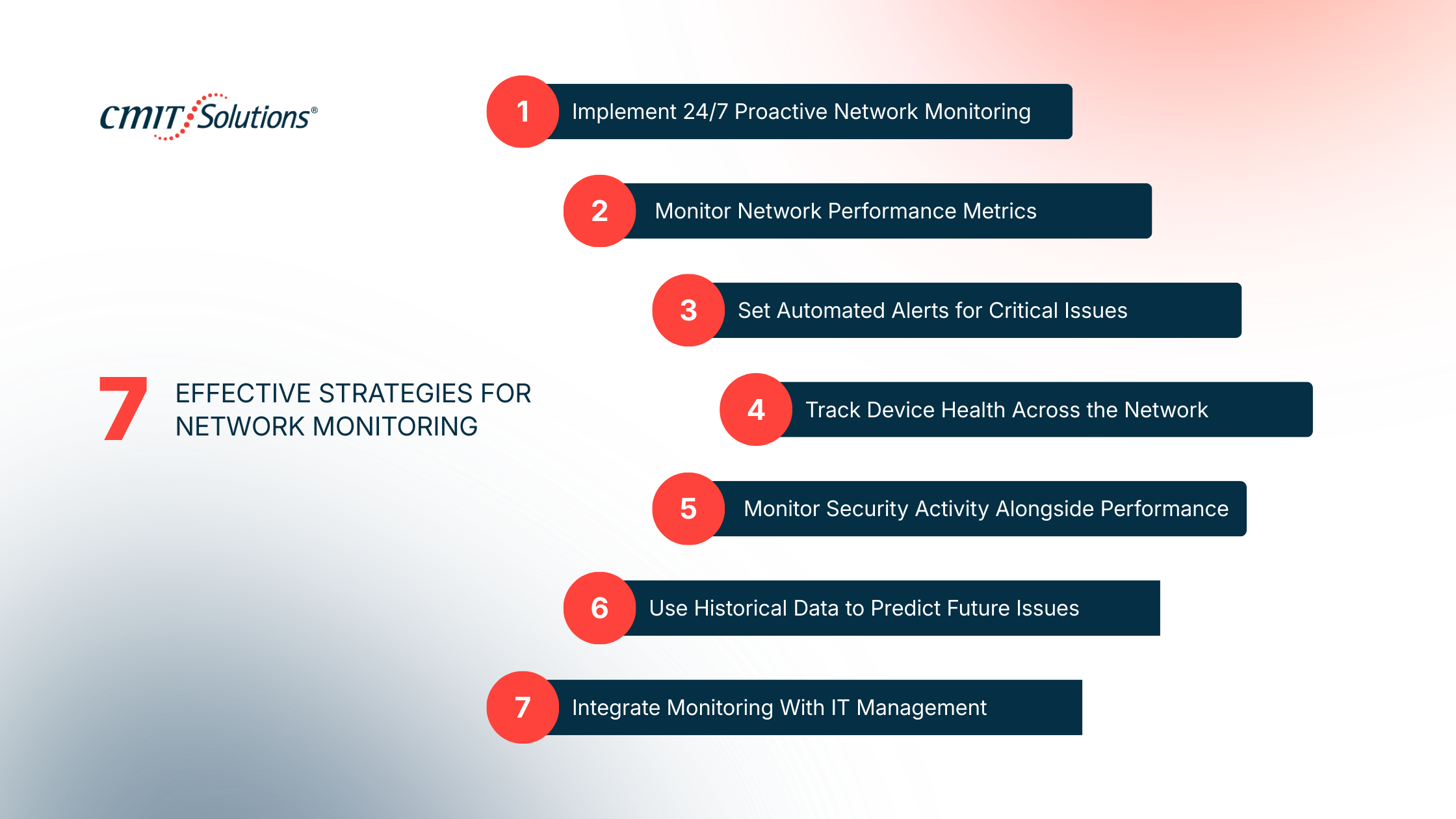
1: Implement 24/7 Proactive Network Monitoring
Networks function continuously, even during office closures. Employees may be working remotely. Customers may be accessing online platforms. Automated systems may be processing transactions. Continuous monitoring allows IT teams to detect problems immediately. 24/7 monitoring tracks:
- Server performance
- Network bandwidth usage
- Device health
- Connection stability
- Firewall activity
- Application availability
If performance drops or unusual activity appears, alerts are triggered instantly. Companies working with providers offering Orange County network management gain the advantage of continuous oversight without needing a large internal IT team, which allows them to quickly address performance issues and maintain optimal network health.
2: Monitor Network Performance Metrics
Network health is measurable. Businesses should monitor key performance indicators that reveal whether infrastructure is functioning correctly. Important metrics include:
- Latency
- Packet loss
- Bandwidth utilization
- CPU usage
- Disk usage
- Network traffic patterns
- Response times for critical applications
These indicators help detect early warning signs such as the following:
- Network congestion
- Failing hardware
- overloaded servers
- application bottlenecks
Strong network performance monitoring ensures systems stay within optimal operating ranges. This allows businesses to resolve issues before employees or customers notice a problem.
3: Set Automated Alerts for Critical Issues
Monitoring systems should not simply collect data. They must notify IT teams when something requires attention. Automated alerts help teams respond quickly when performance thresholds are crossed. Alerts can be triggered when:
- CPU usage exceeds safe limits
- Bandwidth spikes unexpectedly
- Devices go offline
- Suspicious traffic patterns appear
- Security vulnerabilities are detected
Immediate alerts allow technicians providing network support in Anaheim to respond quickly and correct the issue before it escalates. This dramatically improves uptime and system reliability.
4: Track Device Health Across the Network
Business networks include dozens or even hundreds of connected devices. These may include:
- Routers
- Switches
- Firewalls
- Servers
- Wireless access points
- Workstations
- printers
- IoT devices
Each device plays a role in network stability. Monitoring tools track:
- hardware health
- firmware status
- device connectivity
- system load
- potential hardware failures
Proactive visibility allows IT teams to replace failing equipment before it causes outages. This approach is a core part of network management strategies for professionals in Orange County.
5: Monitor Security Activity Alongside Performance
Network monitoring is not only about performance. It is also a powerful tool for cybersecurity.
Monitoring systems detect unusual behaviour that could indicate the following:
- malware activity
- unauthorized access attempts
- suspicious login patterns
- abnormal network traffic
- data exfiltration attempts
Early detection helps security teams respond quickly and contain threats before damage occurs. When combined with strong network monitoring best practices, businesses gain both operational stability and improved security protection, which is crucial in preventing data exfiltration attempts and minimising potential breaches.
6: Use Historical Data to Predict Future Issues
Advanced monitoring systems collect long term performance data. This data reveals patterns that help predict future problems. For example:
- bandwidth usage increases during peak hours
- storage capacity is approaching limits
- certain applications consistently cause bottlenecks
- specific devices experience recurring failures
Historical insights allow businesses to plan infrastructure upgrades before issues impact operations. Organisations working with experienced network support providers in Anaheim often use this data to make smarter IT investment decisions.
7: Integrate Monitoring With IT Management
Monitoring alone is not enough. It must connect with broader IT management practices. Effective monitoring should support:
- patch management
- device updates
- capacity planning
- security audits
- infrastructure optimization
When monitoring insights feed directly into IT decision-making, businesses can continuously improve performance and reduce risk. This is why many organisations partner with providers that offer comprehensive network management services in Orange County rather than isolated monitoring tools.
How Proactive Network Monitoring Reduces Downtime
Businesses that implement proactive monitoring see significant improvements in reliability. Benefits include:
- early detection of network issues
- faster response times
- reduced system outages
- improved employee productivity
- better customer experience
- stronger security protection
Instead of reacting to emergencies, companies operate in a preventive mode. That shift alone can dramatically reduce network downtime across the organisation.
Why Businesses in Orange County Need Professional Network Monitoring
Small and mid-sized businesses often lack the internal resources to maintain full-time monitoring systems. Professional IT providers help bridge this gap. With expert network support in Anaheim, businesses gain access to:
- 24/7 monitoring tools
- dedicated IT specialists
- faster incident response
- proactive system maintenance
- security threat detection
- strategic IT guidance
This allows growing companies to maintain enterprise-level reliability without building a large in-house IT department.
Build a Network That Prevents Problems Instead of Reacting to Them
Network failures rarely happen without warning. Slow systems, unusual traffic patterns, and device errors often appear long before a disruption occurs. Businesses that implement the right network monitoring best practices gain visibility through these early warning signs. Through proactive monitoring, performance tracking, security oversight, and expert management, organisations can keep their systems running smoothly while avoiding costly downtime. For businesses looking to strengthen infrastructure and prevent disruptions, professional Orange County network management and network support services in Anaheim provide the expertise and tools needed to maintain a reliable and secure network environment.
FAQs
How often should businesses monitor their network performance?
Network performance should be monitored continuously. Modern networks operate 24/7, and issues can occur at any time. Continuous monitoring ensures IT teams detect problems immediately and address them before they affect operations.
What types of network issues can monitoring detect early?
Monitoring systems can detect early signs of many problems, including bandwidth congestion, failing hardware, network configuration errors, security threats, unusual traffic spikes, server overload, and connectivity issues.
How does network monitoring improve security and threat detection?
Monitoring tools track network traffic and user behavior. If unusual patterns appear, such as unauthorised login attempts or abnormal data transfers, alerts are triggered. This allows IT teams to investigate potential security threats quickly.
What is the difference between network monitoring and network management?
Network monitoring focuses on observing network performance and detecting issues. Network management includes a broader set of activities such as configuring devices, maintaining infrastructure, managing security policies, and optimising network performance.
Can network monitoring reduce IT support costs for small businesses?
Yes. Early detection prevents major outages and emergency repairs, which can be expensive. Proactive monitoring helps businesses resolve issues quickly and maintain stable operations, reducing overall IT support costs.
How does 24/7 network monitoring benefit growing businesses?
Growing businesses rely heavily on digital systems and cloud applications. Continuous monitoring guarantees the reliability of network performance, detects security threats early, and resolves technical issues before they disrupt productivity.