Data privacy has become one of the biggest concerns for businesses today.
Companies collect, store, and process enormous amounts of customer information through websites, cloud platforms, applications, payment systems, and digital communication tools. At the same time, consumers are becoming more aware of how businesses use their personal data.
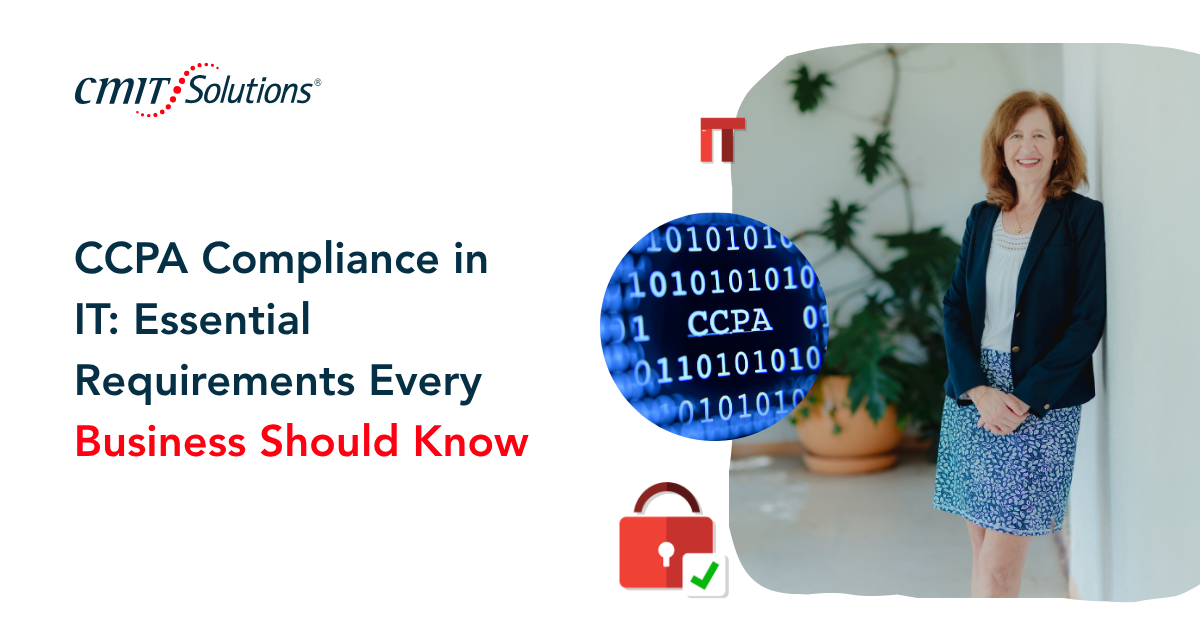
Because of growing privacy concerns, regulations like the California Consumer Privacy Act (CCPA) are changing how businesses manage customer information and cybersecurity practices.
Many organizations assume CCPA only affects large companies located in California. In reality, the law impacts businesses across multiple industries and locations if they handle California consumer data.
For businesses, CCPA compliance is no longer just a legal requirement; it has become an important part of cybersecurity, data protection, and customer trust.
Businesses working with CMIT Solutions of Charleston increasingly focus on strengthening IT security, improving data management practices, and reducing compliance risks through proactive cybersecurity strategies.
What Is CCPA?
The California Consumer Privacy Act (CCPA) is a data privacy law designed to give consumers greater control over how businesses collect, use, store, and share personal information.
The law provides California residents with rights related to their personal data, including the ability to:
- Know what information businesses collect
- Request access to personal data
- Ask businesses to delete information
- Opt out of data sharing or selling
- Receive equal service regardless of privacy requests
Although the law focuses on California residents, many businesses outside California must still comply if they process or manage California consumer information.
This is why CCPA has become a major cybersecurity and compliance consideration for organizations across the country.
Businesses reviewing data privacy risks can better understand how privacy expectations are evolving.
Why CCPA Compliance Matters for Businesses
Modern businesses rely heavily on customer data for operations, marketing, communication, and service delivery.
This includes information such as:
- Names
- Email addresses
- Phone numbers
- Payment information
- Browsing activity
- Customer preferences
- Device information
As businesses collect more data, they also face greater responsibility for protecting it.
Failure to properly manage personal information can lead to:
- Compliance penalties
- Data breaches
- Legal liability
- Reputation damage
- Customer trust issues
CCPA compliance helps businesses create stronger data privacy and security practices while improving transparency with customers.
Organizations using compliance services are often better positioned to reduce operational and legal risks.
Which Businesses Must Comply With CCPA?
Many businesses mistakenly believe CCPA only applies to large technology companies.
In reality, CCPA may apply to businesses that meet certain criteria related to revenue, data processing volume, or data-sharing activities.
Organizations may need to comply if they:
- Process personal information from California residents
- Meet certain annual revenue thresholds
- Handle large amounts of consumer data
- Generate revenue from selling or sharing personal information
Even businesses located outside California may still fall under CCPA requirements if they serve California customers.
This is why many organizations are reviewing cybersecurity, data storage, and IT management practices more carefully.
Companies exploring privacy compliance can strengthen readiness for changing regulations.

How IT Plays a Major Role in CCPA Compliance
CCPA compliance is not only a legal or administrative responsibility.
IT infrastructure plays a major role in protecting consumer data and supporting compliance requirements.
Businesses must understand:
- Where customer data is stored
- How data is accessed
- Who has permission to view information
- How systems are secured
- How data is transferred or shared
Without proper IT visibility and security controls, businesses may struggle to comply with privacy regulations effectively.
This is why cybersecurity and compliance have become closely connected.
Organizations working with managed IT services providers often strengthen IT environments to support resilience and compliance readiness.
Data Visibility Is Essential
One of the biggest CCPA challenges businesses face is understanding what data they actually collect.
Customer information may exist across:
- Cloud applications
- Email systems
- CRM platforms
- Payment systems
- File storage environments
- Employee devices
Without proper visibility, businesses may struggle to respond to consumer data requests accurately.
For example:
If a customer requests access to their personal information, businesses must be able to identify and retrieve relevant data quickly.
This requires organized data management and proper IT oversight.
Businesses increasingly implement network management systems to improve visibility and reduce compliance risks.
Strong Access Controls Matter
CCPA compliance also requires businesses to strengthen how customer information is protected internally.
Not every employee should have unrestricted access to sensitive customer data.
Organizations should implement:
- Role-based access controls
- Multi-factor authentication
- Secure password policies
- Identity management systems
Limiting unnecessary access helps reduce the risk of:
- Insider threats
- Unauthorized access
- Accidental exposure
- Credential compromise
Businesses that improve identity and access management often strengthen both cybersecurity and compliance readiness simultaneously.
Strong IT guidance can help organizations create better access policies.
Data Security Is a Critical Requirement
One of the biggest risks businesses face under CCPA is a data breach involving consumer information.
Cyberattacks continue increasing across industries, including:
- Ransomware attacks
- Phishing campaigns
- Credential theft
- Insider threats
- Cloud vulnerabilities
Businesses handling personal data must implement reasonable security measures to reduce the likelihood of unauthorized access or exposure.
This often includes:
- Endpoint protection
- Firewall security
- Threat monitoring
- Encryption
- Backup systems
- Security patch management
Organizations implementing cybersecurity services are often better positioned to reduce breach risks and improve compliance support.
Why Employee Training Matters
Technology alone cannot guarantee compliance.
Employees remain one of the biggest cybersecurity and privacy risks businesses face today.
Human error often contributes to:
- Phishing attacks
- Data exposure
- Weak password practices
- Unauthorized data sharing
Businesses should regularly train employees on:
- Data privacy responsibilities
- Secure handling of customer information
- Phishing awareness
- Password security
- Compliance procedures
Ongoing security awareness training helps reduce operational risks while supporting stronger privacy practices.

Cloud Security and CCPA Compliance
Many businesses now rely heavily on cloud platforms for operations and collaboration.
Cloud environments improve flexibility but also introduce additional privacy and security concerns.
Businesses should understand:
- Where cloud data is stored
- Which providers manage information
- How customer data is protected
- Whether cloud access is monitored
Cloud misconfigurations remain one of the leading causes of data exposure incidents.
Organizations increasingly strengthen cloud security monitoring and access controls to reduce compliance risks.
Businesses using cloud services can improve visibility and protection across business environments.
Incident Response Planning Is Important
CCPA compliance also requires businesses to prepare for potential security incidents.
If a breach occurs, organizations may need to:
- Investigate the incident quickly
- Identify affected data
- Notify impacted individuals
- Reduce further exposure
Without an incident response plan, businesses may struggle to manage cybersecurity events effectively.
Strong incident response planning helps organizations:
- Improve recovery speed
- Reduce operational disruption
- Minimize legal exposure
- Strengthen customer communication
Businesses focused on business continuity can recover faster from security incidents.
Why Businesses Are Taking Data Privacy More Seriously
Consumer expectations around privacy continue growing.
Customers increasingly expect businesses to:
- Protect personal information
- Handle data responsibly
- Be transparent about data collection
- Respond quickly to privacy requests
Businesses that fail to prioritize privacy and security may experience:
- Reputation damage
- Customer trust loss
- Regulatory scrutiny
- Financial penalties
As privacy regulations continue evolving, organizations are moving toward more proactive data governance and cybersecurity strategies.
Companies improving customer trust can turn compliance into a stronger business advantage.
The Connection Between Cybersecurity and Compliance
Modern compliance requirements are closely tied to cybersecurity readiness.
Businesses cannot effectively protect customer privacy without strong IT security practices.
This is why organizations increasingly invest in:
- Endpoint protection
- Security monitoring
- Threat detection
- Identity management
- Backup and disaster recovery
- Employee cybersecurity training
A strong cybersecurity strategy not only reduces operational risks but also improves long-term compliance readiness.
Businesses implementing data backup and proactive IT management are often better prepared to adapt to evolving privacy regulations.
Organizations can also use IT support to maintain security controls and respond to compliance-related issues faster.
Conclusion
CCPA compliance is becoming an important part of modern business operations as organizations handle increasing amounts of customer data across digital environments. Businesses must focus on data visibility, strong access controls, cybersecurity protection, employee awareness, and incident response planning to reduce privacy risks and support compliance requirements effectively.
As cybersecurity threats and privacy regulations continue evolving, businesses need proactive IT and security strategies that protect both sensitive information and customer trust.
Businesses looking to strengthen data security and improve compliance readiness can work with CMIT Solutions of Charleston to implement cybersecurity and IT solutions designed to support long-term privacy protection and operational resilience.
Ready to improve data privacy readiness? Contact us today to learn how CMIT Solutions of Charleston can help your business strengthen CCPA compliance, cybersecurity, and data protection.