Most businesses do not fail because of one dramatic event. They fall behind slowly, through a series of small technology decisions made under pressure rather than with a plan. A server gets replaced only after it crashes. Software gets purchased because a competitor uses it, not because it fits the business. Security gets addressed after an incident, not before one. Over time, these reactive choices pile up into a patchwork of systems that slow growth and quietly increase risk.
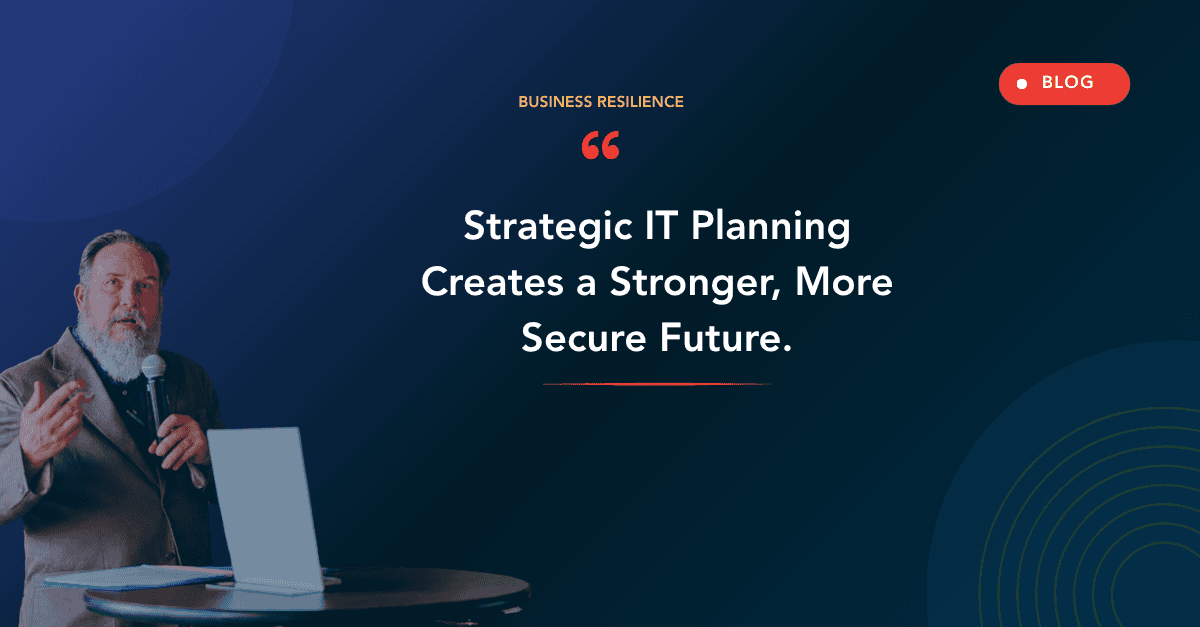
Strategic IT planning is the alternative. Instead of treating technology as a series of emergencies to manage, it treats technology as a driver of business outcomes, tied directly to growth goals, budget cycles, and risk tolerance. For businesses across Greenville, this shift in approach is increasingly becoming the difference between companies that scale smoothly and companies that spend years stuck fighting the same recurring problems.
CMIT Solutions of Greenville works with local business owners to build that kind of forward-looking plan. This article explains what strategic IT planning actually involves, why it matters more now than ever, and how a structured approach helps businesses grow faster while staying protected against a constantly shifting threat landscape. Whether a business is adding its first remote employees, opening a second location, or simply trying to get ahead of aging infrastructure, the same underlying principle applies: technology decisions made with a plan consistently outperform decisions made under pressure.
What Strategic IT Planning Actually Means
Strategic IT planning is the practice of aligning technology decisions with business objectives over a defined period, typically one to three years, rather than making isolated purchases in response to whatever problem is most urgent that week. It answers questions like:
- What systems need to scale as the business adds staff, locations, or customers
- Where are the biggest security and compliance gaps that could disrupt growth
- What technology investments will actually move the business forward, versus which ones are just maintenance
- How much should be budgeted for technology each year, and when
- Which tools or platforms are approaching end of life and need replacement before they become a liability
A strategic plan turns technology from a reactive cost center into a proactive part of running the business, with the same level of forethought applied to marketing, hiring, or financial planning.
Why Reactive IT Slows Growth
Businesses without a plan tend to fall into a predictable pattern. Something breaks, gets fixed under time pressure, and the business moves on until the next issue surfaces. This cycle creates several compounding problems.
- Inconsistent systems. Different departments end up using different tools that do not integrate well, creating data silos and manual workarounds.
- Delayed growth initiatives. New locations, product lines, or hires get held up while IT scrambles to catch up with infrastructure needs that should have been planned in advance.
- Rising security exposure. Systems purchased without a security review often lack basic protections, creating gaps that accumulate quietly over time.
- Unpredictable spending. Emergency purchases and rush fixes typically cost more than planned investments, straining budgets unpredictably throughout the year.
- Staff frustration. Employees working with outdated or mismatched tools lose productivity and often find workarounds that introduce further risk.
None of these problems are dramatic on their own, but together they slow a business down in ways that are difficult to trace back to a single cause. Strategic planning addresses the root issue rather than treating each symptom individually.
The Core Elements of a Strategic IT Plan
A well-built strategic IT plan typically covers several interconnected areas, each tied back to specific business goals.
Infrastructure Roadmap
This outlines what hardware, networking, and cloud resources the business needs now and over the coming years, based on projected growth. It includes decisions about on-premises versus cloud infrastructure, technology procurement solutions for upcoming hardware refresh cycles, and capacity planning tied to headcount or transaction volume projections.
Security and Compliance Strategy
Security cannot be an afterthought bolted onto the plan later. A strategic approach builds in proactive threat protection from the start, along with compliance requirements specific to the industry the business operates in.
Backup and Business Continuity
Growth increases what a business stands to lose if systems go down. A strategic plan incorporates cloud backup solutions and recovery objectives that scale alongside the business rather than becoming outdated within a year of implementation.
Software and Application Strategy
Rather than adopting tools one department at a time, a strategic plan evaluates productivity software tools holistically, looking for platforms that integrate well and support the business as it scales, instead of creating new silos.
Communication and Collaboration Tools
As teams grow, especially across multiple locations or remote arrangements, unified communication tools become essential for keeping everyone connected without relying on a patchwork of disconnected apps.
Budget Forecasting
A strategic plan maps out technology spending across the planning period, smoothing out costs and avoiding the budget shocks that come from emergency purchases.
Monitoring and Support Structure
Ongoing round the clock monitoring and support ensure that as systems grow more complex, issues are caught and resolved before they become larger disruptions.
How Strategic Planning Supports Growth
Growth puts pressure on every part of a business, and technology is often the least visible constraint until it becomes the biggest bottleneck. Strategic planning removes that constraint in several concrete ways.
- Scalable systems avoid costly rebuilds. Choosing platforms designed to grow with the business prevents the need to rip out and replace core systems every time the company reaches a new size threshold.
- Faster onboarding for new locations or hires. Standardized systems and documented processes mean new offices or employees can be brought online quickly rather than requiring custom setups each time.
- Better data for decision making. Integrated systems produce cleaner, more reliable data, giving leadership the visibility needed to make informed growth decisions.
- Reduced downtime during transitions. Mergers, new product launches, or seasonal spikes go more smoothly when infrastructure has been planned for that kind of scaling in advance.
- Improved customer experience. Reliable systems mean fewer disruptions to service delivery, which matters directly to customer retention as a business grows.
- Stronger vendor and partner relationships. Consistent, well-documented systems make it easier to integrate with partners, suppliers, and outside platforms as business relationships expand.
Taken together, these advantages compound over time. A business that plans its technology growth two or three years ahead is rarely caught off guard by the operational strain that expansion typically brings, and can instead focus its energy on the parts of growth that actually require creativity and judgment.
How Strategic Planning Strengthens Security
Security and growth are often framed as competing priorities, but a strategic plan treats them as connected. Rapid, unplanned growth is actually one of the biggest drivers of new security gaps, since new systems, new staff, and new locations are frequently added faster than security controls can keep pace.
A strategic approach addresses this by building security into every stage of growth planning rather than treating it as a separate initiative:
- New employee onboarding includes access provisioning aligned with least-privilege principles from day one
- New locations are brought online with consistent security configurations rather than ad hoc setups
- New software is vetted for security before deployment, not after an incident reveals a gap
- Ongoing advanced threat prevention scales alongside the expanding attack surface that comes with more systems, users, and locations
- Regular reviews catch configuration drift before it becomes an exploitable weakness

This proactive posture also supports cyber insurance requirements and regulatory compliance, both of which increasingly expect documented, consistent security practices rather than reactive fixes applied after growth has already outpaced protection.
The Role of AI in Strategic IT Planning
Artificial intelligence has become a meaningful part of strategic planning conversations, both as a tool businesses can adopt and as a factor that changes what infrastructure and security planning need to account for.
Businesses considering how AI fits into their growth strategy typically start with an AI readiness evaluation to understand where automation can realistically add value without introducing unnecessary complexity or risk. From there, a strategic plan can incorporate:
- AI powered services that improve efficiency in customer service, data analysis, or internal operations
- A framework for secure AI adoption that protects sensitive data as automation tools are introduced across departments
- Infrastructure that supports secure remote access for teams increasingly relying on cloud-based and AI-enabled tools from multiple locations
Businesses that fold AI planning into their broader IT strategy, rather than treating it as a separate, isolated initiative, tend to adopt these tools more successfully and with fewer security surprises down the line.
Industry-Specific Planning Considerations
Strategic IT planning looks different depending on the industry, since growth patterns, compliance obligations, and operational priorities vary significantly.
Manufacturing
Manufacturers planning for growth need infrastructure that supports both business systems and production environments. Manufacturing sector solutions often prioritize scalable inventory and scheduling systems, paired with dedicated attention to plant floor technology as production capacity expands.
Financial Services
Growth in financial services usually comes with added regulatory scrutiny. Financial services support planning incorporates compliance requirements from the outset, so expansion does not outpace the controls regulators expect to see in place.
Healthcare
Adding providers, locations, or services in healthcare requires careful planning around patient data systems. Healthcare practice support strategies build HIPAA-aligned infrastructure into growth plans from the beginning rather than retrofitting compliance later.
Legal
Law firms adding attorneys or practice areas need systems that maintain strict confidentiality as the organization scales. Legal practice IT planning focuses on access controls and document management that hold up under growth.
Hospitality
Hospitality businesses expanding to new properties or locations need consistent, replicable technology setups. Hospitality technology support planning standardizes point-of-sale, reservation, and guest network systems so each new location comes online smoothly.
Building a Strategic IT Plan Step by Step
Businesses ready to move from reactive to strategic technology management can follow a practical framework to get started.
Step 1: Assess the Current State Begin with a technology self assessment to establish a clear, honest baseline of existing systems, gaps, and risks.
Step 2: Define Business Goals Identify specific growth targets, whether that means new locations, increased headcount, new product lines, or expanded service offerings, and translate them into technology requirements.
Step 3: Prioritize Investments Rank planned investments by impact and urgency, distinguishing between what supports immediate growth and what can be phased in over subsequent budget cycles.
Step 4: Build the Budget Timeline Map projected technology spending across the planning period, smoothing costs and avoiding reliance on emergency purchases.
Step 5: Assign Ownership Designate who is responsible for executing each part of the plan, whether that is internal staff, leadership, or an outside technology partner offering reliable IT support.
Step 6: Review and Adjust Regularly Revisit the plan at least annually, adjusting for changes in business direction, new threats, or shifts in available technology.
Keeping the Plan Alive Through Execution
A strategic plan only delivers value if it actually gets implemented and maintained over time. Many businesses invest significant effort into building a roadmap, only to see it stall once day-to-day operations take over. Avoiding that outcome requires ongoing attention, not just a one-time planning exercise.
- Regular check-ins to track progress against the timeline keep the plan from quietly slipping
- Continuous 24/7 system monitoring provides the operational visibility needed to know whether infrastructure investments are performing as expected
- Periodic reviews of offsite data storage practices ensure recovery capabilities keep pace as data volumes grow
- Refreshed business software tools evaluations catch opportunities to consolidate platforms as the business’s needs evolve
- A dependable technical support partner who understands the plan’s goals can flag when execution starts drifting from the original strategy
Businesses that build this kind of accountability into their planning process are far more likely to see the intended results, rather than watching a well-designed roadmap quietly gather dust after the initial planning meetings.
Aligning Departments Around a Shared Technology Vision
One of the more overlooked benefits of strategic IT planning is the alignment it creates across departments that might otherwise pursue technology decisions independently. Sales, operations, finance, and customer service often have different priorities, and without a shared plan, each department may adopt tools that make sense locally but create friction across the organization as a whole.
A shared roadmap helps by:
- Establishing a single source of truth for which platforms are approved and supported
- Reducing duplicate spending on overlapping tools purchased by different teams
- Creating a consistent business communication platforms strategy that keeps every department connected rather than siloed
- Giving leadership a clearer picture of total technology spending across the organization
- Supporting a more consistent free IT assessment process each year, since systems are more standardized and easier to evaluate
When departments operate from the same technology vision, growth initiatives move faster because teams are not working around incompatible systems or duplicated efforts.
Where Automation Fits Into the Long-Term Plan
As businesses mature their technology environment, automation increasingly becomes part of the conversation. Strategic plans that account for this early tend to adopt automation more smoothly than those that bolt it on as an afterthought. Expanding business AI solutions into areas like customer service, reporting, and internal operations can meaningfully reduce manual workload, freeing staff to focus on higher-value work as the business scales. Manufacturing businesses in particular often revisit their manufacturing IT management approach as automation expands from back-office systems into production environments, requiring closer coordination between IT and operations teams.

Common Mistakes That Undermine Strategic Planning
Even businesses that attempt strategic planning can fall short if certain pitfalls are not avoided.
- Treating the plan as a one-time document. A plan that is written once and never revisited quickly becomes outdated as the business and threat landscape change.
- Focusing only on hardware and ignoring processes. Technology alone does not solve problems if the underlying workflows and staff training are not addressed alongside it.
- Skipping stakeholder input. Plans built without input from department leaders often miss practical needs that only surface once implementation begins.
- Underestimating security’s role in growth planning. Security added as an afterthought tends to be more expensive and less effective than security built in from the start.
- Failing to track outcomes. Without measuring whether planned investments actually delivered the expected results, it becomes difficult to refine future planning cycles.
The Financial Case for Strategic Planning
Beyond growth and security benefits, strategic IT planning has a direct financial impact that is often underestimated. Predictable budgeting reduces the frequency of emergency spending, which typically costs more than planned purchases made with adequate lead time to evaluate options and negotiate pricing. Standardized systems reduce the ongoing cost of supporting a patchwork of mismatched tools, since fewer platforms mean less complexity for internal staff or an outside provider to manage.
There is also a less obvious financial benefit tied to risk reduction. Businesses with strong, planned security postures often see better outcomes when applying for cyber insurance, since insurers increasingly reward documented, consistent controls with better pricing and broader coverage. A business that has invested in strategic IT guidance throughout the year typically enters renewal conversations with stronger documentation and fewer last-minute gaps to close.
It is worth noting that the financial case for planning is not only about avoiding costs. Businesses that budget technology spending strategically are often able to invest more confidently in growth-focused initiatives, since they are not diverting funds toward unexpected repairs or emergency replacements throughout the year. This predictability also makes it easier to secure financing or investment, since lenders and investors generally view a business with a documented technology roadmap as lower risk than one making decisions on an ad hoc basis.
Conclusion
Strategic IT planning is easiest to sustain with a partner who understands both the technical landscape and the specific realities of doing business in Greenville. CMIT Solutions of Greenville works with local businesses across manufacturing, healthcare, financial services, legal, and hospitality industries to build technology roadmaps that reflect real growth goals, not generic templates borrowed from unrelated industries.
The result is a technology environment that supports the business as it grows, rather than holding it back or introducing new risk with every expansion. Instead of scrambling to catch up after a problem surfaces, businesses with a strategic plan in place can move forward with confidence, knowing their systems, security, and budget are aligned with where the company is headed.
If your business has been making technology decisions reactively, now is a good time to build a plan that actually supports where you want to go. Schedule a consultation to talk through your current systems and growth goals, or connect with specialists who can help translate those goals into a practical, budget-conscious technology roadmap.
Frequently Asked Questions
Frequently Asked Questions