A decade ago, ransomware was a rare nuisance. Today it is a multi-billion-dollar criminal industry, striking small and midsize businesses (SMBs) every 11 seconds. Traditional backups are no longer enough.
While regular backups remain a cornerstone of cyber hygiene, attackers now target backup repositories, encrypt cloud storage, and launch double-extortion schemes.
To survive and recover, organizations must build a modern ransomware response strategy that blends prevention, detection, and rapid recovery.
Ransomware in 2025: A Clear and Present Danger
Modern ransomware attacks are:
- Automated – AI-driven code spreads faster than humans can react.
- Targeted – Criminals focus on SMBs that often lack enterprise defenses, confirming why small businesses remain top targets.
- Sophisticated – Attackers now exfiltrate data before encrypting it, threatening public leaks to force payment.
- Cloud-aware – Malicious code hunts down connected SaaS and backup accounts.
The recent major telecom breach underscores how even well-funded companies can be crippled when response strategies lag behind attacker tactics.
Why Backups Alone Are No Longer Enough
Traditional backup strategies—nightly snapshots stored on local servers—fail in three critical ways:
- Backup targeting – Attackers now encrypt or delete backup files.
- Slow recovery – Restoring terabytes of data can take days or weeks.
- Compliance risk – Sensitive data leaks before encryption, creating regulatory exposure.
This shift reflects the data protection movement, which prioritizes resilience and rapid restoration over simple duplication.
Key Components of a Modern Ransomware Response Plan
An effective plan moves beyond backups to a layered defense:
1. Prevention
- Endpoint protection with AI-based detection and automated patching.
- Email security to block phishing, a common entry point for attacks.
- Zero-trust access to limit lateral movement inside networks.
- Regular IT assessments to identify hidden vulnerabilities.
2. Detection
- 24/7 monitoring with behavioral analytics to catch unusual activity, supported by network visibility tools.
- Threat intelligence feeds to track new ransomware variants.
- Immutable logs to document attacks for forensic review.
3. Containment
- Automated isolation protocols to quarantine infected endpoints.
- Segmented networks to stop lateral spread.
- Cloud-native controls for instant account lockdown.
4. Rapid Recovery
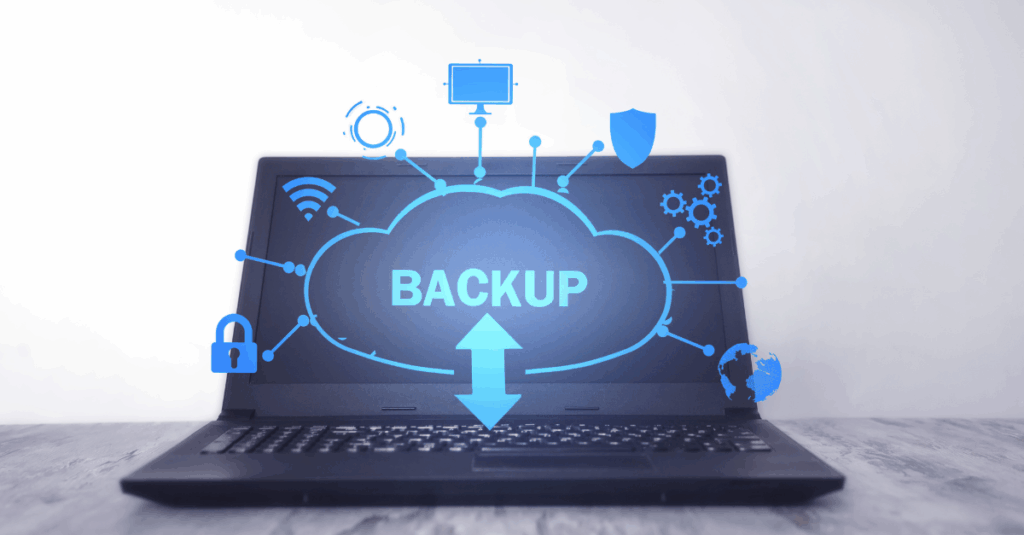
- Immutable backups stored in off-site or air-gapped environments.
- Disaster recovery runbooks tested quarterly.
- Verified recovery time objectives (RTOs) aligned with business needs.
These steps should be reinforced by strong cybersecurity strategy planning and executive buy-in.
Building Resilience Through Managed IT
Developing this type of multilayered response requires constant oversight and specialized skills.
Partnering with an experienced Managed Services Provider delivers:
- Reliable guidance for risk assessment and planning, similar to IT guidance offered by CMIT Solutions.
- Continuous monitoring with real-time alerts.
- Proactive patching to reduce exploitable weaknesses.
- Expert recovery support during an incident.
Many SMBs choose managed IT because it provides enterprise-level security at a predictable monthly cost.
Cloud and Multi-Cloud Considerations
Cloud adoption introduces both benefits and risks.
Attackers exploit misconfigured permissions and unsecured storage buckets.
To protect cloud workloads:
- Use multi-factor authentication and least-privilege policies.
- Enable immutable backups across providers
- Simplify operations with multi-cloud management strategies.
Modern ransomware often spreads across connected SaaS platforms, so visibility and unified control are critical.
AI: Friend and Foe
Artificial intelligence fuels both sides of the ransomware arms race.
- Criminals deploy AI-driven scams to create convincing phishing lures.
- Defenders use AI for rapid anomaly detection and automated containment.
- Predictive analytics help estimate breach impact and guide recovery priorities.
AI’s dual role underscores the need for human expertise plus intelligent automation.
Employee Awareness and Digital Experience
Even the best technology fails if employees fall for phishing emails or reuse weak passwords.
A modern strategy includes:
- Regular security awareness training.
- Simulated phishing campaigns.
- Endpoint analytics to measure digital employee experience and spot risky behaviors.
Human factors remain the first line of defense—and the most common point of failure.
Incident Response Playbook
Every organization should maintain a written, regularly tested plan covering:
- Roles and responsibilities – Who makes decisions under pressure.
- Communication protocols – Internal updates and external disclosures.
- Law enforcement contact – When and how to report incidents.
- Legal and insurance steps – To handle regulatory obligations.
Regular drills ensure staff can execute the plan during an actual attack.
Compliance and Regulatory Readiness
Failing to protect sensitive data can trigger fines and lawsuits.
A modern ransomware strategy aligns with industry frameworks and cybersecurity compliance requirements such as HIPAA, GDPR, and PCI DSS.
Automated reporting and immutable audit logs simplify regulatory responses.
Business Continuity and Testing
A plan is only effective if it works under pressure:
- Conduct tabletop exercises to simulate attacks.
- Perform quarterly recovery tests to confirm RTO and RPO goals.
- Validate that backups remain accessible and uncorrupted.
These drills uncover weaknesses and build staff confidence.
Partnering for Ransomware Resilience
Modern ransomware defense demands more than tools—it requires a trusted technology partner.
CMIT Solutions of Oak Park, Hinsdale & Oak Brook delivers:
- Proactive threat monitoring and endpoint security.
- Advanced cloud protection through system monitoring and multi-cloud controls.
- Expert recovery support when incidents occur.
- Ongoing strategic planning that aligns IT with long-term business goals.
These services provide the layered security and operational resilience needed to withstand today’s ransomware threats.
Final Takeaway
Backups remain essential, but they are only the beginning.
Ransomware resilience demands prevention, detection, containment, and rapid recovery, reinforced by continuous monitoring and expert guidance.
By combining advanced technology, employee training, and proactive management, SMBs can move from a posture of fear to one of confidence.
CMIT Solutions of Oak Park, Hinsdale & Oak Brook helps businesses implement comprehensive strategies that go beyond backups—ensuring operations continue even when attackers strike.