Cybersecurity threats are becoming more advanced, more automated, and more difficult for businesses to manage internally.
Ransomware attacks, phishing campaigns, insider threats, cloud vulnerabilities, and AI-driven cyberattacks now affect organizations across every industry. At the same time, businesses are managing larger digital environments that include remote employees, cloud platforms, mobile devices, and connected systems.
Many organizations already use cybersecurity tools such as firewalls, antivirus software, endpoint protection, and email security solutions. But modern cyber threats often move faster than traditional security systems can respond.
This is why many businesses are turning to Managed Detection and Response (MDR) providers for stronger protection.
MDR services help businesses monitor threats continuously, improve incident response, and strengthen overall cybersecurity visibility. However, not all MDR providers offer the same level of protection, integration, or compliance support.
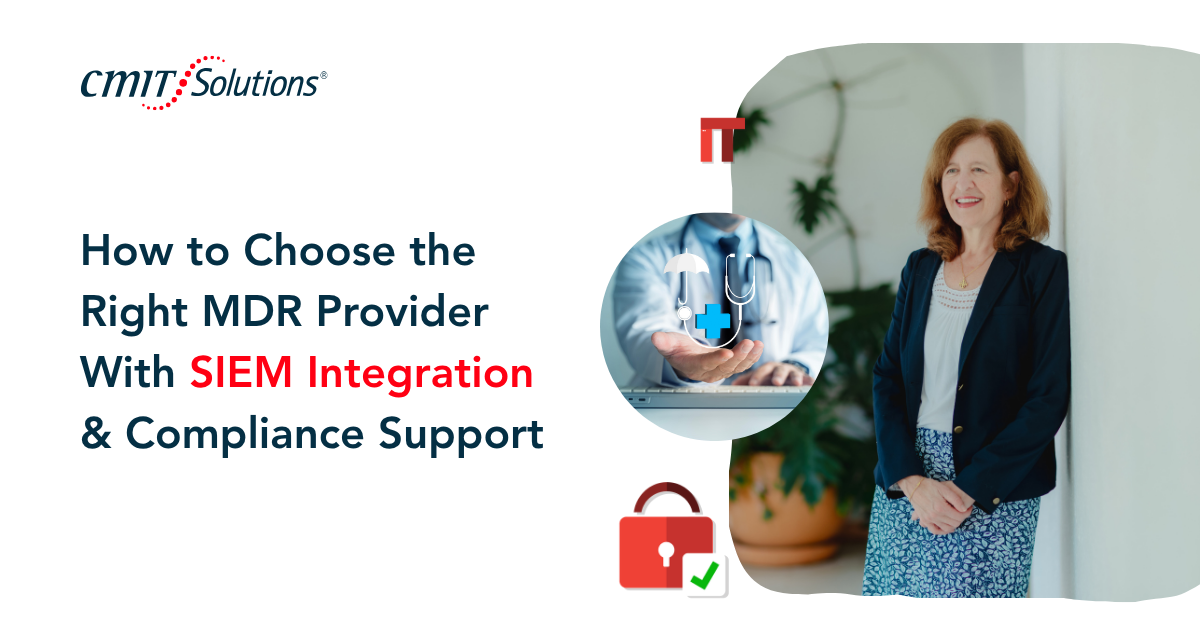
Businesses working with CMIT Solutions of Charleston increasingly look for MDR solutions that integrate with SIEM platforms, improve threat detection, and support evolving compliance requirements.
Choosing the right MDR provider is not just about adding another security tool. It is about building a cybersecurity strategy that supports long-term business resilience.
Why Businesses Are Investing in MDR Services
Many businesses today face cybersecurity challenges such as:
- Limited internal security staff
- Alert fatigue
- Slow incident response
- Increasing compliance requirements
- Cloud security risks
- Remote work vulnerabilities
Traditional security tools often generate large numbers of alerts but provide limited investigation or response capabilities.
This creates a major problem for businesses.
Internal IT teams may struggle to determine:
- Which alerts are serious
- How attacks entered the network
- Whether threats are still active
- How quickly systems can recover
MDR helps solve these challenges by providing continuous threat monitoring, investigation, and response support.
Instead of simply generating alerts, MDR providers actively monitor environments and help contain threats before they cause major damage.
Businesses exploring MDR solutions often prioritize providers with strong response capabilities.
What Makes MDR Different From Traditional Security Monitoring
Many businesses assume MDR works the same way as antivirus software or basic monitoring tools.
In reality, MDR provides a much broader security service.
Modern MDR solutions combine:
- Continuous monitoring
- Threat intelligence
- Security analytics
- Human expertise
- Automated response capabilities
The goal is not only to detect suspicious activity but to investigate and respond quickly.
This becomes especially important as cyberattacks continue growing more sophisticated.
Businesses now need cybersecurity solutions capable of monitoring endpoints, cloud environments, user behavior, and network activity together.
Organizations investing in cyber defense are increasingly combining automation with expert oversight.
Why SIEM Integration Matters
One of the most important features businesses should evaluate when choosing an MDR provider is SIEM integration.
SIEM stands for Security Information and Event Management.
A SIEM platform helps businesses collect and analyze security data from across their environment.
This includes data from:
- Firewalls
- Endpoints
- Servers
- Cloud systems
- Email platforms
- Authentication systems
- Business applications
Without SIEM integration, businesses often struggle with fragmented visibility.
One system may detect unusual network traffic while another identifies suspicious login behavior. If those alerts remain isolated, businesses may fail to recognize a coordinated attack.
MDR providers with SIEM integration help connect this information into a centralized security view.
This allows businesses to identify threats faster and improve overall cybersecurity awareness.
Organizations working with CMIT Solutions of Charleston often prioritize security models that improve visibility across the entire IT environment.
Continuous Monitoring Is Critical
Cyberattacks do not happen only during business hours.
Many attacks occur overnight, during weekends, or outside normal operating schedules.
Most small and mid-size businesses do not have dedicated security teams monitoring systems 24/7.
This is one of the biggest reasons businesses invest in MDR services.
A strong MDR provider should offer continuous monitoring that includes:
- Threat detection
- Incident investigation
- Security alert analysis
- Threat containment support
- Real-time escalation
Faster response times can significantly reduce:
- Operational downtime
- Data loss
- Recovery costs
- Business disruption
Continuous monitoring has become essential for businesses operating in today’s evolving threat landscape.
Businesses building always-on defense strategies can reduce risk during nights, weekends, and off-hours.

Compliance Support Is Becoming More Important
Cybersecurity compliance requirements continue increasing across industries.
Healthcare providers, financial firms, legal organizations, manufacturers, and professional service companies all face growing pressure to improve cybersecurity management.
Businesses may need to comply with standards such as:
- HIPAA
- PCI DSS
- NIST CSF
- CMMC
- SOC 2
- GDPR
One of the biggest mistakes businesses make is assuming compliance only involves documentation.
In reality, compliance also requires strong security monitoring, incident response procedures, and risk management controls.
This is why compliance support should be a major consideration when selecting an MDR provider.
A strong provider should help businesses improve:
- Security visibility
- Audit readiness
- Incident reporting
- Threat monitoring
- Access management
- Log retention
Businesses increasingly seek MDR providers that can support both cybersecurity operations and compliance goals together.
Organizations strengthening compliance services can improve audit readiness and reduce regulatory risks.
Questions Businesses Should Ask Before Choosing an MDR Provider
Choosing the right MDR provider requires more than comparing pricing or features.
Businesses should evaluate how the provider fits into long-term cybersecurity goals.
Some important questions include:
Does the MDR Provider Integrate With Existing Security Tools?
Businesses should avoid solutions that require completely replacing their current security infrastructure.
A good MDR provider should integrate with:
- Existing endpoint protection
- Firewalls
- Cloud systems
- Identity management platforms
- Microsoft 365 environments
- SIEM tools
Integration improves efficiency and maximizes existing security investments.
Businesses using managed IT services
often benefit from stronger tool integration and centralized visibility.
Does the Provider Offer 24/7 Threat Monitoring?
Cyberattacks can happen at any time.
Businesses should confirm whether the provider offers true continuous monitoring and incident response support.
Companies relying on IT support can strengthen monitoring, escalation, and response coordination.
How Fast Does the Provider Respond to Threats?
Threat response speed matters significantly during active cyber incidents.
The longer attackers remain inside systems, the greater the damage they can cause.
Businesses should evaluate:
- Threat escalation procedures
- Response timelines
- Incident handling capabilities
- Communication processes
Organizations focused on business continuity can reduce downtime with faster incident response.
Does the Provider Support Compliance Requirements?
Businesses operating in regulated industries should ensure the MDR provider understands relevant compliance frameworks.
Strong compliance support helps businesses improve security readiness and reduce regulatory risks.
Companies reviewing HIPAA compliance requirements should prioritize MDR providers with regulatory experience.
Does the Provider Offer Human Security Expertise?
Automation alone is not enough.
The best MDR providers combine technology with experienced cybersecurity analysts who can investigate suspicious activity and respond appropriately.
Human expertise remains essential for identifying complex attack patterns and reducing false positives.
Businesses adopting proactive security strategies often balance automation with expert analysis.
Why Endpoint Visibility Matters
Endpoints remain one of the most common targets for cyberattacks.
Every laptop, mobile device, desktop, and remote workstation creates a potential entry point for attackers.
Businesses should look for MDR providers that offer strong endpoint visibility and monitoring.
This includes the ability to:
- Detect unusual device behavior
- Monitor remote endpoints
- Identify malware activity
- Investigate suspicious processes
- Contain compromised systems quickly
As remote work environments continue growing, endpoint monitoring has become increasingly important.
Organizations improving endpoint security can better protect remote employees and connected devices.
Cloud Security Support Is Essential
Modern businesses rely heavily on cloud platforms for operations, communication, and collaboration.
This includes environments such as:
- Microsoft 365
- Azure
- AWS
- Google Workspace
- SaaS applications
Cloud adoption improves flexibility but also introduces new security risks.
Businesses should choose MDR providers capable of monitoring cloud environments effectively.
This includes visibility into:
- User login behavior
- Permission changes
- Account compromise attempts
- Cloud workload activity
- Suspicious access patterns
Cloud security visibility has become a major part of modern cybersecurity strategies.
Businesses using cloud services can strengthen protection across hybrid and remote environments.
MDR Should Reduce Alert Fatigue
One of the biggest cybersecurity problems businesses face today is alert overload.
Security tools generate thousands of alerts every day.
Internal IT teams often struggle to determine which alerts are legitimate threats and which are false positives.
This creates alert fatigue that increases the risk of missing serious attacks.
A strong MDR provider should help reduce alert fatigue through:
- Threat prioritization
- Security analytics
- Threat validation
- Human investigation
- Automated filtering
This allows businesses to focus on critical threats instead of spending time reviewing unnecessary alerts.
Organizations comparing EDR MDR options can better understand how MDR reduces alert fatigue.

Why Scalability Matters
Cybersecurity needs continue evolving as businesses grow.
An MDR solution that works for a small business today may not support future growth requirements.
Businesses should evaluate whether MDR providers can scale with:
- Additional users
- Remote employees
- Cloud infrastructure
- Multiple locations
- Compliance expansion
Scalable cybersecurity solutions help businesses avoid future operational limitations.
Organizations working with CMIT Solutions of Charleston often prioritize cybersecurity strategies that support long-term growth and operational flexibility.
Businesses exploring IT packages can improve scalability and long-term planning.
The Importance of Proactive Cybersecurity
Modern cybersecurity requires more than reactive incident response.
Businesses now need proactive monitoring, continuous visibility, and integrated security strategies capable of adapting to evolving threats.
The right MDR provider should help businesses move beyond basic security monitoring toward a more proactive cybersecurity posture.
This includes:
- Continuous threat visibility
- Faster incident response
- Better compliance readiness
- Improved operational resilience
- Stronger security integration
As cyber threats continue growing more sophisticated, businesses that invest in proactive cybersecurity strategies are often better positioned to reduce risk and maintain long-term operational stability.
Organizations modernizing with cybersecurity services can strengthen resilience against advanced threats.
Conclusion
Choosing the right MDR provider is an important step toward building a stronger and more proactive cybersecurity strategy. As cyber threats continue evolving, businesses need more than basic monitoring tools. They need continuous threat visibility, faster incident response, SIEM integration, and compliance support that works across their entire technology environment. A well-integrated MDR solution helps businesses reduce security gaps, improve operational resilience, and strengthen protection against modern cyber threats.
CMIT Solutions of Charleston helps businesses implement advanced MDR solutions with SIEM integration, proactive monitoring, and compliance-focused cybersecurity strategies designed to improve security visibility and support long-term business protection.
Businesses looking to improve cybersecurity visibility and compliance readiness can work with CMIT Solutions of Charleston to implement integrated MDR solutions designed to support modern security and business continuity needs.
Ready to strengthen your MDR strategy? Contact us today to learn how CMIT Solutions of Charleston can help your business implement MDR protection with SIEM integration and compliance support.