
Business email has quietly become the number one entry point for cybercriminals, and the trend is accelerating faster than most companies realize. What used to be an occasional spam message or an obviously fake prize notification has turned into a sophisticated, highly targeted form of attack that costs businesses billions of dollars every year. Attackers no longer need to break through firewalls or exploit complicated software vulnerabilities when they can simply trick an employee into clicking a link, approving a fake invoice, or handing over login credentials.
At CMIT Solutions of Fort Myers South, we work with local business owners every day who are surprised to learn just how advanced these email based attacks have become. This guide breaks down why email has become such an attractive target, how attackers are using new tools to increase their success rate, and what your organization can do to close the gaps before criminals find them first.
The Numbers Behind the Rise in Email Based Attacks
Email remains the single most used communication tool inside every organization, which is exactly why it has become the preferred weapon for attackers. A few realities explain why this channel is under such heavy pressure right now.
- Nearly every employee, from entry level staff to senior executives, checks email multiple times a day, creating constant opportunities for a mistake.
- Email naturally carries trust. People are conditioned to open messages from coworkers, vendors, and clients without much hesitation.
- Attackers can automate thousands of personalized messages at almost no cost, making email far cheaper to exploit than other attack methods.
- Many businesses still rely on outdated spam filters that were never designed to catch modern, highly targeted messages.
These factors combine to make email a low effort, high reward target. Criminals do not need to write custom malware or find a rare software flaw. They only need one distracted employee on a busy afternoon.
Why Attackers Prefer Email Over Other Attack Methods
Cybercriminals are strategic. They tend to focus their time and resources on the methods that produce the best return. Email checks nearly every box they are looking for.
It Bypasses Technical Defenses
Firewalls, antivirus software, and network monitoring tools are built to stop technical intrusions. A well written phishing email does not need to defeat any of that. It simply needs to convince a human being to take an action, which sidesteps most traditional security layers entirely. This is part of the reason network management services alone are no longer enough to fully protect a business; email requires its own dedicated strategy.
It Exploits Human Trust, Not Just Technology
People want to be helpful. They want to respond quickly to their boss, their accounting department, or a client. Attackers understand this psychology and design messages that create urgency, so the recipient acts before thinking it through. A message that appears to come from a company leader asking for an urgent wire transfer plays directly into that instinct.
It Scales Easily
A single attacker with the right tools can send out thousands of personalized phishing emails in a matter of minutes. With AI writing assistance now widely available, these messages read more naturally than ever, stripping away the broken grammar and awkward phrasing that used to make phishing easy to spot.
How AI Has Changed the Email Threat Landscape
Artificial intelligence has reshaped nearly every industry, and unfortunately that includes cybercrime. Businesses exploring multimodal AI adoption for legitimate purposes should understand that criminals are applying the same technology in reverse.
- AI tools can generate flawless, professional sounding emails in seconds, eliminating the spelling and grammar mistakes that once served as warning signs.
- Publicly available information from company websites and social media profiles can be scraped and used to craft messages that reference real names, real projects, and real vendor relationships.
- Voice cloning technology now allows attackers to leave convincing voicemail messages that reinforce a fraudulent email request.
- AI chatbots can carry on real time conversations with victims, answering questions and building trust before the final request for money or credentials is made.
This is why many organizations are rethinking their defenses and looking toward AI powered cyber defense tools that can detect subtle anomalies human reviewers might miss. At the same time, businesses that are automating internal workflows need to remember that speed without security creates new exposure, a concept explored further in our piece on AI automation security gaps.
Understanding Business Email Compromise
Business Email Compromise, often shortened to BEC, is one of the fastest growing and most financially damaging categories of cybercrime. Unlike mass phishing campaigns, BEC attacks are highly targeted and often involve significant research before the first message is ever sent.
A typical BEC scheme unfolds like this:
- The attacker researches a company’s leadership structure, vendor relationships, and communication style.
- A fake or compromised email account is used to impersonate a trusted executive, vendor, or partner.
- A message is sent requesting an urgent wire transfer, a change to banking details, or sensitive employee information.
- The request is timed to create pressure, often referencing a deadline, a confidential deal, or the executive being unavailable by phone.
Because these attacks rarely include malicious attachments or links, they can slip past traditional email filters entirely. The message often looks completely legitimate, which is why access management solutions and layered verification processes have become essential rather than optional.
The Financial and Operational Cost of Email Attacks
The consequences of a successful email attack go far beyond the immediate financial loss. Businesses often underestimate the ripple effect until they experience it firsthand.
- Direct financial loss from fraudulent wire transfers or payments, which are rarely recoverable once funds leave the country.
- Operational downtime while IT teams investigate the breach, reset credentials, and rebuild trust in affected systems.
- Reputational damage with clients and partners who learn their data may have been exposed through a compromised account.
- Regulatory exposure, particularly for businesses in healthcare, legal, and financial services where a breach can trigger compliance investigations.
- Legal liability if client or employee data was exposed as a result of the compromised account, an issue we cover in more detail in our discussion of ransomware business impact.
Many breaches also go unnoticed for extended periods. Attackers who gain access to a mailbox often sit quietly, monitoring conversations and gathering information before acting, a pattern we outlined in our article on network breach detection.
Why Small and Mid Sized Businesses Are Especially Vulnerable
There is a common misconception that only large corporations are attractive targets for cybercriminals. In reality, small and mid sized businesses are targeted just as often, sometimes more, because attackers know their defenses tend to be weaker.
- Smaller IT budgets often mean fewer dedicated security tools and less frequent employee training.
- Many small businesses share login credentials across staff, making it harder to trace suspicious activity back to a single account.
- Owners and managers frequently wear multiple hats, leaving less time to review security alerts or unusual login attempts.
- Smaller companies are often connected to larger organizations as vendors or subcontractors, making them an easier entry point into a bigger target’s network, a risk we cover in our article on subcontractor network access.
This is part of the reason managed IT services have become such a valuable investment for growing companies that cannot justify a full time internal security team but still need enterprise level protection.

Industry Specific Email Risks
While every business is a potential target, certain industries face heightened risk because of the sensitive data they handle or the financial transactions they process regularly.
Legal Practices
Law firms handle confidential case files, settlement details, and client financial information, all of which make them attractive targets. A single compromised inbox could expose privileged communications, an issue we explore in law firm cybersecurity and further in our overview of law firm IT support.
Healthcare Providers
Medical practices manage protected health information that is highly valuable on the black market. A breach can also trigger serious compliance consequences, which we detail in our comparison of a HIPAA compliance audit versus a truly compliant practice, along with broader guidance on healthcare cybersecurity needs.
Accounting and Financial Firms
Accounting firms process direct access to client financial accounts and tax records, making them a favorite target for BEC scams. Our articles on accounting firm breach risks and accounting firm risks break down the specific tactics attackers use against this sector.
Real Estate and Property Transactions
Real estate deals involve large sums of money moving between multiple parties, often under tight deadlines, which creates the perfect environment for wire fraud. Our piece on real estate cyber risk covers this in greater detail.
Construction and Manufacturing
Companies in these sectors often manage vendor payments, subcontractor invoices, and equipment purchases through email, giving attackers multiple angles for fraud. See our guides on construction IT downtime and manufacturing downtime prevention for industry specific strategies.
Common Warning Signs Your Business Email May Be Targeted or Compromised
Recognizing the early indicators of an attack can make the difference between a minor incident and a major loss. Employees and IT teams should watch for:
- Login alerts from unfamiliar locations or devices, especially outside normal business hours.
- Emails that appear to be sent from a colleague but use slightly altered writing style, tone, or urgency.
- Unexpected requests to change banking or payment details, particularly from vendors or executives.
- Missing emails or messages that appear to have been read before the recipient opened them.
- Unusual forwarding rules set up inside a mailbox without the user’s knowledge.
- Duplicate or near identical email domains that mimic a real vendor or partner, sometimes off by a single letter.
If any of these signs appear, it is worth reviewing the situation described in our article on modern inbox threats, which walks through how today’s attacks differ from what most employees were trained to recognize.
Building a Layered Defense Strategy for Business Email
No single tool can fully protect a business from email based attacks. The strongest approach combines several layers of protection working together.
Technical Safeguards
- Advanced spam and phishing filters that use behavioral analysis rather than relying only on known threat signatures.
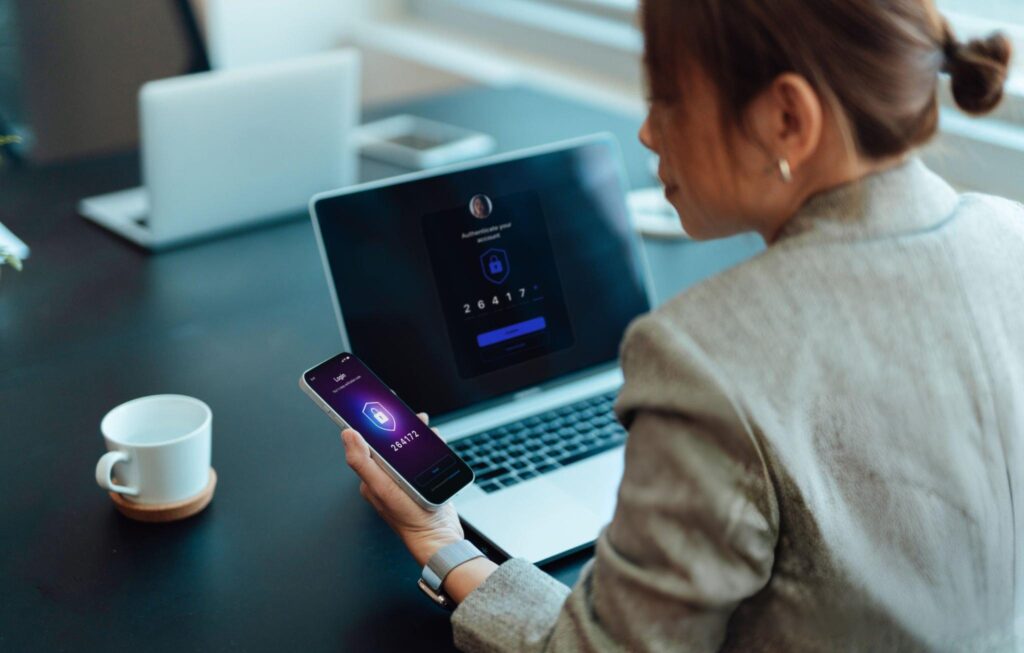
- Multi factor authentication on every account, which significantly reduces the impact of stolen credentials.
- Encrypted email for sensitive communications, particularly in industries handling regulated data.
- Regular patching and updates across all connected systems, supported by strong network management services.
- Reliable data backup solutions so that even a successful attack does not result in permanent data loss.
Process Based Safeguards
- A verification requirement for any request involving a wire transfer or change to payment details, ideally through a phone call to a known number.
- Clear escalation procedures so employees know exactly who to notify if something looks suspicious.
- Documented policies covering acceptable use of company email and how to handle unexpected attachments or links.
- A regularly updated AI usage policy that addresses how employees may use AI tools involving company data.
Human Based Safeguards
- Ongoing employee training that includes real world phishing simulations, not just an annual slideshow.
- Encouraging a culture where employees feel comfortable reporting a mistake immediately rather than hiding it out of fear.
- Leadership setting the example by following the same verification steps expected of everyone else.
The Role of Continuous Monitoring and Threat Detection
Static defenses are no longer sufficient against attackers who constantly adjust their tactics. Businesses need ongoing visibility into what is happening across their environment at all times.
- Real time monitoring helps catch suspicious login attempts and unusual mailbox activity as they happen rather than days later, a concept we cover in real time monitoring strategies for growing businesses.
- Continuous threat exposure management takes this a step further by regularly testing systems for weaknesses before attackers find them, a topic explored in our guide on continuous threat exposure management.
- Cloud security posture reviews are especially important for businesses using cloud based email platforms, since misconfigurations are one of the most common causes of exposure, as detailed in our overview of cloud security posture management.
- Edge protection matters more than ever for businesses supporting remote or hybrid teams, a trend we discuss in edge security solutions.
Why Employee Awareness Still Matters More Than Technology Alone
Technology can filter out a large percentage of malicious emails, but the most convincing attacks are specifically designed to slip past automated systems and land in front of a human being. This is why awareness training remains one of the highest return investments a business can make.
- Employees should be trained to slow down and verify unusual requests, even if they appear to come from someone in a position of authority.
- Staff should understand that legitimate vendors and executives will never object to a quick verification call.
- Teams should know how to recognize a mismatched email domain, an unusual sense of urgency, or a request that bypasses normal approval steps.
- Training should be refreshed regularly, since attackers constantly update their tactics, similar to how essential technology terms evolve as new tools and threats emerge.
Passwords also deserve a fresh look. Many businesses are still relying on password policies that were written long before AI tools made credential guessing and cracking dramatically faster, a gap addressed in our article on an updated password policy.
Compliance and Regulatory Considerations
Businesses that handle sensitive data face an additional layer of pressure when it comes to email security. A breach is not only a financial and operational problem, it can also become a legal one.
- Companies handling European client data need to understand the requirements outlined in our GDPR compliance steps guide.
- Healthcare providers must maintain strict safeguards around protected health information, with proper compliance management services playing a central role.
- Data governance policies help ensure that sensitive information is classified, stored, and shared appropriately, a topic covered in our discussion of data governance strategy.

What to Do If You Suspect Your Business Email Has Been Compromised
Acting quickly can significantly limit the damage of a suspected compromise. If you notice any warning signs, take the following steps immediately.
- Change the affected account’s password right away and enable multi factor authentication if it is not already active.
- Review mailbox rules for any unauthorized forwarding or deletion settings the attacker may have created.
- Notify your IT provider or internal security team so they can investigate the full scope of the incident.
- Alert any vendors, clients, or coworkers who may have received fraudulent messages from the compromised account.
- Document the incident thoroughly in case it becomes relevant for insurance, legal, or regulatory purposes.
- Review your broader business continuity planning to ensure operations can continue with minimal disruption.
A strong cyber recovery planning strategy, built well before an incident occurs, is what separates businesses that bounce back quickly from those that struggle for months afterward.
Looking Ahead: The Future of Email Based Threats
Email based attacks are only going to become more sophisticated as AI tools continue to advance. Businesses that want to stay ahead need to think beyond reactive fixes and build security into their long term strategy.
- Expect deepfake audio and video to increasingly support email based fraud attempts, adding another layer of realism to social engineering.
- Automated attack tools will continue to lower the technical skill required to launch convincing campaigns, widening the pool of potential attackers.
- Businesses adopting AI automation readiness practices should build security review into every new workflow from the start rather than adding it later.
- Long term resilience depends on treating cybersecurity as an ongoing investment rather than a one time project, a mindset explored in our guide to long term IT planning.
As attackers get smarter, so must the defenses businesses rely on. Pairing modern tools with an experienced AI IT partnership gives business owners the confidence that both the technology and the strategy behind it are being handled correctly.
Turning Awareness Into Action
Understanding the threat is only the first step. The businesses that stay protected are the ones that turn awareness into a consistent, ongoing plan involving the right combination of tools, training, and monitoring.
- Start with a full review of current email security settings and gaps.
- Put clear verification procedures in place for financial requests.
- Train employees regularly, not just once a year.
- Partner with a team that understands both the technology and the evolving tactics attackers use.
At CMIT Solutions of Fort Myers South, we help local businesses across every industry build practical, layered protection around their email systems and their broader IT environment, backed by our cybersecurity service solutions and hands on responsive IT support. If you are unsure how exposed your business currently is, our team can walk you through a clear, no pressure assessment of where you stand today.
Email based threats are not slowing down, and waiting until after an incident occurs is the most expensive way to learn this lesson. If your business is ready to strengthen its defenses, schedule a consultation with our team today and take the first step toward a more secure inbox.
Frequently Asked Questions