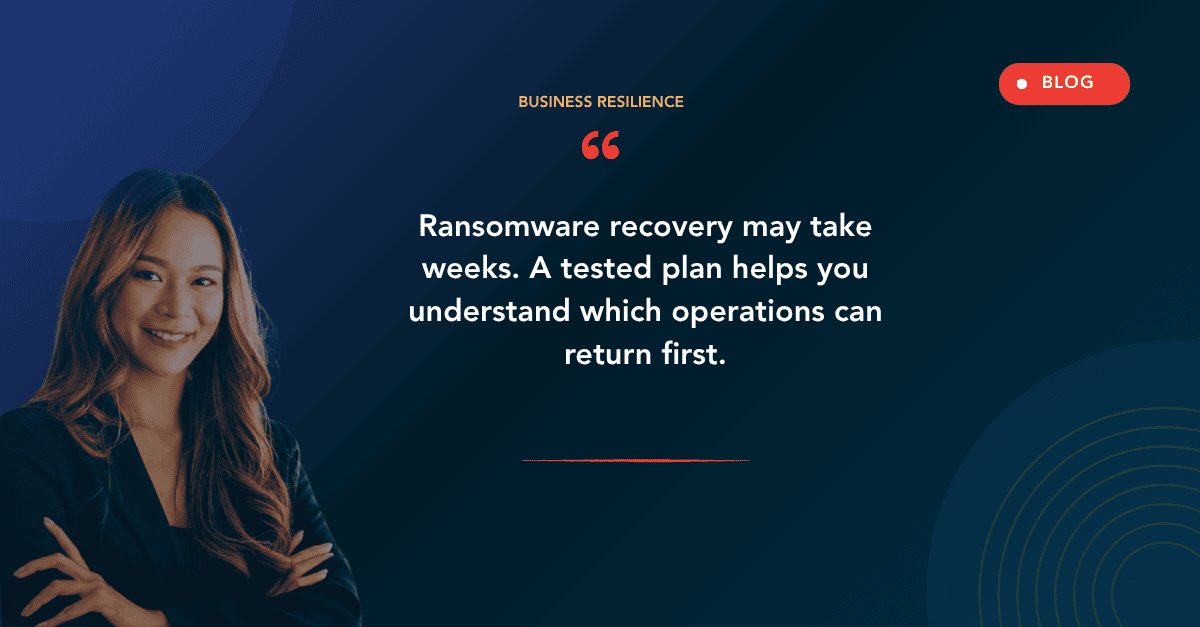
Most businesses picture a ransomware attack as a single bad day. Systems lock up, a ransom note appears, panic sets in, and then somehow, within a day or two, everything gets fixed and life returns to normal. That picture is almost entirely wrong. The reality of ransomware recovery unfolds over weeks, sometimes months, and the businesses that survive it best are the ones who understand from the beginning that recovery is a process, not an event.
This article walks through what a realistic ransomware recovery timeline actually looks like, week by week, based on patterns seen across small and mid-sized businesses. Understanding this timeline in advance is one of the most valuable things a business can do, because it replaces panic with a plan.
Why the Timeline Matters More Than People Think
When ransomware hits, the instinct is to ask “how fast can we fix this?” That question, while understandable, often leads to poor decisions made under pressure: paying a ransom without verification, restoring backups without checking for reinfection, or rushing systems back online before confirming the attacker no longer has access. A realistic timeline helps business owners set expectations with employees, clients, and stakeholders, while giving IT teams room to do recovery correctly instead of quickly.
The stakes of getting this wrong are covered in more depth in this breakdown of how ransomware attacks have grown more sophisticated, making rushed recovery decisions increasingly dangerous.
Week One: Detection, Containment, and Chaos Management
Day One: The Discovery
Ransomware is usually discovered one of two ways: either files suddenly become inaccessible with a ransom note attached, or security monitoring tools flag unusual activity before full encryption completes. The second scenario is far better, which is part of why proactive monitoring matters so much, a theme explored in this look at managed detection and response systems replacing traditional antivirus tools.
Immediate actions in the first hours typically include:
- Disconnecting affected systems from the network to stop the spread
- Disabling shared drives and remote access temporarily
- Identifying which systems and data have been affected
- Notifying leadership and activating the incident response plan
- Engaging outside IT or cybersecurity support if not already in place
Days Two and Three: Assessment and Scope
Once the immediate spread is contained, the focus shifts to understanding the full scope of the attack. This involves determining which systems were compromised, what data may have been accessed or exfiltrated, and how the attacker initially gained entry.
This phase often reveals uncomfortable truths about existing security gaps, a pattern discussed in this piece on how one small security mistake can lead to a much larger breach than anyone expected.
Key questions being answered during this window include:
- Was the ransomware able to reach backup systems?
- Which employee credentials or devices were the entry point?
- Is there evidence of data exfiltration, not just encryption?
- Are there legal or regulatory notification obligations tied to the incident?
Days Four Through Seven: Decision Point on Ransom and Recovery Path
By the end of the first week, most businesses reach a critical decision point: attempt recovery from backup, or consider paying the ransom. This decision should never be made in isolation. It typically involves legal counsel, cyber insurance providers, and IT leadership working together.
Businesses with properly isolated, tested backup systems are in a dramatically stronger position here, since they may be able to restore clean data without ever engaging with the attacker. This is exactly why the distinction between basic cloud storage and true backup protection matters so much, a difference explored in this comparison of cloud storage versus backup systems and their very different recovery capabilities.
If cyber insurance is in place, this is also when the policy’s requirements around documented security controls become relevant, a factor increasingly scrutinized by insurers, as covered in this overview of why cyber insurance providers now expect stronger protections before approving claims.
End of Week One Status: Systems are contained, scope is understood, and a recovery path has been chosen. The business is not yet operational at normal capacity, and employees are likely working around significant limitations.
Week Two: Rebuilding and Controlled Restoration
Verifying Backup Integrity
Before restoring anything, backup copies must be verified as clean and uncompromised. Restoring infected backups is a common and costly mistake, effectively reintroducing the same ransomware into a freshly rebuilt environment. This verification step is why testing backup restoration in advance matters so much, a point emphasized in this discussion of proven backup strategies that reduce downtime during real incidents.
Rebuilding Systems From the Ground Up
Rather than simply restoring files onto existing infrastructure, most security teams recommend rebuilding affected systems from scratch. This ensures no hidden backdoors or persistence mechanisms remain from the original attack. This process typically includes:
- Wiping and reimaging affected servers and workstations
- Resetting all credentials, including service accounts and administrative access
- Applying security patches and updates that may have been missed previously
- Rebuilding network segmentation to limit future lateral movement
Restoring Data in Priority Order
Not all systems are restored simultaneously. Recovery typically follows a priority order based on business criticality, starting with systems required for basic operations, then moving to secondary functions. This prioritization should have been defined in advance as part of a broader disaster recovery plan, a topic covered in this piece on business continuity planning built around 24/7 operational resilience.
Employee Communication and Temporary Workarounds
During this phase, employees are often working with limited system access, temporary manual processes, or restricted communication tools. Clear, consistent communication about what is and is not available prevents confusion and reduces the temptation for staff to find risky workarounds, such as using personal devices or unapproved apps.
End of Week Two Status: Core systems are being rebuilt and restored in priority order. Partial operations may resume, but full functionality is still weeks away for most businesses.
Week Three: Partial Operations and Deep Verification
Bringing Critical Systems Back Online
By week three, many businesses have their most essential systems, email, core applications, and customer-facing tools, back online, though often running in a more restricted or heavily monitored state than before the attack.
Continuous Monitoring for Reinfection
Even after systems are restored, security teams continue monitoring closely for signs that the attacker retained access or that reinfection is occurring. This heightened monitoring period is critical, since attackers sometimes leave dormant backdoors specifically designed to reactivate after recovery efforts appear complete.
This ongoing vigilance connects to a broader shift toward continuous security oversight, a theme detailed in this look at network observability as a standard for proactive IT management going forward.
Regulatory and Client Notifications
Depending on the industry and the nature of the data involved, this is often when formal notification obligations come due. Healthcare organizations may face HIPAA breach notification timelines, while other industries may have contractual obligations to inform clients or partners. These obligations are explored further in this overview of healthcare compliance requirements tied to breach reporting timelines.
Financial Impact Assessment
By this point, the business typically has enough information to begin calculating the financial impact of the attack, including lost productivity, recovery costs, potential regulatory fines, and reputational damage. This assessment often becomes part of an insurance claim process as well.
End of Week Three Status: Most critical systems are operational under close monitoring. Secondary systems and full functionality are still being restored, and notification obligations are being addressed.
Week Four: Full Restoration and Initial Stabilization
Completing System Restoration
By the end of the first month, most businesses have restored the majority of their systems, though some specialized applications or legacy systems may take longer depending on complexity. This is often when businesses realize how much legacy systems contributed to both the vulnerability and the difficulty of recovery.
Conducting a Post-Incident Review
A thorough post-incident review examines exactly how the attack occurred, what worked well during the response, and what gaps need to be addressed going forward. This review typically covers:
- The initial point of entry and why existing defenses failed to catch it
- How quickly the incident was detected and contained
- Whether backup systems performed as expected
- Communication effectiveness during the crisis
- Specific security improvements needed to prevent recurrence

Implementing Immediate Security Improvements
Based on the post-incident review, businesses typically implement several immediate security upgrades, which may include:
- Expanding multi-factor authentication across all systems
- Tightening access controls and reviewing user permissions
- Upgrading endpoint protection with more advanced threat detection
- Increasing employee security awareness training frequency
These improvements often mark the beginning of a shift toward more advanced protection models, a transition covered in this discussion of zero trust security approaches that many businesses adopt following an incident.
End of Week Four Status: Systems are fully or nearly fully restored. The business has completed an initial post-incident review and begun implementing immediate security improvements.
Weeks Five Through Eight: Stabilization and Structural Change
Recovery does not end when systems come back online. The next month typically focuses on deeper structural changes designed to prevent a repeat incident and address the underlying vulnerabilities that made the attack possible in the first place.
Rebuilding Cybersecurity Architecture
Many businesses use this period to implement more advanced security frameworks rather than simply patching the specific gap that was exploited. This often includes exploring newer approaches such as cybersecurity mesh architecture as a more adaptive security model.
Revisiting Backup and Disaster Recovery Strategy
The attack often exposes weaknesses in the previous backup approach, prompting a full redesign. This typically includes better isolation between production and backup environments, more frequent testing, and clearer recovery objectives, themes covered in this piece on smart backup strategies helping businesses recover faster from future incidents.
Addressing Cyber Insurance Claims and Renewal Requirements
Insurance claims processes can extend well into this period, particularly for larger incidents involving significant financial loss. Insurers often require documented proof of the security improvements made following the incident before agreeing to renew coverage or process a full claim.
Rebuilding Client and Stakeholder Trust
For client-facing businesses, this period often involves direct communication with affected customers, partners, or regulators. Transparency about what happened and what has been done to prevent recurrence tends to preserve relationships far better than silence or vague reassurance.
End of Week Eight Status: The business has moved from crisis response into structural improvement, with new security frameworks, updated backup strategies, and insurance matters largely addressed.
Weeks Nine Through Twelve: Long-Term Resilience Building
Comprehensive Security Testing
By this stage, many businesses invest in more rigorous testing of their new defenses, including penetration testing and vulnerability assessments designed to confirm that the improvements made are actually effective, not just theoretically sound.
Employee Training and Culture Change
Long-term resilience depends heavily on employee behavior, since human error remains one of the most common entry points for attacks. This period often includes more comprehensive, ongoing security awareness programs rather than one-time training sessions.
Strategic Technology Planning Going Forward
Many businesses use the months following a ransomware incident to build a more comprehensive long-term technology roadmap, ensuring that security, backup, and infrastructure planning become ongoing priorities rather than afterthoughts. This shift is explored in this overview of strategic technology planning that helps companies stay both secure and competitive.
Reassessing the IT Partnership Model
Some businesses discover during recovery that their previous IT support model, whether internal or outsourced, was not equipped to handle a serious incident. This often leads to a broader evaluation of whether a more strategic, proactive partnership is needed going forward, a consideration detailed in this discussion of what separates a vendor from a strategic partner in IT support relationships.
End of Week Twelve Status: The business has fully stabilized, implemented long-term security improvements, and typically emerged with a stronger, more resilient technology environment than it had before the attack.
The Hidden Costs That Extend Beyond the Timeline
While systems may be fully restored within three months, the full cost of a ransomware attack often extends further, in ways that do not always show up on a recovery timeline.
- Reputational damage can affect client retention and new business development for months afterward
- Increased insurance premiums often follow for several policy renewal cycles
- Employee turnover sometimes increases following the stress and disruption of a major incident
- Ongoing compliance monitoring may be required by regulators or clients following the breach
These lingering effects are part of why prevention remains far more cost-effective than recovery, a point reinforced in this look at essential IT risk management practices that reduce the likelihood of an incident in the first place.
Why Preparation Changes This Timeline Dramatically
Everything described above assumes a business without strong pre-existing defenses. Businesses with proper preparation in place often move through this timeline significantly faster, sometimes cutting total recovery time in half or more. Key differentiators include:
- Isolated, tested backups that allow rapid, confident restoration without ransom negotiation
- A documented incident response plan that removes guesswork during the chaotic first hours
- Advanced threat detection that catches attacks before full encryption occurs
- Regular employee training that reduces the likelihood of successful initial entry
- A trusted IT partner already familiar with the business’s environment, rather than starting from zero during a crisis
This preparation gap is often the clearest difference between businesses that treat cybersecurity as an ongoing priority and those that treat it as a one-time project, a distinction explored in this piece on how proactive IT management helps reduce both downtime and recovery time when incidents do occur.
Industry Considerations That Affect Recovery Speed
Healthcare
Healthcare organizations face additional regulatory reporting requirements that can extend the recovery timeline, particularly around patient notification obligations, a factor discussed in this overview of patient data security risks in modern healthcare environments.
Legal Services
Law firms face unique confidentiality obligations that can complicate recovery, particularly around client notification and bar association reporting requirements, a topic covered in this piece on law firm data breaches and their professional implications.
Manufacturing
Manufacturers dealing with connected production systems face additional complexity when ransomware affects operational technology alongside traditional IT systems, a challenge addressed in this discussion of modernizing manufacturing IT without compromising uptime.
Nonprofits
Nonprofits often face funding and donor trust implications following a breach, particularly as grant funders increasingly require documented security controls, a connection explored in this overview of grant funding cybersecurity requirements tied to organizational resilience.
What Business Owners Often Get Wrong About Recovery Timelines
Assuming Recovery Ends When Systems Come Back Online
Many business owners mistakenly believe recovery is complete once employees can log back in and access their files. In reality, the structural and strategic work that follows initial restoration is just as important as the technical recovery itself.
Underestimating the Value of Pre-Incident Planning
Businesses without an incident response plan in place often lose critical time during the first hours simply figuring out who to call and what steps to take, time that directly extends the overall recovery timeline.
Rushing Restoration Without Verification
In the pressure to resume normal operations quickly, some businesses skip proper verification steps, restoring systems before confirming backups are clean or that attacker access has been fully removed. This shortcut frequently leads to reinfection, effectively resetting the recovery clock.
Treating the Incident as a One-Time Event
The most resilient businesses treat a ransomware incident as a turning point that informs ongoing strategy, not a problem that gets closed out once systems are restored. This mindset shift is part of what separates businesses that recover well from those that experience repeat incidents.

How CMIT Solutions of Greenville Supports Businesses Through Recovery
Recovering from ransomware requires more than technical restoration. It requires coordinated support across cybersecurity, backup management, compliance, and strategic planning, delivered by a team that understands both the technical and business dimensions of the crisis.
CMIT Solutions of Greenville works with businesses across healthcare, legal, manufacturing, and professional services to build the kind of preparation that shortens recovery timelines dramatically when incidents do occur, while also providing hands-on support throughout every phase of the recovery process itself. This includes everything from isolated data backup solutions to comprehensive cybersecurity services designed to detect and contain threats before they escalate into a full-blown crisis.
Beyond incident response, this includes broader support for:
- Compliance management tied to breach notification and regulatory reporting requirements
- Network management services that rebuild and secure infrastructure following an attack
- Cloud services support for businesses restoring or migrating systems during recovery
- Unified communications tools that keep teams connected during extended restoration periods
Bringing It All Together
Ransomware recovery is rarely a matter of days. A realistic timeline stretches across weeks and often months, moving through containment, restoration, stabilization, and long-term resilience building. Businesses that understand this timeline in advance are far better equipped to make sound decisions under pressure, rather than reactive ones driven by panic.
Preparation remains the single biggest factor separating a fast, controlled recovery from a prolonged, chaotic one. Isolated backups, documented response plans, and a trusted IT partner already familiar with the business environment can cut recovery time dramatically compared to businesses starting from scratch during a crisis.
If your business does not currently have a documented ransomware response plan, or if your last backup restoration has never actually been tested, that gap is worth closing before an attack forces the issue. You can schedule a consultation to assess your current readiness, or explore available IT service packages and managed IT services designed to reduce both the likelihood and the impact of a future attack.‘
Frequently Asked Questions
“`