How Bayshore Group is turning AI curiosity into practical change with CMIT Solutions
Bayshore Group buys and sells pulp and paper products around the world. Its team connects suppliers with customers, coordinates shipments, and manages the paperwork that keeps those transactions moving. Yet throughout that process, the company never touches the products it trades.
For this fully remote business, the work happens through information. Since its founding in 2019, much of that information has lived in a handful of spreadsheets.
Those spreadsheets helped the company operate for years. They also left room for broken formulas, disconnected data, and steps that were easy to skip.
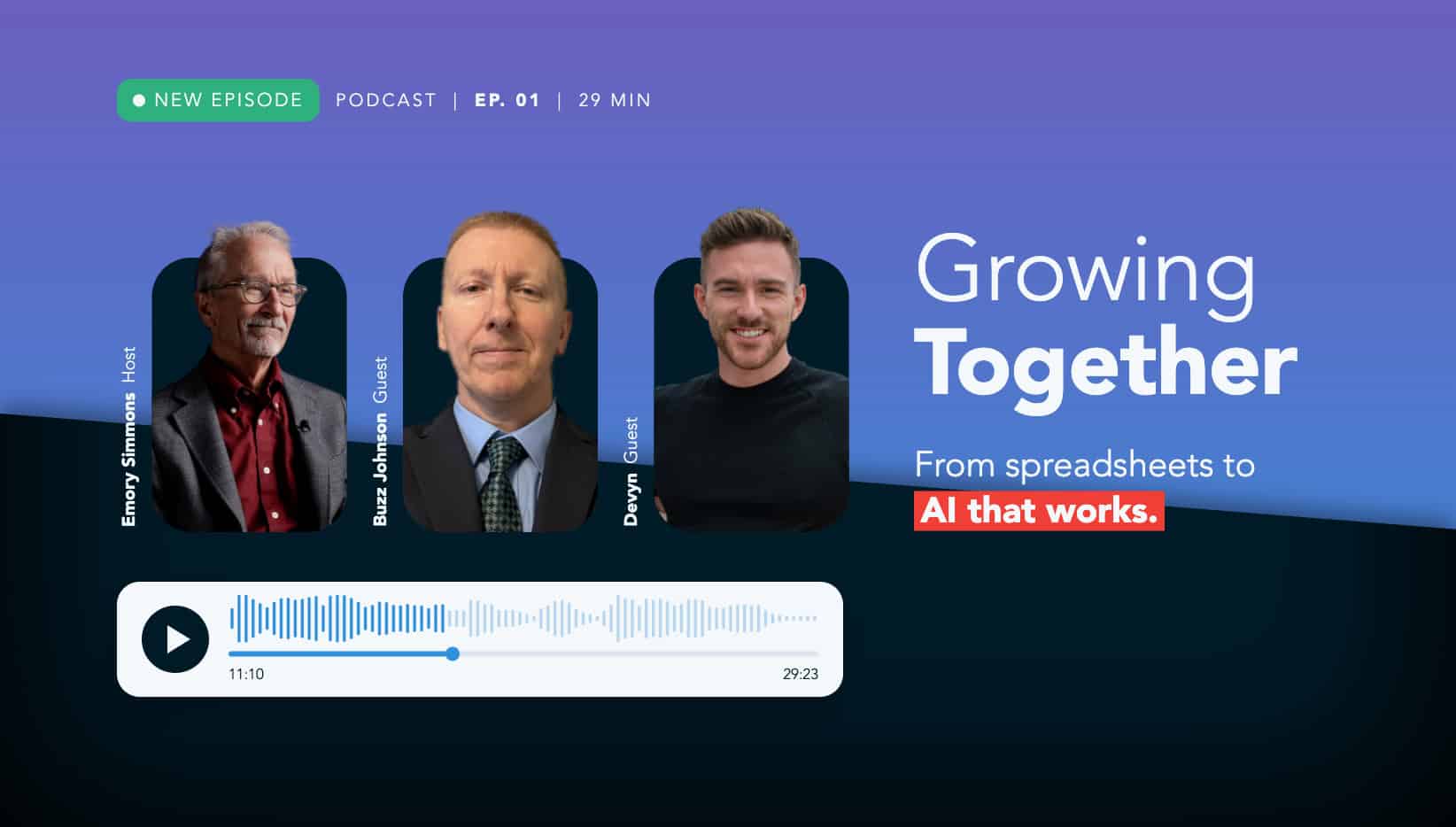
In the first episode of Growing Together with CMIT Solutions, Bayshore’s Buzz and Devin joined CMIT’s Emery Simmons and Matt Wong to discuss how that familiar setup became the starting point for an AI-assisted operations app.
Their experience offers a practical answer to a question many business owners are asking: How can we use AI to improve the work we already do?
For Bayshore, the answer began with understanding its processes, exploring what AI could help build, and involving its IT partner along the way.
A relationship that started with the basics
When Bayshore first connected with CMIT, it needed help with everyday technology. Its small team brought experience in finance, sales, and operations, but the company did not have an internal IT department.
Laptops, connectivity, and reliable support were the immediate priorities. Over time, the relationship expanded as CMIT helped the team identify needs and consider its next steps.
“You guys are our IT people,” Buzz said.
That history mattered when AI entered the conversation. Bayshore already had people to call who understood its technology environment and could help evaluate unfamiliar options.
The company had also invited CMIT to present at its annual meetings. For its October 2025 gathering, the subject was AI: what it could do, where it might fit, and what employees needed to watch out for.
From experiments to an operational problem worth solving
Bayshore’s early AI experiments included generating funny images of colleagues for mugs and T-shirts. Moving from those experiments to changing business operations required a different kind of thinking.
Matt’s AI overview gave the team a shared starting point. Some employees had already tried AI tools; others were less familiar. The discussion covered potential uses alongside responsible handling of company information.
Devin later began exploring Claude after hearing about it at another conference. He saw an opportunity to tackle a problem he understood closely: the spreadsheets connecting Bayshore’s sales, logistics, administration, and finance work.
He had helped build those spreadsheets with his colleagues. He knew what information the business needed and how an order moved through the company.
Bayshore had previously explored custom software development, but explaining requirements, testing changes, and relaying errors had been difficult for a small business. Using AI to assist with development gave Devin a more direct way to experiment and refine an application around the team’s existing workflow.
The goal became an all-in-one operations app that could gradually replace spreadsheets throughout the order process.
Where should an AI-assisted business app live?
Building the app raised another question: Where should it run, and how would the company protect its information?
Bayshore’s trade data includes details about purchases and sales accumulated over years. Devin wanted to understand the implications of hosting that information on an outside website before taking that step.
“I’m not a software developer,” Devin said.
He brought the options to CMIT. Together, they worked through how the app could fit within Bayshore’s existing environment. The team chose to host it within the company’s SharePoint infrastructure.
That decision was part of a broader discussion about deployment, permissions, and risk. As Devin made changes, approval requirements sometimes slowed his progress. He, Buzz, and Matt discussed the access he needed and the potential downsides before Bayshore decided how to proceed.
The experience illustrates why IT guidance belongs early in an AI project. Creating something useful is one part of the work. Deciding where it runs, who can change it, and how it handles company information requires attention, too.
A new app reveals old habits
Introducing the app also exposed something that had little to do with writing code.
With spreadsheets, employees could sometimes bypass steps because an order seemed familiar. A repeat transaction might move forward on the assumption that a colleague already knew the details.
The app made those steps harder to skip. At the time of the conversation, generating a new order required using the application.
That change brought some resistance. Employees had different levels of comfort with technology, and a more structured process could feel like extra work.
For Devin, the purpose was consistency: following the process even when an individual transaction appeared routine. He was working to balance a simple experience with the detail the business needed.
Centralizing information was also opening reporting possibilities that had been difficult when order and warehouse data lived in separate, increasingly complex spreadsheets. The project remained in development, with more features still to come.
More time for relationships, less time entering data
Devin’s next ideas center on reducing repetitive work.
For example, a shipment involving many rail cars or ocean containers can generate numerous invoices. He wants to explore whether AI could help extract information from those documents and make it available to operations and finance.
That is a future opportunity, rather than a completed result. But it reflects the direction Bayshore wants to take: giving employees more time for relationships and problem-solving.
Devin remains cautious about replacing human thought and interaction. Buzz likewise sees the opportunity in freeing people from repetitive tasks so they can focus on improving the business.
What other businesses can learn from Bayshore’s experience
Bayshore’s story suggests a practical starting point for AI adoption:
- Identify a specific workflow your team understands well.
- Involve the people who do the work in defining what should improve.
- Bring IT into decisions about data, access, and deployment.
- Expect employee adoption to require attention alongside development.
- Separate what is working today from what you still need to build and test.
The project began with curiosity, but its direction came from a detailed understanding of the business. CMIT’s role grew with it, from everyday IT support to helping the team evaluate how a new application would fit.
Listen to Trading spreadsheets for AI for the full conversation with Bayshore Group.
Wondering where AI could make a practical difference in your business? Connect with a CMIT Solutions AI expert to explore your workflows, technology, and next steps.