Data compliance means following the laws, regulations, and internal policies that govern how your business collects, stores, and protects sensitive information.
At CMIT Solutions, we help small and medium businesses build compliance programs that cover everything from patient health records to customer payment data, because these obligations apply regardless of how many employees you have.
Explore our business data compliance solutions to see how CMIT Solutions protects businesses like yours.
Why data compliance is no longer optional for small businesses
Many small business owners assume data compliance rules only apply to large corporations or hospitals with dedicated legal teams. That assumption has become increasingly dangerous. Regulations like HIPAA, PCI-DSS, and CMMC apply to businesses based on what data they handle, not how many employees they have.
A small dental practice with ten staff members carries the same legal obligation to protect patient records as a large hospital system. A boutique hotel that processes credit card payments must meet the same PCI-DSS requirements as a major hotel chain.
The regulatory landscape does not scale down for smaller organizations, but the consequences of non-compliance scale up fast.
Beyond legal penalties, non-compliance creates real business risk. A data breach can damage customer trust, trigger lawsuits, and disrupt operations for weeks or months.
CMIT Solutions works with SMBs every day to close these gaps before they become costly problems.
What does data compliance actually cover?
Data compliance is the practice of managing sensitive information in line with legal requirements, industry standards, and internal security policies. It covers how data is collected, stored, used, shared, and eventually destroyed.
Three core areas sit at the heart of any data compliance program:
- Data security: Protecting information from unauthorized access, theft, or loss. This includes technical tools like encryption and access controls, as well as physical safeguards for devices and servers.
- Data privacy: Governing how personal information is collected and used, giving individuals rights over their own data and requiring businesses to be transparent about their practices.
- Data governance: Establishing the internal policies, procedures, and accountability structures that keep data management consistent and auditable across the organization.
CMIT Solutions helps businesses build programs that address all three areas together, because gaps in any one of them create exposure across the others.
Data compliance vs. data security compliance: what’s the difference?
Data compliance is the broader category. It encompasses all the rules and regulations an organization must follow when handling data, including privacy rights, data retention requirements, breach notification timelines, and transparency obligations.
Data security compliance is a subset, focused specifically on the technical and procedural controls used to protect data from unauthorized access, breaches, and other security threats.
Frameworks like PCI-DSS and FISMA fall primarily under data security compliance, while GDPR and HIPAA span both categories. Giving customers the right to request deletion of their data, for example, is a compliance obligation that goes beyond technical security measures alone.
CMIT Solutions maps the full landscape for each client, so nothing falls through the cracks between these two related but distinct obligations.
If you’re ready to strengthen your security posture and build a compliance program that holds up under scrutiny, contact us today to speak with a CMIT Solutions expert.
The Data Compliance Regulations Your Business Needs to Know
The specific regulations that apply to your business depend on your industry, the type of data you handle, and where your customers are located. The table below covers the most common frameworks that affect small and medium businesses in the United States.
| Regulation | Who It Applies To | What It Governs | Enforced By |
| HIPAA | Healthcare providers, insurers, and their vendors | Protected health information (PHI) | HHS Office for Civil Rights |
| PCI-DSS | Any business that processes, stores, or transmits credit card data | Cardholder data security | PCI Security Standards Council |
| CMMC | DoD contractors and subcontractors | Controlled unclassified information (CUI) | Department of Defense |
| GDPR | Businesses handling data of EU residents | Personal data privacy and rights | EU Data Protection Authorities |
| CCPA | Businesses collecting data from California residents above certain thresholds | Consumer data rights | California Attorney General |
| SOX | Publicly traded companies | Financial data integrity and reporting | SEC |
| FERPA | Educational institutions receiving federal funding | Student education records | U.S. Department of Education |
More than one framework often applies to the same business at the same time. CMIT Solutions determines exactly which obligations are in play for your organization and builds a plan around them.
💡 Additional reading: Learn more about the full range of data compliance regulations and how they apply to your industry.

HIPAA compliance: what small healthcare businesses must know
HIPAA was signed into law in 1996 and remains one of the most consequential data compliance frameworks for small businesses in the healthcare sector. It applies not just to doctors and hospitals, but to any organization that handles protected health information (PHI), including billing services, IT vendors, and software providers that work with healthcare clients.
PHI includes names, dates, addresses, Social Security numbers, medical record numbers, health plan beneficiary numbers, and any other information that could identify a patient in connection with their health data. Under HIPAA, covered entities and their business associates must implement administrative, physical, and technical safeguards to protect PHI.
The HHS Office for Civil Rights enforces HIPAA and has the authority to impose civil monetary penalties. Penalties vary depending on the level of negligence involved, and criminal violations can result in fines and imprisonment. Enforcement actions against small providers, including solo practitioners and small clinics, appear regularly in the HHS public enforcement record.
CMIT Solutions guides healthcare organizations through HIPAA’s administrative, physical, and technical requirements, helping them build the safeguards and documentation needed to meet compliance and withstand an audit.
💡 Additional reading: See how CMIT Solutions approaches healthcare data compliance for practices of every size.
PCI-DSS: compliance for any business that takes payments
If your business accepts, processes, stores, or transmits credit card information, PCI-DSS applies to you. This includes brick-and-mortar retailers, hotels, restaurants, e-commerce stores, and any service provider that handles payment card data on behalf of merchants.
The PCI Security Standards Council developed and maintains PCI-DSS. It is a contractual requirement, not a government regulation, but non-compliance can result in fines from card brands and the loss of the ability to process card payments entirely.
PCI-DSS compliance is organized around twelve core requirements covering network security, access control, data encryption, vulnerability management, monitoring, and security policies. The level of compliance validation required depends on the volume of transactions a business processes annually.
For hospitality businesses, which handle high volumes of card transactions across front desk, restaurants, and ancillary services, PCI-DSS is one of the most operationally significant compliance obligations they face.
CMIT Solutions helps hospitality clients assess their current posture, close gaps, and maintain the documentation required for compliance validation.
CMMC: the compliance standard reshaping defense supply chains
The Cybersecurity Maturity Model Certification (CMMC) is a framework developed by the U.S. Department of Defense to protect controlled unclassified information (CUI) across the defense industrial base. If your business is a contractor or subcontractor that handles federal contract information or CUI, CMMC compliance will be required to maintain eligibility for DoD contracts.
CMMC organizes cybersecurity requirements into three levels of maturity, from foundational cyber hygiene at Level 1 to advanced practices at Level 3. The level required depends on the sensitivity of the data your contract involves. Unlike many other frameworks, CMMC requires third-party certification, not just self-assessment, for higher maturity levels. Your compliance posture must be documented, demonstrable, and independently verified.
CMIT Solutions supports defense contractors at every stage of CMMC readiness, from gap assessments and remediation planning through to the documentation required for third-party certification.
Learn more about our CMMC compliance services and how CMIT Solutions prepares defense contractors for certification.
GDPR and CCPA: compliance obligations that cross borders and state lines
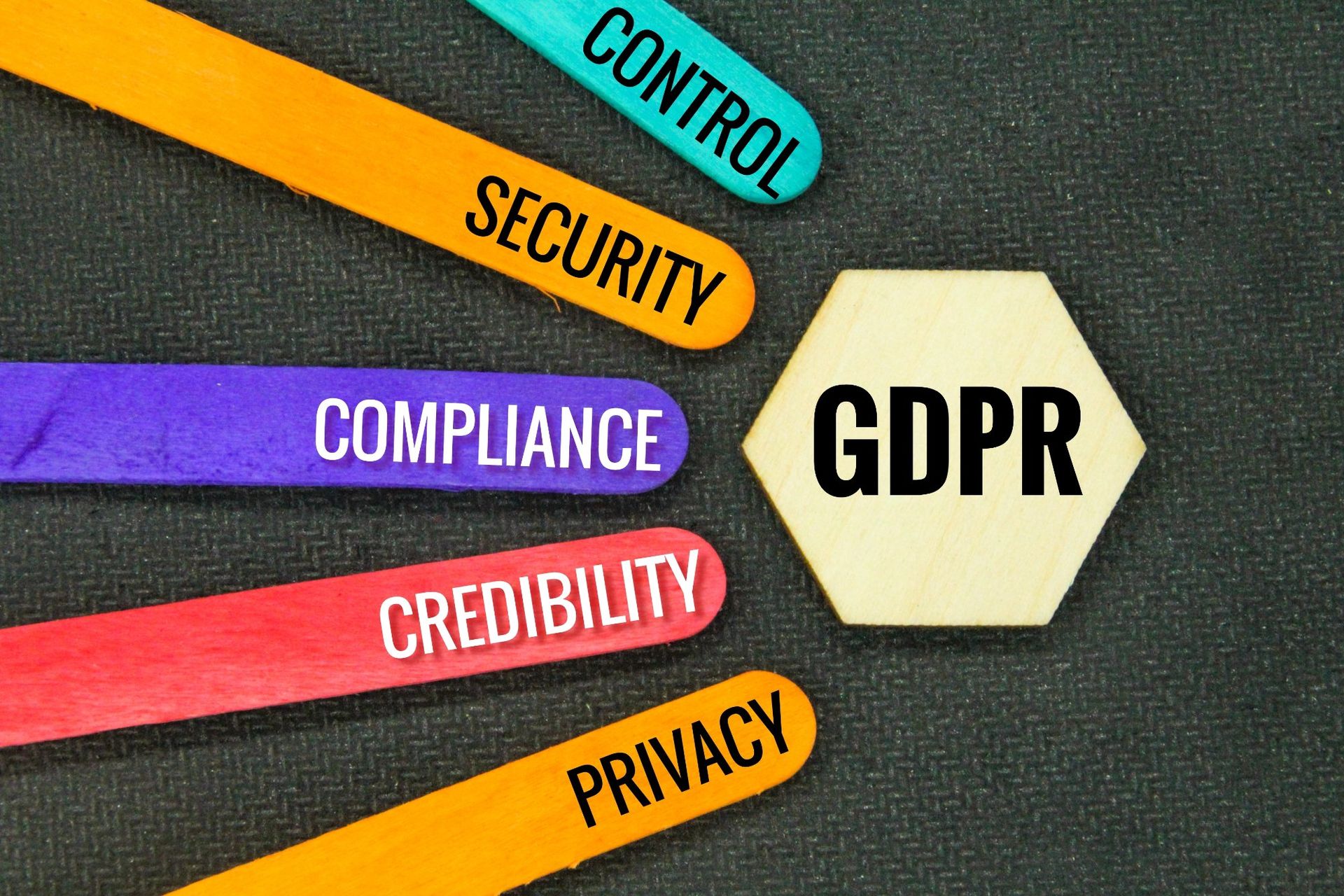
You do not need to be headquartered in Europe to have GDPR obligations, and you do not need to be based in California to be subject to the CCPA. Both regulations are triggered by the location of the individuals whose data you collect, not the location of your business.
The General Data Protection Regulation (GDPR) applies to any organization that collects or processes personal data belonging to residents of the European Union or European Economic Area. Penalties for non-compliance can reach up to 4% of global annual revenue or €20 million, whichever is greater.
The California Attorney General’s office oversees CCPA enforcement, which grants California residents the right to know what data is collected, the right to request deletion, and the right to opt out of data sales. It applies to for-profit businesses that meet certain thresholds around revenue or data volume.
| Feature | GDPR | CCPA |
| Geographic scope | EU and EEA residents | California residents |
| Consent model | Opt-in (consent required before collection) | Opt-out (consumers can object after collection) |
| Maximum fine | €20M or 4% of global turnover | Up to $7,500 per intentional violation |
| Right to deletion | Yes | Yes |
| Right to data portability | Yes | Limited |
| Applies to SMBs | Yes, if collecting EU resident data | Yes, if meeting revenue or data volume thresholds |
CMIT Solutions helps businesses determine whether GDPR, CCPA, or both apply to their operations, and puts the right data handling practices in place to meet those obligations.
What data does your business actually need to protect?
Before building a compliance program, it helps to understand the categories of data that regulations are designed to protect. Not all data carries the same risk or the same legal obligations.
- Personally identifiable information (PII): Any data that can identify an individual, including names, email addresses, Social Security numbers, IP addresses, and device identifiers.
- Protected health information (PHI): Any health data that can be linked to a specific individual, governed by HIPAA.
- Cardholder data: Credit and debit card numbers, expiration dates, security codes, and related payment information governed by PCI-DSS.
- Controlled unclassified information (CUI): Federal information that requires protection under law or regulation, relevant to CMMC.
- Employee data: Personnel records, payroll information, and benefits data, which may fall under state and federal privacy laws.
A useful starting point is a data inventory: a record of what sensitive information your business collects, where it lives, who has access to it, and how it moves through your systems.
CMIT Solutions conducts these assessments as the foundation of every compliance engagement.
The real cost of non-compliance for small businesses
Data compliance is sometimes framed as a burden, a set of boxes to check before moving on to more important work. But non-compliance carries costs that are far more disruptive than the cost of building a proper compliance program in the first place.
According to research by the Ponemon Institute and Globalscape, conducting regular compliance audits reduces total compliance costs by an average of $2.86 million, and non-compliance costs businesses roughly twice as much as maintaining active compliance. For a small business, a single enforcement action, breach notification process, or forensic investigation can run into the hundreds of thousands of dollars.
The indirect costs are just as real. A data breach requires notification to affected individuals, which is legally mandated under HIPAA and many state laws. Breach notifications can trigger media coverage, customer attrition, and long-term reputational damage that takes years to rebuild.
There is also the operational cost of remediation: taking systems offline, engaging forensic investigators, retraining staff, and rebuilding processes from the ground up.
CMIT Solutions helps businesses significantly reduce the likelihood by putting the right controls in place before an incident occurs, not in response to one.
Use our IT downtime calculator to see what a compliance failure could cost your business.
How data compliance programs are built: the core components
Building a data compliance program does not require enterprise-level resources. It requires a structured approach that matches the scale and risk profile of your specific business. A solid compliance program typically rests on four foundational components:
- Data inventory and classification: A data inventory documents what sensitive information your business collects, where it is stored, who has access to it, and how it flows through your systems. This inventory forms the basis of almost every other compliance activity.
- Access controls and authentication: Role-based access controls ensure that employees can only access the information they need to do their jobs. Multi-factor authentication adds a second layer of verification that significantly reduces the risk of credential-based attacks.
- Security policies and staff training: Written policies establish clear expectations, and regular training ensures that staff can recognize threats like phishing attempts before they cause harm.
- Monitoring, auditing, and incident response: Regular audits verify that controls are working as intended. A documented incident response plan ensures that the business can respond to a breach quickly, minimize damage, and meet mandatory notification deadlines.
CMIT Solutions implements and manages all four components on behalf of its clients, backed by 24/7 monitoring and a network of 900+ IT experts.

Industry-specific compliance: healthcare and hospitality
Two of the industries CMIT Solutions serves most closely, healthcare and hospitality, face distinct compliance pressures that are worth examining in detail.
Healthcare organizations are subject to HIPAA as a baseline, but many also work with Medicare and Medicaid programs that carry additional requirements from the Centers for Medicare and Medicaid Services.
Electronic health record systems, telehealth platforms, medical devices, and billing software all represent potential points of exposure. The HHS Office for Civil Rights actively investigates breach reports and publishes enforcement actions publicly, including against small practices.
Hospitality businesses process high volumes of credit card transactions across multiple touchpoints, creating significant PCI-DSS obligations. They also collect personal data from guests, including names, addresses, passport numbers for international visitors, and loyalty program information, which may trigger CCPA or GDPR obligations depending on the guest’s location.
Hotels and restaurants using cloud-based property management systems must also account for the compliance obligations of their technology vendors.
CMIT Solutions has deep experience in both sectors and delivers compliance programs designed around the specific regulatory pressures each industry faces.
The role of your IT provider in maintaining compliance
For most small and medium businesses, building and maintaining a data compliance program is not something that can be handled effectively with internal staff alone. Technical requirements are broad, regulations change frequently, and the consequences of gaps are significant.
A managed IT services provider with deep compliance expertise serves as an extension of your team, bringing the tools, knowledge, and monitoring capabilities that most SMBs cannot sustain internally. That includes 24/7 system monitoring, vulnerability management, policy development, staff training, and maintaining the documentation regulators expect.
Compliance is not a one-time project. Regulations evolve, new threats emerge, and technology environments shift. At CMIT Solutions, we use established frameworks such as the NIST Cybersecurity Framework 2.0 as a structured foundation, translating those standards into practical controls, policies, and ongoing risk management tailored to your business.
CMIT Solutions keeps pace with regulatory changes and security threats, helping your organization remain compliant, protected, and audit-ready as requirements evolve.
Find out where your business stands with our insurance readiness assessment, and let CMIT Solutions identify the gaps.
Let CMIT Solutions take data compliance off your plate
Data compliance can feel overwhelming, especially when your business is managing day-to-day operations, serving customers, and watching the bottom line.
CMIT Solutions guides small and medium businesses through every layer of compliance, from initial data inventories and risk assessments to ongoing monitoring and incident response planning.
With more than 25 years of experience and a network of 900+ IT experts, CMIT Solutions builds a compliance program that fits your industry, your size, and your risk profile, whether your obligations fall under HIPAA, PCI-DSS, CMMC, or a combination of frameworks.
To see what this looks like in practice, the Optyx case study shows how CMIT Solutions helped a multi-location business bring its IT infrastructure and security posture in line with operational and compliance demands.
Call (800) 399-2648 or contact us today to speak with a compliance specialist.
Frequently asked questions
How long does it typically take a small business to become data compliant for the first time?
For most small businesses, reaching an initial state of data compliance takes between three and six months, depending on the frameworks involved and how mature the existing IT environment is. HIPAA readiness generally takes longer than PCI-DSS because it requires documented policies, staff training, and technical safeguards across every system that touches patient data.
What is the difference between a data compliance audit and a risk assessment, and does a small business need both?
A risk assessment identifies where your business is exposed, while a compliance audit measures whether your current controls meet a specific regulatory standard. Small businesses benefit from both: a risk assessment tells CMIT Solutions what gaps exist, and an audit validates that the remediation work has been done correctly and is documented to a standard that would withstand regulatory scrutiny.
If my business operates across multiple states, do I need to comply with data privacy laws in every state where my customers are located?
Yes. State-level data privacy laws apply based on where your customers reside, not where your business is incorporated or headquartered. A business operating in one state but serving customers in California, Virginia, or Texas may be subject to multiple state privacy laws simultaneously, each with different thresholds, consumer rights provisions, and enforcement timelines.
What specific documentation does a small business need to maintain to prove data compliance to a regulator or auditor?
Regulators and auditors typically require written security policies, evidence of staff training completion, access control logs, vendor contracts and Business Associate Agreements, data inventory records, and documented incident response procedures. For CMMC specifically, the documentation must also demonstrate that security practices have been in place consistently for at least the preceding twelve months.
How does cyber liability insurance relate to data compliance, and will a non-compliant business be covered after a breach?
Cyber liability insurers increasingly require evidence of compliance controls before issuing or renewing policies, and many policies contain exclusions for breaches that result from known, unaddressed vulnerabilities. A business that cannot demonstrate active compliance efforts at the time of a breach may find that its insurer disputes or denies the claim, compounding the financial impact significantly.