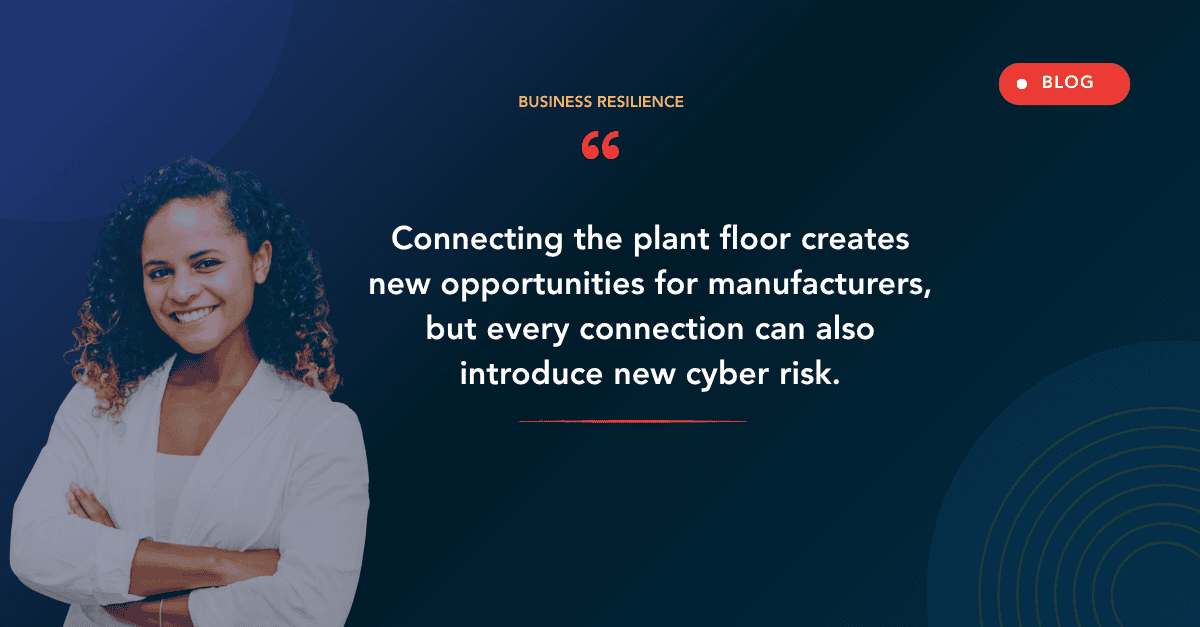
Manufacturing has changed dramatically over the past decade. Plant floors that once ran on isolated, purpose-built machines now connect directly to company networks, cloud dashboards, and remote monitoring tools. This connectivity brings real benefits, better efficiency, real-time visibility, and predictive maintenance that reduces costly downtime. It also introduces a level of cyber risk that many manufacturers still aren’t fully prepared for.
CMIT Solutions of Greenville works with manufacturers across the Upstate who are navigating this exact balancing act, trying to modernize operations without exposing the plant floor to threats it was never designed to withstand. This guide breaks down the specific challenges manufacturers face when connecting operational technology to the broader network, and what a practical, risk-aware approach actually looks like.
Why Manufacturing IT Is Different
IT security for a typical office environment focuses primarily on protecting data, laptops, and cloud accounts. Manufacturing environments add an entirely different layer of complexity: operational technology, or OT, which includes the programmable logic controllers, sensors, and industrial control systems that actually run production equipment.
This creates a fundamentally different risk profile:
- OT systems often run on outdated operating systems that can’t simply be patched like a standard laptop
- Downtime on the plant floor has direct, immediate financial consequences, unlike a delayed office task
- Many industrial devices were never designed with cybersecurity in mind, since they predate today’s threat landscape
- Physical safety can be affected if certain control systems are compromised, not just data
- Vendors and third-party technicians often require remote access to maintain specialized equipment
Understanding these differences is the starting point for any manufacturer trying to build a security strategy that actually fits their environment, rather than applying a generic office IT approach to the plant floor.
The Business Case for Connecting the Plant Floor
Despite the added risk, the push toward connected manufacturing isn’t going away, and for good reason. Connected systems enable:
- Real-time production monitoring and predictive maintenance
- Faster identification of equipment issues before they cause a full breakdown
- Centralized visibility across multiple production lines or facilities
- Better inventory and supply chain coordination
- Data-driven decision-making that improves overall efficiency
This connectivity increasingly depends on edge processing plant operations, which allows data to be processed closer to where it’s generated on the plant floor, improving both speed and reliability compared to sending everything to a centralized cloud environment. The challenge isn’t whether to connect these systems. It’s how to do so without opening the door to serious security risks.
Common Vulnerabilities on the Plant Floor
Manufacturing environments tend to accumulate risk over time, often without anyone fully realizing it. Common vulnerabilities include:
- Legacy equipment: Machines running outdated software that can’t be easily updated or replaced
- Flat network architecture: Plant floor devices sitting on the same network as office computers, with no separation
- Unsecured remote access: Vendors connecting to equipment for maintenance using outdated or poorly secured methods
- USB and removable media: A common entry point for malware on isolated systems that lack other network protections
- Default credentials: Industrial devices still running factory-default usernames and passwords
- Limited visibility: IT teams often have far less insight into OT network activity than they do into standard office systems
Many manufacturers only discover these issues during a formal risk assessment, uncovering unnoticed operational security gaps that had existed quietly for years without causing an obvious problem, until they did.
Why Legacy Systems Remain Such a Persistent Risk
Industrial equipment is often expected to last for decades, far longer than a typical office computer or server. This creates a difficult tension: the equipment still works perfectly well mechanically, but the underlying software running it may be years or even decades out of date.
This challenge isn’t unique to manufacturing. Similar concerns show up in aging system security debt across other industries, where replacing equipment purely for security reasons feels financially difficult to justify. In manufacturing specifically, this often means:
- Operating systems that no longer receive security patches from the manufacturer
- Control systems that can’t support modern authentication methods
- Equipment that would need to be taken offline for extended periods to update, directly affecting production
- Vendors who no longer support or update the original software
Rather than waiting for a full equipment replacement cycle, manufacturers need interim strategies that reduce risk without requiring every legacy system to be swapped out immediately.
Network Segmentation: The Foundation of OT Security
The single most impactful step most manufacturers can take is separating the plant floor network from the corporate IT network. Without segmentation, a compromised office laptop can potentially provide a path straight to production control systems, and vice versa.
Effective segmentation typically involves:
- Creating separate network zones for IT and OT systems
- Using firewalls to strictly control what traffic can pass between zones
- Limiting OT network access to only the specific devices and personnel who need it
- Monitoring traffic between zones for unusual or unauthorized activity
- Applying the same segmentation principles across multiple facilities consistently
This kind of distributed security architecture model has become increasingly popular in manufacturing environments specifically because it allows for flexible, zone-based protection rather than relying on a single perimeter defense that, once breached, exposes everything behind it.
Visibility Into the Plant Floor Network
One of the biggest challenges manufacturers face is simply not knowing what’s happening on their OT network. Many industrial environments were built without the kind of monitoring tools that are standard in office IT environments.
Improving visibility involves:
- Deploying monitoring tools specifically designed for industrial protocols, not just standard IT traffic
- Establishing a baseline of normal plant floor activity to more easily spot anomalies
- Setting up alerts for unexpected devices connecting to the OT network
- Reviewing logs regularly rather than only after an incident occurs
Building plant floor network visibility gives manufacturers the ability to catch suspicious activity early, rather than discovering a problem only after production has already been affected.
Managing Remote Vendor Access
Specialized industrial equipment often requires remote access from the original equipment manufacturer or a third-party technician for maintenance and troubleshooting. This access, if not properly managed, becomes a significant vulnerability.
Best practices for vendor remote access include:
- Requiring time-limited access that’s granted only when actually needed, not left open indefinitely
- Using dedicated remote access tools with strong authentication, rather than generic remote desktop software
- Logging and reviewing all vendor access sessions
- Requiring vendors to demonstrate their own security practices before granting access
- Immediately revoking access once maintenance work is complete
Manufacturers connected to defense supply chains face particularly strict requirements here, since next wave ransomware readiness increasingly factors in third-party access as one of the most common entry points attackers exploit.

The True Cost of Production Downtime
Downtime in manufacturing isn’t just an inconvenience. It has direct, measurable financial consequences that scale quickly the longer systems remain offline. Costs typically include:
- Lost production output and missed delivery deadlines
- Labor costs for idle staff during downtime
- Potential contractual penalties for delayed shipments
- Costs associated with emergency IT response and system restoration
- Reputational damage with clients relying on consistent delivery schedules
This is exactly why production downtime recovery planning needs to be treated as a core business priority, not just an IT concern. A well-tested recovery plan can be the difference between a few hours of disruption and days of lost production.
Backup and Recovery for Manufacturing Environments
Traditional backup strategies designed for office data don’t always translate cleanly to manufacturing environments, where production systems, configuration data, and control system settings all need to be protected and recoverable.
An effective approach includes:
- Backing up control system configurations, not just standard business data
- Testing recovery procedures specifically for production-critical systems
- Maintaining offline, isolated backups that ransomware can’t reach
- Documenting recovery procedures clearly enough that they can be followed under pressure
- Prioritizing which systems need to be restored first to minimize production impact
Manufacturers that have invested in rapid operational recovery strategies consistently report significantly shorter downtime windows following an incident, compared to those relying on generic, untested backup processes.
Ransomware: A Growing Threat to Manufacturing
Manufacturing has become one of the most frequently targeted industries for ransomware, in part because attackers know that production downtime creates enormous pressure to pay quickly. Understanding increasingly sophisticated ransomware tactics is particularly important for manufacturers, since a successful attack can halt an entire production line, not just a single department’s productivity.
Manufacturers should prioritize:
- Segmented networks that limit how far ransomware can spread from an initial infection point
- Continuous monitoring tools capable of detecting ransomware behavior early
- Regularly tested backups that allow for recovery without paying a ransom
- Clear incident response plans specifically addressing production system recovery
Supply Chain and Vendor Risk in Manufacturing
Manufacturers rarely operate in isolation. Raw materials, components, and logistics all depend on a network of suppliers and partners, each representing a potential point of vulnerability. This reality is central to ongoing conversations about supply chain network dependency, since a disruption at one link in the chain can ripple through an entire operation.
Managing this risk involves:
- Assessing the security posture of key suppliers, particularly those with direct system access
- Building redundancy into critical supply relationships where possible
- Establishing clear communication protocols for reporting supply chain disruptions
- Reviewing contracts for data protection and incident notification requirements
Compliance Considerations for Manufacturers
Manufacturers working with government contracts or defense-related supply chains face specific compliance obligations that go beyond general best practices. Understanding manufacturing regulatory compliance needs early helps avoid costly gaps discovered during a contract-required audit.
Working with a provider offering structured manufacturing compliance guidance helps ensure that network segmentation, access controls, and monitoring practices align with whatever specific requirements apply to a manufacturer’s contracts or industry certifications.
Expanding to Multiple Facilities Safely
As manufacturers grow and open new production facilities, each new location introduces additional network complexity and potential entry points. Applying expanding facility security planning principles consistently across every facility helps prevent the kind of inconsistent security posture that often develops when growth outpaces IT planning.
Key considerations for multi-facility manufacturers include:
- Standardizing network segmentation practices across every location
- Ensuring consistent monitoring and visibility regardless of facility size
- Centralizing security policy management while allowing for site-specific adjustments
- Avoiding the temptation to treat smaller facilities as lower priority from a security standpoint
Cloud Migration Considerations for Manufacturers
Many manufacturers are gradually moving certain systems, such as inventory management or production analytics, into cloud environments. This shift brings real benefits but also requires careful planning to avoid introducing new vulnerabilities.
Common oversights include:
- Assuming cloud providers handle all security responsibilities automatically
- Migrating systems without properly reconfiguring access controls
- Failing to account for how cloud connectivity interacts with existing OT network segmentation
- Overlooking data residency or compliance requirements tied to cloud storage locations
Reviewing cloud migration blind spots before migrating critical manufacturing systems helps ensure the move actually improves efficiency without quietly expanding the attack surface.

Building Continuous Monitoring Into Manufacturing Security
Given how much is at stake with production uptime, manufacturers benefit significantly from continuous, around-the-clock monitoring rather than periodic check-ins. Establishing continuous security operations coverage ensures that suspicious activity on either the IT or OT network gets caught and addressed quickly, regardless of what time it occurs.
This is paired effectively with continuous threat detection systems and connected device threat defense that specifically account for the wide range of connected devices found across a modern production environment, from sensors to industrial controllers.
Planning for the Future
Manufacturers evaluating their long-term technology roadmap should approach connectivity decisions with future ready technology planning in mind, ensuring that new equipment and systems are evaluated for security compatibility before purchase, not after installation.
Supporting Infrastructure for Manufacturing Security
Bringing all of these considerations together requires a coordinated technology foundation, including:
- Comprehensive plant IT management that spans both office and production environments
- Operational technology cybersecurity tailored specifically to industrial control systems, not just standard office networks
- Industrial cloud infrastructure configured with appropriate segmentation and access controls
- Production data protection covering both business data and critical control system configurations
- Plant network administration that maintains consistent segmentation and monitoring across facilities
- Cross facility communication systems that keep teams connected across multiple production sites
- Shop floor software tools configured with appropriate access controls for plant personnel
- Industrial equipment procurement that evaluates new machinery for cybersecurity compatibility before purchase
- On site technical response available when plant floor issues require immediate, hands-on attention
- Manufacturing technology strategy that aligns security investments with production and growth goals
- Customized manufacturing IT plans that scale as facilities expand and connectivity needs grow
CMIT Solutions of Greenville works with manufacturers to bring these pieces together into a coordinated strategy that supports growth and efficiency without leaving the plant floor exposed.
A Practical Starting Checklist
For manufacturers ready to take the first steps, here’s a condensed starting point:
- Conduct a full inventory of all OT and IT devices currently connected to the network
- Implement network segmentation between plant floor and office systems
- Establish monitoring specifically designed for industrial network protocols
- Formalize vendor remote access procedures with time-limited, logged sessions
- Test backup and recovery procedures specifically for production-critical systems
- Review compliance requirements tied to any government or defense contracts
- Build a roadmap for gradually replacing or isolating unsupported legacy equipment
Final Thoughts
Connecting the plant floor brings real, measurable benefits for manufacturers, but only when it’s done with security built in from the start rather than added as an afterthought. Segmentation, visibility, and disciplined vendor access management make it possible to modernize operations without opening the door to unnecessary risk. CMIT Solutions of Greenville helps manufacturers strike that balance, building connectivity strategies that support growth without compromising the plant floor.
If your manufacturing operation is ready to connect systems more safely, schedule a consultation to review your current setup and build a plan that fits your production environment.
Frequently Asked Questions