Data Protection

Data Protection Solutions for Small and Mid-Sized Businesses

Protecting business data means keeping sensitive information secure, ensuring it can be recovered after an incident, and meeting the compliance requirements that govern how it must be stored and handled.

CMIT Solutions delivers all three for small and mid-sized businesses, with more than 25 years of experience and a network of over 900 IT experts nationwide, giving SMBs access to the kind of data protection expertise that used to be available only to large enterprises.

What Types of Data Does Your Business Need to Protect?

Not all data carries the same level of risk, but most businesses hold more sensitive information than they realize. CMIT Solutions helps you identify exactly what you are responsible for protecting and builds the right defenses around it.

Common categories of protected data for SMBs include:

  • Customer personally identifiable information (PII): Names, addresses, phone numbers, email addresses, and social security numbers collected during transactions or account creation.
  • Payment card data: Credit and debit card numbers, CVV codes, and billing details governed by PCI DSS requirements.
  • Protected health information (PHI): Medical records, diagnoses, and treatment histories are subject to HIPAA regulations.
  • Employee records: Payroll data, tax documents, benefit information, and HR files that carry legal obligations under federal and state employment law.
  • Proprietary business data: Contracts, financial reports, pricing strategies, and intellectual property that competitors or bad actors could exploit.
  • Email and communications: Business correspondence that may contain sensitive negotiations, legal matters, or confidential instructions.
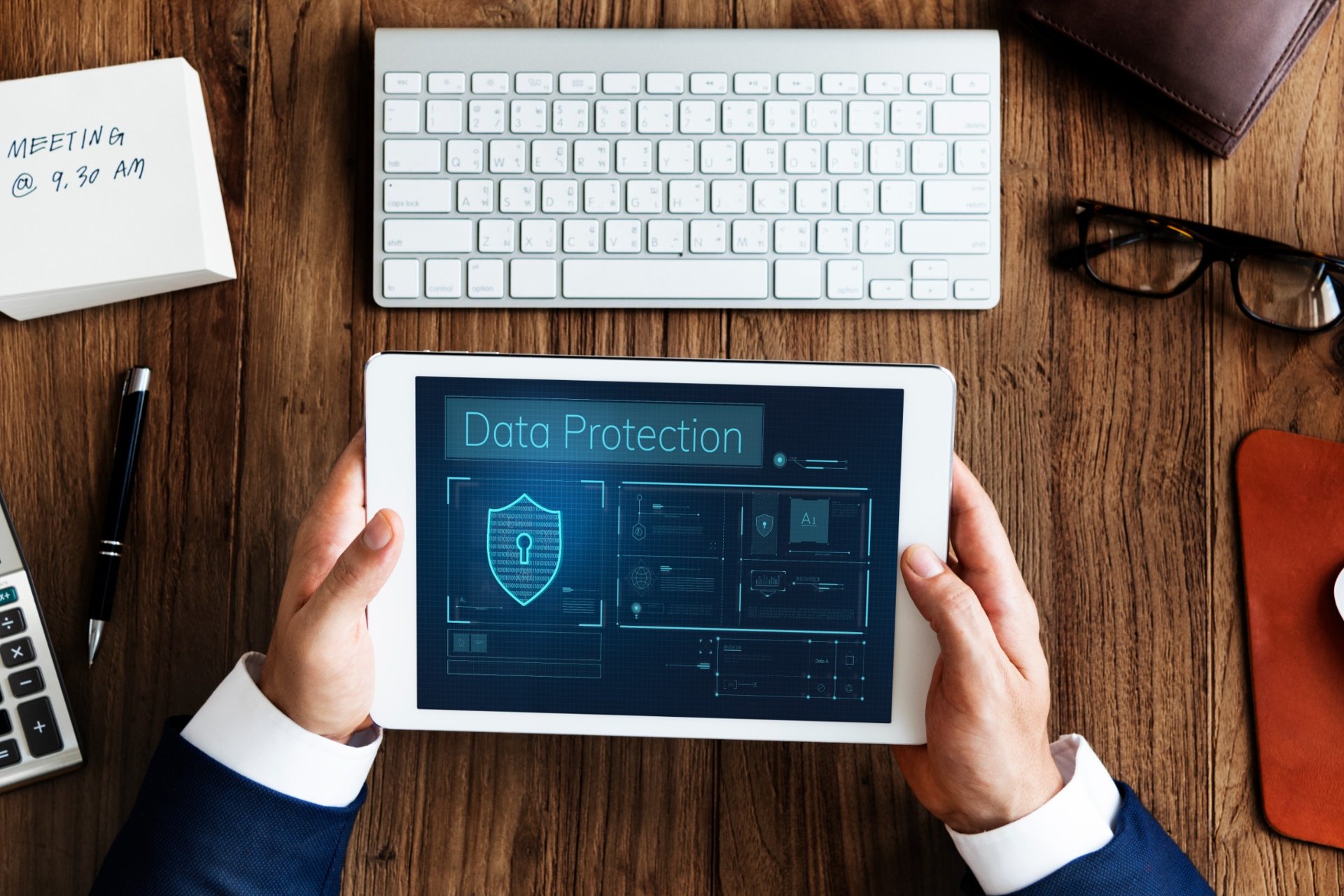
Person using a tablet with digital firewall and data protection icons

How CMIT Solutions Protects Your Business Data

CMIT Solutions takes a layered approach to data protection. Rather than relying on a single tool or control, we build multiple lines of defense around your most critical information, so that if one layer is bypassed, others remain in place.

Our data protection services for SMBs include:

Data discovery and classification

We identify sensitive data across your network, endpoints, cloud storage, and email systems, then classify it by risk level so protection resources are directed where they matter most.

Encryption

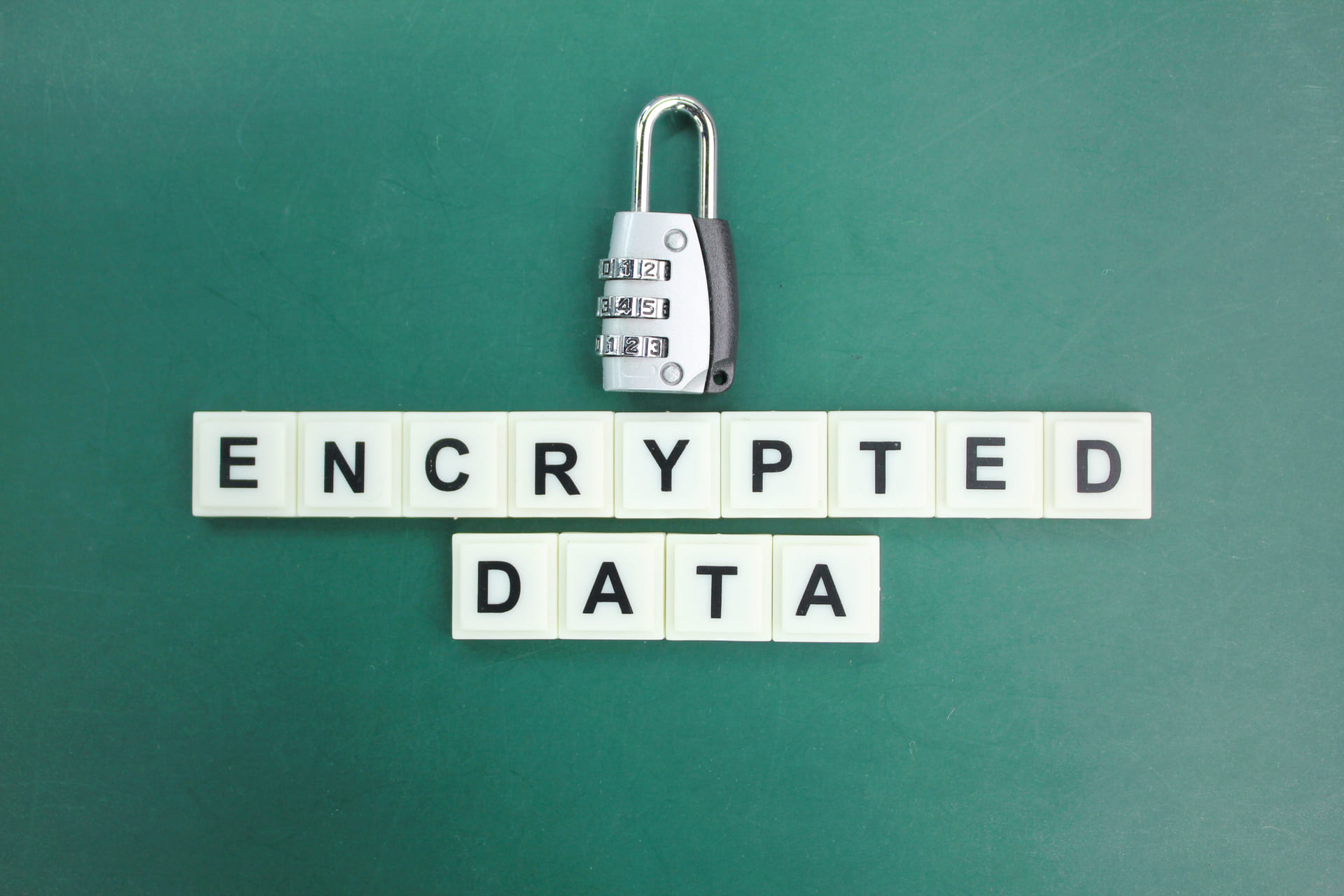
We implement encryption for data at rest, stored on devices, servers, or cloud platforms, and data in transit, moving across your network or the internet. Encryption renders data unreadable to anyone who intercepts or accesses it without authorization.

Backup and disaster recovery

We configure automated, secure backups with tested recovery procedures so your data can be restored quickly after a ransomware attack, hardware failure, or accidental deletion.

Access controls and identity management

We enforce the principle of least privilege, ensuring employees can only access the data their role requires. Multi-factor authentication (MFA) adds an additional barrier against unauthorized access, particularly for remote workers and cloud applications.

Endpoint protection

We secure every laptop, workstation, and mobile device connected to your network with monitoring, patching, and threat detection so vulnerabilities are closed before they can be exploited.

Cloud data security

We configure your cloud platforms to meet security and compliance requirements without disrupting how your team works.

24/7 monitoring

Our network operations center monitors your systems around the clock, detecting unusual data access, movement, or exfiltration attempts in real time.

Data Encryption: What It Is and Why SMBs Need It

Encryption converts readable data into an unreadable format that can only be decoded with the correct key. For SMBs, it is one of the most effective protections available because it renders stolen or intercepted data useless to an attacker, even if they break through other defenses.

There are two core contexts where encryption matters most. Data at rest refers to information stored on hard drives, servers, databases, and cloud storage. Data in transit refers to information moving between devices, applications, or networks. Both require distinct encryption approaches, and both are increasingly required by major compliance frameworks.

Key management is part of every encryption engagement at CMIT Solutions. We ensure encryption keys are stored and rotated securely, because encrypting data with poorly managed keys offers far less protection than most businesses realize. Our team handles this complexity on your behalf so nothing falls through the cracks.

Data Protection

Always-on Technology

Play Video
Data Protection

Always-on Technology

Play Video

Get the Protection You Need

Learn how our data protection solutions can help you secure your business.

Data Backup and Disaster Recovery: Your Last Line of Defense

When an incident occurs, whether from ransomware, a hardware failure, or human error, your ability to recover depends entirely on the quality of your backup strategy. The Cybersecurity and Infrastructure Security Agency (CISA) recommends the 3-2-1 rule as a baseline for business continuity: three copies of your data, on two different types of media, with one stored offsite.

CMIT Solutions configures automated backup schedules, tests recovery procedures regularly, and establishes clear recovery time objectives (RTOs) and recovery point objectives (RPOs) tailored to your operations. These metrics determine how quickly you can get back online and how much data you can afford to lose.

We work with you to define your RTO and RPO before an incident occurs, not in the middle of one, so your recovery plan is already in place when you need it most.

Additional reading: enterprise data security

Data Loss Prevention: Stopping Sensitive Data From Leaving Your Business

Data loss prevention (DLP) refers to tools and policies that detect and block the unauthorized transfer of sensitive information outside your organization. This matters not just for external threats, but for insider risks as well, whether an employee accidentally emails a sensitive file to the wrong address or attempts to take customer data before leaving the company.

DLP policies can be configured to monitor email, cloud storage, USB devices, and file transfers, and to automatically block or quarantine suspicious activity. For businesses subject to HIPAA, PCI DSS, or other regulatory frameworks, DLP is often a required control, not just a best practice.

CMIT Solutions designs and manages DLP policies that fit how your business actually operates, giving you visibility into how sensitive data moves through your organization and the controls to act on it.

admin checking data center supercomputer

Data Protection and Compliance: What the Regulations Require

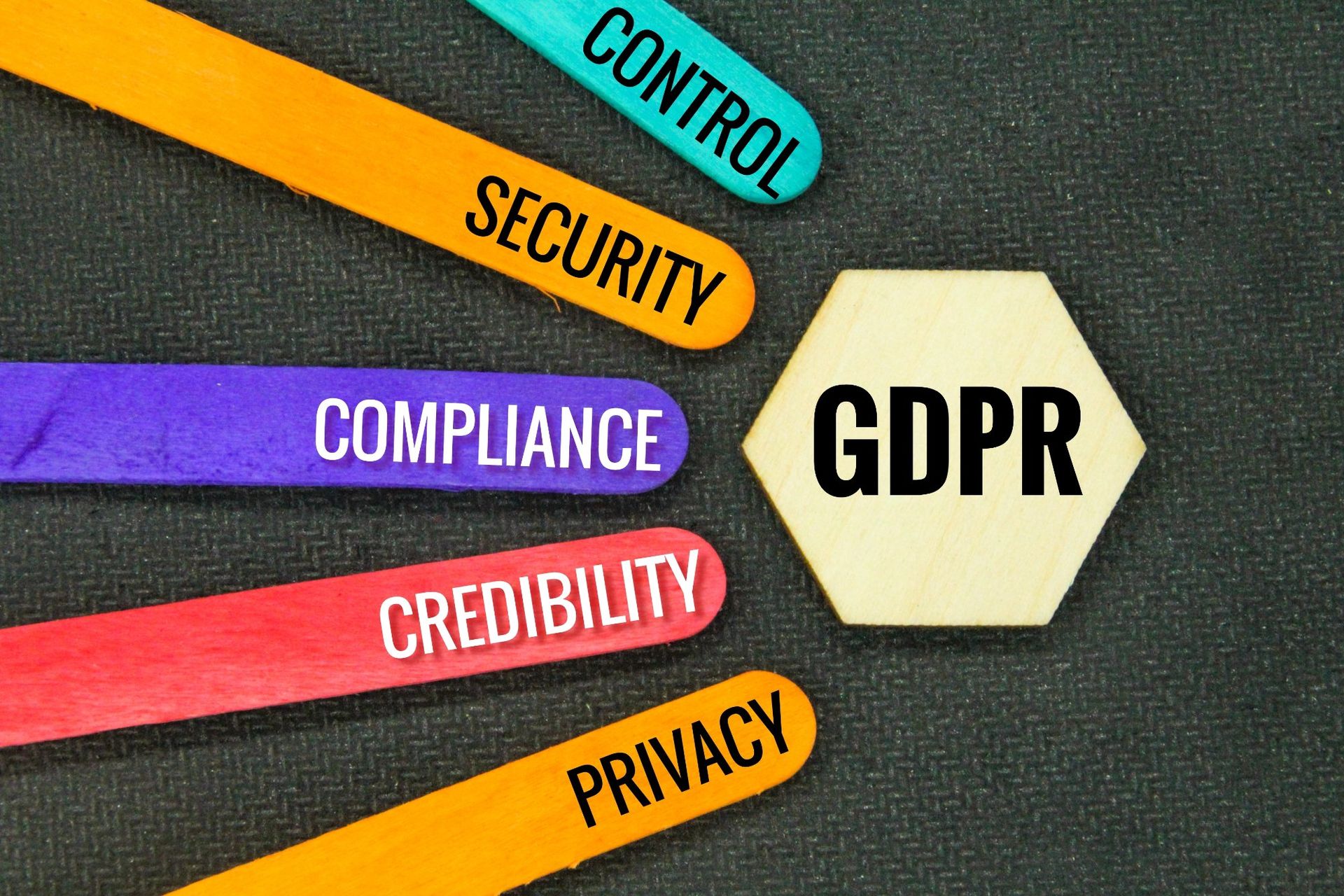
For many SMBs, data protection is not only a security priority, but it is also a legal obligation. The specific requirements your business faces depend on your industry, the types of data you collect, and the states or jurisdictions in which you operate.

Non-compliance carries real consequences. The HHS Office for Civil Rights actively investigates healthcare data breaches and publishes its enforcement actions publicly, including settlements against small practices and business associates.

For a widely recognized approach to structuring those controls, the NIST Cybersecurity Framework 2.0 offers practical guidance that applies to businesses of any size.

CMIT Solutions maps your compliance obligations to concrete technical and administrative controls, so you always have expert guidance rather than regulatory language to interpret on your own.

gdpr-compliance-security-privacy-business-concept

You’ve Got a Lot Going on

To get help mapping your compliance obligations to the right controls, get in touch with our team.

Cloud Data Protection: Securing Data You No Longer Store On-Site

The shift to cloud platforms has changed where SMB data lives. Files that once sat on a server in your back office now reside across Microsoft 365, Google Workspace, and other cloud services your team uses daily. Many businesses assume the cloud provider handles security entirely, when in fact the responsibility is shared.

Under the shared responsibility model, cloud providers secure the infrastructure. You are responsible for securing what you put in it: your data, your user accounts, your access permissions, and your configurations. An employee who leaves the company but retains active cloud credentials is your problem, not the cloud platform’s.

CMIT Solutions configures your cloud environments to enforce strong authentication, limit access by role, encrypt sensitive files, and monitor for suspicious activity. We also ensure your cloud data is included in your broader backup and recovery strategy, because cloud platforms do not automatically protect you from accidental deletion, ransomware that syncs to your cloud storage, or account compromise.

Woman using a digital interface with cloud security and SASE icons

Network Security and Data-in-Transit Protection

Data is most vulnerable when it is moving. Every time an employee sends an email, uploads a file, or connects to your business systems from a public Wi-Fi network, that data travels across connections that may not be secure.

The Federal Trade Commission’s guidance on protecting personal information highlights the risk of sensitive data being transmitted without appropriate safeguards, a risk that remains common and underestimated among SMBs.

CMIT Solutions secures data in transit through encrypted network connections, properly configured VPNs for remote workers, and TLS/SSL certificate management for any web-facing systems your business operates. We also segment your network so that even if one area is compromised, sensitive data stored elsewhere remains isolated and protected.

digital-illustration-of-the-network-and-data-conce

Insider Threats and Human Error: The Data Risks That Are Easy to Overlook

External attackers get most of the headlines, but a significant share of data incidents originate inside the organization. Employees send files to the wrong recipient, misconfigure sharing permissions, use personal cloud storage to work around IT restrictions, or lose a laptop. Each of these scenarios can trigger the same regulatory obligations and reputational damage as an external breach.

CMIT Solutions addresses insider risk through a combination of access controls, security awareness training, DLP monitoring, and clear acceptable use policies. Our team builds the guardrails that reduce accidental exposure and flag intentional misuse, without creating friction that slows your team down.

Cybersecurity analysts monitoring digital threat data on multiple screens

Data Protection for Specific Industries

The data protection challenges facing a dental practice differ from those facing a government contractor or a hotel management company. CMIT Solutions has deep experience serving businesses across regulated industries and understands the specific compliance obligations, threat profiles, and operational realities each one faces.

Healthcare

HIPAA requires covered entities and business associates to implement administrative, physical, and technical safeguards for protected health information. We support healthcare entities, such as medical practices, dental offices, home health agencies, and healthcare vendors, with HIPAA-aligned data protection programs tailored to their size and workflow.

Hospitality

Hotels, restaurants, and hospitality groups process large volumes of payment card data and guest PII. PCI DSS compliance, point-of-sale security, and guest Wi-Fi network segmentation are areas where CMIT Solutions has specific expertise.

Government contractors

Businesses working with federal agencies or the Department of Defense must meet increasingly stringent requirements around controlled unclassified information (CUI). The DoD’s CMMC program requires documented, tested data protection controls, and our team helps you implement and maintain them.

Professional services

Law firms, accounting practices, and financial advisors hold highly sensitive client data subject to both regulatory requirements and professional ethics obligations. CMIT Solutions helps you meet those obligations before a breach puts them to the test.

How CMIT Solutions Assesses Your Data Protection Posture

Most SMBs do not know exactly how exposed they are until something goes wrong. CMIT Solutions conducts structured assessments that give you a clear picture of where sensitive data lives, which controls are in place, what gaps exist, and what the priority remediation steps are.

A data protection assessment from CMIT Solutions covers:

Data Inventory

Identifying all locations where sensitive data is stored, including applications and personal devices in use for work purposes.

Access Review

Auditing who has access to what, including former employees whose credentials may still be active.

Encryption Audit

Confirming that sensitive data at rest and in transit is encrypted and that keys are managed properly.

Backup Verification

Testing whether backups actually restore successfully, and confirming that backup schedules align with your RPO requirements.

Compliance Gap Analysis

Mapping your current controls against the regulatory frameworks that apply to your business and identifying where you fall short.

Endpoint Inventory

Cataloguing all devices, including employee-owned devices used for work, and confirming that endpoint protection is in place.

Your Business Data Deserves Expert Protection. We’re Here to Help

Data protection is not something your business should be figuring out alone. The regulatory landscape is complex, the threat environment evolves constantly, and the stakes, including financial penalties, operational downtime, and reputational damage, are too high to leave to chance.

CMIT Solutions brings more than 25 years of experience and a nationwide network of over 900 IT experts to help SMBs build data protection programs that actually work.

Our team takes the complexity off your plate, guiding you through compliance obligations, identifying your most sensitive data, implementing the right technical controls, and maintaining them as your business grows.

Frequently Asked Questions

How quickly can a small business get basic data protection in place?

Foundational controls, including encrypted backups, endpoint protection, and access management, can typically be deployed within a few weeks. A full compliance-aligned program with gap analysis and tested recovery procedures usually takes one to three months, depending on the complexity of your environment.

Does data protection software work with tools like Microsoft 365 and QuickBooks?

Yes. Most modern data protection tools integrate with widely used platforms, including Microsoft 365, Google Workspace, and QuickBooks. CMIT Solutions evaluates your existing technology stack before recommending anything, so protection is built around the tools your team already uses.

What happens to our data protection when we hire new staff or open a new location?

Every new employee or location introduces new endpoints and user accounts that can create fresh exposure if not properly managed. CMIT Solutions monitors your environment continuously and adjusts controls as your business grows, so expansion never leaves gaps in your defenses.

How is data protection different from general cybersecurity?

Cybersecurity focuses on defending your systems and networks from threats. Data protection focuses specifically on securing the information your business holds, controlling who can access it, and ensuring it can be recovered if lost. CMIT Solutions addresses both as part of a unified managed IT and security program.

If our business experiences a data breach, what do we have to do next?

Most businesses are legally required to notify affected individuals and regulatory bodies within a set timeframe. HIPAA requires notification within 60 days, and the National Conference of State Legislatures tracks breach notification laws across all 50 states. CMIT Solutions helps you build an incident response plan before a breach occurs.