A managed intelligence provider (MIP) is a managed IT and cybersecurity partner that helps a business use artificial intelligence safely. It adds AI governance, safe adoption, and day-to-day usage oversight on top of the services a traditional managed service provider (MSP) delivers, so AI improves productivity without exposing company data.
The role matters most for small and mid-sized businesses that rarely have in-house AI or security specialists. CMIT Solutions acts as that partner, pairing security-first managed IT with the governance businesses need to use AI with confidence.
See how CMIT Solutions delivers managed AI solutions that keep AI adoption safe from day one.
What is a managed intelligence provider (MIP)?
A managed intelligence provider is a managed services partner that treats artificial intelligence as something to be governed, secured, and supported, not just switched on. It manages the tools, policies, and oversight that let a business use AI productively while keeping sensitive data protected and employees working within approved boundaries.
The term builds on the managed service provider model. Where an MSP keeps systems running, an MIP adds a layer focused on how AI is adopted, used, and controlled across the business.
That layer covers three jobs: governing AI use, enabling safe adoption, and overseeing daily activity. Each one protects the business while helping it get real value from the tools its people already want to use.
Explore the managed IT services that form the secure foundation an MIP builds on.
Why the managed intelligence provider role emerged
The MIP role emerged because AI tools entered the workplace faster than most businesses could govern them. Employees started using chatbots and assistants on their own, often with no policy, oversight, or security review, creating a gap a managed intelligence provider is built to close.
Many small and mid-sized businesses now use or test AI in some form. The benefits are real, but so are the risks when staff paste sensitive data into tools no one has vetted.
Traditional IT support was not built for this. Keeping servers online says nothing about whether an AI assistant is handling customer records safely, which is the problem an MIP is designed to solve.
What a managed intelligence provider does
A managed intelligence provider carries out three core jobs that a standard IT provider usually does not. Together they let a business use AI without losing control of its data or its people’s habits.
- AI governance: The MIP sets the rules for how AI is used, including who approves tools, what data can and cannot go into them, and who owns the outcome. This is the scaffolding that keeps AI use consistent and accountable.
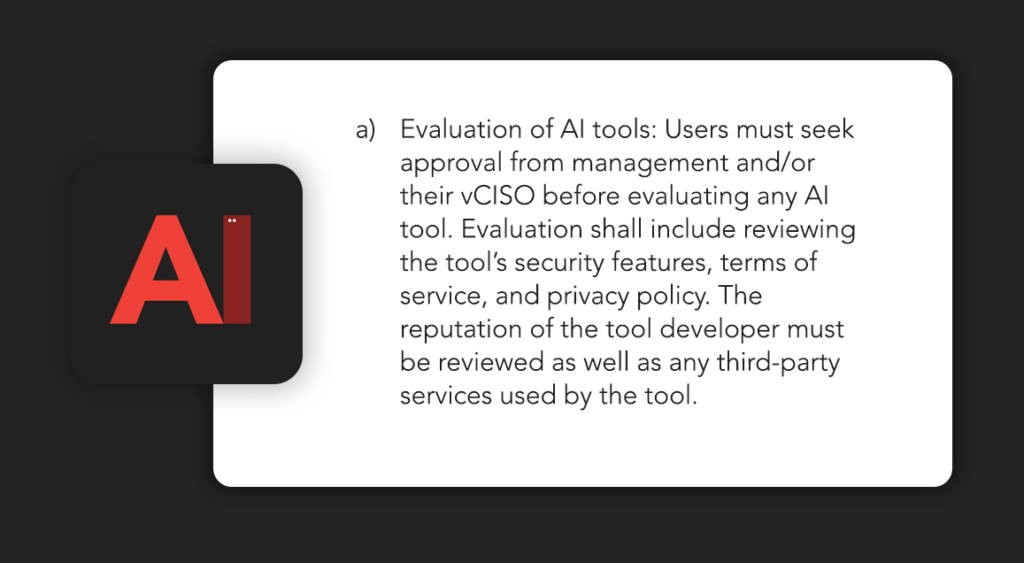
- Safe adoption: The MIP vets tools and vendors, then rolls out approved options with training so staff know what is allowed. Employees get useful tools without guessing whether each one is secure.
- Usage oversight: The MIP monitors how AI is actually being used, flags unapproved tools, and keeps logs for review. This turns informal, invisible AI use into something a business can see and manage.
CMIT Solutions handles all three, so a business can adopt AI without building new expertise in-house or adding another vendor to manage.
How a managed intelligence provider builds on a traditional MSP
The table below shows what a managed intelligence provider adds on top of a traditional MSP, in CMIT’s security-first terms.
| Capability | Traditional MSP | Managed intelligence provider (MIP) |
| Help desk, monitoring, and system upkeep | Yes | Yes, same foundation |
| Core cybersecurity controls (MFA, endpoint protection, backup) | Varies by provider | Yes, security-first by default |
| AI governance (policies, approvals, ownership) | Not typically | Yes, a core function |
| Safe AI adoption (approved tools, vendor vetting, training) | Not typically | Yes |
| AI usage oversight (shadow AI detection, logging) | Not typically | Yes |
| Protection against AI data exposure | Not typically | Yes |
| AI use aligned with compliance needs (HIPAA, CMMC, and more) | Limited | Yes, tied to existing controls |
The pattern is simple. An MSP keeps the business running, while an MIP keeps the business running and its AI use safe.
Additional reading: MSP vs MSSP vs MIP
Reliable IT is the foundation an MIP builds on, so see what downtime could be costing you with our IT downtime calculator.
The security-first difference
The defining feature of a managed intelligence provider is that it treats AI as a security matter first and a productivity tool second. Every new AI tool is another door into company data, so an MIP governs that access the same way it governs networks, devices, and users.
The biggest everyday risk is simple exposure. When an employee pastes client records, contracts, or financial details into a public AI tool, that data can leave the business and land in a model no one controls.
An MIP reduces this risk with approved tools, clear data rules, and monitoring for shadow AI, the unapproved tools staff use without telling anyone. These controls map closely to recognized guidance such as the National Institute of Standards and Technology’s AI Risk Management Framework, which helps organizations govern, map, measure, and manage AI risk.
Many businesses assume their cyber insurance will cover them after an incident, but insurers increasingly require specific security controls, including controls over AI, before issuing or renewing coverage.
Use our insurance readiness assessment to see whether your current security environment aligns with what insurers now expect.
What managed AI looks like day to day
The clearest way to see the difference is a side-by-side example. Picture a small accounting firm, used here only as an illustration, where staff have started using AI to speed up routine work.
The team wants to summarize client documents and draft emails faster. The real question is not whether they use AI, but whether anyone is managing how they use it.
| Situation | Without AI governance | With a managed intelligence provider |
| Tool choice | Staff pick free public tools on their own | Approved, vetted tools rolled out to the team |
| Client data | Financial records pasted into unvetted models | Clear rules keep sensitive data out of public tools |
| Visibility | No record of what was shared or when | Usage logged and reviewed for risk |
| Compliance | Possible gaps during an audit | AI use aligned with existing requirements |
| Result | Faster work, hidden exposure | Faster work, protected data |
Both versions of the firm move faster with AI. The difference is governance, the layer that keeps speed from turning into exposed data.
For businesses held to frameworks like CMMC, that governance has to reach their AI use too, backed by our CMMC compliance services.
Who benefits most from a managed intelligence provider
A managed intelligence provider fits businesses that are adopting AI faster than they can oversee it. The situations below are the most common signs a business needs this kind of partner.
- Teams already using AI informally: Staff rely on chatbots or assistants with no policy or approval process in place. The business has adoption but no control.
- Regulated industries: Healthcare, finance, legal, and government contractors handle data that cannot safely reach public AI tools. Governance is a requirement, not a preference.
- Lean businesses without IT depth: Small and mid-sized companies seldom have dedicated AI or security staff of their own. A partner supplies that expertise without the cost of hiring in-house.
- Multi-location or remote teams: Consistent AI rules are hard to enforce across scattered staff. An MIP applies the same standards everywhere.
For these businesses, CMIT Solutions brings security-first managed IT and a nationwide network of specialists to keep AI adoption safe as the company grows.

Put your AI to work without putting your data at risk
Adopting AI safely is not about carrying every risk on your own shoulders. CMIT Solutions guides small and mid-sized businesses through AI governance, safe adoption, and ongoing oversight, so technology drives growth instead of creating exposure.
IT services don’t have to be complicated, and neither does adopting AI. Backed by security-first managed IT and a nationwide network of technology and cybersecurity professionals, CMIT Solutions has helped businesses put technology to work for more than 25 years.
CMIT Solutions supports Optyx, a multi-location optical retail chain with in-house doctors and a shared EMR system, keeping its storefronts secure, HIPAA-compliant, and consistently connected. The Optyx case study shows how CMIT delivers the same standards and responsive support across every location as a business grows.
See how CMIT Solutions can help your business adopt AI safely, call (800) 399-2648 or contact us to speak with an IT expert.
Frequently asked questions
Does a managed intelligence provider replace my internal IT team?
A managed intelligence provider usually works alongside an internal IT team rather than replacing it. The business keeps control of strategy and key vendor relationships, while the provider handles AI governance, security, and daily oversight. CMIT Solutions offers co-managed options that add specialist support without removing in-house ownership.
How long does it take to start working with a managed intelligence provider?
Getting started with a managed intelligence provider usually begins with an assessment of current tools, data, and AI use, on a timeline that varies by size and complexity. The provider then sets priorities, approves tools, and rolls out policies in stages. CMIT Solutions scopes each engagement to the business.
Can a small business afford a managed intelligence provider?
A managed intelligence provider is usually affordable for a small business because it is priced as a predictable monthly service rather than a large upfront cost. The value shows up in avoided data exposure, fewer wasted tools, and time saved. CMIT Solutions builds plans around what a small business needs.
Does a managed intelligence provider work with the tools we already have?
A managed intelligence provider is built to fit the tools a business already has, not to force a rebuild. It connects AI oversight to the email, cloud, and security systems already in place, so governance works across the current setup. CMIT Solutions integrates AI controls into existing environments.
Do I need a managed intelligence provider if we only use basic AI tools?
A managed intelligence provider is worth having even for businesses that only use basic AI tools, because simple chatbots can still expose sensitive data if used without clear rules. It sets safe boundaries for basic and advanced use. CMIT Solutions governs everyday AI tools before informal habits create security gaps.